
Florida Store Collapse Claims and Maintenance Records
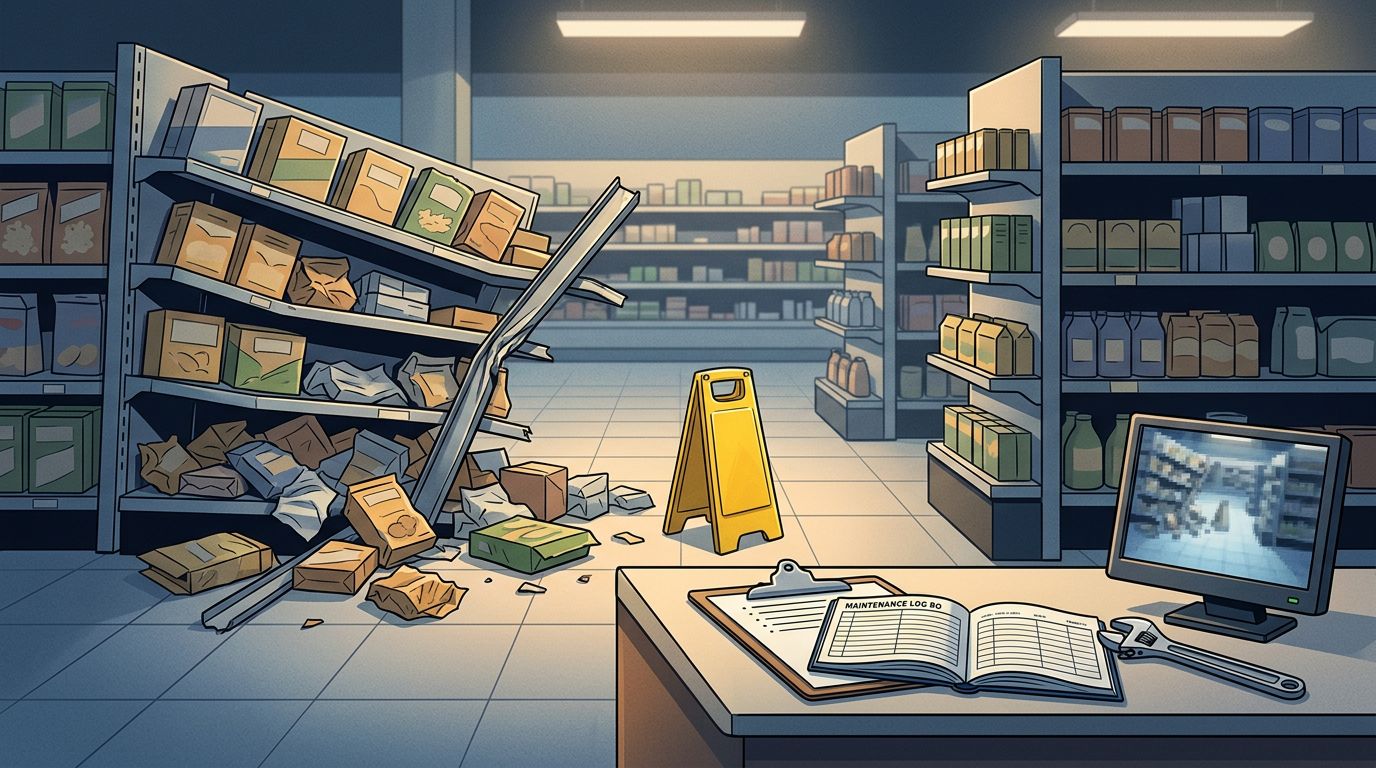
A heavy endcap can tip in seconds, trapping a shopper beneath merchandise or metal shelving. Florida store collapse claims often turn less on what fell than on why it fell and what records existed before the accident.
Retailers owe shoppers reasonable care, including safe displays, secure shelving, and reasonable inspections. Maintenance logs, repair tickets, installation documents, and surveillance video may show whether the store knew about a danger or failed to discover it. Because video can be overwritten and broken fixtures can be moved, early evidence work matters.
What Florida store collapse claims must prove
Store display injuries usually fall under ordinary negligence and premises liability. The injured person generally must show that the store owed a duty, failed to act reasonably, caused the injury, and created measurable losses.
Start with the failed display, not only the injury
A display-collapse case may involve a grocery-store shelf, warehouse rack, endcap, clothing fixture, sign, promotional stand, or stacked merchandise. The failure may result from improper anchoring, excessive weight, defective parts, poor assembly, employee stocking practices, or a lack of inspection.
The physical condition matters because a medical record can show the nature of the injury, but it usually cannot explain why the fixture collapsed. Photographs of bent brackets, missing fasteners, broken shelves, scattered products, and the surrounding aisle can help connect the accident to a maintenance or setup problem.
A falling box and a collapsing display can raise related but different legal issues. Avard Law’s guide to Florida falling merchandise injury claims addresses cases where products fall from shelves or displays and injure shoppers.
Identify who controlled the condition
The store may not be the only responsible party. Potential defendants can include a property owner, retail operator, maintenance company, display manufacturer, installation contractor, distributor, or merchandising vendor.
Control is often central. A store may have selected the display, directed employees to load it, inspected it, or received complaints about it. A contractor may have installed the unit. A manufacturer may face a product-defect claim if a component failed despite proper use.
Florida Statutes § 768.0755 addresses a different situation, when a person slips and falls on a transitory foreign substance in a business establishment. A collapsing shelf or display usually requires a broader negligence analysis, rather than relying only on that statute’s notice rule. Read the current Florida transitory-substance statute for the statutory language.
Which maintenance records matter most
Store records may reveal whether employees inspected the display, whether someone reported a problem, and whether the business followed its own safety procedures. They can also identify contractors and vendors who handled the fixture before the collapse.
Inspection and repair records
A lawyer may seek opening and closing checklists, aisle-walk records, rack inspections, manager reports, safety audits, and employee training materials. These documents can show whether the store had a routine inspection system and whether workers completed the required checks.
Repair and maintenance records may include work orders, service tickets, replacement requests, photographs, and communications about loose shelves or unstable displays. A prior complaint involving the same unit can be important, even if no earlier injury occurred.
Records should be examined for more than one isolated entry. A pattern of skipped inspections, repeated repairs, or recurring complaints may help establish that the condition lasted long enough for the store to discover it.
Installation, loading, and video records
Other useful documents may include:
- The display’s purchase date, model number, assembly instructions, and manufacturer warnings.
- Vendor installation records, contracts, invoices, and post-installation signoffs.
- Planograms or merchandising instructions showing where products belonged.
- Load-rating documents and records showing the weight placed on each shelf.
- Prior incident reports involving the same display, aisle, rack, or fixture.
- Surveillance footage showing the area before and after the collapse.
The exact fixture should also be identified. A store may replace a damaged shelf quickly, but the original parts can show overloading, missing hardware, defective welds, or improper anchoring. The evidence for Florida falling merchandise injuries includes practical steps for documenting what fell, where it fell, and how the accident caused harm.
A missing maintenance entry does not automatically prove negligence. It can still raise important questions about whether the store inspected the display and preserved its safety records.
How to preserve evidence after a store collapse
The scene may change before anyone investigates it. Employees can remove products, repair the shelf, discard broken parts, or place a different display in the same location. Quick action helps preserve the facts.
What to do at the scene
If your condition allows, take photographs and video of the entire area. Capture the collapsed display, attached hardware, product placement, warning signs, aisle width, lighting, debris, and any visible damage to your clothing or personal property.
Report the incident to a manager and request a written incident report. Ask for the report number and the manager’s name. Avoid guessing about the cause when speaking with store personnel. State what happened, where you were, what struck you, and what symptoms began afterward.
Get medical care promptly, even if the pain seems manageable. Tell the provider that a store display or merchandise caused the injury. Keep medical records, bills, prescriptions, work restrictions, wage information, and receipts for related expenses.
Write down the event while the details remain fresh. Include the store location, approximate time, people who saw the collapse, employee statements, and the display’s condition. A guide on getting a Florida slip and fall incident report explains information that can help identify a store’s report.
Send a preservation request quickly
A preservation letter can demand that the store retain surveillance video, incident reports, inspection logs, work orders, employee schedules, training records, photographs, communications, and the exact display or shelf parts.
The letter should identify the date, time, location, and type of incident. It should also describe the damaged fixture with enough detail to prevent confusion if the store has several similar displays.
Do not attempt to move or store a heavy fixture yourself. A lawyer can arrange inspection and preservation through appropriate legal procedures. If evidence disappears, a court may consider a spoliation issue, but the result depends on possession, control, timing, the importance of the evidence, and the reason it was lost.
Deadlines and legal defenses in Florida
Time limits can affect the claim before the parties ever discuss its value. A store display injury should receive legal review soon after the event, especially when the store controls the records.
The general filing deadline
Under current Florida Statutes § 95.11, an action founded on negligence generally must be filed within two years. The Florida negligence limitations statute contains the governing language.
The correct deadline can depend on the injury date, the identity of the defendant, a minor’s status, incapacity, wrongful death, or another legal exception. A request for records does not replace filing a lawsuit, and an insurance claim does not necessarily stop the limitations period.
Comparative fault and public property
Florida’s comparative-fault statute allows damages to be reduced according to a person’s share of fault. The current law also includes a greater-than-50-percent bar for negligence actions covered by the statute. The Florida comparative fault statute should be reviewed with the facts of the case.
A store may argue that the customer pulled on the display, ignored a warning, entered a restricted area, climbed a fixture, or handled merchandise improperly. The store may also blame the customer’s footwear or actions. Those defenses do not decide the case by themselves. Photos, witness accounts, video, and maintenance records can show what actually happened.
Different rules may apply if the collapse occurred at a government-owned or government-operated facility. Florida Statutes § 768.28 includes special sovereign-immunity, notice, and timing provisions. Review the Florida government tort claims statute immediately if a city, county, state agency, public school, airport, or other government entity owns or controls the property.
When workers’ compensation applies
The legal path changes when an employee is injured while stocking, repairing, assembling, or inspecting a store display.
Customers and employees follow different paths
A store employee may have a workers’ compensation claim even when no one can prove that the employer acted negligently. Workers’ compensation may cover authorized medical treatment and wage-loss benefits for an injury arising out of employment.
Florida Statutes § 440.185 generally requires an employee to notify the employer of a work injury within 30 days. The Florida workers’ compensation notice statute contains the reporting rule.
An employee should report the injury promptly and request an authorized medical evaluation. Avard Law provides information about workers’ compensation benefits after a workplace fall, including issues that can arise when the injury happens during regular job duties.
Third parties may still face claims
Workers’ compensation rules can limit a negligence lawsuit against the employer. They do not always eliminate claims against a separate contractor, display installer, maintenance company, manufacturer, or vendor.
For example, a merchandising contractor may have assembled the display incorrectly, or a manufacturer may have supplied a defective bracket. Identifying those parties early matters because each may hold separate records and insurance coverage. Employment status also matters when a worker is hired through a staffing agency or works for a third-party vendor inside the store.
How a lawyer builds the claim from records
Maintenance records help create a timeline. The timeline may show when the display was installed, who loaded it, when employees inspected it, whether repairs were requested, and what happened after the collapse.
What a records review can reveal
A lawyer may compare inspection logs with employee schedules, surveillance footage, work orders, and inventory records. If a checklist says an aisle was inspected while video shows an unstable display for hours, that difference may require further investigation.
The records can also clarify whether the store created the risk itself. Employee loading instructions, planograms, and training materials may show that workers placed heavy products on an upper shelf or used a fixture outside its intended purpose.
Missing records require careful treatment. Their absence may result from ordinary retention practices, a technical failure, or intentional destruction. A lawyer will examine when the store learned about the injury and whether it had a reason to preserve the information.
Why early legal review matters
A Florida store collapse claim may involve several legal theories and more than one responsible party. Early review helps identify the correct defendants, protect the physical evidence, request records, and calculate medical and financial losses.
Bring photographs, receipts, medical information, employer records, witness details, the incident report number, and any communication from the store or its insurer. Do not sign a release or accept a settlement before understanding whether it covers future treatment and all responsible parties.
Conclusion
A collapsed display can point to negligent installation, overloading, inadequate inspection, poor maintenance, or a defective component. The strongest Florida store collapse claims connect the physical failure to reliable evidence, including the fixture itself, surveillance footage, witness accounts, and maintenance records.
Report the incident, obtain medical care, document the scene, and ask that the store preserve relevant evidence. Because Florida generally allows two years for negligence actions and different rules may apply to employees or government property, prompt advice from a Florida personal injury attorney can protect options that may otherwise disappear.