
Florida U-Turn Crash Claims: Video and Lane Position Proof
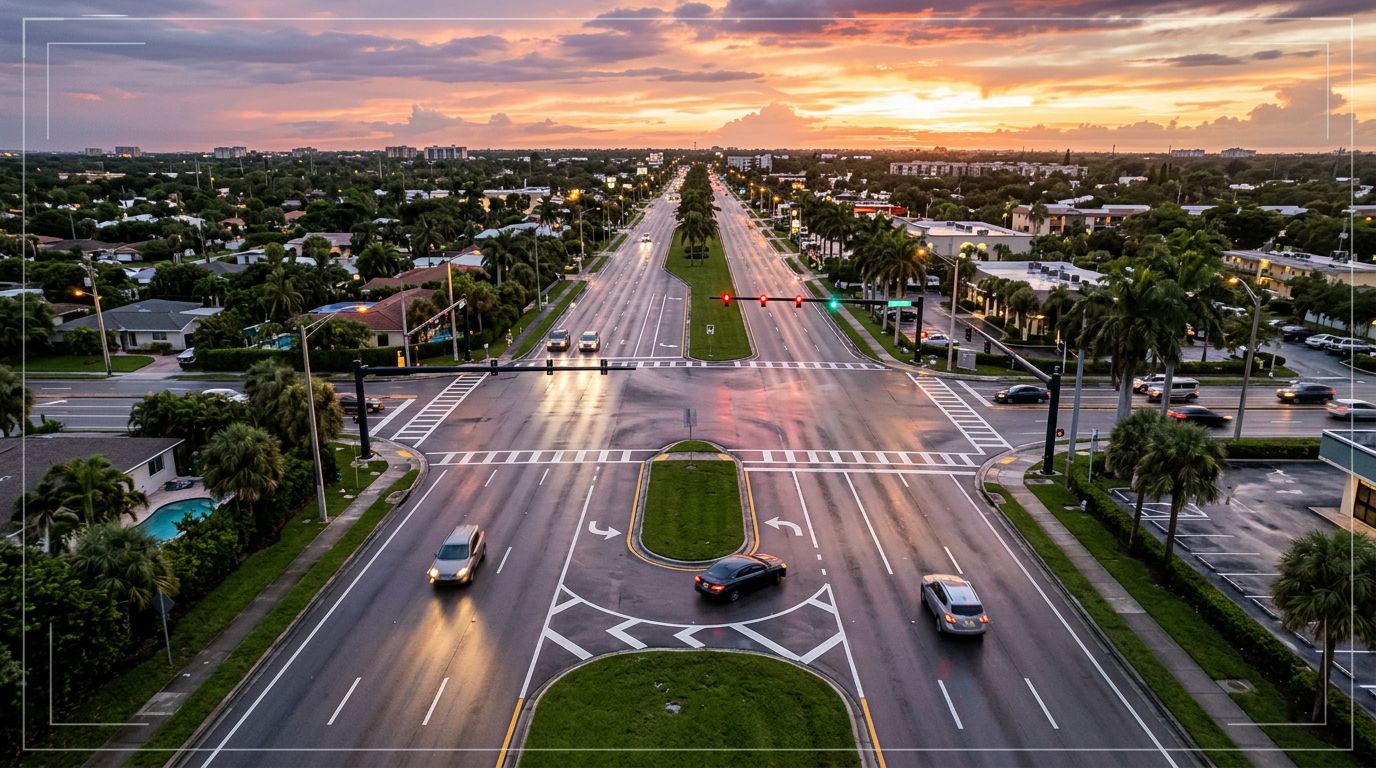
A U-turn crash can look simple on paper, then turn messy fast. One driver says the turn was safe, the other says the lane was cut off, and the whole claim hangs on a few seconds of movement.
That is why video evidence and lane position matter so much in Florida U-turn crash claims. A clear clip, a parking lot camera, a dash cam, or even the angle of impact can show where each car was and who had the right to move first.
A claim for Florida illegal U-turn accident liability often rises or falls on those facts. The strongest cases tie the turn, the roadway, and the damage pattern together.
Why U-turn crashes are so hard to sort out
U-turn collisions often happen in places with poor sight lines. Busy roads, narrow medians, turn lanes, and fast traffic leave little room for error.
The problem is that each side may remember the crash in a different way. The turning driver may say the lane was clear. The other driver may say the car pulled out too far or crossed into traffic too soon. That gap matters because fault in Florida depends on proof, not guesses.
Police reports help, but they do not always settle the issue. A report may list statements, note damage, and describe the scene. It may still leave out the details that show where the turning car actually sat in the lane.
That is where physical evidence helps. Tire marks, debris, vehicle rest positions, and camera footage can show whether the U-turn car entered the lane cleanly or blocked traffic. Even a small shift in placement can change the whole claim.
Sometimes the location matters just as much as the turn itself. A U-turn near a center lane, median opening, or painted refuge area can raise the same proof problems seen in Florida center turn lane accident claims, where lane markings and vehicle paths shape the fault analysis.
Video can show more than the final impact
Video matters because it captures motion. A photo shows one moment. Video shows the lead-up, the turn, the brake lights, and the strike.
That extra context can answer questions no witness can sort out later. Did the turning driver pause in the lane? Did the other driver have time to brake? Was the U-turn made from the correct opening, or did the car swing wide across traffic?
A single clear clip can do more than a stack of statements.
Useful video often comes from more places than people expect:
- Dash cams from either vehicle
- Traffic cameras at intersections or major roads
- Nearby business cameras from gas stations, stores, or offices
- Residential doorbell cameras if the crash happened near a neighborhood
- Ride-share or fleet footage if a work vehicle was involved
The key is speed. Many systems overwrite footage within days. Some business cameras keep only a short loop. If the video is not saved quickly, it can disappear before anyone asks for it.
Short clips can still help. Even if the camera does not catch the full impact, it may show the lead-in, lane position, or traffic flow. That can support a claim when the other driver tells a different story.
Video also helps with timing. If the turning vehicle was already halfway through the lane, a clip may show that. If the other driver was speeding or weaving, the footage may show that too. Either fact can matter when fault is disputed.
Lane position proof often tells the real story
Lane position is one of the most overlooked parts of a U-turn claim. People focus on the damage, then miss the place where the cars actually were.
The question is simple. Where was each vehicle when the turn happened?
If the turning car crossed too far into the travel lane, that can show an unsafe or illegal move. If the other driver changed lanes suddenly or drove too close to the median, that may shift part of the blame. Small differences in placement can point in very different directions.
Photos of the scene help here. Wide shots are better than close-ups alone because they show lane paint, turn openings, medians, signs, and curb lines. The road itself often tells the truth.
Other evidence can support lane position too:
- Skid marks can show where braking started
- Scrape marks can show the angle of contact
- Debris fields can help place the impact point
- Paint transfer may show which vehicle struck the side, rear, or quarter panel
- Vehicle rest positions can reveal how the cars moved after impact
Damage location matters as well. A side hit on the turning car may suggest it entered the path of traffic too soon. Rear-quarter damage can suggest the car had not finished the turn before impact. Front-end damage on the straight-moving vehicle may point to a sudden cut across the lane.
This is why crash claims should not rely on damage photos alone. A bent bumper can hide a much bigger lane issue.
Common defense arguments after a U-turn crash
Insurance companies like simple blame stories. They often try to reduce a U-turn crash into one line and ignore the rest of the scene.
One common argument is that the turning driver had the duty to yield. That may be true in many cases, but it does not end the analysis. The insurer still has to look at speed, lane position, signage, road design, and visibility.
Another defense says the video is unclear. That can happen. A blurry clip is still useful if it confirms the location, the traffic flow, or the point where the vehicles met. Even partial footage can back up a witness account or a police sketch.
A third argument is that the crash happened too fast to avoid. That claim often falls apart when skid marks, braking distance, or lane placement show the driver had time to react. If the straight-moving vehicle was already in the lane, the turning driver may not get a pass just because the impact was sudden.
Insurers also try to blame poor weather, glare, or a blind spot. Those factors matter, but they do not erase bad lane position. A careful claim looks at all of them together, not one excuse at a time.
What to gather before evidence disappears
The best proof starts at the scene, then gets backed up fast. Waiting too long can erase the details that matter most.
If you’re involved in a U-turn crash in Florida, save the following as soon as you can:
- Photos of both cars, taken from several angles
- Wide shots of the roadway, including lane markings and signs
- Names and phone numbers of witnesses
- Any dash cam or phone video
- The police report number
- Medical records showing when symptoms started
Write down what you remember while it’s fresh. Note where each car was, which direction you were heading, and whether the other driver crossed into your lane or cut across the opening. Those details often fade faster than people expect.
If the crash involved a work truck, a rideshare vehicle, or a commercial driver, ask about other records too. GPS data, delivery logs, and vehicle telematics may help place the cars at the moment of impact.
Prompt legal help matters because evidence moves quickly. Camera systems record over old footage. Vehicles get repaired. Road crews repaint lanes. The scene changes, and proof goes with it.
Conclusion
Florida U-turn crash claims often come down to a narrow question, where was each vehicle when the turn happened? Video can answer that. So can lane position, damage patterns, and roadway marks.
When those pieces line up, a disputed crash starts to look clear. When they are lost, the case becomes much harder to prove.
The safest move is to preserve the scene, save every clip, and treat lane position proof as early evidence, not an afterthought.