
Florida Uninsured Motorist Claims After a Crash Without BI Coverage
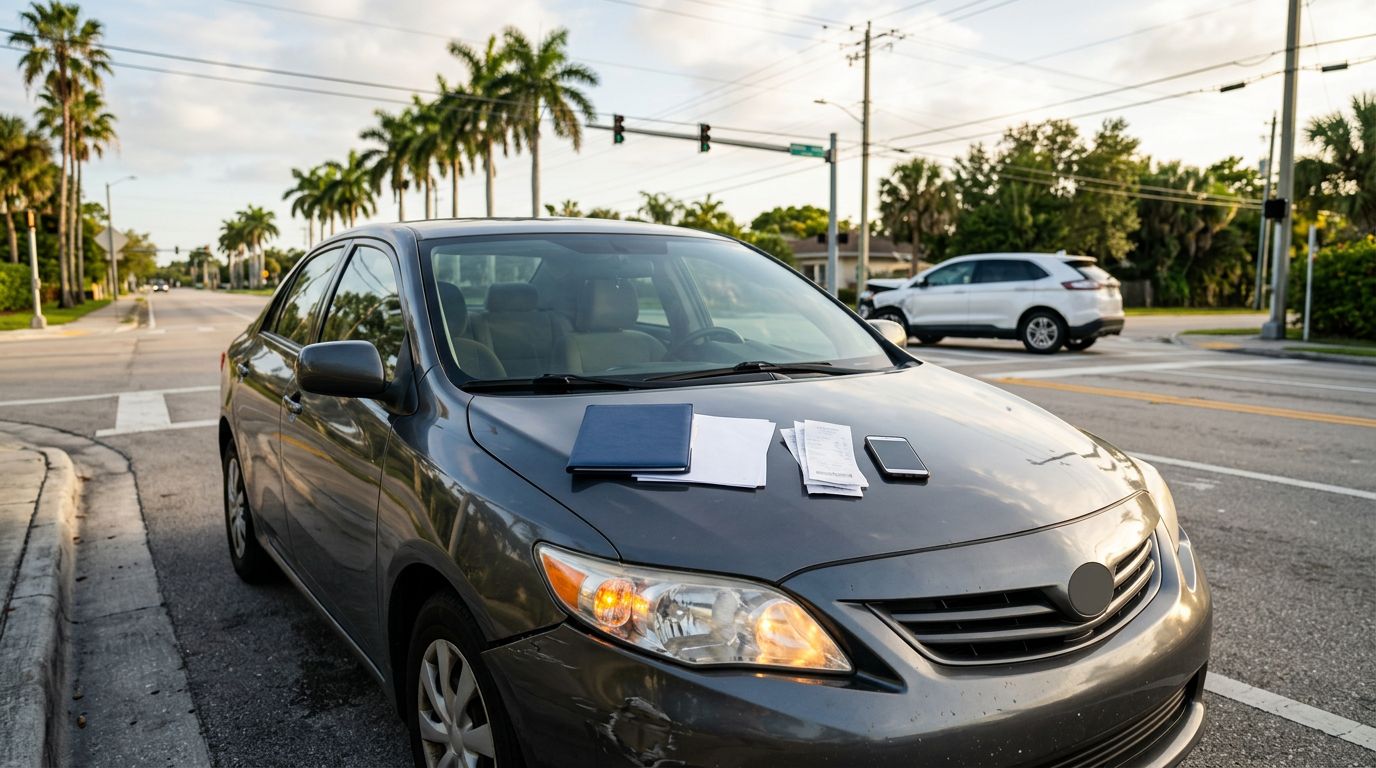
A Florida car accident becomes harder to resolve when the at fault driver has no bodily injury liability coverage. Medical bills may arrive immediately, and the person who caused the collision may have no bodily injury coverage available. A UM claim may let you seek compensation through your auto insurance policy if it includes uninsured motorist coverage. That insurance coverage may respond only if the policy applies and you can prove the claim.
Florida’s no-fault system usually starts with personal injury protection, not a complete injury recovery. Your declarations page, UM selection form, medical records, and claim correspondence can determine what remains available. Start with the coverage rules, then protect the claim before the insurer closes the file.
Key Takeaways
- A driver without bodily injury liability coverage may leave you dependent on your own PIP and uninsured motorist coverage for injury-related losses.
- Review the declarations page, complete policy, written UM selection or rejection form, stacking status, limits, and every household policy that may provide coverage.
- Report the crash promptly, seek medical care, preserve evidence, and document fault, injuries, medical expenses, lost wages, and future limitations.
- Before accepting a liability settlement or signing a release, give the UM insurer the required written notice and allow time to approve the settlement or protect its subrogation rights.
- Hit-and-run and phantom vehicle claims require prompt reporting and corroborating evidence, particularly when there was no physical contact.
What No Bodily Injury Coverage Means After a Florida Crash
Bodily injury liability coverage pays for injuries a policyholder causes to another person. If the at-fault driver has no such coverage, that driver’s insurance company can’t pay your medical expenses or damages for pain and suffering.
Florida generally doesn’t require ordinary drivers to purchase liability insurance. A driver may carry required PIP and property damage liability while having no protection for injuries suffered by other people. The Florida CFO’s automobile insurance overview explains the main types of coverage available to Florida motorists.
The responsible driver may remain personally responsible for the collision. However, a personal judgment is only useful if the driver has income or assets that can satisfy it. Many injured people instead look to their own UM benefits after an uninsured driver causes the crash.
PIP pays certain benefits under your own policy. UM coverage addresses bodily injury damages caused by an uninsured or underinsured driver, subject to the policy’s terms and limits.
Florida’s large number of uninsured motorists is tied partly to this insurance structure. High coverage costs, policy cancellations, and lapses also leave many drivers without protection. As a result, reviewing your own insurance coverage after a crash can matter as much as identifying the responsible driver’s insurer.
Florida Uninsured Motorist Coverage: Is It Required?
When UM coverage appears in a Florida policy
Florida statute 627.727 generally requires an automobile policy that includes bodily injury liability to include UM protection. The named insured can reject that protection in writing or select different limits through the required form. The Florida uninsured motorist statute controls these choices.
Florida law doesn’t force every driver to buy UM coverage. Instead, it regulates how an insurance company offers, limits, and documents insurance coverage. Paying insurance premiums doesn’t mean UM was included. If your policy carries no liability protection, don’t assume UM exists. Review the declarations page and full auto insurance policy.
Look for terms such as:
- Uninsured motorist bodily injury
- Underinsured motorist bodily injury
- Stacked or nonstacked coverage
- UM limits per person and per accident
- A signed rejection or lower-limit selection
How a legal rejection affects your claim
A verbal conversation with an insurance agent usually isn’t enough to reject uninsured motorist coverage. The named insured must make the choice in writing using the required form. That selection can affect every insured person under the policy.
Ask for the signed rejection or selection form, not only the declarations page. The form may show that the policyholder rejected UM entirely, selected lower limits, or accepted nonstacked coverage. Those distinctions can change the value of a UM claim.
If the form is missing, incomplete, or inconsistent with the policy, have the documents reviewed before accepting the insurer’s position. The policy language and application records may answer whether the rejection was legally effective.
PIP and UM Pay Different Parts of the Loss
PIP usually pays first
Florida personal injury protection (PIP) pays certain medical and wage-loss benefits under your own plan after a motor vehicle crash. The Florida PIP statute generally provides benefits for a portion of reasonable medical expenses and lost wages, subject to statutory conditions and available limits.
PIP commonly pays 80 percent of covered medical expenses and 60 percent of wage losses, with benefits generally subject to a $10,000 limit. Treatment requirements, medical findings, and the timing of care can affect the amount available. PIP may also pay benefits while fault remains disputed.
Notify your insurance company promptly and follow its requirements. Keep copies of medical bills, explanation-of-benefits statements, wage records, and payments made by the carrier.
UM may address uncompensated injury damages
Uninsured motorist coverage is a separate first-party claim against your own insurer. It can cover damages you may recover from the driver who caused the crash, including losses that exceed what PIP pays.
Underinsured motorist coverage may also address damages beyond PIP when the other driver’s available funds aren’t enough. PIP payments don’t automatically eliminate a UM claim. However, the insurer may apply policy terms, legal offsets, and available limits when calculating benefits.
The claim must still establish that the other driver caused the crash and that your injuries resulted from it.
Florida’s no-fault rules also limit when an injured person can recover non-economic damages. A serious injury must meet the applicable tort threshold before pain and suffering damages become available. UM coverage doesn’t remove that underlying requirement.
What a Florida Uninsured Motorist Claim Can Cover
Uninsured motorist coverage may apply to damages caused by an uninsured motor vehicle. Depending on the facts and the bodily injury coverage available, recoverable damages can include:
- Reasonable medical expenses and future medical care
- Lost wages and reduced future earning capacity
- Physical pain and suffering
- Permanent impairment, scarring, or disfigurement
- Loss of the ability to enjoy ordinary activities
- Wrongful death damages when the crash causes a fatal injury
Recovery depends on proof and available policy limits, not only on the total of medical bills. The insurance company evaluates evidence about diagnosis, treatment, prognosis, disability, income, and daily limitations. The applicable insurance coverage also affects recovery.
Section 627.737 contains Florida’s tort exemption and injury threshold rules. Review the Florida tort threshold statute when a claim includes permanent injury or non-economic damages.
UM benefits generally don’t pay to repair your vehicle. Vehicle damage may require property damage liability from the responsible driver, collision coverage, or separate uninsured motorist property damage coverage if your plan includes it. Keep the vehicle available for inspection and preserve repair estimates, photographs, and towing records.
UM and UIM Coverage Solve Different Insurance Gaps
Uninsured motorist coverage applies when an uninsured driver has no liability protection. It may also apply when the responsible vehicle cannot be identified, such as in some hit-and-run crashes.
Underinsured motorist coverage applies when the other driver has liability insurance, but available bodily injury liability protection is too low to cover your injuries. Serious injuries may exceed that driver’s modest coverage, even though an active policy exists.
The terms UM and UIM often appear together because the same policy can address both gaps. A claim still depends on your insurance coverage, available limits, policy language, fault, injury value, and any settlement with the other driver.
A liability settlement may affect the insurer’s subrogation rights and your UIM claim. Before signing a release, have the policy reviewed and follow the required notice procedure. Avard Law’s guide to Florida underinsured motorist claims provides additional information about claims after the other driver’s available limits are exhausted.
How to File an Uninsured Motorist Claim in Florida
Start with notice and records
Report the car accident to law enforcement and your insurance company. Give the insurer basic facts and notice that you may seek uninsured motorist coverage. Inconsistent statements can become part of the claim file.
Seek medical care promptly and describe every symptom accurately. Gaps in treatment can give the insurer an argument that the crash didn’t cause the injury, even when the injury is genuine.
A useful claim file may include:
- The declarations page and complete auto insurance policy
- The UM rejection or coverage selection form
- The crash report, photographs, and vehicle damage records
- Medical records, bills, prescriptions, treatment recommendations, and documentation of medical expenses
- Wage statements and records showing lost wages
- Witness information, traffic-camera footage, and available electronic evidence
You should also identify every policy that might provide insurance coverage. That can include motor vehicle insurance for another household vehicle, a spouse’s policy, or coverage available through an occupying relative, depending on the policy language and relationship.
The Florida uninsured driver claims guide covers policy review, early notice, and documentation after a crash involving another motorist.
Prove fault, injury, and financial loss
Your UM claim must establish the uninsured driver’s legal liability and show that the crash caused compensable injury. The carrier may investigate traffic rules, vehicle damage, witness statements, prior medical conditions, and the course of treatment.
Medical records should connect the symptoms to the crash and explain the expected recovery. For lasting injuries, obtain opinions about permanent restrictions, future care, and work limitations when appropriate.
The insurer is your own carrier, but it is also evaluating how much it must pay under the policy. Don’t assume an early settlement offer reflects the full value of your claim. Compare the offer with your medical prognosis, lost income, future needs, and available policy limits.
Stacked Versus Nonstacked UM Limits in Florida
When stacking can increase available limits
Stacking uninsured motorist coverage may allow an insured to combine limits across multiple vehicles on the same policy. Depending on the policy and applicable law, separate household policies may also affect available coverage.
Stacking can be important when one vehicle’s UM limit is insufficient for a severe injury. Review every household policy instead of looking only at the policy covering the vehicle involved in the crash.
Florida’s statute permits stacked and nonstacked forms of UM protection. The Florida UM stacking guide explains how combining limits can affect a claim.
How nonstacked selection changes the claim
Nonstacked coverage limits the ability to combine coverage. Florida requires disclosures and an approved acceptance form from the insurance company for nonstacked UM limitations. The statute also provides for a premium reduction of at least 20 percent for policies carrying those limitations.
Lower insurance premiums can mean less protection after a serious crash. Check whether the policy says stacked or nonstacked, identify the available limits for each vehicle, and preserve every renewal document.
Protect Your Claim Before Accepting a Settlement
The 30-day notice rule
If you plan to settle with the other driver’s liability insurance company, consider whether the payment will satisfy your injury claim. Under Florida statute 627.727, written notice to the UM insurer is required. Send the settlement notice by certified or registered mail, and keep proof of delivery.
After receiving the notice, the UM insurer generally has 30 days to approve the settlement or protect its subrogation rights. The carrier may need to pay the proposed amount to preserve those rights. This same process can protect an underinsured motorist coverage claim when available limits won’t cover the full loss.
Why signing a release can cause problems
A release can end your claims against the other driver. It may also interfere with your UM or UIM claim if you settle without giving the required notice.
Don’t accept a liability settlement, sign a release, or cash a settlement check until you know how it affects your own policy. Send the proposed settlement information to the UM insurer, and get legal advice if the insurance company disputes the notice or refuses consent.
Hit-and-Run and Phantom Vehicle UM Claims
Physical contact can affect coverage
Uninsured motorist coverage may apply after a hit and run accident involving an unidentified vehicle. Coverage depends on physical-contact rules and corroborating evidence.
A driver who swerves to avoid an unidentified vehicle may have a valid claim, but proof requirements are stricter without a collision. Your testimony alone may not be enough in a no-contact case.
Corroborating evidence strengthens the claim
Report the unidentified vehicle to police immediately. Notify your insurance company, identify witnesses, request nearby business or traffic-camera footage, preserve dashcam recordings, and keep the original crash report.
A contemporaneous 911 call or report that describes the vehicle can support your account. Photos of tire marks, vehicle damage, road conditions, and the location may also help establish what happened and support available insurance coverage.
For more guidance, see the information on Florida hit-and-run UM claims. A prompt investigation matters because video may be deleted and witnesses may become difficult to locate.
Frequently Asked Questions
Is uninsured motorist coverage required in Florida?
Florida doesn’t require every driver to purchase uninsured motorist coverage. When an automobile policy includes bodily injury liability coverage, the insurer generally must offer UM protection, but the named insured may reject it in writing or select different limits.
Does PIP replace uninsured motorist coverage?
No. PIP generally pays a portion of covered medical expenses and lost wages after a crash, while UM coverage may address additional bodily injury damages caused by an uninsured driver. Both coverages remain subject to their policy terms, limits, and applicable Florida law.
What should I review before filing a UM claim?
Review the declarations page, complete auto insurance policy, UM rejection or selection form, stacking status, and limits. You should also identify other household policies that might provide coverage and collect crash reports, medical records, bills, wage records, and evidence of fault.
Can I settle with the at-fault driver’s insurer before resolving my UM claim?
Don’t accept a settlement, sign a release, or cash a settlement check without first reviewing its effect on your UM or UIM claim. Florida law generally requires written notice to the UM insurer, which typically has 30 days to approve the settlement or protect its subrogation rights.
Can UM coverage apply after a hit-and-run crash?
It may apply when an unidentified vehicle causes the crash, but coverage can depend on physical-contact rules and the available evidence. Report the incident promptly, preserve video and photographs, identify witnesses, and keep the original crash report.
Conclusion
A crash with no bodily injury liability coverage can leave you dependent on your auto insurance policy. PIP may cover part of the immediate loss, while uninsured motorist coverage or underinsured motorist coverage may address additional damages if the available insurance coverage applies.
Review the declarations page, written UM selection, stacking status, and every household policy. Report the crash promptly to your insurance company, preserve evidence, and give the required notice before settling with another driver. When an insurer denies coverage or undervalues a serious injury, a Florida personal injury lawyer can review the policy and protect your claim.