
Broken Guard Evidence in Florida Window Fall Claims
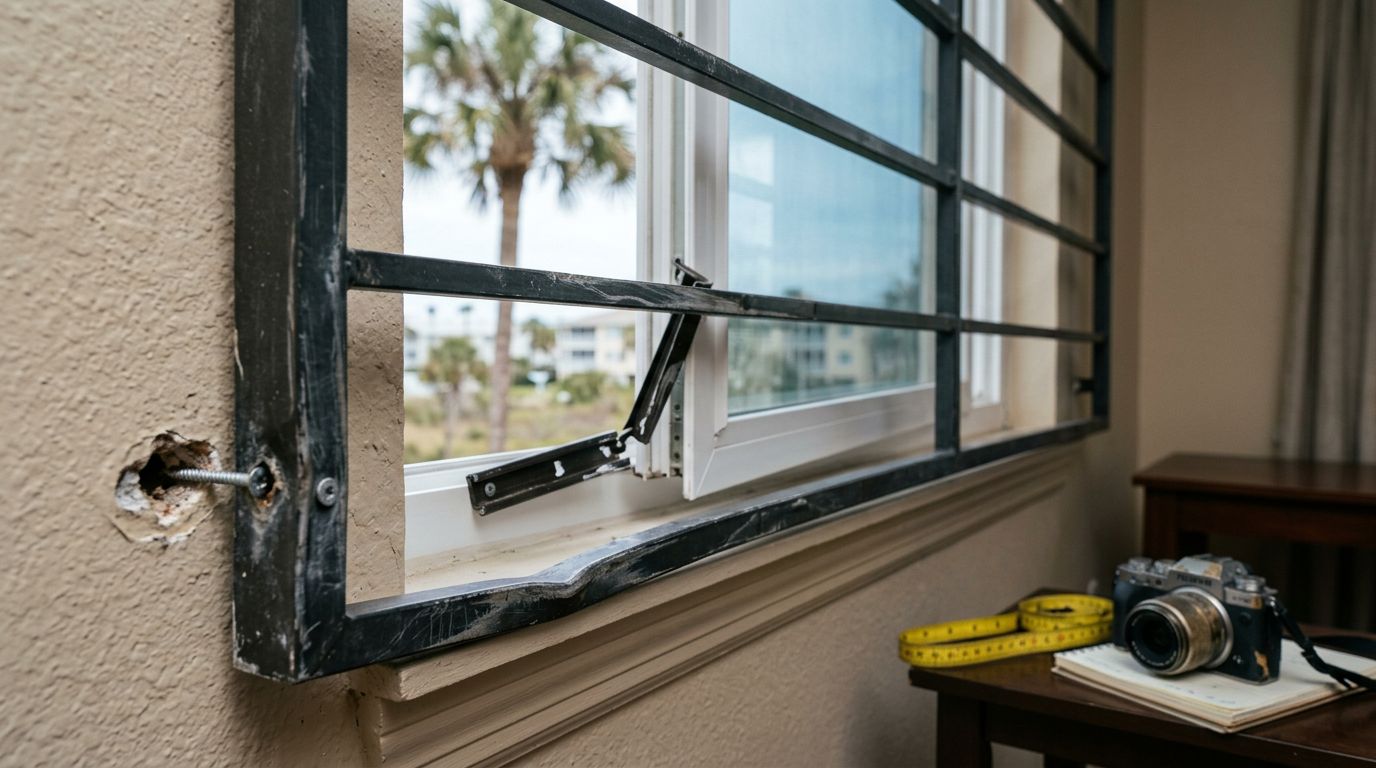
In Florida window fall claims, a broken guard can be the clearest physical proof that an apartment presented a dangerous condition. A missing fastener, loose railing, failed window limiter, or damaged barrier may show how the fall occurred and whether management ignored a known safety problem.
The condition can change within hours. An apartment owner may repair the opening, remove damaged parts, or repaint the area. Photos, measurements, maintenance records, and witness statements can preserve what the scene showed before repairs. The strength of a claim often depends on how quickly that evidence is collected.
Why Broken Guard Evidence Matters in Florida Window Fall Claims
A window guard or opening-control device has one basic purpose: to prevent a person from falling through an unsafe opening. When that protection breaks or fails, the physical condition may support several parts of a negligence claim.
First, the condition can help prove that a dangerous hazard existed. A guard that rocks, pulls away from the wall, has missing screws, or contains a wide opening may show more than ordinary wear. A photograph can capture details that a later inspection cannot.
Second, the broken guard may help establish notice. Florida apartment owners and managers may be responsible when they knew, or should have known, about a dangerous condition and failed to correct it. Rust, repeated patching, damaged anchors, or older maintenance records can help show that the problem existed long enough for someone to discover it.
Third, the guard evidence must connect to the injury. A successful claim requires more than proof that a railing or window device was defective. The evidence should show that the failure allowed the fall and caused specific harm, such as a fracture, brain injury, spinal injury, internal trauma, or death.
A repaired window may look safe after the incident, but the original defect can still determine whether the apartment owner had a dangerous condition under control.
The evidence also helps address arguments about the accident itself. Management may claim that the guard was intact, that the injured person leaned or climbed against it, or that another person damaged the barrier moments before the fall. Scene evidence gives an attorney facts to test those explanations.
For a broader discussion of preserving proof after an apartment accident, review this Florida apartment fall proof checklist.
Florida Building Code Issues for Apartment Windows and Guards
Florida code questions can provide an important framework, but the applicable rule depends on the building’s classification, construction date, renovations, and window history. An attorney may need to compare the code in effect when the apartment was built or altered with the condition that existed when the fall occurred.
Operable windows and fall-prevention devices
Apartment windows can create a fall hazard when the opening is low and the drop outside is substantial. In common Florida Building Code references for Group R-2 apartment buildings, a qualifying operable window may require fall protection when the exterior sill is more than 72 inches above the surface below and the interior sill is less than 36 inches above the floor.
Several forms of protection may satisfy the applicable requirements. The opening may need to prevent a 4-inch sphere from passing through, or it may require a window fall-prevention device or window opening control device that complies with ASTM F2090.
A window limiter must remain secure when the window is opened. If the device detached from the frame, failed to restrict the opening, or could be released without the required action, those facts deserve preservation. A standard insect screen is not a substitute for fall protection because screens aren’t designed to stop a person’s weight.
Furniture also matters when a child is injured. A dresser, bed, or chair placed beside a low window may create a climbing route. That fact doesn’t automatically establish liability, but photographs of the room can help explain access and the sequence of events.
Because code requirements vary, don’t assume that a single measurement decides the case. A code-focused Florida railing inspection guide discusses common height and guard requirements, but an attorney or qualified inspector must apply the correct rules to the specific property.
Balcony rails, guards, and open-sided areas
A fall from a balcony, landing, porch, or other elevated walking surface raises a separate set of questions. Florida code summaries generally identify a 30-inch drop as the point at which a guard is required for many open-sided surfaces. Apartment guards commonly measure about 42 inches in height, although the applicable standard may vary by location and code edition.
The openings within a guard can be just as important as its height. Many guard requirements use a 4-inch sphere test, meaning openings must be small enough to prevent the sphere from passing through designated areas. A loose bottom rail, missing baluster, or failed glass panel can create a dangerous opening even if the remaining railing is tall enough.
Structural strength is another issue. Code summaries commonly refer to a 50-pound-per-linear-foot uniform load and a 200-pound concentrated load at the top of a guard. The exact requirements and testing method depend on the building code that applies. A technical overview of guardrail code requirements can provide background, but it doesn’t replace a property-specific inspection.
A code violation doesn’t automatically decide negligence. It can, however, support an argument that the guard failed a recognized safety standard. The claim still must establish duty, breach, causation, and damages.
Evidence to Preserve After a Window or Balcony Fall
If the injured person can do so safely, someone should document the condition before anyone repairs it. Emergency treatment comes first, but preservation should begin as soon as possible.
- Photograph the entire area. Take wide photos showing the room, balcony, or landing. Then take close images of broken fasteners, gaps, cracks, bent rails, missing parts, damaged glass, and the window frame. Include a common object for scale, but don’t alter the condition to make the defect appear larger.
- Record measurements. Measure the window sill, opening, guard height, gap width, distance to the ground, and any separation between the guard and the wall or frame. A licensed professional may later perform more formal measurements, but early measurements can preserve details lost during repair.
- Save physical evidence. Keep detached screws, brackets, pieces of railing, broken window-control devices, and damaged screens when possible. Don’t throw away a broken part or allow maintenance staff to remove it without recording what happened.
- Identify witnesses and records. Obtain names and contact information for neighbors, guests, maintenance workers, first responders, and anyone who saw the guard before or after the fall. Ask management for the incident report, but don’t assume its description is complete.
- Collect medical and communication records. Keep emergency records, imaging reports, bills, photographs of injuries, and messages to the landlord. Save emails, texts, work orders, online maintenance requests, and letters about the window or railing.
Surveillance footage may disappear quickly. Apartment managers often use cameras near entrances, hallways, elevators, pool areas, and parking lots. A written preservation request can help prevent routine deletion. An attorney may send a formal evidence-preservation letter covering video, inspection logs, work orders, employee messages, photographs, permits, and repair invoices.
Don’t post detailed accounts of the incident online. Statements made before the facts are known can create confusion about whether the guard failed, how the person fell, or what the injured person did immediately before the event.
Who May Be Responsible for a Broken Apartment Guard?
The apartment owner or property manager is often the first party examined because that party may control inspections, repairs, and tenant safety. The key questions include who had control of the window or balcony, who received complaints, who scheduled maintenance, and who had authority to close the area.
Maintenance companies and contractors may also matter. A repair company that installed a guard incorrectly, used the wrong fasteners, failed to secure a window device, or performed an inadequate repair may share responsibility. The original builder, renovation contractor, architect, or product manufacturer could become relevant if the defect began during construction or resulted from a defective component.
Lease terms can affect control, but they don’t automatically remove an owner’s duties. A provision assigning some maintenance to a tenant may not excuse an owner from correcting a dangerous structural condition or code-related defect.
Florida also applies comparative negligence rules. The defense may argue that the injured person climbed, leaned against the guard, moved furniture near a window, ignored a warning, or otherwise contributed to the fall. That argument doesn’t erase the apartment’s possible responsibility. Instead, the facts may affect the percentage of fault and the amount of compensation.
When the injured person is a child, the investigation should focus on the apartment’s design, access, warnings, and protective devices. A child may not recognize the danger presented by a low window or weak barrier.
How Attorneys Build a Claim From the Evidence
A personal injury attorney usually compares the physical scene with the paper trail. Maintenance records may reveal earlier complaints. Inspection reports may show that an employee saw the defect. Vendor invoices can identify who removed or installed the guard. Building permits may show when a window or balcony was altered.
The attorney may also arrange an inspection by a structural engineer, building-code professional, or other qualified specialist. The inspection can address whether the guard was properly anchored, whether the opening exceeded permitted dimensions, whether the device met ASTM F2090, and whether a reasonable inspection should have found the problem.
Medical evidence supplies the other half of the case. Hospital records, diagnostic images, physician opinions, rehabilitation notes, and employment records can connect the fall to lost income and long-term limitations. Keep treatment appointments and describe symptoms accurately. Gaps in treatment can give an insurer an argument that the injury improved or came from another cause.
Timing matters as well. For many Florida personal injury claims arising after March 24, 2023, the statute of limitations is two years, although older claims and different types of cases may follow other deadlines. Wrongful-death claims, claims involving government property, and claims involving minors can require separate analysis. A consultation should happen promptly, before evidence disappears and before a filing deadline creates a separate problem.
Conclusion
A broken window guard or balcony railing can provide more than a picture of the accident. It may show the dangerous condition, how long the problem existed, who controlled the area, and why the fall occurred. Measurements, preserved parts, maintenance records, witness accounts, and medical documentation can turn a disputed incident into a fact-based claim.
If you or a family member suffered a serious injury, preserve the scene and seek legal advice before repairs erase the evidence. In Florida window fall claims, the condition that management fixes tomorrow may be the evidence that explains what happened today.