
Florida Zip Line Injury Claims: Why Harness Records Matter
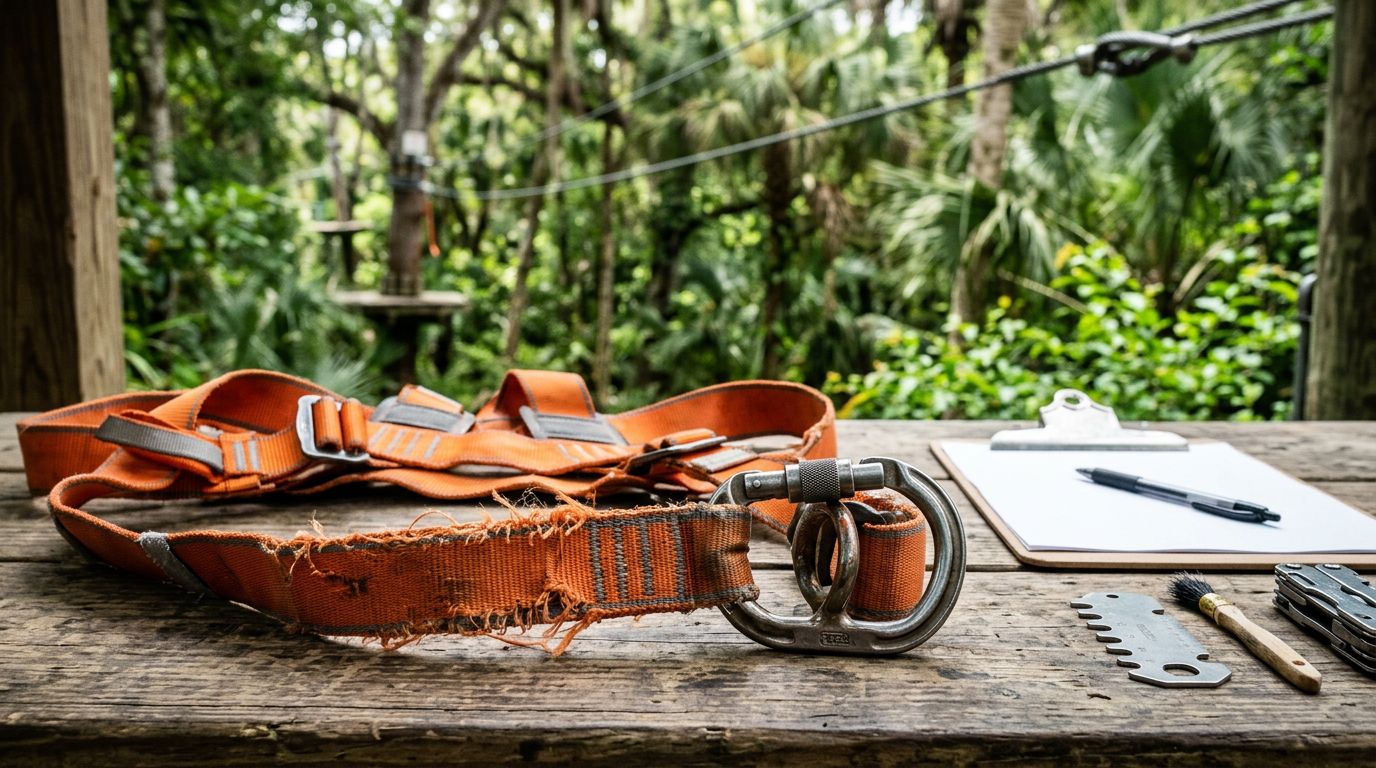
A zip line harness can look secure while hiding frayed webbing, damaged stitching, or a failed attachment point. When a rider falls or collides with a platform, the operator’s inspection records may reveal what happened before the injury.
Florida zip line injury claims often turn on evidence that disappears quickly. Maintenance logs, daily inspection sheets, equipment serial numbers, and incident reports can show whether the business followed required safety procedures. Those records may also identify a repeated problem that the operator failed to correct.
Key Takeaways
- Florida regulates zip lines as amusement rides under Section 616.242.
- Daily ride inspections must be completed before opening, with written records retained for at least 14 days.
- Harness records can show missed inspections, improper retirement, poor storage, or repeated equipment defects.
- Photos, medical records, witness information, and the harness itself can support a claim.
- Florida’s filing deadline is often two years, but the correct deadline depends on the facts.
Florida safety rules make inspection records important
Florida treats zip lines as amusement rides, so operators must follow state safety requirements. The Florida Department of Agriculture and Consumer Services, through its Division of Consumer Services, oversees many ride inspections and permits.
Permanent amusement rides generally receive state inspections twice each year. They also require annual nondestructive testing for structural components. Before opening each day, the owner or operator must inspect and test the ride. Written daily inspection records must remain available for at least 14 days.
The state’s fair ride inspection requirements provide important background for reviewing a zip line accident. The rules cover permits, insurance, inspections, testing, and operator responsibilities.
A daily ride checklist may include more than the cable and towers. The operator may record checks of harnesses, carabiners, trolley systems, brakes, platforms, stairs, and other components. The exact form varies by business, but the records can establish whether staff performed a meaningful inspection before allowing riders onto the course.
Florida’s rules also require accident reporting in certain situations. For a non-exempt ride, an accident that sends a patron to a hospital or urgent care center generally requires a telephone report within four hours and a written report within 24 hours. A ride defect that causes a qualifying closure may trigger separate reporting duties.
Large theme parks that meet statutory requirements can operate under different inspection and reporting systems. They may use full-time in-house inspectors and submit reports on a different schedule. Those differences don’t eliminate the value of internal harness, maintenance, and incident records.
The Florida Senate analysis of amusement ride safety standards also describes inspection and insurance requirements connected with amusement ride operations. A record showing that a business ignored a required inspection can become important evidence of negligence.
What harness inspection records can reveal
Harness evidence is more than a single checkbox marked “passed.” A complete record may show who inspected the equipment, what they examined, which harness a rider used, and whether the harness had reached its retirement date.
Useful records may include:
- The harness manufacturer, model, size, and serial number
- Purchase dates and replacement records
- Pre-use inspection sheets
- Periodic inspections by a qualified employee or contractor
- Reports of falls, sudden stops, or other high-load events
- Repairs, rejected equipment, and retirement decisions
- Cleaning and storage procedures
- Employee training and harness-fitting records
Harnesses can suffer damage from cuts, abrasion, heat, chemicals, ultraviolet exposure, and improper storage. A harness may also need removal after a significant fall or impact, even when the damage isn’t obvious to a rider.
For example, a record may show that a harness was involved in an earlier incident but returned to service without a documented evaluation. Another file may show that staff repeatedly reported worn webbing near the leg loops. A purchase record could establish that the equipment was past the manufacturer’s recommended service life.
The inspection date matters too. If an operator’s checklist says staff inspected every harness before opening, but no record identifies the equipment assigned to the injured rider, the business may have trouble proving that the specific harness received a proper review.
Missing records can also matter. Their absence doesn’t automatically prove negligence, especially if the law required retention for a limited period. Still, a missing log may prevent the operator from showing that it followed its own safety system. An attorney can compare the operator’s written policies with the records actually produced.
Inspection records should also be compared with the physical harness. The serial number, color, size, and markings can help identify the equipment used. Photographs taken after the incident may show torn stitching, bent hardware, damaged straps, or unusual wear before the business repairs or discards the harness.
How harness failures support a Florida injury claim
A personal injury claim generally requires proof that the operator owed the rider a duty, failed to use reasonable care, and caused physical harm. Harness records can help establish the breach and connect it to the accident.
Several theories may apply:
Negligent inspection may exist when staff failed to examine a harness before use or relied on a rushed checklist.
Negligent maintenance may apply when the business knew about worn equipment but kept using it, or failed to replace parts according to manufacturer instructions.
Negligent training or supervision may be involved when employees didn’t know how to fit the harness, inspect stitching, secure the trolley, or respond to a malfunction.
Premises negligence may apply when the accident involves an unsafe launch platform, landing area, staircase, or other part of the course.
The records don’t need to contain an admission such as “we used a defective harness.” Evidence usually develops through comparison. An attorney may compare the operator’s inspection policy, employee testimony, manufacturer guidance, daily logs, repair records, and physical evidence.
The timing of the injury can be important. If several riders reported loose straps or if an employee documented a problem hours before the accident, the operator had more information than a business facing a sudden, unforeseeable failure.
The operator may raise defenses. It could argue that the rider failed to follow instructions, altered the equipment, ignored a warning, or used the harness improperly. A liability waiver may also affect the case. Florida courts generally examine the wording of releases carefully, and a waiver doesn’t necessarily excuse every form of negligent conduct.
Florida uses modified comparative negligence in many personal injury cases. If an injured person is found more than 50 percent responsible, recovery may be barred. At 50 percent or less, damages are generally reduced by that person’s percentage of responsibility. The facts surrounding training, instructions, supervision, and equipment condition can affect that analysis.
Damages may include emergency care, surgery, rehabilitation, medication, lost income, reduced earning ability, physical pain, and emotional harm. Permanent nerve damage, fractures, spinal injuries, and traumatic brain injuries may require long-term medical evidence.
Evidence to preserve after a zip line accident
Seek medical care promptly, even if symptoms seem manageable. Tell the provider how the injury occurred, including whether the harness slipped, tightened, released, or caused a hard impact. Medical records can connect the symptoms to the ride and document the severity over time.
Preserve the clothing, shoes, helmet, harness, and other equipment involved. Don’t wash, repair, alter, or return those items if you can avoid it. Store them safely and take clear photographs of visible damage, including close-ups of stitching, buckles, clips, and straps.
Write down the location, date, approximate time, course name, ride number, and employee instructions while the details remain fresh. Keep the admission ticket, waiver, receipt, text messages, emails, and any photographs or videos from the visit. Ask witnesses for contact information.
Report the injury to the operator, but avoid guessing about fault or signing a detailed release before getting legal advice. Request a copy of the incident report if the business will provide one. Also record the names of employees who fitted the harness, performed the safety briefing, or responded after the accident.
Contacting the business quickly can help preserve evidence. A lawyer may send a preservation request for harnesses, inspection sheets, video, employee schedules, training files, maintenance records, electronic access logs, and communications about the accident. Security footage may be overwritten, and equipment may be removed from service or discarded.
If you need help evaluating an injury, Florida personal injury legal representation can include investigating the operator, collecting records, communicating with insurers, and pursuing compensation. A lawyer can also determine whether the claim involves the ride operator, property owner, equipment manufacturer, contractor, or more than one party.
Florida’s deadline for a negligence-based personal injury lawsuit is often two years for injuries occurring on or after March 24, 2023. Exceptions may change the deadline, including claims involving minors, government entities, or different legal theories. Waiting can make it harder to locate witnesses and preserve the harness and inspection records.
Why the complete record matters
A harness inspection sheet is one piece of a larger evidence file. The strongest Florida zip line injury claims often connect the equipment record to the operator’s policies, employee conduct, accident report, medical proof, and physical condition of the harness.
A business may claim that every ride was inspected. The records can show whether that statement applies to the actual harness, the actual shift, and the actual injury. They can also reveal whether staff treated inspection as a safety procedure or as a routine box-checking exercise.
A harness that failed during a ride may tell only part of the story. The inspection history can show what the operator knew before the accident.
Conclusion
A zip line injury can happen in seconds, but the evidence needed to explain it may disappear soon afterward. Harness inspection records can show whether the equipment was examined, maintained, retired, and assigned properly.
Preserve the harness and related evidence, obtain medical care, document what happened, and avoid signing a settlement before the claim is reviewed. In a serious case, the inspection history may be the clearest path to determining whether an avoidable safety failure caused your injuries.