
Garbage Truck Crash Claims and Route Data in Florida
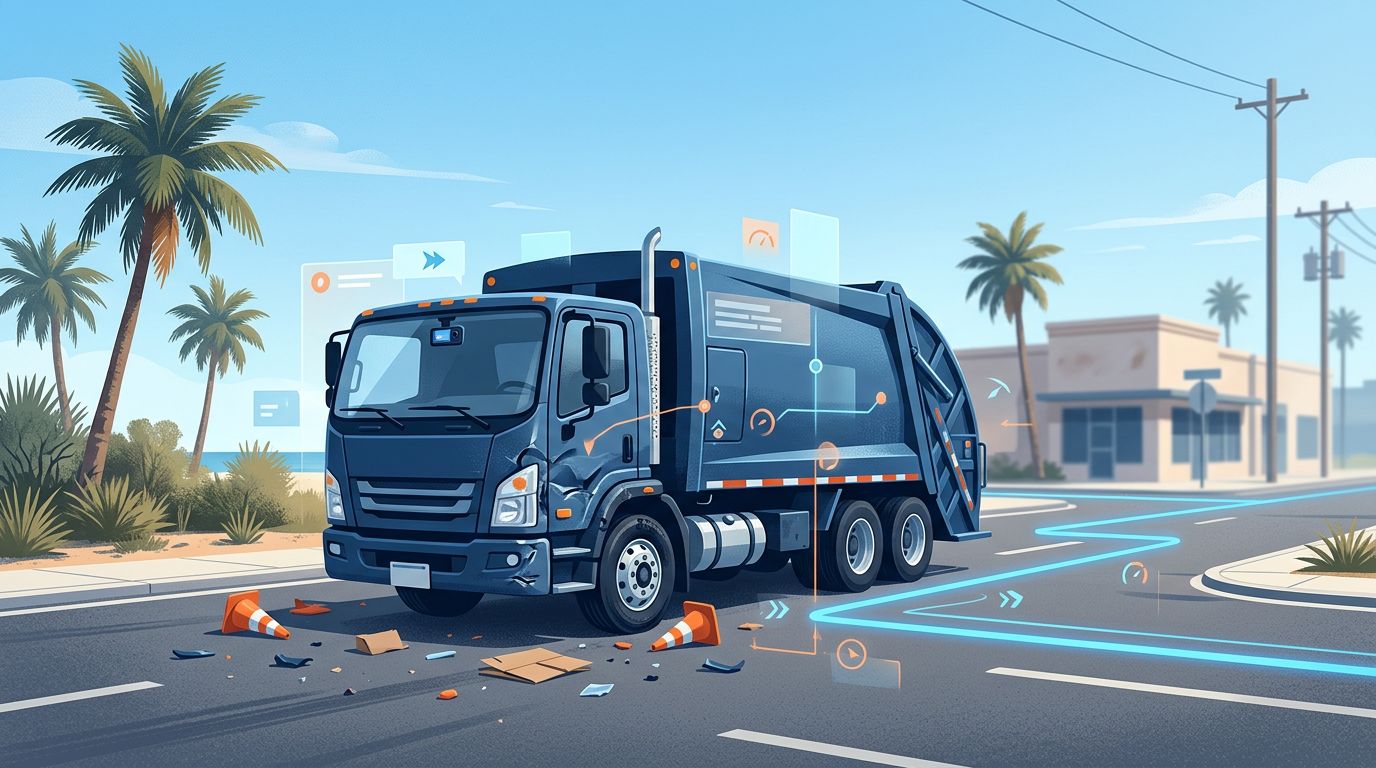
A garbage truck can leave behind more than damage to a vehicle. Its GPS history, onboard cameras, dispatch records, and maintenance logs may show what happened before impact. For people pursuing garbage truck crash claims, that evidence can help establish speed, lane position, backing activity, right-of-way violations, and the identity of the responsible employer.
Florida cases can become difficult when a truck belongs to a city, county, or private waste company. Evidence may remain in someone else’s possession, and government claims have special notice rules. Quick action helps protect the records that may decide whether the claim succeeds.
Key Takeaways
- Route data can show a truck’s location, speed, stops, direction, and timing before a collision.
- Camera footage may reveal a driver’s view, blind spots, backing movements, turn signals, and nearby traffic.
- GPS and video records can disappear through automatic overwriting, routine maintenance, or device replacement.
- The responsible defendant may be a private waste contractor, a city, a county, or another public agency.
- Government claims require attention to written notice, statutory deadlines, damage caps, and the agency’s investigation period.
Why Route Data Matters in Garbage Truck Crash Claims
Garbage collection vehicles follow planned routes with frequent stops. Their work often involves turning across traffic, entering driveways, backing into narrow areas, and stopping near sidewalks or travel lanes. Those repeated movements create questions that eyewitnesses may not answer completely.
A route system may record the truck’s location at regular intervals. Depending on the equipment, records can also show speed, direction, braking, idle time, geofenced stops, and the time the truck entered or left a collection area. Some systems record whether the truck operated in reverse or used a power takeoff connected to collection equipment.
The data can help establish a timeline. For example, a log may show that the truck left its assigned route, traveled faster than the company expected, or remained stopped at a location longer than the driver reported. It may also show whether the truck had already begun a turn when the collision occurred.
Route information doesn’t decide fault by itself. GPS points may be several seconds apart, and the system may not show the driver’s exact lane position. A lawyer must compare the electronic record with photographs, traffic signals, vehicle damage, witness accounts, police reports, and physical evidence.
The truck’s route can also identify the correct defendant. A unit number or route number may connect the vehicle to a specific company, municipal department, shift, or supervisor. This matters when several waste contractors operate in the same city.
People often begin by looking for a Florida garbage truck accident attorney who can identify the vehicle owner and request records before they disappear. The first task is often evidence preservation, not settlement discussions.
Records that may exist
A garbage truck’s electronic evidence may include:
- GPS location history and route breadcrumbs
- Telematics reports showing speed, braking, acceleration, and idle time
- Dispatch messages and collection assignments
- Automatic vehicle location reports
- Driver time records and inspection forms
- Reverse-gear or warning-system activity
- Weigh station or disposal facility timestamps
- Accident reports prepared by the company
- Maintenance and repair records
Not every truck has the same system. A private contractor may use one telematics provider, while a city sanitation department may use another. Some older vehicles may have no usable GPS history. That makes early requests important.
How Camera Evidence Can Show What Happened
Video can answer questions that a written report leaves unresolved. A forward-facing camera may show the traffic signal, the truck’s lane, the distance between vehicles, and whether the driver had time to stop. Side cameras may capture a cyclist, pedestrian, or vehicle beside the truck. Rear cameras can be especially important in backing collisions.
Many collection vehicles have more than one camera, but coverage varies. Some systems record continuously. Others activate when the truck starts, enters reverse, brakes sharply, or detects an impact. A camera may also record audio, driver behavior, or activity inside the cab, although privacy and retention rules can affect access.
The most useful footage often begins before the impact. A clip showing only the collision may not reveal whether the driver checked mirrors, used a turn signal, stopped at a red light, or accelerated into an intersection. An attorney may request a broader time window, including the minutes before and after the crash.
Video evidence should be preserved in its original format. A phone recording of a monitor may help show that footage existed, but it can lose timestamps, metadata, image quality, or other information. The original file, system export, retention policy, and testimony from the records custodian provide stronger support.
Camera evidence can also expose limitations. Rain, darkness, glare, dirt, a blocked lens, or a narrow field of view may prevent a clear conclusion. A missing recording doesn’t automatically prove wrongdoing. However, if the company received notice of a serious collision and allowed relevant footage to be overwritten, that fact may become important in a dispute over evidence.
Preserve Route and Camera Evidence Immediately
Electronic evidence often has a shorter life than photographs or medical records. A system may overwrite video after a set number of days. GPS data may be stored on a rolling basis. A repair shop may replace a camera, download the device, or return the truck to service before anyone preserves the original information.
After a crash, take reasonable steps to identify the truck and the operator. Write down the company name, municipal department, truck number, route number, license plate, location, and direction of travel. Photograph markings on the vehicle if you can do so safely. A partial company name or unit number may help locate the correct records custodian.
Request preservation of evidence in writing. The request should identify the crash date, approximate time, location, truck, injured person, and categories of records that must be retained. Those categories may include:
- Original and exported camera files
- GPS and telematics data
- Dispatch and route assignments
- Driver schedules and time records
- Inspection and maintenance materials
- Internal incident reports
- Cell phone or communication records, when relevant
- Training and supervision records
- Data from collision-warning or automatic braking systems
A preservation letter isn’t a substitute for formal discovery. It tells the owner or operator that a claim exists and that relevant information must be protected. If the vehicle belongs to a government agency, the letter should go to the agency’s designated contact and the appropriate risk-management or legal department.
Evidence preservation also applies to your own property. Don’t authorize repairs that destroy important crash evidence before photographs, inspections, and downloads occur. Keep damaged parts when possible. Preserve photographs in their original form, and record when and where each image was taken.
Medical documentation has the same practical importance. Seek care promptly, follow treatment instructions, and keep records of appointments, prescriptions, work restrictions, and out-of-pocket expenses. A route log may show what the truck did, but medical records connect the collision to your injuries.
A lawyer may ask for a vehicle inspection by qualified professionals. The inspection can examine crush patterns, visibility, mirrors, cameras, warning devices, tires, brakes, lighting, and mechanical defects. The timing matters because repairs can change the physical evidence.
A short video showing the moment of impact may be less useful than the full recording from several minutes before the collision.
How Attorneys Analyze Route Data and Video
An attorney doesn’t treat a GPS map or camera clip as a complete answer. The evidence must fit the roadway, the truck’s movement, and the applicable traffic rules.
First, the legal team builds a timeline. It may compare the 911 call, crash report, camera timestamps, GPS points, dispatch messages, witness statements, and medical records. Time differences matter. A camera may use a different clock than the GPS device, and a system may display local time while storing data in another format.
Next, the lawyer examines the truck’s movement. Important questions include:
- How fast was the truck traveling before braking?
- Did it stop before entering the intersection?
- Was it changing lanes or making a wide turn?
- Did the driver activate a turn signal?
- Was the truck moving forward or backward?
- Was the vehicle on its assigned route?
- Did the collision occur during collection activity?
- Did an alarm, camera, or collision-warning system activate?
The analysis also considers the driver’s work conditions. Route assignments, shift length, break records, and dispatch demands may help explain whether the driver had time to perform required safety checks. These records don’t prove negligence by themselves, but they may support questions about training, supervision, or company policies.
Maintenance records can reveal another line of responsibility. A failed brake, damaged mirror, defective warning light, worn tire, or inoperable camera may point toward negligent inspection or repair. The records may show repeated complaints that went unresolved.
The truck’s size doesn’t create automatic liability. A waste vehicle may need extra space to turn, and a person near a collection truck may have a limited view. The question remains whether the driver and responsible company acted reasonably under the circumstances.
Eyewitness accounts can support or contradict electronic records. A witness may recall that the truck rolled through a stop sign, turned without warning, or backed without a spotter. However, memories can change, especially when a witness saw only a few seconds of the event. Route data and video can test those accounts against objective timing and movement.
An attorney may also use accident reconstruction. A reconstruction professional can map the roadway, analyze vehicle damage, review sight distances, and compare the vehicles’ positions with the electronic timeline. This work is particularly useful when the truck driver and injured person provide different accounts.
Who Is Responsible for a Florida Garbage Truck Collision?
Liability depends on ownership, control, and the conduct that caused the crash. The truck may belong to a private waste company, a city sanitation department, a county, or a contractor working under a public agreement.
A private operator may be responsible for its driver’s negligence under ordinary Florida tort principles. The company may also face claims involving negligent hiring, inadequate training, unsafe scheduling, poor supervision, or deficient vehicle maintenance. Those theories require evidence tied to the facts of the crash.
A city or county may face a claim when its employee caused the collision while working within the scope of employment. Florida’s sovereign-immunity waiver statute applies to the state and its agencies and subdivisions, including many municipalities and counties. The statute treats certain claims under rules that differ from a normal private-party case.
Read the current text of Florida Statute 768.28 before relying on general information about public-entity claims. The statute covers the waiver, notice process, damage limits, and other restrictions.
A private contractor can complicate the case. The city may have hired the company to collect waste, but the contractor may own the truck, employ the driver, control the route, and maintain the vehicle. A contract may allocate duties between the parties, yet the contract doesn’t automatically answer every negligence question.
The evidence should identify:
- Who owned the truck?
- Who employed the driver?
- Who assigned the route?
- Who controlled training and supervision?
- Who inspected and repaired the vehicle?
- Which entity received the route data and camera footage?
- Was the driver working within the assigned job at the time?
This information often comes from vehicle registrations, insurance records, contracts, company policies, dispatch records, and personnel documents.
When the truck is a public vehicle, legal deadlines require immediate attention. A Florida government vehicle accident guide can help explain the separate issues that arise when an agency, city, or county is involved.
Government Notice Rules, Damage Limits, and Deadlines
Florida government claims require more than proving that a truck driver caused an injury. Under Section 768.28, a claimant generally must present written notice to the responsible agency and the Florida Department of Financial Services. The agency receives time to investigate before a lawsuit proceeds.
The general notice period is often three years after the claim accrues. Wrongful death claims have a shorter period under the statute. These rules operate alongside the general statute of limitations, which is two years for many negligence claims accruing on or after March 24, 2023.
The deadlines can interact in ways that are easy to misunderstand. Sending a letter to a city may not satisfy every notice requirement. A claim may also involve more than one public entity, such as a county road authority and a municipal sanitation department. Each possible defendant should be identified and served properly.
Florida’s general sovereign-immunity limits are $200,000 per person and $300,000 per incident for covered claims against the state or its agencies and subdivisions. Amounts above the statutory limit may require a legislative claims bill. Punitive damages generally aren’t available against the government under the waiver statute.
These limits may affect settlement decisions, insurance coverage, and the decision to pursue other responsible parties. A private contractor, a vehicle owner, or another negligent party may have separate liability and insurance. The available defendants depend on the evidence.
The government may also dispute whether the employee acted within the scope of employment. A driver who was assigned to a route and performing collection duties presents a different issue from a driver using a vehicle for a personal errand. Route records can help establish what the driver was doing when the crash occurred.
Building a Strong Garbage Truck Crash Claim
A strong case usually begins with a clear record of the collision and the injury. Keep the crash report, photographs, medical records, wage information, insurance correspondence, and contact details for witnesses in one place.
Avoid giving a recorded statement to an insurer before you understand the coverage and the potential defendants. Answer basic claim questions honestly, but don’t guess about speed, distance, or fault. A statement made before route data and video are available may later be taken out of context.
A lawyer may investigate the case through preservation letters, public-records requests, insurance inquiries, subpoenas, inspections, and formal discovery. Government records may require a request under Florida’s public-records law, while private company records may require litigation tools.
Your attorney may also evaluate:
- Emergency treatment and continuing medical care
- Permanent impairment or work restrictions
- Lost wages and reduced earning ability
- Vehicle damage and transportation costs
- Pain, disability, and loss of daily activities
- Future medical needs
- Wrongful death damages when a family member died
The value of a claim depends on proof, not only on the appearance of the truck or the seriousness of the initial impact. Route data can establish movement. Video can show conduct. Medical evidence can establish injury. Company and maintenance records can identify additional responsibility.
The investigation should begin before the truck returns to service and before a video system cycles through its next recordings. Prompt action gives the case a better chance of preserving the facts while they remain available.
Conclusion
Garbage truck crash claims often turn on evidence controlled by the truck owner or operator. GPS history, telematics, dispatch records, camera footage, and maintenance files may show what happened more clearly than a brief eyewitness account.
Florida cases also require careful identification of the responsible party. A private contractor and a public sanitation department face different procedures, deadlines, and damage limits. Preserving route data and video early can protect the evidence needed to determine fault and pursue fair compensation.