
Nightclub Assault Claims: Video and Staffing Records
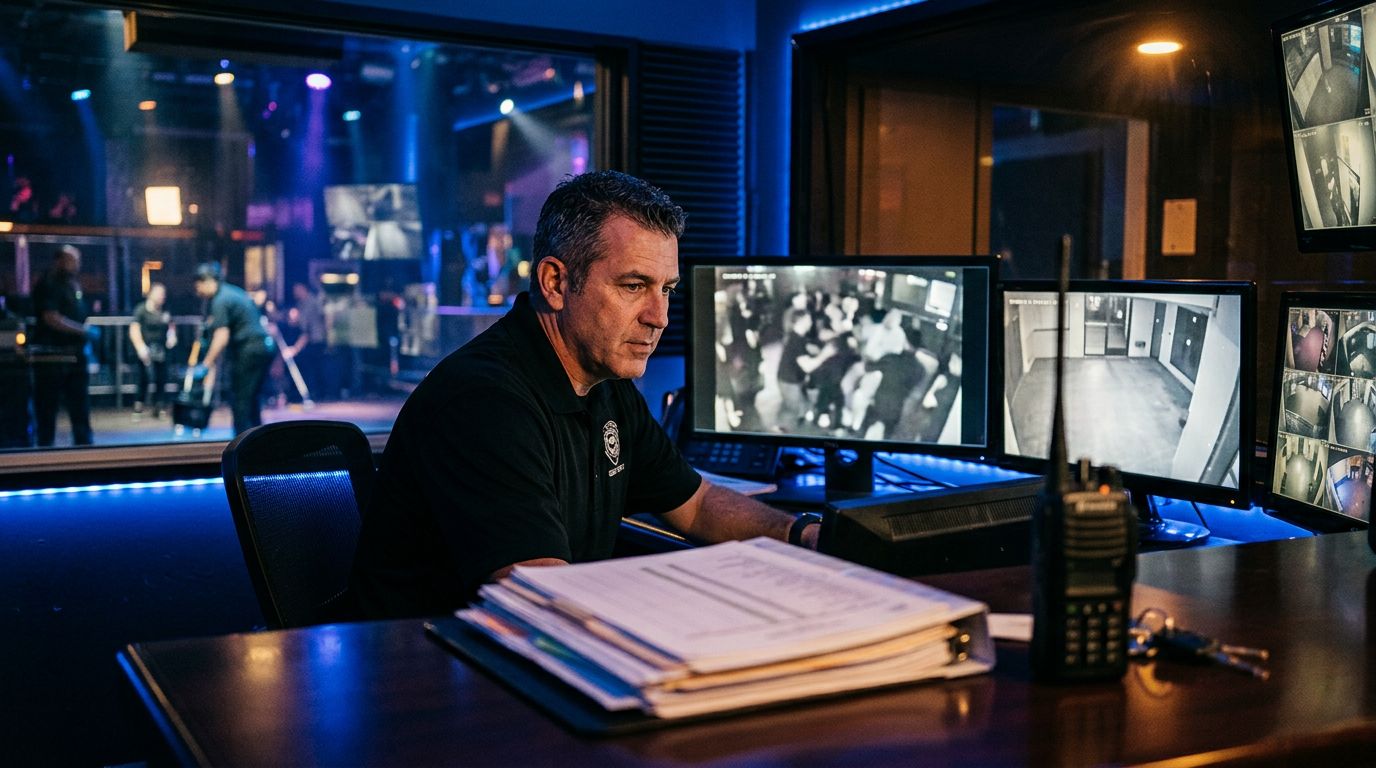
A nightclub assault can happen in seconds, but the evidence may decide what happened before, during, and after the attack. For people pursuing nightclub assault claims in Florida, security video and staffing records can show whether the business took reasonable steps to protect guests.
A club may face a negligent security claim when it failed to respond to a reasonably foreseeable risk. However, an assault alone doesn’t automatically prove liability. The evidence must connect the club’s conduct to the injury.
Why Evidence Matters in Florida Nightclub Assault Claims
Florida treats negligent security as a type of premises liability. A nightclub generally owes lawful visitors reasonable care under the circumstances. That duty can include taking reasonable precautions against foreseeable criminal acts by third parties.
A typical claim requires proof of:
- A legal duty owed by the nightclub.
- A foreseeable risk of criminal conduct.
- A failure to use reasonable security measures.
- A connection between that failure and the assault.
- Measurable injuries and losses.
The central dispute often involves foreseeability. A club may have had warning signs before the incident, such as prior fights, police calls, threats, repeated disturbances, poor lighting, or a known dispute between patrons. Security video and staffing records can help establish whether employees saw those warning signs and had enough time to respond.
For example, video may show a confrontation building near the bar while guards remain at the entrance. Staffing records may then show that only one guard worked during a crowded late-night event. Those facts can matter when deciding whether the club’s security plan was reasonable.
Florida law also changed how fault may be allocated in certain negligent security cases filed after March 24, 2023. Under section 768.0701, the fact finder considers the fault of all persons who contributed to the injury. The conduct of an attacker, the nightclub, a security contractor, or another responsible party may affect the final allocation of damages.
That rule doesn’t eliminate a nightclub’s potential responsibility. It makes careful evidence collection even more important.
How Security Video Can Support an Assault Injury Case
Security footage may provide the clearest record of an incident, but lawyers need more than a short clip showing the final blow. The minutes before the assault can be just as important.
A complete video review may show:
- Whether the attacker followed, threatened, or confronted the victim.
- Whether employees observed the warning signs.
- How long the conflict continued before the assault.
- Where guards stood and how quickly they responded.
- Whether employees separated the people involved.
- Whether the club removed the attacker or allowed continued access.
- Whether the victim received prompt assistance afterward.
Footage from several cameras may be necessary. A camera at the entrance could show when the attacker arrived. Interior cameras may capture the argument. Parking lot footage could show whether the assault continued outside. Cameras near hallways, bathrooms, patios, or exits may reveal events that a single camera missed.
Video quality also matters. A recording can appear useful but fail to identify faces, clothing, movements, or the location of each person. A lawyer may need the original export rather than a phone recording of a monitor. The original file can preserve timestamps, camera identification, system information, and other details that help establish authenticity.
A club’s video system may overwrite recordings on a regular cycle. Florida doesn’t have one universal video-retention period for every private nightclub. Local rules may impose specific requirements, and a business may also have its own retention policy.
For example, Boca Raton’s nightclub ordinance requires a camera system that records and retrieves images during operating hours. The ordinance also requires at least 30 days of storage. In Pompano Beach, the late-hours business code requires cameras that can monitor, record, and retrieve identifiable images, including coverage of interior and parking areas, with recordings available to law enforcement for 72 hours.
These local requirements don’t apply to every Florida club. The city and business classification matter. Still, they show why an attorney should check local ordinances instead of relying on a general assumption about retention.
A video system can preserve the assault while losing the evidence that explains how the danger developed.
What Staffing Records May Reveal About Security Failures
Video shows conduct. Staffing records show whether the nightclub had the personnel needed to respond.
Important records may include guard schedules, time-clock entries, payroll data, employee rosters, security contracts, post orders, training records, and written policies. Occupancy records and event information may also help establish how many guests were present.
The records can answer practical questions:
- How many security employees were scheduled?
- How many actually clocked in?
- Did the club use its own employees or a private security company?
- Where was each guard assigned?
- Did guards leave their posts?
- Did the club reduce staffing during a busy event?
- Did supervisors document a shortage or request additional help?
- Did employees receive training on crowd control and intervention?
Florida cities may impose their own staffing standards. Boca Raton, for instance, requires nightclubs operating after 10:00 p.m. to provide interior security personnel at a ratio of one security person for every 150 occupants, or portion of that number. A violation doesn’t automatically decide a civil case, but it may provide evidence about the club’s security planning.
Staffing records can also expose differences between written policy and actual practice. A nightclub may claim that four guards worked that night, while time records show only two clock-ins. The security company’s invoice may tell another part of the story. Video can then show whether those employees were present in the areas where the incident occurred.
The timing of a guard’s response matters too. A staffing shortage may not be the only problem. A club could have enough employees on paper, yet assign them to a distant entrance while leaving a crowded dance floor and bar area unmonitored.
Prior records may also support foreseeability. Incident reports, manager logs, police calls, employee text messages, and complaints can show whether the nightclub knew about repeated fights or threats. A pattern of similar incidents may make the risk easier to prove.
People seeking help can review Florida personal injury attorneys who understand how business records, third-party security companies, and injury damages fit together.
Preserving Nightclub Security Evidence After an Assault
A person injured in a nightclub should seek medical care first. After immediate medical needs are addressed, evidence preservation should happen quickly.
A written preservation request can tell the nightclub, property owner, security company, and insurer to preserve relevant materials. The request should identify the date, approximate time, location, and nature of the incident. It should ask for more than the final assault clip.
Preservation may include:
- Original security footage from every relevant camera.
- Video from the hours before and after the incident.
- Camera maps and equipment locations.
- DVR or network video recorder data.
- Maintenance records and reports of camera outages.
- Guard schedules, time records, and assignments.
- Security contracts and post orders.
- Incident reports and employee statements.
- Police communications and 911 records.
- Occupancy counts and event records.
A preservation letter doesn’t guarantee that a business will provide the evidence voluntarily. It does create a clear record that the business received notice of a potential claim and knew which materials mattered.
A nightclub may provide a short edited clip while withholding surrounding footage. It may also claim that footage no longer exists because the system automatically recorded over it. The reason for the deletion, the retention policy, and the timing of the request may become disputed issues.
Lawyers can seek records through formal discovery after filing a lawsuit. A subpoena may also be needed when an independent security company, property manager, event promoter, or neighboring business holds relevant footage.
Witness evidence should be preserved as well. Names, phone numbers, social media messages, photographs, receipts, ride-share records, and text messages may help establish who was present and what occurred. A witness who saw the conflict develop may provide information that no camera captured.
Don’t post detailed accusations or speculate about the incident online. Public statements may be taken out of context and can complicate negotiations or litigation.
Florida Deadlines and Fault Rules for Security Cases
Florida negligent security claims require close attention to deadlines. For negligence claims accruing on or after March 24, 2023, Florida’s statute of limitations is generally two years under section 95.11(5)(a). Older claims may involve different rules, so the date of the assault should be reviewed promptly.
The deadline can become complicated when the victim is a minor, the defendant is a government entity, or the facts support another legal theory. An insurance claim or police investigation doesn’t necessarily stop the civil deadline.
Florida also has statutory provisions that apply to particular property types. For example, Florida Statutes section 768.0705 addresses certain convenience businesses and security measures. That provision isn’t a blanket protection for nightclubs, and it doesn’t replace a fact-specific review of the premises, the risks, and the business’s conduct.
Potential damages may include emergency treatment, follow-up care, medication, lost income, reduced earning ability, pain, emotional distress, scarring, and other losses supported by the evidence. Severe assaults may also lead to ongoing counseling or physical limitations.
The nightclub may argue that the attacker alone caused the harm, that the assault was unforeseeable, or that employees acted reasonably. The defense may also dispute the extent of the injuries. Security video, staffing records, medical records, and prior incident evidence help address those arguments.
When choosing counsel, review factors in hiring a Florida personal injury attorney, including experience with premises liability, access to investigators, and a willingness to pursue records from outside contractors.
Building a Stronger Nightclub Assault Claim
A strong case usually begins with a clear timeline. Identify when the victim entered, when the conflict began, when employees became aware of it, when the assault occurred, and what happened afterward.
Next, match each event to available evidence. Video may establish movement and timing. Staffing records may establish who was responsible for monitoring the area. Police reports may identify earlier calls. Medical records may document the physical and emotional consequences.
The evidence should answer a simple question: What reasonable security measures could have prevented or reduced the harm?
That answer depends on the facts. It could involve additional guards, better positioning, faster intervention, improved lighting, functioning cameras, controlled entry, or action against a visibly dangerous patron. A lawyer must connect the proposed measure to the known risk rather than rely on a general claim that the club should have done more.
Conclusion
Nightclub assault claims often turn on evidence that disappears before a lawsuit begins. Security video can reveal the warning signs and response. Staffing records can show whether the club had adequate personnel in the right locations.
Florida law focuses on reasonable care and foreseeable criminal risks, while local ordinances may add specific camera or staffing requirements. Prompt preservation and a careful review of deadlines can protect the evidence needed to pursue fair compensation.