
Florida Nursing Home Fall Claims: Care Plan Records
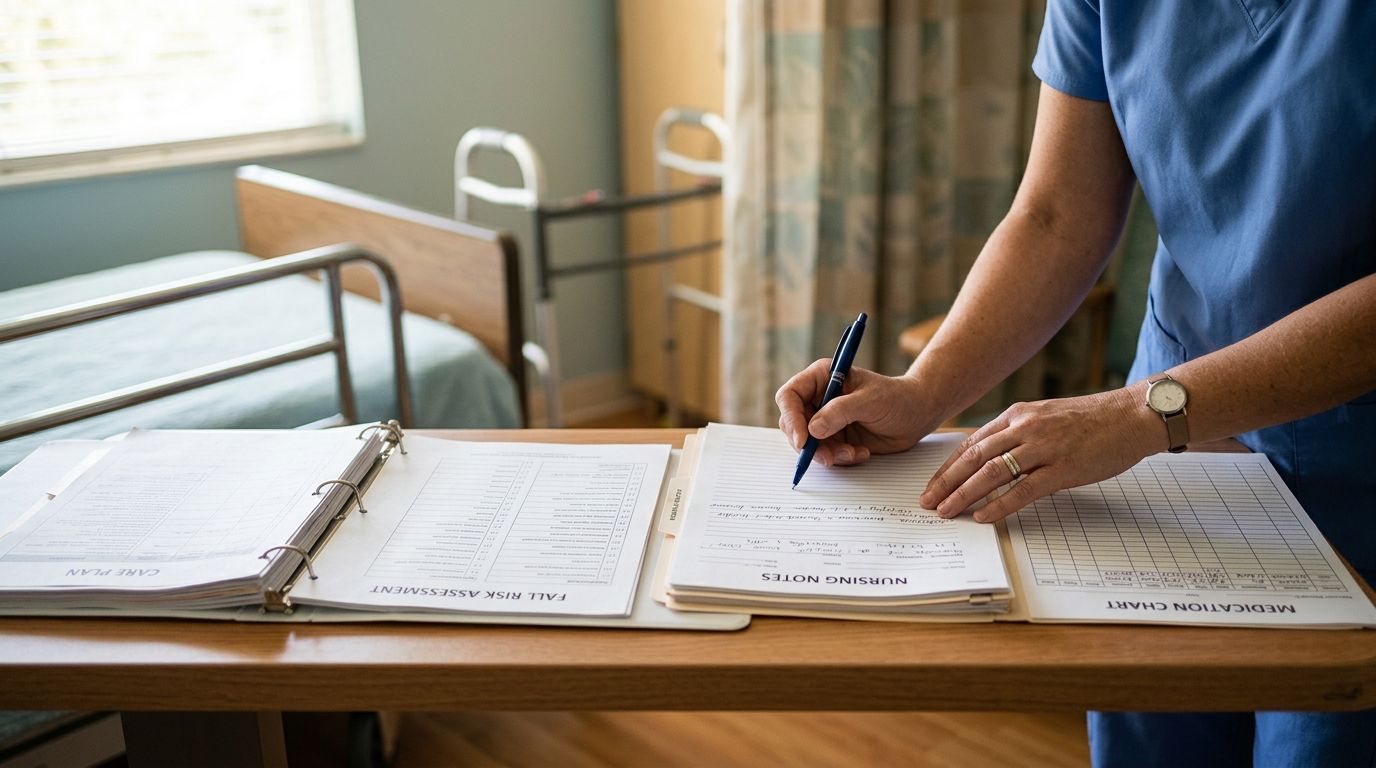
A nursing home fall can leave a family with more questions than answers. Was the resident known to be at risk while living in these skilled nursing facilities? Was help available, and did staff follow the written care plan?
Nursing home fall claims often turn on these specific questions. Care plans, fall risk assessments, nursing notes, medication records, and post fall reports can show what the facility knew and what staff did afterward, often revealing evidence of nursing home negligence. The sooner these records are preserved, the easier it is to identify missing care and protect a potential claim.
Key Takeaways
- A fall alone does not prove negligence, but a failure to follow a resident’s care plan may support liability.
- Care plan records should identify a comprehensive fall risk assessment, required assistance, safety devices, supervision, and measurable prevention steps.
- Post-fall notes can reveal delayed treatment, incomplete monitoring, missing notifications, or a failure to update the care plan.
- Families should request records promptly, document the resident’s injuries, and preserve communications with the facility.
- Florida time limits can restrict a claim, so an attorney should review the facts before important evidence disappears.
When a Florida Nursing Home Fall May Support a Claim
Nursing homes do not guarantee that residents will never fall. Many residents have dementia, balance problems, weakness, medication side effects, or mobility limitations. Even with proper care, some falls may be unavoidable.
A claim may arise when a facility exhibits nursing home negligence by failing to take reasonable steps after identifying a known risk. These failures can include leaving a resident alone during transfers, ignoring a call light, failing to use a required wheelchair alarm, allowing clutter or wet flooring to remain, or administering medication without addressing resulting dizziness.
Florida nursing home law gives residents specific rights and imposes duties on licensed facilities. Florida Statutes Chapter 400 addresses resident care, safety, staffing, records, and civil enforcement. Section 400.023 allows a resident or legal representative to seek damages when a facility breaches its duty of care, causing injury or death.
The facts usually matter more than the label placed on the case. A fall may involve:
- Negligent supervision or inadequate assistance
- Failure to follow a fall-prevention care plan
- Environmental hazards such as unsafe flooring, lighting, handrails, or room layout
- Defective or poorly maintained equipment
- Inadequate staffing, lack of supervision, or delayed response to a call light
- Medication-related dizziness, sedation, or low blood pressure
- Failure to assess a resident after a change in condition
- Failure to investigate and prevent a second fall
A care plan violation is strong evidence, but it is only one part of the case. The facility may argue that staff followed the plan, that the resident refused assistance, or that a sudden medical event caused the fall. Records from before and after the incident help test those explanations.
Families often need to collect evidence while the facility controls most of the important documents. Florida nursing home fall claims may involve a detailed review of what the home knew, what it promised to do, and what happened in practice.
Why the Care Plan Is Often the Center of the Case
A care plan converts a resident’s medical assessment into daily instructions for staff. It should identify a resident’s specific risks and outline the necessary fall prevention strategies to minimize those hazards.
Federal regulations require a nursing home to create a person-centered comprehensive care plan after completing the resident assessment. Under 42 C.F.R. §483.21, federal regulations mandate that the plan must address the resident’s medical, nursing, mental, and psychosocial needs, while also including measurable objectives and specific timeframes.
For a resident with a known fall risk, the plan may address transfer assistance, toileting, walking, bed position, alarms, footwear, mobility devices, room placement, and supervision. It may also identify conditions that increase risk, such as confusion, weakness, poor vision, incontinence, or medication effects.
The plan matters because it establishes the specific care the facility determined the resident needed. For example, if the plan requires two-person assistance for transfers, a transfer performed by only one aide may raise a serious question about the quality of care. If the plan requires staff to answer a call light promptly, call-system records and nursing notes may reveal whether the facility met that requirement.
Facilities should also review and update plans when a resident’s condition changes. A fall, hospitalization, new medication, infection, fracture, or decline in strength may require new precautions. A plan that remains unchanged after repeated falls may show that staff failed to respond to known dangers.
The Agency for Healthcare Research and Quality’s long-term care fall prevention guidance identifies care planning as part of a broader process that includes assessment, prevention, monitoring, and follow-up. The written plan should match the resident’s actual needs, rather than remaining a generic form in an electronic chart.
A care plan does not prove that a facility caused a fall by itself. Instead, it provides a crucial benchmark. Investigators compare that benchmark against staffing records, witness accounts, medication administration, room conditions, and the facility response to determine if the facility met the required standard of care.
Records That Can Show What the Facility Knew
The care plan is only one part of the extensive medical records maintained by a facility. A complete review often requires documents from several departments and time periods.
Request records from before the fall, the date of the incident, and the weeks afterward. Earlier records may show previous falls, near-falls, complaints of dizziness, changes in walking ability, or repeated requests for help. Later records may show the full effect of the injury.
Important records can include:
- Assessments and care plans. Ask for admission, quarterly, change-in-condition, fall-risk, post-fall, and discharge assessments. Request every version of the care plan, including revisions and effective dates.
- Nursing and aide documentation. Daily notes, flow sheets, rounding records, transfer documentation, toileting records, and repositioning notes may show whether staff performed required checks.
- Medication records. The medication administration record can show what the resident received before the fall. Physician orders and pharmacy reviews may identify sedatives, blood-pressure drugs, diuretics, or other medications that require monitoring.
- Incident and investigation materials. Ask for the incident report, witness statements, staff interviews, photographs, root-cause review, and corrective action. These documents are particularly helpful when investigating an unwitnessed fall. Some documents may have special confidentiality rules, so an attorney can determine how to obtain and use them.
- Staffing and assignment records. Payroll records, schedules, assignment sheets, and time-clock data can show who was responsible for the resident and whether understaffing issues meant that adequate staff were not present to provide necessary supervision.
- Equipment and environmental records. Maintenance logs, inspection reports, repair requests, housekeeping records, and video can help establish whether a walker, wheelchair, alarm, floor, bathroom, or call light contributed to the event.
- Medical records after the fall. Collect EMS reports, emergency department records, imaging, surgical records, rehabilitation notes, medication changes, and follow-up appointments.
- Communication records. Preserve emails, portal messages, letters, text messages, and notes from calls with administrators, nurses, physicians, and discharge planners.
Ask the facility to preserve surveillance video, electronic chart audit trails, call-light data, access logs, and staffing information. Video may be overwritten quickly. Electronic records may also show when a note was created, changed, or entered after the incident.
Families should keep their own file. Include photographs of bruises or swelling, hospital bills, therapy schedules, physician statements, and a dated timeline. Write down who called the family, what the facility said, when the family learned about the fall, and how the resident’s condition changed.
The AHRQ fall prevention manual for long-term care facilities provides practical information about assessing risk and improving fall prevention. It can also help families understand why details such as footwear, transfer assistance, environmental hazards, and medication review appear in a resident’s records.
What a Complete Fall Prevention Plan Should Include
A comprehensive fall prevention plan should identify a resident’s specific risks and provide staff with clear, actionable instructions. General statements like “monitor for falls” offer little guidance when a resident requires hands-on assistance. Developing a tailored approach is essential to reducing the occurrence of preventable falls and ensuring resident safety.
The plan must address the resident’s mobility in detail. It should specify whether the person can walk independently, requires a walker or wheelchair, or needs one or two staff members for transfers. Instructions must cover bed-to-chair transfers, bathroom trips, showering, and movement during meals or activities.
Supervision requirements should also be clearly defined. A resident may require regular checks, a chair alarm, a bed alarm, a low bed, a sitter, or direct assistance. The record must document when staff members are required to provide help so that the resident is not left to attempt an unsafe task alone.
Environmental precautions are equally vital. To mitigate environmental hazards, the plan may require keeping pathways clear, maintaining adequate lighting, ensuring personal items remain reachable, using secure footwear, keeping floors dry, confirming that handrails are secure, and placing the resident near the nursing station. Staff must ensure that all mobility devices are available and kept in working condition.
Medication reviews are a critical part of the prevention process when drugs may increase fall risk. Side effects such as drowsiness, dizziness, weakness, confusion, and low blood pressure can significantly affect a resident’s ability to stand safely. A change in medication should prompt increased observation and, when appropriate, communication with the prescribing provider.
Toileting needs deserve specific attention, as residents frequently suffer injuries while attempting to reach the bathroom independently. A plan may require scheduled toileting, prompt assistance, or closer observation during times when accidents are most likely to occur.
The care plan should contain measurable, specific instructions. “Assist with transfers every time” is significantly clearer than “provide support as needed.” “Keep the call light within reach and respond promptly” gives staff a concrete duty, while “reassess after any fall or change in condition” creates a necessary point for follow-up.
Federal regulations require that a resident’s care plan be completed within seven days after the comprehensive fall risk assessment is finalized. The assessment itself must generally be completed within 14 days after admission. It is essential that all staff members who provide direct care know the plan and have ready access to its specific instructions.
The Florida Department of Health provides older-adult fall prevention information addressing risks that can lead to serious injury. In a legal claim, the core question is whether the facility applied appropriate, individualized precautions to the specific resident, rather than whether it simply kept a generic safety brochure on file.
Post-Fall Records Can Reveal Missed Care
The first hours after a fall may affect the resident’s recovery. Serious complications such as a brain bleed, internal bleeding, a fracture, or a spinal injury may not be obvious immediately. Documentation should show the assessment, monitoring, notifications, and treatment that followed.
A post-fall record should identify the time and location of the fall, the resident’s position, nearby objects or hazards, witnesses, injuries, complaints, and vital signs. It should also record whether the resident struck the head, lost consciousness, reported pain, or showed a change in behavior.
Staff should document whether a nurse assessed the resident and whether the physician, responsible party, and emergency services were notified. If the resident went to a hospital, the chart should connect the transfer decision to the symptoms and findings.
Monitoring matters because a resident can worsen after the initial event, which is a critical factor in determining nursing home liability. Records should show neurological checks or other observations required by the facility’s policy and the resident’s condition during the period after the fall. A proper record should also show follow-up during the next 72 hours when post-fall monitoring applies.
Florida nursing homes must investigate adverse incidents and report certain events to the Agency for Health Care Administration. An injurious fall may trigger reporting requirements, and a fall resulting in death has stricter timing. The existence of a report does not automatically prove negligence, but missing or inconsistent reports can raise questions.
Look for gaps between the incident report and the medical chart. A report may say the resident had no injury, while later nursing notes document severe pain or an inability to stand. A facility may also claim that a resident fell while walking alone, while staffing records show that staff had been assigned to assist with that activity.
The care plan should be reviewed after a fall to improve fall prevention efforts. New measures might include more frequent checks, a different transfer method, medication review, therapy, a room change, or a new alarm. If the facility fails to learn from these preventable falls and the same risk remains without further intervention, the facility may be held accountable for its failure to provide adequate care.
A fall record should tell a consistent story. When the time, location, injuries, and staff response change across documents, the differences deserve careful review.
Proving Liability and Damages in a Fall Case
A Florida nursing home fall claim generally requires proof of duty, breach, causation, and damages to establish nursing home liability. The facility’s legal duties are defined by Florida law, federal regulations, the resident’s care plan, facility policies, and the established standard of care for nursing homes.
A breach occurs when the facility commits medical negligence by failing to meet these duties. Examples include failing to provide required transfer assistance, leaving a known high-risk resident unattended, ignoring a malfunctioning alarm, or failing to respond to a dangerous change in condition.
Causation connects the failure to the injury. A facility may have violated a policy without directly causing the fall. Conversely, delayed treatment after the fall may exacerbate an injury, even if the original event was unavoidable. Medical records and expert review often help distinguish these issues.
Injuries can include hip fractures, shoulder injuries, traumatic brain injuries, spinal damage, broken wrists, lacerations, and loss of mobility. Seniors suffering from hip fractures often require surgery, which can lead to complications such as infections, blood clots, pressure injuries, prolonged hospitalization, or a permanent need for rehabilitation.
Damages may include medical expenses, ambulance charges, hospital treatment, surgery, therapy, and prescription costs. Beyond these economic factors, a resident may experience significant pain and suffering, emotional distress, reduced independence, and a diminished quality of life. Families seeking financial compensation must account for these various losses.
When a fall results in death, the family may have a wrongful death claim. Florida law dictates who may bring such a claim and which losses may be recovered. The resident’s age, medical condition, expected care needs, and financial losses are all vital factors in this analysis.
A facility may point to a resident’s dementia or pre-existing weakness to shift blame. However, those conditions do not automatically defeat a claim. The critical issue remains whether the facility knew about the resident’s specific condition and adjusted their care plan accordingly to prevent the fall.
Steps to Protect Evidence After a Nursing Home Fall
Families should focus first on medical care. Ask the treating provider about imaging, head-injury symptoms, pain, mobility changes, and follow-up. Keep every discharge instruction and appointment record.
Next, send a written request for the resident’s medical records to the facility administrator or medical records department. Identify the resident, the fall date, the requested categories, and the time period. Request the care plan and all revisions, fall-risk assessments, nursing notes, medication records, incident materials, staffing information, and post-fall monitoring.
A separate preservation letter can request that the facility retain video, electronic records, call-light data, staffing schedules, maintenance records, and communications to prepare for potential legal action. The letter should identify the date, location, and resident. Keep proof that the facility received it.
Don’t rely on a verbal promise that records will be saved. Ask the facility to identify its retention policy for surveillance and electronic chart data. Video can disappear before a family realizes it may be important.
Document the resident’s condition in concrete terms. Record whether the resident can walk, transfer, eat, sleep, communicate, and participate in therapy. Note new fear, confusion, pain, or dependence on staff.
Avoid signing a release, settlement, waiver, or admission agreement without review by a personal injury lawyer. A facility or insurer may request broad access to sensitive documentation or ask the family to accept payment before the full injury becomes clear.
If the resident remains in the facility, report safety concerns in writing and ask for the updated care plan. If you suspect nursing home negligence, a family may also contact the Florida Agency for Health Care Administration about a complaint or facility concern. A regulatory complaint and a civil claim are separate processes, so one does not replace the other.
Families looking for nursing home abuse attorneys can ask whether the firm handles falls, nursing home abuse, care plan violations, and wrongful death cases. Bring the timeline and available records to the consultation.
Deadlines and Getting Legal Help
Florida legal deadlines depend on the specific legal theory, the date of the injury, the date the injury was discovered, the date of a resident’s death, and the parties involved. Nursing home claims involving wrongful death or traumatic brain injuries often require specific attention to limitation and repose periods under Chapter 400. Because these rules are complex, consulting with a qualified personal injury lawyer as soon as possible is essential to protect your rights.
A delay can also hurt the evidence even before a filing deadline arrives. Witnesses may leave the facility, video footage may be deleted, and electronic notes may become harder to obtain. Early review allows an attorney to identify missing documents and secure vital evidence before it disappears.
When you work with an attorney, they will compare the facility care plan against actual staffing, medication administration, call light response, and post fall monitoring. A thorough review will focus on uncovering evidence of nursing home negligence, such as a lack of supervision, which often serves as the foundation for the claim. This process may also require medical records from hospitals, rehabilitation facilities, physicians, and therapists.
During a consultation, be prepared to provide the fall date, facility name, resident diagnosis, injury details, hospital information, witness names, and copies of any communications. Be candid about prior falls, medical conditions, and any refusal of assistance. Providing full facts helps counsel evaluate the facility likely defenses, estimate the potential settlement value of the case, and assess damages related to medical expenses and pain and suffering.
A successful legal claim is not based solely on the fact that an older adult fell. It depends on evidence showing that the facility failed to provide required care and that this specific failure caused measurable harm.
Frequently Asked Questions
Does a fall in a nursing home automatically mean there was negligence?
Not necessarily. Nursing homes cannot prevent every fall, and some may occur even when staff follow proper protocols. A claim generally arises only when the facility fails to take reasonable steps to prevent a known risk or violates the resident’s established care plan.
What role does the care plan play in a fall claim?
The care plan acts as a benchmark that defines the specific safety measures the facility promised to provide for a resident. If staff members deviate from these written instructions—such as failing to use a required wheelchair alarm or neglecting to provide documented transfer assistance—it serves as strong evidence of potential negligence.
Why is it important to request records quickly after a fall?
Facilities may overwrite surveillance video, delete electronic logs, or lose staffing data shortly after an incident occurs. Requesting records and issuing a preservation letter promptly ensures that critical evidence is secured before it is destroyed or becomes difficult to obtain.
Can a resident’s pre-existing medical conditions defeat a claim?
While facilities often cite dementia or weakness to shift blame, these conditions do not automatically prevent a claim. The legal focus remains on whether the facility was aware of these specific risks and whether they adjusted the care plan to provide appropriate supervision and protection.
Conclusion
A nursing home fall can begin with one incident, but the evidence usually spans weeks of care. The resident’s care plan, fall-risk assessments, staffing records, medication history, and post-fall notes can show whether staff recognized the danger and responded appropriately. When these safeguards fail, it may point toward nursing home negligence or even nursing home abuse.
Because many of these incidents are preventable falls, it is essential to act quickly. Preserve those records, document changes in the resident’s condition, and seek legal advice before Florida deadlines or missing evidence limit the case. The most important question is often clear: did the facility follow the care plan it created for the resident? If a failure to provide adequate care resulted in harm, families may be entitled to seek financial compensation for the injuries their loved ones sustained.