
Florida Cruise Ship Falls: Why Deck Records Matter
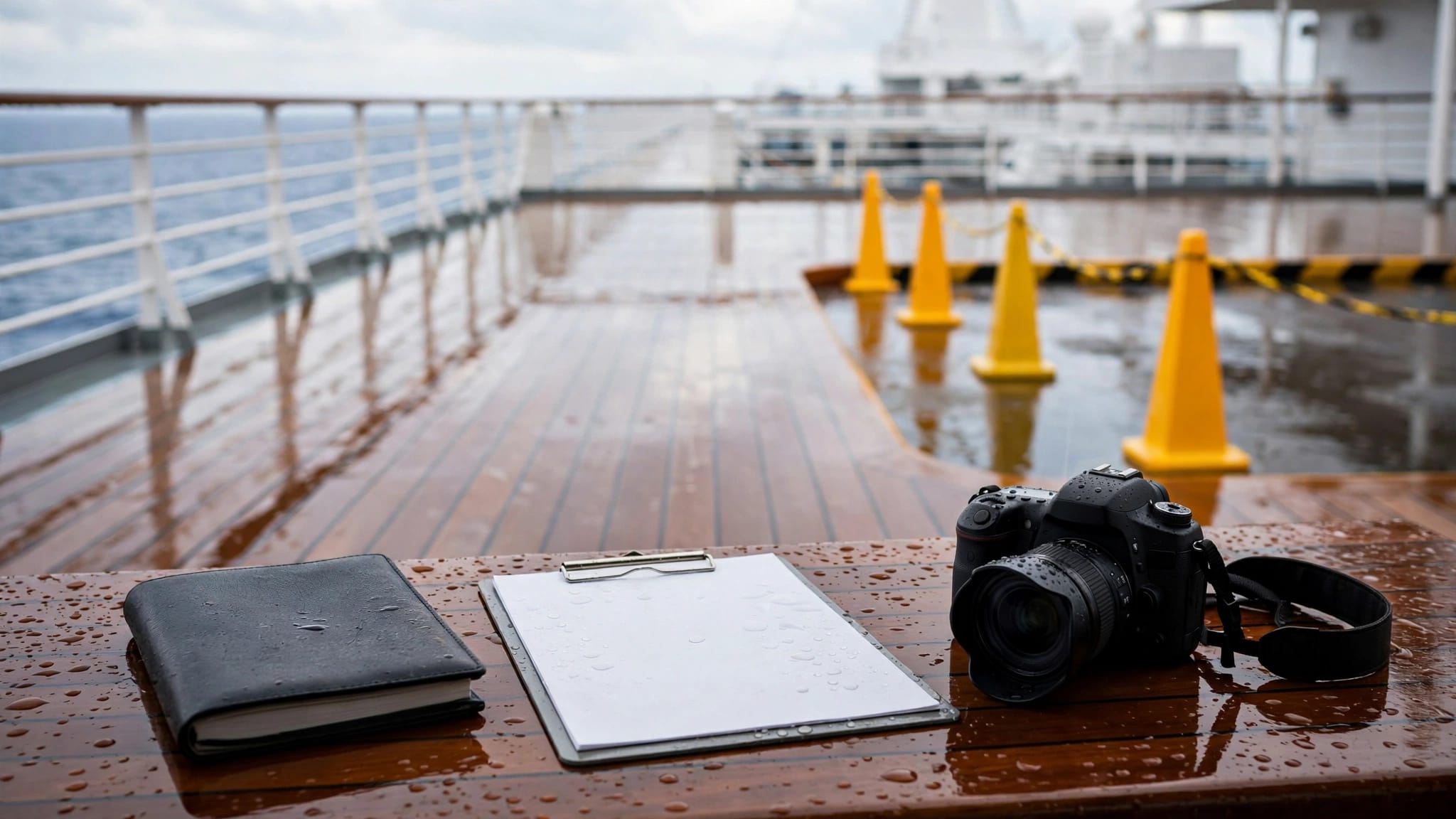
Deck inspection records can help prove whether a cruise line knew about a dangerous condition before a passenger slipped and fell. Their value depends on specific details: where the crew inspected, what they found, and what happened next.
If you suffered a cruise ship slip and fall, the company may control much of the evidence needed to explain your injury. Photographs matter, but inspection logs can reveal conditions that existed before you arrived. Start by understanding which records connect the hazard to the crew’s response.
Key Takeaways
- Deck records are strongest when they identify the accident location, inspection time, observed hazard, and corrective action.
- Inspection logs should be compared with video, cleaning records, witness accounts, and earlier complaints.
- Maritime law and cruise-ticket deadlines can differ from ordinary Florida injury rules.
- Reporting an accident doesn’t necessarily satisfy a ticket’s written claim-notice requirement or preserve your right to sue.
Why Maritime Law Matters After a Cruise Ship Fall
A cruise departing from Florida doesn’t automatically make every onboard injury a Florida premises-liability case. The location, circumstances, and legal theory determine which rules apply.
The cruise line owes passengers reasonable care
General maritime law ordinarily requires a vessel operator to exercise reasonable care under the circumstances. A fall alone doesn’t establish that the operator breached that duty.
For a dangerous-deck claim, the investigation must identify the condition that caused the fall. Water, cleaning residue, worn flooring, and a defective transition present different evidence questions. Inspection records help establish whether the crew discovered the condition and whether its response was reasonable.
However, records must connect that condition to your fall. A spill elsewhere on the same deck may prove little.
The precise accident location changes the investigation
A fall near a pool can involve different records than one on an exterior stair or restaurant walkway. Identify the deck number, nearby entrance, and direction you were walking.
If you fell on a shore-side dock rather than aboard the ship, marina dock injury claims may involve different defendants and maintenance records. Boarding areas can also raise questions about who controlled the surface.
What Deck Inspection Records Can Reveal
A useful inspection record documents an event. A general statement that employees routinely inspect the ship provides much less information.
Time, location, observations, and follow-up
The most useful entries identify the inspector, inspection time, exact area, observed condition, and any response. Records may document mopping, drying, a warning sign, restricted access, or a maintenance referral.
The timing matters because the question is what happened before the fall. A record created afterward may describe the scene without establishing earlier knowledge.
Electronic systems may also retain creation times, later edits, and employee identifiers. Those details can help distinguish a contemporaneous entry from information added later. Still, a missing entry doesn’t automatically prove that nobody inspected the area.
Cleaning and repair records complete the picture
Deck inspections rarely tell the whole story. Cleaning schedules, work orders, drainage complaints, and earlier incident reports may explain why a surface became hazardous.
A repair request involving the same drain or flooring section deserves closer attention than an unrelated complaint elsewhere aboard the vessel. Likewise, a cleaning record may identify the product applied and the employee assigned to the area.
Staff assignments can identify witnesses who worked nearby. An attorney can compare these materials with the cruise line’s description of its inspection practices.
How Records Help Prove the Cruise Line Had Notice
For claims involving negligent maintenance of a dangerous deck, notice often becomes a central dispute. The evidence must connect the operator’s knowledge to the condition involved.
Actual notice means the danger was known
An employee’s report, passenger complaint, or unresolved work order may show actual knowledge. An inspection entry identifying pooled water can be important if it concerns the location where the passenger later fell.
Warnings can matter, too. In the Eleventh Circuit’s Guevara decision, the court examined warning-sign evidence after an outer-deck fall involving a step. The connection between a warning and the particular danger mattered to the notice analysis.
A generic caution sign elsewhere on the ship doesn’t answer what the operator knew about your accident location.
Constructive notice depends on the surrounding facts
Constructive notice concerns a danger the operator should have discovered through reasonable care. Evidence may address how long the condition existed or whether substantially similar hazards had occurred before.
Therefore, attorneys compare inspection intervals with video, witness observations, and earlier complaints. Prior incidents need a meaningful connection to the condition at issue.
An inspection policy shows what employees were instructed to do. A completed record, supported by other evidence, can show what actually happened.
Different negligence theories can require a different notice analysis, including claims based on a crew member’s conduct.
Preserve Evidence Before the Deck Changes
Medical care comes first. Once you’re safe, preserve the information available to you without entering restricted areas or interfering with the crew.
Keep your own account and original files
Report the fall and identify the employee who received your report. Request a copy of the incident report, and keep your description factual.
Photograph the surface, surrounding area, lighting, warnings, and visible injuries when you can do so safely. Preserve original files because edited images and social-media copies may lose useful detail or date information.
Also save witness contact information, your ticket contract, booking confirmation, onboard medical records, and communications with the cruise line. Keep footwear and clothing when they may help explain the fall. Don’t guess about facts you couldn’t observe.
Request preservation of company-controlled evidence
A written preservation request should identify the vessel, sailing dates, accident time, deck, and location. Relevant categories may include surveillance footage, inspection logs, cleaning records, work orders, earlier complaints, and crew communications.
Available video should cover a meaningful period before the fall, not only the moment of impact. Earlier footage may show the hazard’s development or a crew member’s response.
Keep the request and proof of delivery. A preservation request creates a record, but it doesn’t automatically produce documents or stop a filing deadline.
How an Attorney Obtains and Tests Deck Records
Passengers usually don’t have access to the cruise line’s internal systems. Obtaining records and evaluating their reliability are separate parts of the investigation.
Discovery can reach records and employee testimony
After litigation begins, formal discovery can seek relevant documents, electronic information, and testimony. Depending on the case, that may include the people responsible for inspection, cleaning, maintenance, and recordkeeping.
An attorney can ask how employees create entries, what areas an inspection covers, and whether the system permits later changes. These questions help explain what a log actually establishes.
Requests should identify the relevant location and time period. Broad demands for every document aboard the ship can create disputes without producing useful evidence.
Compare the timeline rather than trusting one entry
A completed inspection form isn’t conclusive. Its contents should agree with available video, employee assignments, witness accounts, and other records.
An expert may also evaluate flooring, drainage, or slip resistance when those issues require technical analysis. That work should address the actual surface and relevant conditions.
Meanwhile, medical records establish the injury and its consequences. Bills, treatment recommendations, work restrictions, and earnings records support claimed losses. Strong liability evidence doesn’t replace proof of damages, and serious injuries alone don’t establish negligence.
Cruise Ticket Deadlines Can Be Short
For covered large passenger vessels traveling between U.S. ports or between a U.S. port and a foreign port, federal law permits contractual deadlines as short as six months for written injury notice and one year to sue.
These statutory minimums appear in 46 U.S.C. Subtitle III. Tickets may provide longer periods. Covered small passenger vessels have different minimum periods of two years, and statutory exceptions can affect notice or timing.
Written claim notice and filing a lawsuit are separate requirements. An onboard accident report shouldn’t be assumed to satisfy the ticket’s claim-notice provision. Likewise, a preservation letter doesn’t necessarily satisfy it.
The ticket may also designate where litigation must occur. An attorney should address those terms early, alongside the governing law and responsible defendants.
Settlement discussions, an open insurance file, and requests for additional records don’t automatically pause the clock. Waiting for treatment to end or every inspection record to arrive can put the claim at risk.
Frequently Asked Questions
Can I bring a claim without an inspection log?
Yes. Video, witness testimony, photographs, complaints, and repair records may establish important facts. A missing log doesn’t automatically prove negligence, however. The claim still needs evidence of the dangerous condition, responsibility, causation, and injury.
Does a warning sign defeat my case?
A sign doesn’t automatically resolve the claim. Its location, visibility, wording, and relationship to the hazard matter. Evidence should show what you could see along your approach, rather than only what appeared in photographs taken afterward.
Can the cruise line blame me for falling?
The operator may argue that your conduct contributed to the injury. Maritime comparative-fault principles can reduce damages based on a passenger’s responsibility. An adjuster’s proposed percentage isn’t a final legal finding, and Florida’s fault threshold shouldn’t automatically be applied to a maritime claim.
Protect the Records That Explain Your Fall
Deck inspection records matter when they connect a dangerous condition to what the crew knew and did before your injury. The strongest investigation tests those entries against other evidence while protecting medical proof and filing deadlines.
At Avard Law Offices, we offer free consultations for injured people. Seek legal guidance early enough to address preservation, maritime law, and ticket requirements before evidence disappears or deadlines expire.