
Florida Premises Liability When Control Is Shared
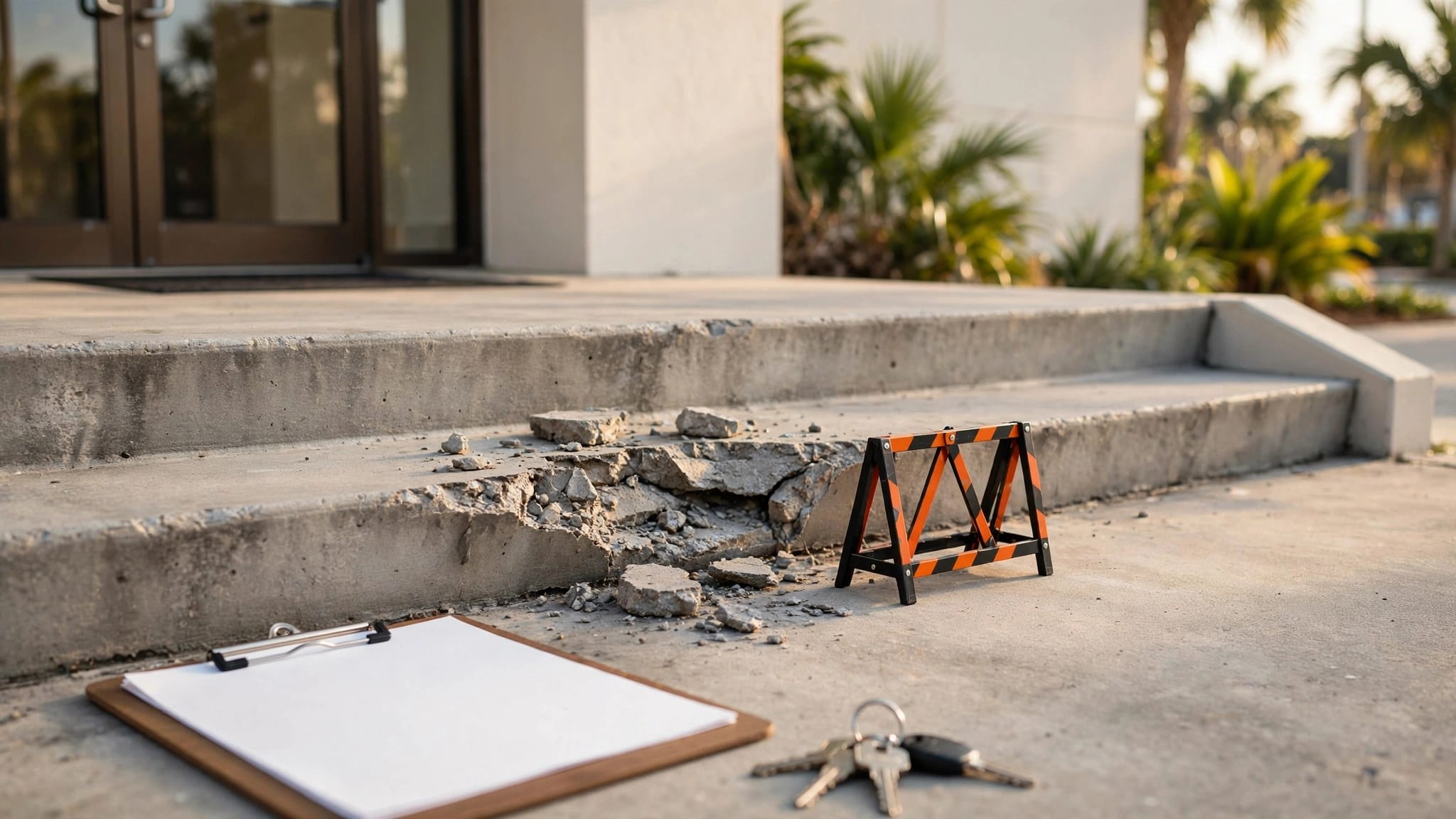
A landlord and tenant may both be responsible for an injury when each had a duty to address the danger and their negligence contributed to the harm. In Florida premises liability claims, control of the hazard often matters more than the name on the building.
After an injury, you may hear conflicting explanations about who maintained the entrance, repaired the stairs, or handled complaints. Lease terms matter, but so do maintenance records and what each party actually did. The starting point is the precise location and condition that caused your injury.
Key Takeaways About Shared Responsibility
- A landlord, tenant, property manager, or contractor may have different duties concerning the same property.
- Leases and maintenance agreements help identify responsibility, while inspections and complaints can establish knowledge of a dangerous condition.
- Temporary spills in business establishments require a different legal analysis than broken stairs, deteriorated ceilings, or defective equipment.
- Shared control doesn’t establish equal fault, and insurance negotiations don’t automatically extend the deadline for filing a lawsuit.
How Florida Premises Liability Follows Control
A premises injury claim generally requires proof of a duty, a breach of that duty, causation, and damages. Your reason for entering the property also affects the duty owed. Customers, invited guests, tenants, and trespassers don’t necessarily receive identical protections.
Identify the exact area involved
The investigation should identify the particular stair, landing, doorway, parking space, or walkway segment involved. Responsibility can change at a storefront threshold or where a leased entrance meets a common sidewalk.
Landlords often retain control over common areas, while tenants control their leased interiors. However, those arrangements aren’t universal. Property records identify the owner, but leases and maintenance records help establish who had authority to inspect, repair, restrict access, or provide warnings.
Our discussion of Florida walkway injury claims addresses why the exact segment and maintenance history matter.
Separate each party’s role
Control can overlap. Roof maintenance, floor inspections, and customer warnings may belong to different parties even when the danger affects one entrance.
For that reason, an injury claim should examine each party’s conduct separately. A landlord’s repair obligation doesn’t automatically resolve whether a tenant should have warned customers. Similarly, a tenant’s daily operations don’t settle responsibility for a structural defect that another party controlled.
What the Lease Establishes About Maintenance
A lease can identify reserved areas, repair obligations, reporting procedures, and access rights. Amendments and separate service agreements may change those responsibilities, so the complete documents matter.
Residential landlords have statutory duties
Florida’s landlord maintenance statute, section 83.51, addresses applicable building, housing, and health codes. Where those codes don’t apply, it sets requirements involving specified structural components and plumbing.
For residential buildings other than single-family homes and duplexes, the statute generally requires landlords to keep common areas clean and safe unless otherwise agreed in writing. Permissible changes to other obligations depend on the provision and dwelling type.
A maintenance violation still requires a connection to the injury. A deteriorated ceiling, for instance, requires evidence explaining the failure and resulting harm. Our guide to rental-home ceiling collapse injuries discusses those issues.
Contract terms need supporting records
Commercial leases require their own analysis. A clause assigning repairs to a tenant may be important, but communications and work orders can show whether the landlord retained relevant authority or performed the work.
Also distinguish responsibility for paying an expense from responsibility for addressing a danger. Insurance and indemnity provisions may govern disputes between businesses without deciding every duty owed to an injured visitor.
A lease’s allocation of repair costs doesn’t, by itself, establish who had authority to correct or warn about the hazard.
Match the Legal Analysis to the Hazard
The condition that caused the injury determines which evidence and legal rules matter. A loose handrail requires a different investigation than spilled liquid.
Temporary substances require evidence of notice
Under Florida’s business slip-and-fall statute, section 768.0755, someone who slips on a transitory foreign substance in a business establishment must prove actual or constructive knowledge.
Actual knowledge concerns awareness of the condition. Constructive knowledge may rest on evidence that the substance remained long enough for ordinary care to discover it, or that the condition occurred regularly and was foreseeable.
Video, employee observations, recurring complaints, and inspection timing can therefore matter. The statute also preserves common-law duties owed by those possessing or controlling business premises.
Fixed defects require a different investigation
A broken plank, pothole, loose railing, or malfunctioning door doesn’t automatically fall under the temporary-substance statute. Those claims require attention to the defect, applicable duties, maintenance history, and causation.
The defect’s age and appearance may help establish whether reasonable inspections would have revealed it. Prior repair attempts can also identify who controlled the work.
Our explanation of parking lot pothole injury claims discusses how leases, management arrangements, and repair records can reveal divided responsibility.
Preserve Evidence of Control, Notice, and Injury
An accident report records an event, but it rarely answers every question about responsibility. Strong claims connect the property records to the condition, the incident, and the resulting medical harm.
Keep records that explain the condition
Photograph the precise location, surrounding area, lighting, warning signs, and defect when you can do so safely. Preserve original files because timestamps and other information may matter.
Save maintenance requests, emails, text messages, and responses. A complaint sent before the accident can help establish notice, while a work order may show which company accepted responsibility for repairs.
An attorney can seek leases, management contracts, inspection logs, invoices, and surveillance recordings. Prompt preservation matters because businesses may overwrite video and repairs may change the scene. Necessary safety repairs should proceed, with conditions documented when safely possible.
Connect the incident to your losses
Medical records must support the relationship between the incident and your injuries. Tell providers accurately how the injury occurred and describe your symptoms without guessing about technical causes.
Keep bills, imaging results, prescriptions, therapy records, and work restrictions. Pay records and employer documentation can support lost-income claims. Future treatment expenses also need medical support.
Damages may include supported medical expenses, lost earnings, pain and suffering, and other legally recoverable losses. The existence of a dangerous condition doesn’t establish the amount of those losses.
How Shared Fault Affects Compensation
Shared control and shared fault are different questions. Two parties may control aspects of the property without bearing equal responsibility for an injury.
Under Florida’s comparative-fault statute, a claimant’s percentage of fault generally reduces damages in a covered negligence action. A claimant found more than 50% responsible for their own harm generally cannot recover. Exactly 50% doesn’t cross that threshold.
A defendant may argue that you ignored a warning, looked at your phone, or failed to avoid a visible defect. Those allegations require evidence connecting your conduct to the injury. An insurer’s proposed percentage isn’t a court ruling.
The visibility of a condition also doesn’t answer every duty question. A warning’s placement, available walking routes, lighting, and the need to use the area may affect the analysis.
Filing Deadlines Continue During Responsibility Disputes
For negligence claims accruing after March 24, 2023, Florida’s general negligence filing period is two years. The applicable deadline depends on accrual, the claim, the defendant, and any exceptions. Older claims may require a different analysis.
An open insurance claim doesn’t automatically stop that clock. Neither does a dispute over whether the landlord’s insurer or the tenant’s insurer should handle the loss.
Early legal review is especially important when several businesses use similar names or separate entities own and operate the property. Identifying the correct defendants takes investigation, and waiting for voluntary cooperation can consume valuable time.
Claims involving government-controlled property have additional procedural requirements. Workplace injuries may also involve workers’ compensation and separate claims against parties other than the employer.
Frequently Asked Questions About Landlord and Tenant Claims
Can I bring a claim against both the landlord and tenant?
Yes, when evidence supports a legal basis against each party. The claim must identify each party’s duty, the conduct that breached it, and the connection to your injury.
Their respective roles may involve structural repairs, inspections, warnings, or day-to-day maintenance. Naming both doesn’t establish that both will ultimately owe compensation. Discovery may show that one controlled the relevant condition, that both contributed, or that another party performed negligent work. The evidence determines responsibility rather than an automatic division between owner and occupant.
Can a tenant recover after being injured at home?
A tenant may have a claim when a landlord or another responsible party negligently failed to address a dangerous condition and caused injury. The analysis includes statutory duties, lease provisions, control, notice, and causation.
Written repair requests and prior complaints can be important, but they aren’t the only possible evidence. Inspection findings, photographs, witness accounts, and repair records may also establish the condition’s history. The defense may examine the tenant’s conduct as well, so preserve the complete communications rather than selected messages.
Get Help Identifying Who Was Responsible
A shared-control injury claim depends on matching each party’s duties and conduct to the danger that caused your harm. Early evidence preservation helps prevent responsibility from becoming a contest of unsupported explanations.
We represent people pursuing Florida personal injury claims and offer a free consultation. If a landlord and tenant are pointing to each other after your injury, contact our office to discuss the condition, available records, and your legal options.