
Florida Alligator Attack Claims on Private Property
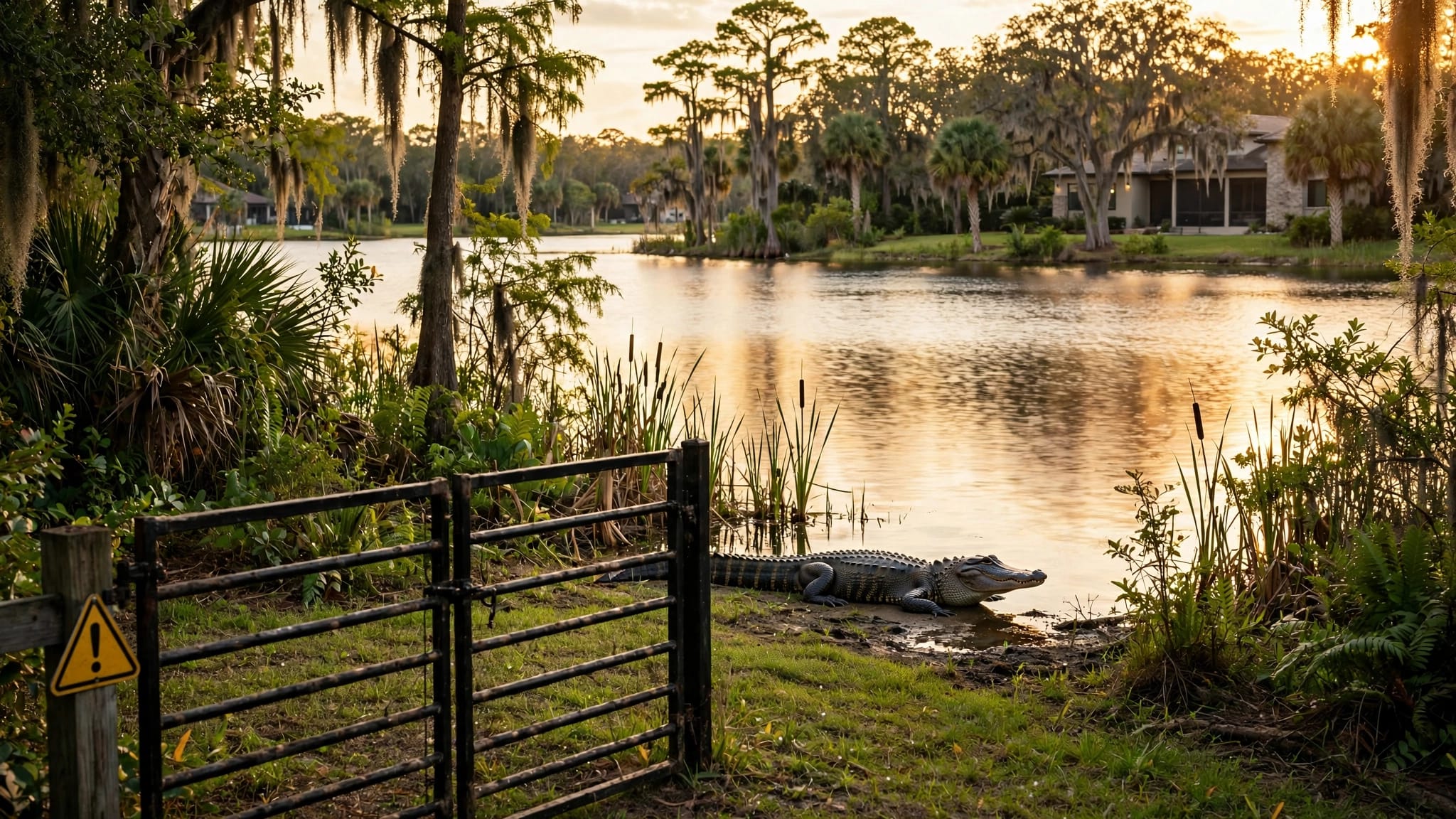
Florida alligator attack claims require proof of legal responsibility, not simply an attack on someone’s property. Because alligators are native wildlife, wild-animal rules can limit claims against property owners, even after severe injuries.
Your ability to recover compensation depends on the applicable duty, the defendant’s conduct, and evidence connecting that conduct to your injuries. Start with the legal distinction between an alligator’s presence and someone else’s responsibility for the attack.
Key Takeaways After an Attack
- A private property owner isn’t automatically liable because an alligator attacked someone on the property.
- Property control, prior reports, warnings, and evidence of feeding or handling can matter, but each requires legal analysis.
- Medical records and financial documentation establish the losses a claim seeks to recover.
- Many Florida negligence claims have a two-year filing deadline. Reporting the incident or negotiating with an insurer doesn’t automatically stop that clock.
When Florida Alligator Attack Claims Can Support Liability
Florida’s wild-animal rule limits owner responsibility
Florida generally doesn’t require landowners to protect visitors against indigenous wild animals outside the owner’s possession. That rule makes these cases different from ordinary claims involving broken stairs or unsafe walkways.
In Palumbo v. State, Game & Fresh Water Fish Commission, Florida’s First District Court of Appeal affirmed judgment for state defendants after an alligator attack at a public recreational park. The court discussed the general rule against liability for indigenous wild animals that haven’t been reduced to possession.
Warnings, the swimmer’s knowledge of them, and the absence of prior similar accidents mattered. Although Palumbo involved public property, its discussion helps explain why property ownership alone doesn’t establish liability.
Specific conduct needs a separate analysis
Evidence of feeding, handling, or keeping an alligator requires close attention. However, feeding or repeated sightings don’t automatically establish a legally enforceable duty or prove that particular conduct caused an attack.
The Florida Fish and Wildlife Conservation Commission’s alligator safety guidance warns against feeding alligators. Safety guidance can provide context, but a civil claim still requires a recognized legal basis for liability.
An attorney must distinguish an alleged failure to protect someone against wildlife from affirmative conduct that may create separate legal responsibility. That distinction can determine whether a claim proceeds.
Identify Who Controlled the Property and the Risk
The person listed on the deed may not be the only party whose role needs investigation. A homeowners association, condominium association, property manager, or commercial operator may control different areas and activities.
Leases, management contracts, and maintenance agreements can identify those responsibilities. As with injuries on private walkways, control of the relevant location can matter as much as ownership.
For waterfront property, identify who managed the shoreline, maintained barriers, posted warnings, or received residents’ complaints. Also identify anyone allegedly feeding or handling the animal and whether that person acted within employment duties.
These records help identify potential defendants. They don’t establish that every owner, manager, or contractor owed a duty concerning the alligator.
Your reason for being on the property also matters. Florida law distinguishes among categories of visitors, and trespasser rules can substantially limit an owner’s responsibility.
Preserve Evidence of Notice and the Attack
Prior reports need dates and specific details
A statement that “alligators live here” provides less information than a dated report describing an animal’s behavior at the attack location. Preserve emails, resident complaints, management responses, and records of earlier calls concerning the animal.
Requests involving an alligator’s removal can also matter. The timing and content may show what someone knew, when they learned it, and what response followed.
Nevertheless, prior knowledge doesn’t automatically overcome Florida’s wild-animal rule. Evidence must support the particular duty and breach alleged, rather than establish only that alligators inhabited the area.
Keep original messages whenever possible. Forwarded excerpts and cropped screenshots can omit context that later becomes important.
Document the location before conditions change
If someone can do so safely, preserve photographs of the attack location, nearby signs, shoreline access, fencing, and gates. Nobody should approach an alligator or return to an unsafe shoreline to collect evidence.
Record witness names and contact information. Also preserve emergency-response records, the incident report, and any photographs taken immediately afterward.
Surveillance footage deserves prompt attention because recording systems may overwrite older video. An attorney can send preservation requests identifying relevant recordings and records.
A photograph taken after a warning sign was added doesn’t establish what visitors saw before the attack. Preserve evidence of timing as well as appearance.
Get Medical Treatment and Report the Incident
Call 911 for an ongoing emergency or serious injury. An alligator bite requires immediate medical attention, including injuries that initially appear limited. Medical care takes priority over photographs, statements, or insurance calls.
Tell treating providers how the attack happened and describe every affected area. Keep discharge instructions, specialist referrals, medication records, and follow-up appointments. Accurate treatment records help connect the attack to your injuries and document your recovery.
For a nuisance alligator, FWC’s Statewide Nuisance Alligator Program receives reports at 866-392-4286. That reporting number doesn’t replace emergency assistance.
Notify the property owner or manager and request a copy of any incident report. Keep your description factual. If an insurer later requests a recorded statement or release, legal advice can help you understand its consequences before you agree.
Compensation Depends on Documented Losses
Medical expenses and lost earnings need support
A successful claim may recover medical expenses, rehabilitation costs, lost income, and supported future losses. Serious attacks can require surgery, continued treatment, and assistance during recovery.
Keep bills, payment statements, therapy records, and documentation of out-of-pocket expenses. Employer records and pay statements can establish missed earnings, while medical work restrictions help explain why you couldn’t return.
Future care and reduced earning capacity require evidence. Treatment recommendations, lasting restrictions, and the effect on your occupation matter more than an early estimate of settlement value.
There’s no reliable standard payout for an alligator attack. Liability, injury severity, available coverage, and documented losses all affect recovery.
Lasting injuries and punitive damages involve different proof
Scarring, disability, pain, and limitations on daily activities may support additional damages when the law allows recovery. Medical findings and consistent descriptions of those limitations strengthen the evidence.
Punitive damages require a separate legal basis under Florida law. Ordinary carelessness or a severe injury alone doesn’t establish intentional misconduct or gross negligence.
Florida also requires an evidentiary showing before a claimant can generally plead punitive damages. They shouldn’t be treated as an automatic addition to an injury claim.
Shared Fault and Filing Deadlines Affect Recovery
Warning signs and visitor conduct can affect fault
A property owner or insurer may argue that you ignored warnings, entered a restricted area, or otherwise contributed to the injury. Those allegations require evidence connecting your conduct to what happened.
Under Florida’s comparative-fault framework, a claimant’s share of responsibility reduces damages in covered negligence actions. A person found more than 50% responsible for their own harm generally cannot recover under the applicable rule.
Exactly 50% doesn’t trigger that bar, although it reduces recovery by half. An adjuster’s proposed percentage isn’t a court finding.
Warnings may also affect duty and causation. Their wording, visibility, placement, and relationship to the alleged danger deserve review.
Insurance negotiations don’t extend the lawsuit deadline
Florida Statutes section 95.11 generally provides two years to file an action founded on negligence. The shortened negligence period generally applies to claims accruing on or after March 24, 2023.
The applicable deadline depends on the claim, accrual date, defendants, and any exceptions. Earlier claims require a separate timing analysis.
An open insurance file doesn’t preserve your right to sue. Neither does a pending records request or a report to wildlife authorities.
Early legal review allows time to identify defendants and preserve evidence while protecting the filing deadline.
Frequently Asked Questions About Private-Property Attacks
Can a family pursue a claim after a child is attacked?
A child’s injury requires its own analysis of duty, visitor status, and the circumstances. Children don’t automatically have a claim merely because an alligator was on private property.
Florida’s attractive-nuisance doctrine generally concerns qualifying artificial conditions and has requirements beyond a child’s presence. It doesn’t automatically make a natural pond or wild alligator an attractive nuisance.
Our explanation of Florida attractive-nuisance claims addresses the doctrine’s requirements. A child’s age, permission to enter, and the condition involved can affect which legal principles apply.
Does homeowners insurance cover an alligator attack?
Homeowners, commercial liability, or association insurance may provide coverage for a legally supported claim, depending on the policy and defendant. Coverage isn’t automatic because an attack occurred on insured property.
Policy terms, exclusions, limits, and the conduct alleged affect whether an insurer must respond. Insurance availability also doesn’t establish that the insured party was negligent.
Before signing a settlement release, consider whether it affects claims against other potentially responsible parties. A release can have consequences beyond the payment offered by one insurer.
Protect Your Options After an Alligator Injury
An attack on private property requires a careful review of Florida’s wild-animal rules and the evidence of legal responsibility. Property ownership alone doesn’t resolve the claim.
Preserve records, document treatment, and seek legal advice before evidence disappears or a filing deadline passes. At Avard Law Offices, we offer a free consultation to discuss your injury and the circumstances surrounding the attack.