
Florida Bounce House Injuries and Operator Liability
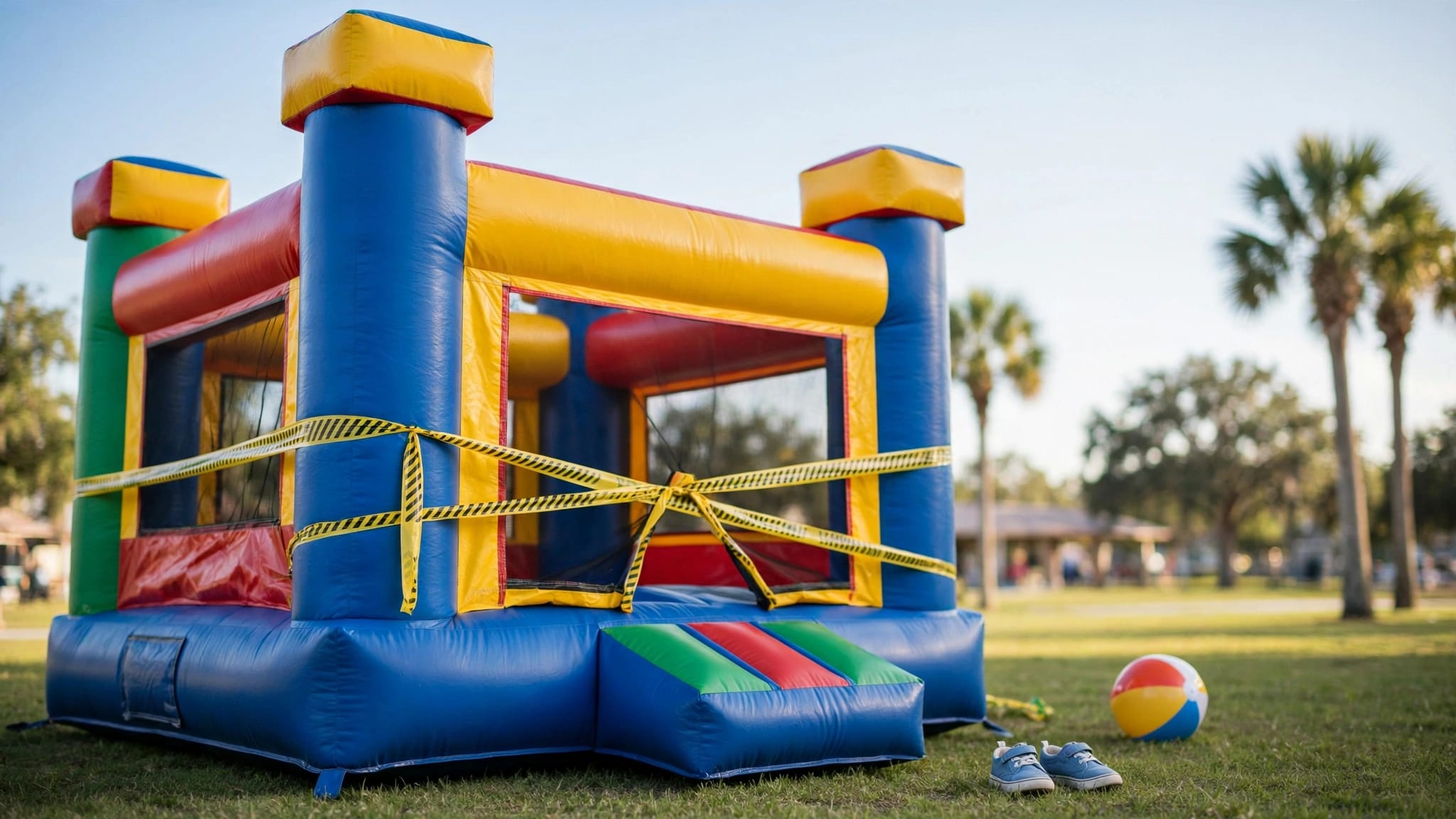
Florida bounce house injuries can support a negligence claim when an operator or another responsible party fails to use reasonable care and that failure causes harm. A child or adult may suffer a fracture, concussion, or other serious injury in a collision, fall, or equipment failure.
An injury alone doesn’t establish liability. The evidence must connect what went wrong to the harm, and much of that evidence may be in the operator’s hands. Knowing what to preserve can help protect your options.
Key Takeaways for Injured Families
- A rental company, attendant, property owner, event organizer, or manufacturer may bear responsibility, depending on the facts.
- Florida’s amusement-ride statute excludes inflatable rides, but ordinary negligence claims may still apply.
- Photos, witness accounts, medical records, and the operator’s maintenance records can help establish what happened.
- Many Florida negligence claims have a two-year filing deadline. Insurance negotiations don’t automatically stop the clock.
How a Bounce House Injury Claim Works
A negligence claim generally requires proof of four elements: a duty of care, a failure to meet that duty, a connection between that failure and the injury, and resulting damages.
For example, evidence might show that an attendant allowed children of substantially different sizes to jump together despite rules requiring separation. The claim would still need evidence that the attendant had a responsibility to enforce those rules and that the failure contributed to the injury.
The same principles apply when a person is hurt at a trampoline facility. Our discussion of Florida trampoline park injury claims explains how operating practices and safety records can support a premises liability case.
A fall or collision can also occur without negligence. The investigation should consider the condition of the inflatable, the activity underway, and what the responsible people knew or should have noticed.
Who May Be Responsible for a Bounce House Injury?
Responsibility follows the facts and each party’s role. The company that rented the inflatable isn’t necessarily the same party that set it up or supervised its use.
Rental companies and attendants
A rental company may own the equipment, install it, provide instructions, or supply an attendant. Its potential responsibility depends on the services it agreed to perform and how it carried them out.
An attendant may have authority to control entry, separate participants by size, or stop unsafe play. If a worker ignored a dangerous condition, the company employing that worker may also face a claim. Contracts and witness accounts can help establish who was responsible for supervision.
Property owners and event organizers
A property owner or organizer may have control over where the inflatable was placed and whether the surrounding area was safe. A school, church, business, or private host may have a different role, depending on its agreement with the rental company and its involvement in the event.
When an unattended inflatable attracts a child onto property, different legal questions can arise. Our page on Florida attractive nuisance claims discusses that separate doctrine. It doesn’t automatically apply to every child injured in a bounce house.
Manufacturers and repair contractors
A defect in the inflatable, blower, or another component may warrant a product-liability investigation. The manufacturer or another business in the distribution chain may be involved, depending on the defect and applicable law.
A repair contractor’s work may also matter. Repair records and an inspection of the equipment can help determine whether an earlier service issue contributed to the injury.
Safety Failures That Can Lead to Injuries
The cause of a bounce house injury isn’t always visible after the inflatable comes down. Photos, video, and the manufacturer’s instructions can help reconstruct the conditions at the time.
Anchoring, wind, and equipment condition
An inflatable can move or overturn if it isn’t secured appropriately. An investigation may examine the anchor points, setup surface, weather, and instructions for the particular device.
The U.S. Consumer Product Safety Commission’s inflatable safety guidance recommends following manufacturer instructions for anchoring and capacity. It also addresses wind and gusts. Those recommendations are safety guidance, not a substitute for the instructions that apply to the equipment or a universal Florida statutory wind limit.
The blower and electrical supply matter too. A loss of air pressure, damaged seam, or blocked entrance can create a dangerous situation. Maintenance records may show whether a problem existed before the event.
Crowding and supervision
Children can collide when too many participants enter at once or when smaller children share the space with much larger jumpers. Rough play near an entrance or exit can also cause a fall.
CPSC recommends active adult supervision and compliance with occupancy and weight limits. For inflatables designed for younger children, its bulletin recommends at least two operators, one monitoring capacity and another watching riders. The staffing required for a negligence claim still depends on the circumstances.
What Florida’s Amusement-Ride Law Covers
Florida’s amusement-ride safety statute expressly excludes inflatable rides from that section. A device’s design and use can matter when determining how it is classified.
That distinction matters because the permit and inspection rules for rides covered by the statute shouldn’t be described as a statewide permit requirement for every bounce house. It also doesn’t remove an operator’s potential duty to use reasonable care.
Private records can be important even when a state amusement-ride file doesn’t exist. Rental agreements, setup instructions, repair histories, and internal checklists may show what the operator knew and did before the injury.
Evidence to Preserve After an Injury
Seek medical care promptly when an injury warrants it. Tell the provider how the incident happened and describe all symptoms, including dizziness, pain, or difficulty moving. Follow-up records can help document whether symptoms persist.
Report the incident to the event organizer or operator when you can do so safely. Ask for a copy of any report you complete, but don’t guess about facts you didn’t see.
Photos, witnesses, and equipment
Take wide and close photographs of the inflatable, anchor points, blower, entrance, and surrounding area. Preserve the original files. If weather or crowding played a role, photos and videos may help establish those conditions.
Write down the date, time, location, and names or contact information of witnesses. Keep rental documents, receipts, wristbands, and any damaged clothing. Avoid altering or discarding physical evidence without legal advice.
Records controlled by the operator
An attorney can request preservation of surveillance video, incident reports, setup instructions, maintenance logs, repair orders, and records of earlier complaints. Footage may be overwritten, and the equipment may be repaired or rented again.
A completed checklist doesn’t settle whether the inflatable was safe during the event. Compare it with witness accounts, video, and any reports of problems that arose after setup. Legal counsel may seek additional records through formal discovery if a lawsuit becomes necessary.
Compensation for a Bounce House Injury
A supported claim may seek payment for medical expenses, including emergency care, imaging, surgery, medication, and rehabilitation. When an injury requires ongoing care, evidence must support the anticipated cost and need for that treatment.
Other recoverable losses may include lost income, reduced earning capacity, and pain and suffering when supported by Florida law and the facts. A child’s injury can also affect school attendance and daily activities. Records of those effects can help explain the extent of the harm.
Keep bills, therapy notes, prescriptions, and receipts together. Save documentation of work missed because of the injury or a child’s care, while recognizing that who may recover a particular loss depends on the claim.
Waivers, Shared Fault, and Filing Deadlines
A rental company or venue may raise a signed waiver or argue that the injured person contributed to the accident. Neither issue should be evaluated without the full document and evidence of what occurred.
How fault affects a claim
Under Florida’s comparative-fault statute, a claimant’s share of fault reduces damages in an applicable negligence case. A claimant found more than 50% responsible for their own harm generally cannot recover under that rule.
An insurer’s allegation that someone ignored a warning isn’t a finding of fault. The wording and visibility of the warning, the person’s conduct, and the cause of the injury all matter. Keep the complete waiver or rental agreement for an attorney to review; a signature doesn’t resolve every legal question.
When the filing clock runs
Florida’s limitations statute generally gives two years to file an action founded on negligence. For many negligence claims accruing on or after March 24, 2023, that is the starting point for evaluating the deadline.
Different claim types, government defendants, and statutory exceptions can affect the analysis. Don’t assume a child’s age automatically determines the deadline. An open insurance claim or settlement discussion doesn’t automatically pause it.
Frequently Asked Questions
Can a parent pursue a claim after signing a waiver?
A signed waiver doesn’t automatically answer whether a claim can proceed. Its language, who signed it, the circumstances of the injury, and Florida law all matter. Bring the entire document to an attorney, including any pages containing activity rules or definitions.
The investigation should also identify every potentially responsible party. A waiver involving one business doesn’t necessarily resolve a claim against a different party whose conduct or product contributed to the injury.
Do bounce house injuries happen often?
CPSC estimated that inflatable amusements were associated with 113,272 emergency-department-treated injuries nationwide during 2003 through 2013. Its inflatable injury report covers inflatable devices broadly, so that estimate isn’t a count of Florida bounce house injuries.
A national estimate can’t establish what caused an individual accident. Your claim depends on the evidence about the particular equipment, event, and injury.
Protect the Evidence Behind Your Claim
A bounce house injury claim turns on whether a preventable failure caused documented harm. Photos and medical records help, but the operator’s setup and maintenance records may be equally important.
At Avard Law Offices, we offer a free consultation to discuss your injury and potential legal options. Early advice can help preserve evidence while you focus on recovery.