
Florida Dog Walker Liability After an Escaped Dog Injury
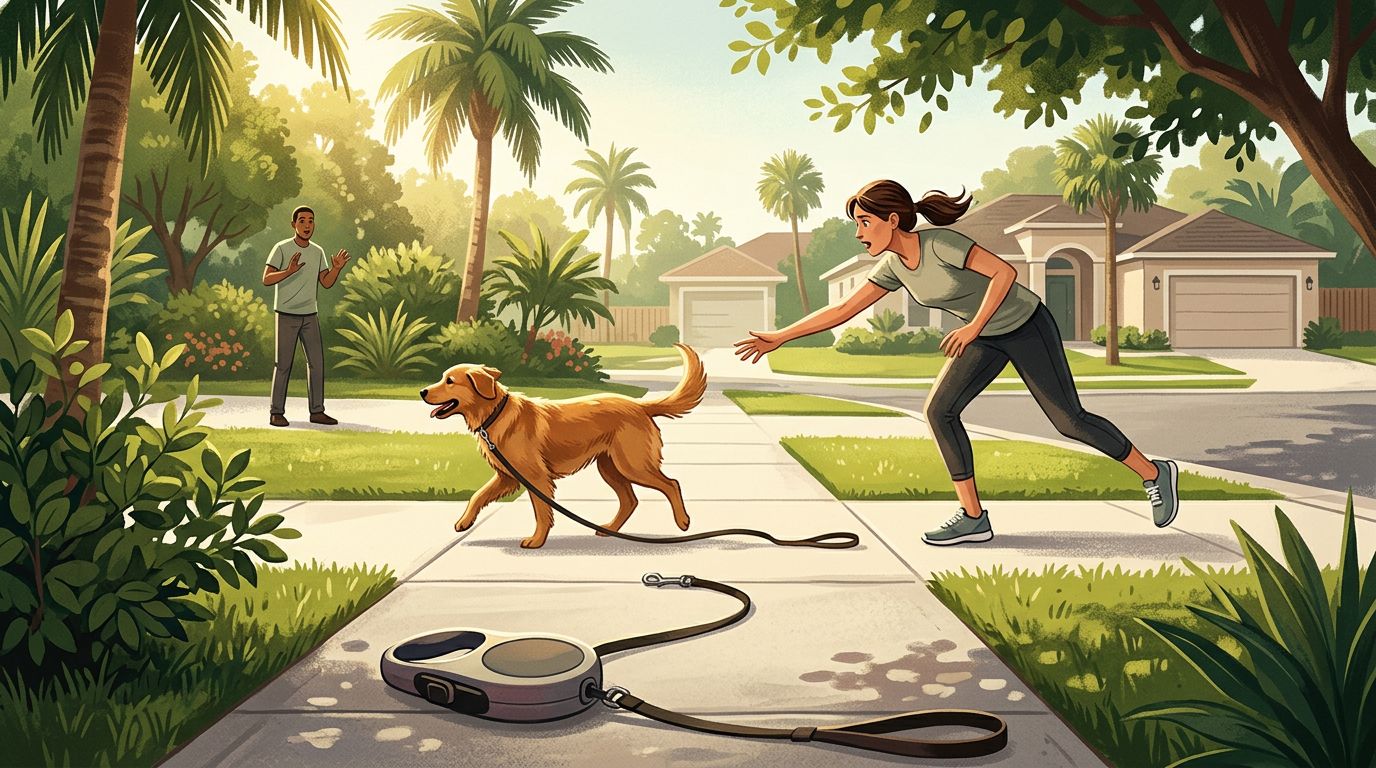
A Florida dog walker may be liable when a dog escapes and injures someone if the walker’s negligence contributed to the injury. The dog’s owner may face a separate claim, particularly when the dog bites someone in a public place or a lawful visitor on private property.
Florida dog walker liability depends on who controlled the dog and what caused the injury. A walker isn’t automatically responsible because an escape occurred, and an owner’s statutory responsibility doesn’t automatically transfer to the walker.
Start by identifying the dog, its owner, and the person handling it when the incident happened.
Key Takeaways After an Escaped Dog Injury
Florida law generally holds an owner liable for a qualifying dog bite, even without proof that the dog bit someone before. A claim against a non-owner walker usually requires a separate negligence analysis.
A fall, collision, or other injury without a bite requires closer review of the facts and available legal claims. Medical records, witness accounts, photographs, and evidence of how the dog escaped can help establish responsibility.
Who Is Responsible When a Dog Escapes?
More than one person may have played a role in an injury. The owner’s claim and the walker’s claim can involve different legal standards, even when they arise from the same event.
The dog owner’s statutory liability
Under Florida’s dog liability statutes, Section 767.04 generally makes an owner liable when their dog bites someone in a public place or lawfully on private property. The injured person doesn’t have to prove the owner knew the dog was dangerous or that it had previously bitten someone.
The person’s reason for being on private property matters. The law addresses people who are there lawfully, including someone carrying out a legal duty or present by invitation.
Section 767.01 also contains broader language concerning damage a dog causes to a person or certain animals. Its application to a particular non-bite injury requires attention to the facts and applicable case law.
The walker’s separate responsibility
A paid walker or other temporary handler doesn’t become the dog’s statutory owner merely by holding the leash. However, a non-owner can face a negligence claim when their own unreasonable conduct causes an injury.
That claim generally requires evidence of a duty of care, a breach of that duty, a connection between the breach and the injury, and resulting damages. The investigation may focus on how the walker handled the dog, what the walker knew, and what happened immediately before the escape.
A leash breaking or a dog getting loose doesn’t, by itself, settle whether the walker acted negligently.
Bites and Non-Bite Injuries Follow Different Paths
Section 767.04 addresses a person who is bitten. Its owner-liability rule shouldn’t be assumed to cover every injury involving a dog.
An escaped dog may knock a pedestrian down, cause a cyclist to fall, or pull a leash across someone’s path. In those situations, an attorney can assess negligence and any other applicable claims against the owner or handler. The evidence must connect the alleged unsafe conduct to the injury.
The distinction also matters when an injury happens around other dogs. Our discussion of Florida dog park injury claims addresses similar questions about bites, falls, and responsibility for unsafe conditions.
A person can suffer serious injuries without a puncture wound. The absence of a bite changes the legal analysis, not the need to document what happened.
What Florida Cases Say About Non-Owner Caregivers
Florida courts have distinguished a dog’s owner from someone who temporarily possesses or controls the animal. That distinction is important when an injured person is considering a claim against a walker.
The Belcher decision
In Belcher Yacht, Inc. v. Stickney, the Florida Supreme Court held that Section 767.04 applies to the dog’s owner. The statute didn’t impose owner liability on a non-owner custodian merely because that person kept the dog.
The court also recognized that the statute didn’t shield a non-owner from a properly supported common-law negligence claim. In other words, the owner’s statutory responsibility and a custodian’s possible negligence are separate questions.
Temporary care doesn’t automatically create ownership
In Wipperfurth v. Huie, the Florida Supreme Court applied that distinction to a kennel owner and veterinarian caring for a dog under an agreement. Possession and control alone didn’t make them statutory owners under the bite law.
Neither decision establishes automatic liability for a walker whose dog escapes. The facts still matter, including the walker’s conduct and its connection to the injury.
Evidence That Can Show How the Dog Escaped
The circumstances just before an escape can be as important as the injury itself. A witness may have seen the dog pull free, while a photograph or video may show the leash, harness, or gate involved.
Handling and equipment
An investigation may examine whether the walker secured the leash and used the available equipment as intended. It may also consider whether the walker knew of a problem, such as a damaged clasp or a harness that repeatedly slipped.
The owner’s instructions can matter too. Messages may show that the owner warned the walker about a dog’s tendency to bolt or directed the walker to use particular equipment. A warning doesn’t automatically establish liability, but it can help explain what each person knew.
Preserve any damaged equipment when possible. Its condition may help establish whether it failed, came loose, or played no role in the escape.
Behavior and witness accounts
Ask witnesses what they saw before the injury, not only after it. Their accounts may identify who held the leash, whether the dog showed warning behavior, and what the handler did when control was lost.
Keep the walker’s and owner’s exact statements if you can record them accurately. Surveillance footage, phone videos, booking records, and messages may also help establish the timeline.
An animal-control report can provide useful information, but a dangerous-dog proceeding is separate from a civil injury claim. An official dangerous-dog classification isn’t required for a qualifying claim under the bite statute.
Other Parties May Share Responsibility
The walker and dog owner aren’t always the only people whose conduct matters. Depending on the facts, an employer, walking business, property operator, or other party may warrant investigation.
For a commercial walking service, records may identify who hired the handler and what duties the handler performed. Employment status and the circumstances of the walk can affect whether a business may bear responsibility. A company’s name on an app or booking page doesn’t resolve those questions on its own.
A property condition may also be relevant. For example, a damaged gate could matter if evidence connects it to the escape and shows that a responsible party failed to address an unsafe condition. Ownership, control, and prior notice may become important.
Each potential claim requires its own evidence. An injury doesn’t automatically make every person or business connected to the dog liable.
How Shared Fault and Warning Signs Affect a Claim
An insurer may argue that the injured person contributed to the incident. The argument might involve alleged provocation, disregarding a warning, or approaching the dog. Those allegations require evidence linking the person’s conduct to the injury.
Section 767.04 allows an owner’s liability to be reduced when negligence by the person bitten helped cause the biting incident. Separately, Florida’s comparative fault statute governs fault allocation in covered negligence actions. In those actions, a person found more than 50% responsible for their own harm generally cannot recover damages.
A prominently displayed, easily readable “Bad Dog” sign on the owner’s premises may also affect a statutory bite claim. The exception doesn’t apply to a child under six or when the owner’s negligent act or omission contributes to the injury.
Don’t assume an insurer’s proposed fault percentage or a warning sign settles the claim. The legal effect depends on the evidence and the claim being pursued.
What to Do After an Escaped Dog Causes an Injury
Get to a safe place and seek medical care. For a bite or possible rabies exposure, contact a health care provider and the county health department promptly. Tell medical staff how the injury occurred, even if the initial wound appears small.
Once you’re safe, obtain the walker’s name and contact information and ask for the owner’s details. A photograph of the dog can help identify it if the handler leaves before a report is completed.
Document the scene before conditions change. Photograph visible injuries, torn clothing, the leash or harness, nearby gates, and any warning signs. Ask witnesses for their contact information and request that a business or property manager preserve relevant video.
Report the incident to animal control or the local health department. Keep a copy or record of the report, along with medical instructions and follow-up recommendations.
Insurance and Compensation for an Injury
Coverage may come from different sources, depending on who is responsible and what the policies cover. An owner’s homeowners, renters, or umbrella policy may provide liability coverage. A professional walker or walking business may have separate coverage.
None of those policies guarantees payment. Exclusions, policy limits, the circumstances of the incident, and the identity of the insured can affect coverage. Some responsible parties may have no applicable insurance.
A claim may include documented medical expenses, rehabilitation, lost wages, and future care supported by medical evidence. Depending on the injury and claim, compensation may also address pain and suffering, scarring, or limitations on daily activities.
Save bills, treatment records, work restrictions, and wage information. A symptom journal can help you describe how the injury affects sleep, work, or activities during recovery.
Don’t Wait for an Insurance Investigation to End
Evidence can disappear while an insurer investigates. Video may be overwritten, equipment may be discarded, and witnesses may become harder to locate. An attorney can seek important records while also identifying the owner, handler, and any business involved.
Lawsuit deadlines depend on the claim and circumstances. Negotiating with an insurer or waiting for an animal-control investigation doesn’t automatically extend the time to file. Claims involving government property or a public entity can raise additional notice requirements.
Protect Your Claim After an Escaped Dog Injury
A qualifying bite can support a claim against the owner, while a claim against a non-owner walker generally depends on evidence of negligence. For a non-bite injury, the cause of the fall or collision deserves a separate legal review.
At Avard Law Offices, we offer a free consultation for people seeking help with injury matters. An early conversation can help identify the evidence needed to assess who may be responsible.