
Florida Pond Liability After a Drowning
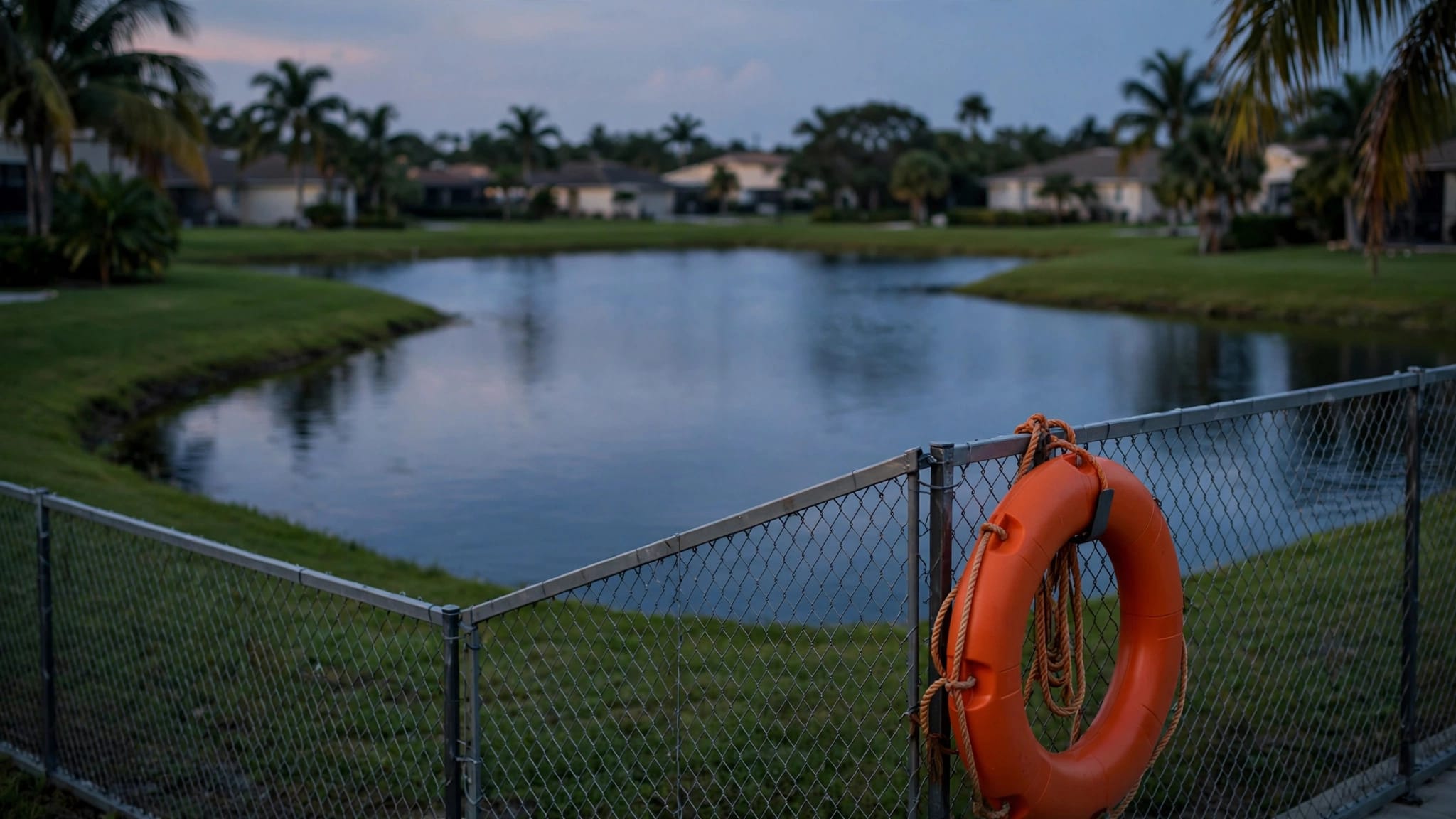
A Florida property owner may be liable for a retention pond drowning when a dangerous condition, a failure to use reasonable care, and the resulting harm are connected by evidence. The outcome depends on who controlled the property, why the person entered, and what made the pond dangerous.
For a family facing a serious injury or death, those facts may be held in maintenance files, permits, or recordings. Early preservation can help protect evidence while you consider your legal options.
Key Takeaways for Families
- A retention pond drowning may support a negligence claim, but the injury alone doesn’t establish liability.
- Ownership, control, access, and prior notice of a hazard can all affect the case.
- Florida’s rules for children who enter without permission require a close look at the condition and the child’s reason for entering.
- Most negligence claims arising on or after March 24, 2023, and most wrongful death claims have a two-year filing period.
- Photos, witness information, medical records, and maintenance files can help establish what happened.
When a Pond Drowning May Support a Claim
A negligence claim generally requires proof of a legal duty, a failure to meet that duty, causation, and damages. Each part matters. A family must show both what the responsible party should have done and how that failure contributed to the drowning or injury.
Identify the dangerous condition
Retention ponds collect stormwater, and their edges and surrounding land may change over time. An investigation can examine features such as steep banks, unstable soil, concealed drop-offs, damaged access barriers, or drainage structures.
The presence of a pond doesn’t establish that its owner acted negligently. The legal question turns on the particular condition, the person’s status on the property, and the precautions that reasonable care required under the circumstances.
Connect the condition to the injury
Evidence must also show how the alleged hazard contributed to the incident. Photographs may show a damaged fence, for example, but a claim still needs evidence about the person’s route to the water and whether the defect made a difference.
Likewise, a hazardous bank may matter if evidence connects it to a fall or inability to escape. Medical and emergency-response records can help establish the resulting injury and its effects.
Who May Be Responsible for the Pond?
The name associated with a neighborhood or development doesn’t always identify the party responsible for maintaining its pond. A Florida pond liability investigation should examine both legal ownership and practical control.
Owners and associations
A homeowner or condominium association may own common property or have maintenance responsibilities under governing documents. A private landowner or developer may also control a pond or the land around it.
Property records can identify the titled owner. Deeds, easements, and association documents may provide a fuller picture of who had authority over the water, banks, and access points.
Contractors and public entities
A management company or maintenance contractor may have agreed to inspect or maintain part of the property. Its potential responsibility depends on its work, its agreement, and the connection between its conduct and the injury.
A city, county, or other public entity may own or maintain a pond or drainage feature. Government claims can involve separate notice requirements and immunity issues, so identifying the entity early matters.
Child Drownings and Attractive Nuisance
Florida law recognizes that a young child may not understand a danger in the same way an adult would. The attractive-nuisance doctrine can affect whether a property owner owes a duty to a child who enters without permission. It is part of a negligence analysis, not a separate claim.
An artificial pond alone isn’t enough
Florida courts have distinguished ordinary dangers associated with bodies of water from unusual conditions that may support a claim. In Newby v. West Palm Beach Water Co., the Florida Supreme Court affirmed dismissal of a claim involving a child who drowned in an artificial reservoir where the record didn’t show an unusual danger.
In Hendershot v. Kapok Tree Inn, Inc., an appellate court also affirmed dismissal after a two-year-old drowned in an ornamental pond. The fact that the pond was artificial didn’t establish attractive nuisance by itself.
Why the child’s route and the hazard matter
In Allen v. William P. McDonald Corp., the Florida Supreme Court reversed dismissal of a child-drowning claim involving an artificial lake and white-sand spoil banks. The court discussed a possible exception for a trap or unusual danger beyond those generally associated with bodies of water. Reversal allowed the claim to proceed; it didn’t establish that the owner was liable.
In Starling v. Saha, an appellate court reversed dismissal of an attractive-nuisance count involving an excavated pond. The court emphasized proof that the condition which injured the child attracted the child onto the land. The court affirmed judgment on a separate negligence count.
These decisions show why evidence about the child’s route, the pond’s condition, and prior access matters. Our discussion of Florida attractive nuisance claims explains how the doctrine fits into a child injury case.
Trespasser Status Can Affect the Duty Owed
A person’s reason for being on the property can change the legal analysis. Someone using an authorized common area may present different questions than someone who entered a restricted property without permission.
Section 768.075 of the Florida Statutes on negligence and liability generally limits an owner’s or controller’s liability for injuries to trespassers. It distinguishes between discovered and undiscovered trespassers and preserves the common-law attractive-nuisance doctrine.
A sign, fence, or locked gate can be relevant evidence of access restrictions. However, a sign alone doesn’t answer every question about a child’s claim or an owner’s knowledge of an unusual hazard. The child’s age, the way the child reached the property, and the condition involved require individual review.
Evidence That Can Explain What Happened
Pond conditions can change after an incident. Vegetation may be cut, barriers repaired, or water levels altered. A record made close to the event can help establish what was present when the injury occurred.
Preserve the scene and timeline
Keep original photographs and videos showing the pond, banks, paths, fences, gates, signs, and nearby homes or play areas. Note when each image was taken and whether it shows the scene before or after a change.
Witness names and contact information can also help establish the person’s movements, prior access to the area, or conditions before the incident. Emergency dispatch records and rescue reports may help establish the timeline. Don’t enter a dangerous area or disturb evidence to document it.
Request records before they’re lost
An attorney can send a written preservation request for surveillance footage, incident reports, inspection logs, maintenance files, prior complaints, and contractor records. Video systems may overwrite recordings, so a request made early can matter.
Permits, site plans, and drainage records may identify the pond’s design and the parties involved in its maintenance. Records of earlier complaints or repairs may also help establish whether a responsible party knew about a condition before the incident.
How Shared Fault Can Affect Recovery
An owner or insurer may argue that the injured person ignored a warning, entered a restricted area, or contributed to the incident in another way. Those arguments need evidence. An insurance adjuster’s proposed share of fault isn’t a court finding.
Under Florida’s comparative-fault rule, a person’s assigned share of fault generally reduces damages in a covered negligence action. A person found more than 50 percent responsible for their own harm generally cannot recover under that rule.
A child’s conduct requires an age-and-capacity analysis. A young child reaching the water doesn’t, by itself, resolve the legal questions about fault or the property owner’s duties.
Give insurers accurate information, but don’t guess about facts you don’t know. Witness accounts, photographs, access records, and medical evidence may clarify disputed details as the investigation develops.
Compensation After an Injury or Death
A person who survives a drowning incident may face emergency care, rehabilitation, and lasting limitations. A personal injury claim may seek medical expenses, future treatment costs, lost income, pain and suffering, and other legally recoverable losses supported by evidence.
Keep treatment records, bills, prescriptions, and documentation of missed work. Future care needs should rest on medical evidence rather than an early estimate. A settlement release may end the claim, so the full extent of the injury matters before an agreement is signed.
When a drowning causes death, Florida’s Wrongful Death Act provides a separate framework. The deceased person’s personal representative brings the action for eligible survivors and the estate. Available damages depend on family relationships and statutory requirements.
Our explanation of Florida wrongful death damages addresses the distinction between survivor losses and estate losses.
Filing Deadlines and Government Notice
For many Florida negligence claims arising on or after March 24, 2023, the general filing period is two years. Wrongful death actions also generally have a two-year deadline, measured from the date of death. Exceptions and other rules can affect a particular case.
The Florida limitations statutes set out time limits for different actions. An insurer’s investigation or settlement discussions don’t automatically stop the clock.
Claims involving a government owner or operator may also require written notice before a lawsuit. Sovereign-immunity rules and limits can affect the case. Because these requirements are separate from the ordinary filing deadline, families should seek legal advice promptly when public property may be involved.
Frequently Asked Questions
Does a retention pond have to be fenced?
A missing fence doesn’t automatically establish liability. The question is whether a responsible party owed a duty, failed to use reasonable care, and caused the injury under the circumstances.
Can a family pursue a claim if a child entered without permission?
A claim may be possible, but Florida’s trespasser rules and attractive-nuisance cases make the facts important. The child’s route onto the land, the condition that caused the injury, and evidence that the condition attracted the child may all matter.
What should I bring to a consultation?
Bring the incident date and location, any photographs or recordings, witness contacts, medical records, and communications with the owner or insurer. You don’t need a complete file before speaking with an attorney. We can discuss what records may be missing and who may hold them.
Protecting Your Family’s Options
A retention pond drowning claim depends on evidence connecting a dangerous condition to the injury. Identifying who controlled the area and preserving records can help answer questions that may otherwise remain disputed.
At Avard Law Offices, we offer free consultations for Florida personal injury matters. We can discuss what happened, the evidence available, and the deadlines that may apply.