
Florida Pool Electrical Shock Claims: Inspection Records
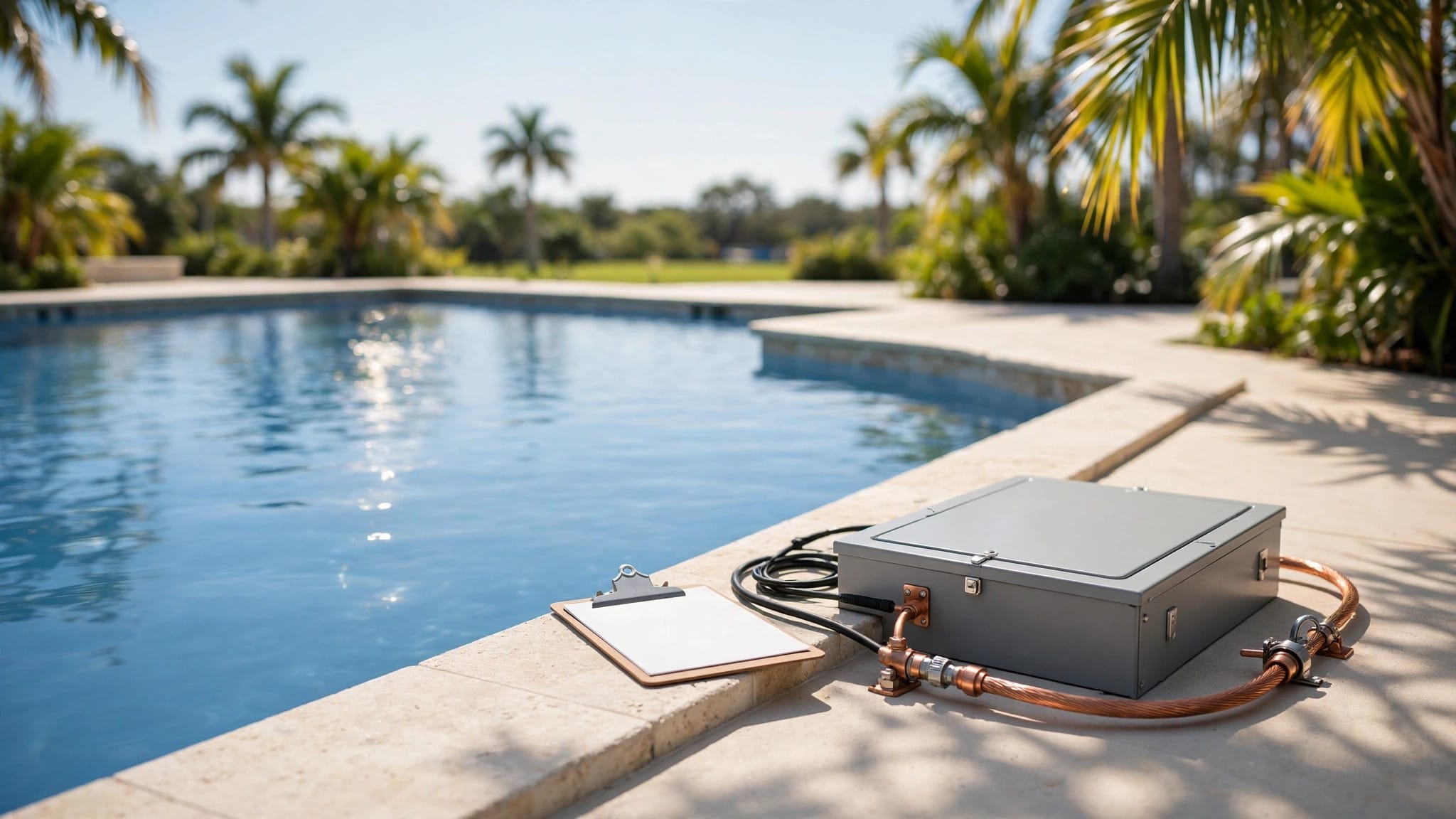
A Florida pool electrical shock claim often turns on whether unsafe wiring, damaged equipment, or defective bonding caused the injury. Bonding records and inspection histories help connect those hazards to the responsible parties, but neither proves liability alone.
For injured swimmers and their families, preserving evidence matters because repairs can change the conditions that explain what happened. Start with medical care and scene safety, then protect the records and equipment needed to investigate the shock.
Key Takeaways
- Bonding, grounding, and ground-fault protection perform different safety functions; an investigation should address each relevant system.
- Permits, inspection results, correction notices, and maintenance files can reveal what changed and who controlled the work.
- A passing inspection doesn’t automatically defeat a claim, and a defect alone doesn’t establish who caused the injury.
- Preserve original recordings and equipment evidence promptly, while keeping emergency safety work and medical treatment first.
Protect People Before Collecting Evidence
Treat a suspected electrical hazard around a pool as an emergency. Call 911, keep others away, and don’t enter the water or touch an affected person while the electrical danger remains. Follow emergency responders’ instructions rather than attempting an improvised rescue that could expose another person to current.
Electrical shock can affect heart rhythm and cause burns or neurological symptoms. Prompt medical evaluation matters even when visible injuries appear limited.
Once responders secure the area, record the incident time, witness names, and where the swimmer was when symptoms began. Photograph accessible areas only from a safe location. Don’t open electrical panels, touch bonding connections, or ask someone to recreate the event.
How Bonding Failures Can Cause Pool Shocks
Bonding and grounding have different jobs
Equipotential bonding connects conductive pool components to reduce dangerous voltage differences between them. Florida Building Commission educational materials explain that this protection can matter even when a pool has no associated electrical equipment.
Grounding provides a fault-current path that helps protective devices operate. A ground-fault circuit interrupter, or GFCI, adds another protective function by detecting an imbalance in current.
These protections aren’t interchangeable. A functioning GFCI doesn’t establish that every required bonding connection exists, and visible bonding wire doesn’t establish that the electrical installation is safe.
The investigation must identify the source and path
An electrical expert may examine pool lights, pumps, junction boxes, wiring, metal rails, and bonding connections. The inspection should address both the source of unwanted voltage and the conditions that exposed the swimmer.
A broken connection can matter, but its role still needs proof. Investigators must distinguish an original installation problem from corrosion, later alterations, or damage during maintenance.
Qualified professionals should document their testing methods and equipment condition. Homeowners and injured swimmers shouldn’t attempt electrical testing themselves.
Which Bonding and Inspection Records Matter?
Permits and approved plans establish the installation history
The permit file can identify the contractor, approved electrical design, inspection stages, failed inspections, and required corrections. Florida’s permit and inspection statute provides the legal framework for much of this building-department documentation.
Request the complete inspection history, including results, inspector comments, correction notices, and reinspections. A final approval may omit details contained in earlier failed inspections.
Dates matter too. The Florida Building Code, 8th Edition (2023), took effect December 31, 2023. However, the requirements relevant to a particular installation depend on its construction and alteration history, rather than the injury date alone.
Maintenance records show what happened after approval
A pool can change substantially after its original inspection. Pump replacements, lighting repairs, resurfacing, and electrical alterations may affect the conditions an expert needs to evaluate.
Service invoices and work orders can identify who disconnected equipment, replaced parts, or responded to earlier complaints. Emails about tingling sensations, repeated breaker trips, or unresolved lighting problems may help establish prior warning.
Compare those records with the equipment actually present. Model numbers, installation photographs, and dated invoices can expose gaps between approved plans and later work.
A passing inspection documents an approval at a particular time. It doesn’t establish that later repairs preserved the same electrical conditions.
Obtain Records and Preserve Evidence Separately
Public records and private files follow different routes
Florida’s public-records law generally allows access to state and local government records, subject to exemptions. Building departments may hold permits and inspection histories. Agencies overseeing public pools may also hold operating inspections, complaints, or enforcement records.
Identify the property address, relevant dates, permit numbers if available, and requested record categories. Older construction documents may be separate from recent repair permits.
Private maintenance files, contractor communications, and surveillance recordings don’t become public merely because an injury occurred. Obtaining them may require cooperation or formal legal discovery.
Preservation protects evidence that a records request may miss
An attorney can send preservation letters identifying surveillance video, incident reports, maintenance logs, contractor files, and relevant pool equipment. Some recording systems overwrite footage within days or weeks, so prompt notice matters.
Keep original photo and video files with their date information. Save witness contact details and written communications rather than relying only on edited clips or social-media posts.
As with pool drain entrapment claims, removed components and repair histories can help explain an equipment-related injury. Don’t remove or discard parts yourself.
Emergency safety work should proceed. Qualified professionals should document conditions before and during repairs when safely possible, while counsel addresses preservation of removed equipment. A preservation letter doesn’t guarantee immediate access or replace formal government-claim notice.
What a Florida Pool Electrical Shock Claim Must Prove
Identify each party’s actual responsibilities
A negligence claim generally requires a duty of care, a failure to meet that duty, causation, and damages. An injury at a pool doesn’t establish all four elements.
Potentially responsible parties may include the property owner, pool operator, electrical contractor, or maintenance company. Their involvement depends on who controlled the equipment, performed the work, or had responsibility for addressing the hazard.
Contracts and work orders can clarify those roles. Prior complaints may show what an operator knew, while installation records may reveal a contractor’s separate error. Ownership alone doesn’t explain every party’s responsibility.
Connect the electrical condition to the medical harm
The evidence must explain how the condition caused the exposure and resulting injuries. Expert findings should fit the incident timeline, witness accounts, and medical records.
Important details include whether the swimmer touched a rail, approached a light, or experienced symptoms while particular equipment operated. Record what witnesses observed without asking them to diagnose the electrical problem.
Medical documentation supports a different part of the claim. Keep emergency records, diagnostic results, rehabilitation notes, bills, work restrictions, and wage records. Describe symptoms and prior conditions accurately so providers can distinguish existing problems from new injuries.
Future treatment needs and lasting limitations should rest on medical evidence rather than an early estimate.
Shared Fault and Filing Deadlines Need Early Attention
An insurer may argue that a swimmer entered a closed pool, ignored warnings, interfered with equipment, or contributed to the injury. Those allegations need evidence connecting the conduct to the harm.
Under Florida’s comparative-fault statute, shared responsibility generally reduces recoverable damages in covered negligence actions. A person found more than 50 percent responsible for their own harm generally cannot recover under that rule. An adjuster’s proposed percentage isn’t a court finding.
Video, warning placement, access controls, and witness accounts can help test those arguments. Give truthful information, but don’t guess about electrical causes or adopt an insurer’s description without a factual basis.
Legal deadlines continue while records requests and settlement discussions remain open. The applicable filing period depends on the claim, defendant, and circumstances. Government-owned pools can also involve separate notice requirements and restrictions. Seek legal review before waiting for a complete inspection file.
Frequently Asked Questions
Does a passed inspection prevent an electrical shock claim?
A passed inspection doesn’t automatically resolve liability. It may show that an inspector approved particular work at a particular time, but later repairs, deterioration, or conditions outside that inspection’s scope may still matter. The investigation should compare the inspection record with the physical equipment and incident evidence.
Can a claim proceed if the bonding wire looked intact?
An intact-looking wire doesn’t establish that every necessary connection was effective. Other electrical conditions may also explain the shock. A qualified expert can evaluate relevant connections and equipment, then relate the findings to the swimmer’s exposure. Photographs alone rarely answer every technical question.
What should I bring to an attorney consultation?
Bring the incident date and location, photographs, original recordings, witness information, medical records, and communications with the owner or insurer. Include any permits, inspection reports, or repair invoices already available. You don’t need a complete evidence file before seeking help; identifying missing records and their custodians is part of evaluating the claim.
Build the Claim Around Preserved Evidence
Bonding records matter most when they align with the pool’s physical condition, maintenance history, and medical evidence. A documented chain of events helps establish responsibility more clearly than a single inspection result.
At Avard Law Offices, we offer a free initial consultation for Florida personal injury matters. Bring the records you have so we can review your claim, preservation needs, and applicable deadlines.