
Florida Workers’ Comp for Occupational Contact Dermatitis
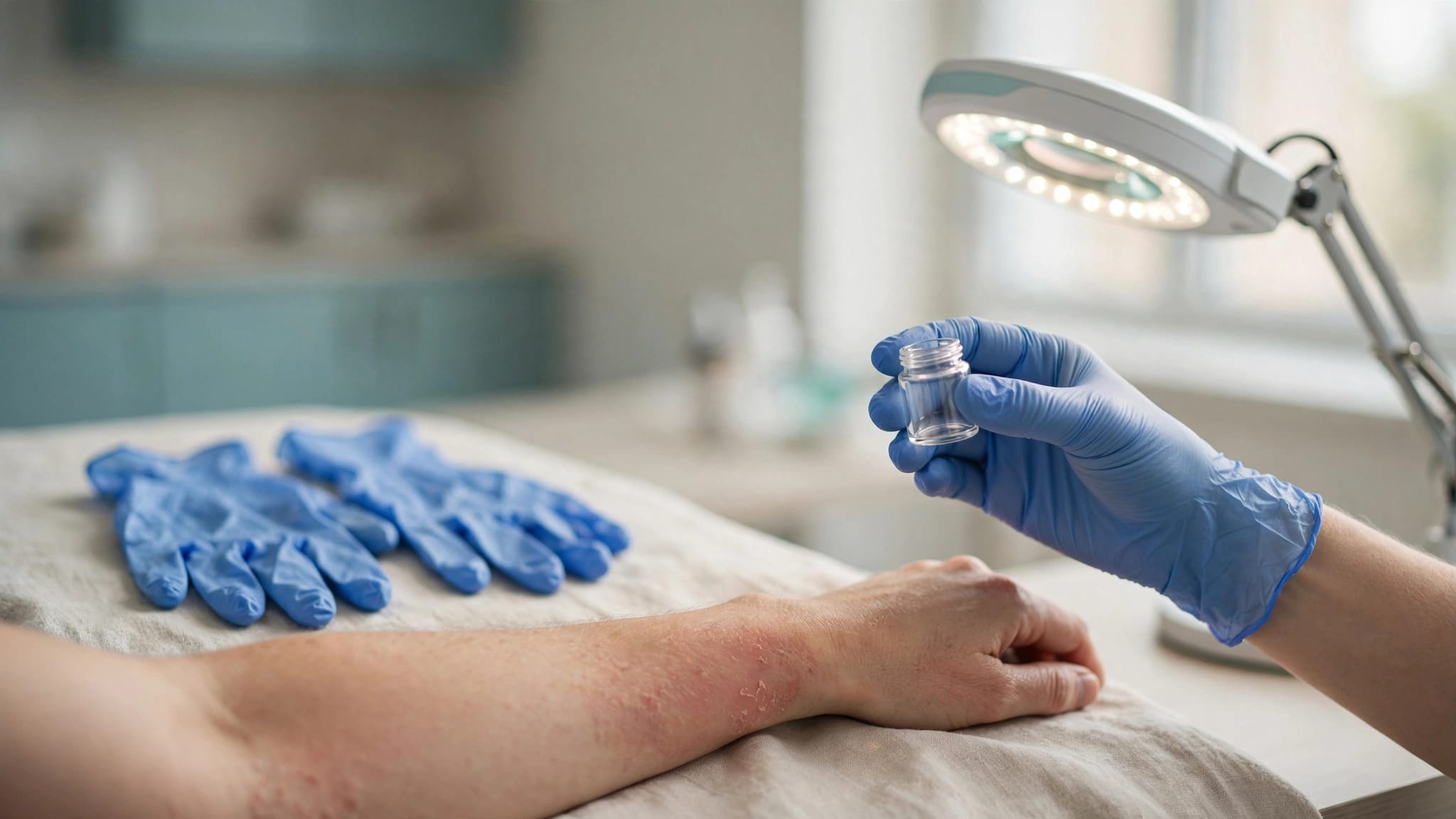
Florida workers’ compensation can cover occupational contact dermatitis when medical evidence establishes the required connection to your job. A rash alone doesn’t prove eligibility, but a documented work-related skin condition may support medical care and qualifying disability benefits.
When symptoms keep returning, you need both treatment and a clear record of workplace exposure. Medical evidence and timely reporting matter, even if you can still work.
Start by understanding what Florida requires for an occupational disease claim.
Key Takeaways
- Occupational dermatitis claims require evidence connecting the diagnosed skin condition to workplace hazards.
- Florida’s occupational-disease law extends the employer-notice period to 90 days. A sudden workplace injury generally follows a different, 30-day notice rule.
- Reporting the condition doesn’t replace filing a Petition for Benefits when benefits are disputed. Separate filing deadlines apply.
- Photographs, medical findings, exposure records, and written communications can help explain how the condition developed and affected your work.
When Occupational Dermatitis Qualifies for Workers’ Comp
Florida generally doesn’t require you to prove employer negligence to receive workers’ compensation. However, you must establish that the condition meets the law’s employment-related requirements.
The workplace must present a qualifying hazard
Under Florida’s occupational-disease law, disablement resulting from a qualifying occupational disease is treated as an injury by accident. The disease must arise from the nature of the employment, and employment must be its major contributing cause.
The statute addresses hazards characteristic of and peculiar to the work. It also addresses occupations with a substantially higher incidence of the disease than occupations generally.
Therefore, developing a rash while employed doesn’t automatically establish coverage. The evidence must explain the workplace hazard and its connection to your condition.
Medical evidence must establish causation
Florida requires medical evidence to establish major contributing cause. Physical-examination findings and diagnostic testing matter because a worker’s belief about the cause cannot replace medical proof.
Your doctor needs an accurate account of your duties, exposure, symptom history, and relevant medical background. Earlier skin problems and possible nonwork causes belong in that history too.
A useful medical record explains why the workplace exposure matters. It should also address the condition’s effect on treatment needs and your ability to perform your job.
Recognizing and Documenting Contact Dermatitis
Contact dermatitis can involve itching, redness, inflammation, blistering, or cracked skin. However, similar-looking symptoms can have different causes, so a medical diagnosis matters.
Irritant and allergic dermatitis differ
The CDC describes irritant and allergic contact dermatitis as inflammatory skin conditions associated with contact exposures.
Irritant dermatitis involves damage to the skin from an irritating substance. Allergic contact dermatitis involves an immune reaction to a substance that triggers an allergy.
That distinction can affect treatment and the investigation of workplace exposure. Don’t label the condition yourself or assume every recurring rash has the same cause.
Seek medical attention for persistent or worsening symptoms. Severe swelling, breathing difficulty, or signs of infection require urgent attention.
The symptom timeline provides useful context
Record when symptoms first appeared, where they developed, and what duties you performed beforehand. Also note whether symptoms changed during workdays, weekends, or longer periods away.
Improvement away from work can support the history, but it doesn’t prove causation by itself. Likewise, symptoms that continue after a shift don’t automatically rule out a work connection.
Keep the account factual. If you don’t remember an exact date, identify it as approximate rather than creating false precision.
Evidence That Connects Your Skin Condition to Work
An occupational dermatitis workers’ compensation claim needs more than photographs of irritated skin. The evidence should connect your actual duties, the suspected exposure, and the medical findings.
Preserve the names of substances you handle and any available product labels or Safety Data Sheets. These records can help your physician understand what contacted your skin. Keep records lawfully, without removing confidential business materials you aren’t entitled to possess.
Photograph visible changes with dates, but retain the original files. Pictures taken during a flare may help explain symptoms that look different by the appointment date.
Work schedules and assignment records also matter. They can show when exposure occurred and whether duties changed before symptoms began.
Save medical records, work restrictions, pay records, and communications about missed shifts. If someone observed your symptoms or working conditions, preserve that person’s name and what they actually witnessed.
A witness can describe exposure or visible skin changes. Medical evidence must establish the diagnosis and required causal connection.
Keep original messages and documents. If you later prepare a written timeline, identify it as a later summary rather than presenting it as a contemporaneous record.
Report Dermatitis and Protect Filing Deadlines
Florida separates notice to your employer from the legal filing used to pursue disputed benefits. Meeting one requirement doesn’t automatically satisfy the other.
Occupational-disease notice differs from accident notice
Section 440.151 extends the employer-notice period to 90 days for occupational diseases. A sudden workplace injury generally falls under the 30-day notice rule instead.
The applicable rule and starting date depend on the claim’s facts, including the condition’s manifestation and your knowledge of its work connection. Report suspected work-related dermatitis promptly rather than waiting for the outside deadline.
Identify your symptoms, affected areas, duties, suspected exposure, and relevant dates. Follow a verbal report with an email, text, or incident report. Save a copy outside your work account.
If a manager refuses to cooperate, our guidance on employer injury-reporting refusals explains why preserving your own notice matters.
A Petition for Benefits has a separate deadline
Florida generally provides two years after you knew or should have known the injury arose from employment to file a Petition for Benefits. The state’s injured-worker informational brochure describes the general filing period.
Authorized treatment and indemnity payments can affect the limitations calculation. Long gaps without either can also create problems.
A Petition for Benefits formally requests disputed benefits through Florida’s workers’ compensation system. It isn’t the same document as an employer’s injury report.
An insurer’s statement that a claim is “under review” doesn’t automatically pause the deadline for pursuing disputed benefits.
Benefits and Disputes in a Dermatitis Claim
Coverage and benefit eligibility are separate questions. Even when a skin condition is work-related, the available benefits depend on medical findings and the effect on your ability to earn wages.
Medical care and work limitations
Workers’ compensation may provide authorized medical care for a compensable condition. Qualifying wage benefits may also apply when disability affects your earnings.
The Florida injured-worker FAQs explain the system’s basic medical and disability benefits.
Ask your treating physician to document functional limits clearly. A general notation of “rash” may not explain why your condition interferes with assigned duties.
Keep written restrictions and records of work offered within those restrictions. Also retain pay records showing reduced earnings or missed work.
Why insurers dispute skin-condition claims
A carrier may question whether workplace exposure caused the condition, whether a different condition explains the symptoms, or whether the medical evidence supports the requested benefits.
The response should address the actual reason for the dispute. More photographs won’t necessarily resolve a missing medical opinion about causation.
Similarly, a physician’s diagnosis may need supporting exposure information. Obtain the written denial and preserve the records the insurer identifies.
Describe symptoms consistently and accurately. Exaggeration, omitted medical history, or guesses about exposure can create avoidable credibility disputes.
How a Florida Workers’ Comp Attorney Can Help
Occupational dermatitis claims can become difficult when symptoms develop gradually, several employers are involved, or the carrier attributes the condition to something outside work.
An attorney can examine the exposure history, medical opinions, employer notice, and benefit records together. That review helps identify whether the dispute concerns coverage, missing medical support, denied care, lost earnings, or a filing deadline.
Legal help also matters when an employer treats the absence of a single accident date as a reason to reject the report. An occupational disease doesn’t have to begin with one dramatic incident.
Bring your medical records, photographs, written notice, carrier correspondence, and wage information to the consultation. Include prior records relevant to the skin condition rather than withholding information you think may hurt the claim.
At Avard Law Offices, we represent Florida workers in workers’ compensation matters and offer free case evaluations. We can review the unresolved issues and explain the next steps for pursuing benefits.
Frequently Asked Questions
Can I pursue a claim if I’m still working?
Yes. Continuing to work doesn’t automatically prevent a claim for a compensable occupational skin condition. However, medical benefits and wage benefits have different requirements. A worker who maintains regular earnings may have a medical-care issue without qualifying for wage replacement.
What if my employer won’t provide insurance information?
Preserve proof of your report and request the carrier’s contact information in writing. Florida’s Employee Assistance and Ombudsman Office assists workers with carrier information and claims questions at 1-800-342-1741. An employer’s silence doesn’t automatically extend notice or filing deadlines.
Does workers’ comp pay for pain and suffering?
Florida workers’ compensation doesn’t provide a separate pain-and-suffering award. It provides defined benefits, including authorized medical treatment and qualifying disability payments. A rash’s discomfort matters medically, but the benefits analysis depends on the statutory requirements rather than a general valuation of suffering.
Protect Your Skin and Your Right to Benefits
A work-related skin condition needs a record that connects workplace exposure, medical findings, and the effect on your job. Prompt reporting protects that record while the medical evaluation develops.
Keep your documents together and address denied care or disputed benefits before filing rights expire. If occupational dermatitis is interfering with your work, we can evaluate the claim and help you understand your options.