
Florida Workers’ Comp When Your Employer Has No Insurance
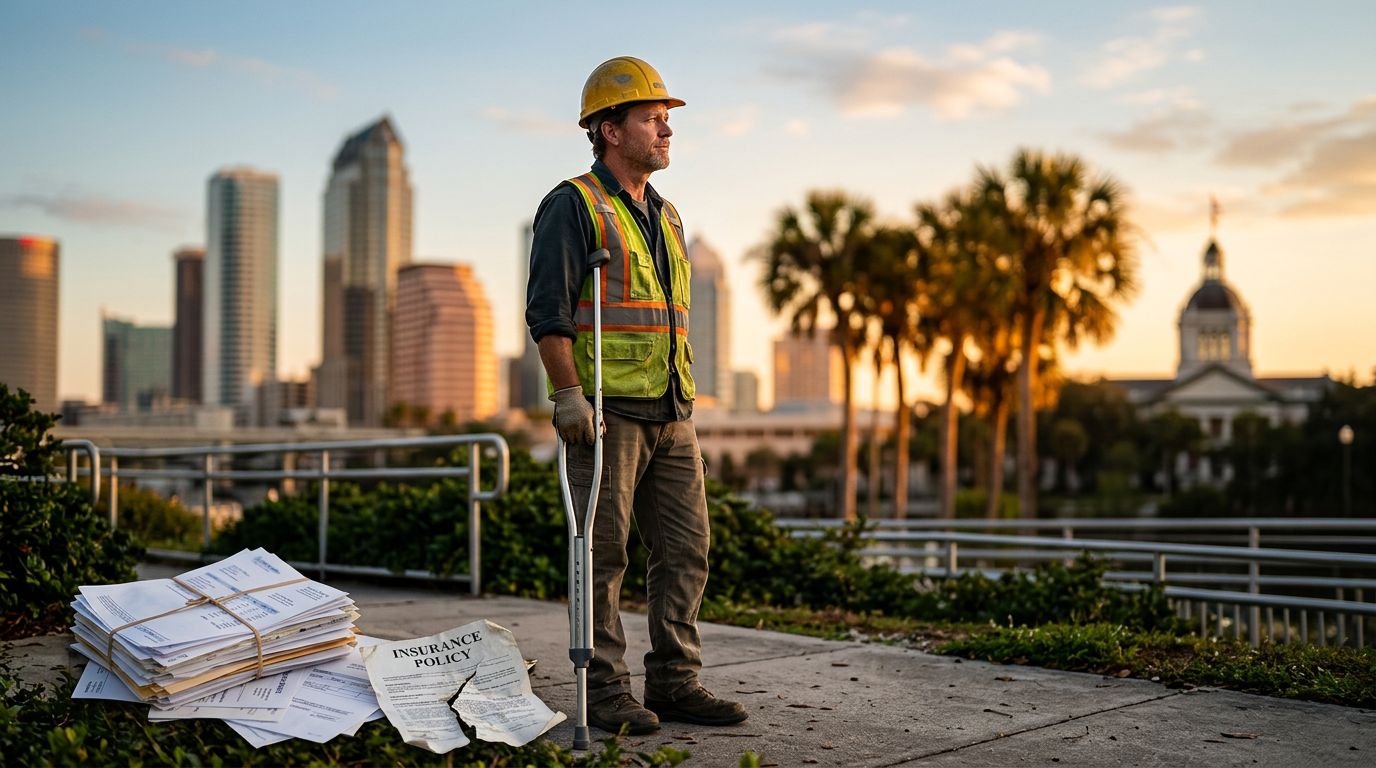
A workplace injury is hard enough. Finding out your employer has no workers’ comp insurance can turn one problem into three: medical bills, missed paychecks, and a legal fight.
If you’re dealing with an uninsured employer in Florida, the first question is simple, but important. Was the business required to carry coverage at all? If it was, the missing policy can change your options in a big way.
Key Takeaways
- Florida usually requires workers’ comp for businesses with 4 or more employees, and construction has a 1-employee rule.
- If coverage was required and missing, the state can issue stop-work orders and steep penalties.
- An injured worker may be able to sue in civil court because the employer may lose workers’ comp immunity.
- Notice and documentation still matter, especially the 30-day reporting window.
- A lawyer can sort out exemptions, misclassification, and the best path forward.
When Florida requires workers’ comp coverage
The first question is whether the business had to carry coverage at all. Florida does not require every employer to buy workers’ comp, but the rule reaches many more businesses than people expect. The threshold depends on the type of work.
| Employer type | Florida coverage rule | What it means |
|---|---|---|
| Most non-construction businesses | 4 or more employees | Coverage is usually required |
| Construction businesses | 1 or more employees | Coverage is usually required |
| Agricultural employers | 6 or more regular employees, or 12 or more seasonal workers | Coverage may be required depending on headcount |
| Sole proprietors and some partners | Often excluded unless they elect coverage | No automatic coverage duty in every case |
| Misclassified workers | Status depends on the real job facts | A label alone does not control |
A small retail shop with three workers may sit outside the rule. A construction company with one helper usually does not. Agriculture has its own threshold, and seasonal headcount can matter.
Independent-contractor labels can also muddy the water. In construction, that issue comes up often. State investigators look at how the work actually runs, not just the title on a form. Who sets the schedule? Who controls the job? Who supplies the tools? Those details matter.
So, an employer without insurance is not always breaking the law. Sometimes the business is exempt. Sometimes it is not. That difference affects whether you are looking at a compensation problem, a civil injury case, or both.
What happens when the employer has no policy
Florida’s workers’ comp rules sit in Chapter 440 of the Florida Statutes. When an employer should have coverage and does not, the state can act fast.
The consequences can include:
- A stop-work order that shuts the business down until it comes into compliance.
- A penalty of at least $1,000, or two times the premium the employer should have paid during the lookback period, whichever is greater.
- A $5,000 penalty for each worker falsely treated as an independent contractor.
- Extra penalties if the business keeps operating after a stop-work order.
Those penalties hit the employer. They do not replace your medical care or lost wages. Your claim still needs its own path.
When coverage should have existed, the employer may lose the usual workers’ comp shield.
That change matters. Workers’ comp is normally a no-fault system. A civil case is different. You may need to prove negligence, but you may also seek damages that workers’ comp does not pay, including pain and suffering.
The Florida Division of Workers’ Compensation and the Department of Financial Services handle enforcement. If a business has been hiding behind false paperwork, the problem can grow fast.
What to do right after the injury
If the injury just happened, the Florida workers comp first 24 hours checklist can help you stay organized.
- Get medical care right away. Tell the doctor the injury happened at work.
- Report the injury in writing within 30 days. Keep the message short and clear.
- Save proof. Hold on to photos, witness names, schedules, text messages, pay stubs, and any statement about insurance.
- Do not sign a release or take a cash payment before you know what it covers.
If the employer says it has no insurance, ask for that in writing. If the answer changes later, the record will matter. A text thread can be worth more than a hallway argument.
Follow your doctor’s instructions too. If you miss appointments or ignore restrictions, the employer may use that against you. Every piece of the paper trail helps.
Can you still recover money in civil court?
Yes, often you can. If the employer should have had coverage but did not, you may be able to sue the business in civil court.
That is where Florida workers compensation attorneys can make a difference, because these cases often start with a coverage question and end with a liability fight. A lawyer can check payroll records, job duties, ownership details, and any signs of misclassification.
A civil claim can seek:
- Medical expenses
- Lost wages
- Future loss of income
- Pain and suffering
Other parties may also share fault, depending on the facts. A general contractor, subcontractor, property owner, or equipment maker can become part of the case if their conduct helped cause the injury.
The main point is simple. A missing policy does not erase your injury. It changes the route.
Deadlines and evidence that can save a case
Deadlines still matter, even when the employer had no policy. Florida generally expects notice of the injury to the employer within 30 days. If you wait too long, the employer may argue that the injury came from somewhere else.
If there is any chance the claim still belongs in the comp system, the Florida workers compensation claim deadline matters too. Missing a deadline can close a door before the facts get sorted out.
Keep everything tied to the injury:
- ER discharge papers
- Follow-up visit notes
- Wage records
- Written reports to the employer
- Photos of the scene, equipment, or injury
- Any message about insurance or lack of coverage
Save screenshots, not just memories. Save originals, not just summaries. When the employer had no insurance, the record can decide whether the case turns into a strong claim or a hard argument.
Conclusion
A missing policy changes the legal path, but it doesn’t erase the injury. The first step is figuring out whether Florida required coverage in the first place. The second is preserving proof before anyone starts rewriting what happened.
If your employer should have carried workers’ comp and didn’t, you may have a civil claim, not just a benefits issue. The sooner the facts are locked down, the harder it is for the other side to bend them.