
Florida Workers Comp Coverage for Unpaid Meal Break Injuries
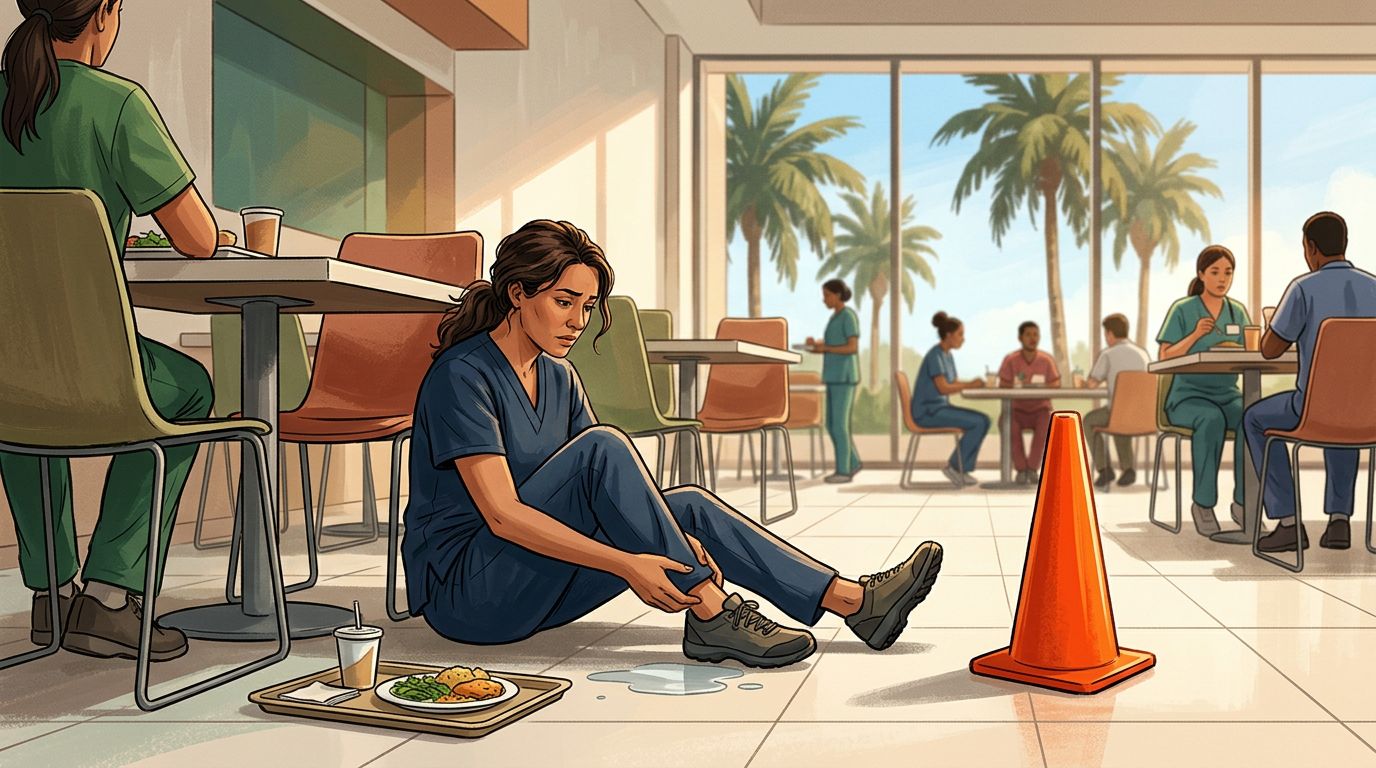
An unpaid lunch break can still end with a workers’ compensation claim in Florida. Florida workers comp coverage does not depend only on whether you punched out or received wages during the break.
A worker who slips in an employer’s cafeteria may have a different claim from someone injured while driving to a restaurant across town. Location, employer control, the purpose of the break, and the activity at the time of injury often determine the result. Start with the legal test that applies to both paid and unpaid breaks.
The legal test for an injury during a meal break
Florida workers’ compensation law does not create an automatic exclusion for lunch periods. Instead, the claim must satisfy the requirement that the injury arose out of work performed in the course and scope of employment.
The injury must arise out of employment
Under Florida’s workers’ compensation coverage statute, an employer may owe benefits when an employee suffers an accidental injury arising out of and in the course of employment.
That test has two related parts. The injury must occur during an activity connected to the employment, and it must happen during a time and at a place where the employee remains within the employment relationship.
A meal break can fit within that relationship even when the employee is not performing a specific job task. Florida recognizes the personal comfort doctrine, which can cover ordinary activities such as eating, drinking, using the restroom, or getting fresh air when they occur within reasonable time and space limits of the workday.
However, the doctrine does not cover every personal activity. A substantial departure from the workplace or the employer’s business can take the injury outside coverage.
Unpaid status does not decide the claim
Punching out may support the employer’s argument that the employee left the course and scope of employment, but it doesn’t settle the issue. Workers’ compensation coverage and wage-payment rules address different questions.
The better question is what the employee was doing, where the activity occurred, and whether the employer retained control over the break. For example, an unpaid break spent in an employer-controlled break room may receive different treatment from an unpaid trip to a private location.
A Florida workers comp insurer may focus on the employee’s timecard. A judge will usually examine the full set of facts instead.
When Florida workers comp may cover a meal break injury
The strongest meal-break claims usually involve the employer’s premises, an employer-directed activity, or a break that remains closely connected to the workday.
Injuries on the employer’s premises
An employee who remains at work during lunch may have a compensable claim after slipping on a wet cafeteria floor, falling on a stairway, or being injured in an employer-controlled break area.
The employer’s ownership or control of the location matters. A parking lot may also qualify when the employer owns it, leases it, controls access to it, or treats it as part of the workplace. See our guide to Florida workers’ comp for parking lot injuries for additional examples.
Being on company property does not guarantee benefits. The injury still must arise from a work-related risk or an activity that falls within the personal comfort doctrine. Yet remaining on the premises generally makes the claim stronger than leaving for a purely personal lunch.
The employee’s assigned area, the condition that caused the injury, and any restrictions placed on the break can all matter.
Work-related activity during lunch
An unpaid meal period may remain within the course and scope of employment when the worker continues performing an assigned duty. Common examples include:
- Attending a required meeting during lunch.
- Eating with a customer or client for a business purpose.
- Picking up supplies or delivering documents at an employer’s direction.
- Answering a work call while carrying out a related task.
- Traveling between job locations when travel is part of the employee’s duties.
The employer does not need to pay for the meal for the activity to benefit the business. What matters is whether the employee was serving the employer’s interests or following an instruction when the accident occurred.
For a closer discussion of the location and purpose questions, review Florida workers’ comp lunch break injuries.
When a personal off-site lunch is less likely to qualify
Florida decisions generally treat an off-premises lunch differently when a worker has a fixed job location and a fixed lunch period.
Leaving a fixed workplace for lunch
A fixed-place employee who leaves the employer’s premises for a personal meal is usually outside the course and scope of employment while traveling to or eating at that location. An accident in a restaurant parking lot or on the road to a sandwich shop may therefore be denied.
The same issue can arise when an employee drives home during lunch. The trip usually serves a personal purpose and does not expose the worker to a risk created by the job.
This rule is fact-sensitive. It can change when the employee had no fixed workplace, was required to travel, received a work assignment during the trip, or was transporting an item for the employer.
Personal deviations can weaken a claim
A short break for food or drink may fit within ordinary work activity. A significant personal detour may not. The longer the employee travels, the farther away the employee goes, and the more unrelated the activity becomes, the more likely the carrier will argue that employment no longer caused or controlled the risk.
Recreational activities also create problems. An employee injured while playing an unsanctioned sport, attending to a personal errand, or visiting a private location may face a stronger denial, even if the accident happened during the scheduled lunch period.
The key issue is not whether the conduct seems reasonable. It is whether the conduct remained connected to the employment in time, place, purpose, and control.
How insurers examine an unpaid-break claim
A carrier will usually investigate the break in detail. Small facts can affect whether the injury falls inside or outside Florida workers comp coverage.
Questions that may affect the decision
The investigation may consider:
- Where exactly did the injury happen?
- Did the employer own, lease, or control the location?
- Was the employee required to stay on the premises?
- Did a supervisor approve or direct the activity?
- How long was the break supposed to last?
- Was the employee performing work or meeting with someone for business?
- Did the employee take a personal detour?
- Were other employees allowed to take the same type of break?
- Did the employer provide the cafeteria, shuttle, vehicle, or meal?
- Did the accident occur while walking, driving, eating, or returning to work?
A worker’s description should be accurate and complete. Saying only that the injury happened “off the clock” can leave out facts that support coverage.
Preserve evidence before details disappear
Report the injury promptly, then preserve the information that shows what happened. Save photographs of the hazard, names of witnesses, text messages from supervisors, time records, schedules, receipts, and any written lunch instructions.
Ask the employer to preserve surveillance footage if cameras covered the break area, hallway, entrance, or parking lot. Video may be erased on a routine schedule.
Medical records also matter. Tell the medical provider exactly when, where, and how the injury happened. Explain that it occurred during a work shift and identify any work-related activity involved. Inconsistent descriptions can give the insurer grounds to challenge the claim.
What to do after an injury during lunch
A questionable lunch-break claim should be reported and documented like any other workplace injury.
Notify the employer quickly
Tell a supervisor, manager, or human resources representative as soon as possible. Give the date, time, location, activity, and body parts affected. Written notice by email or text can create a useful record, but follow the employer’s reporting procedure as well.
Under Florida’s notice-of-injury statute, an employee generally must notify the employer within 30 days after the injury or after the initial manifestation of a work-related condition. Waiting can make the claim harder to prove and may lead to denial.
The employer generally must report the injury to its insurance carrier within seven days after learning about it. The Florida Chief Financial Officer’s injured worker FAQs explain these reporting duties and the information injured workers should receive.
If the injury requires emergency care, seek treatment first and notify the provider and employer that the injury occurred in connection with work.
Follow authorized medical care
Ask the employer or carrier where to receive authorized treatment. Keep every appointment, follow work restrictions, and provide copies of medical restrictions to the employer.
Do not assume that a denied claim means you should stop documenting symptoms. Continue recording pain, missed work, changes in duties, and medical recommendations. The Florida injury-reporting instructions provide the state’s basic reporting information.
A covered claim may provide medical treatment and wage-loss benefits when the injury prevents work or limits earnings. The carrier may dispute compensability first, especially when the accident happened away from the employer’s premises.
Watch the claim deadlines
Florida workers’ compensation claims have additional time limits beyond the initial injury report. A Petition for Benefits generally must be filed within two years after the employee knew or should have known that the injury was work-related, subject to exceptions and later deadlines tied to benefits or medical care.
The Florida workers’ comp claim timeline explains the main reporting and benefit deadlines. If the carrier denies the claim, refuses authorization, or fails to pay benefits, a workers’ compensation attorney can evaluate whether a Petition for Benefits is appropriate.
What benefits may be available
If the injury qualifies, workers’ compensation may cover authorized medical care related to the accident. Depending on the doctor’s restrictions and the employee’s wages, the claim may also provide temporary disability benefits when the worker cannot work or earns less because of the injury.
Some injured workers may qualify for permanent impairment benefits after reaching maximum medical improvement. The amount and type of benefits depend on medical evidence, work status, average wages, and the lasting effects of the injury.
Workers’ compensation generally does not pay for pain and suffering. A separate claim may exist when a negligent third party, such as a driver or property owner, caused the accident. That possibility requires a separate review because deadlines and legal standards differ.
Florida’s official benefits guidance describes medical and wage benefits available to qualifying injured workers.
Conclusion
Punching out for lunch doesn’t automatically end Florida workers comp coverage. An injury is more likely to qualify when it happens on employer-controlled premises, during an employer-directed activity, or during a short break that remains within the time and space of employment.
An off-site personal lunch is harder to cover, especially for a worker with a fixed workplace. Report the injury promptly, preserve evidence about the location and purpose of the break, and get legal advice before accepting a denial based only on the fact that the break was unpaid.