
Florida Apartment Fire Claims: Why Alarm Records Matter
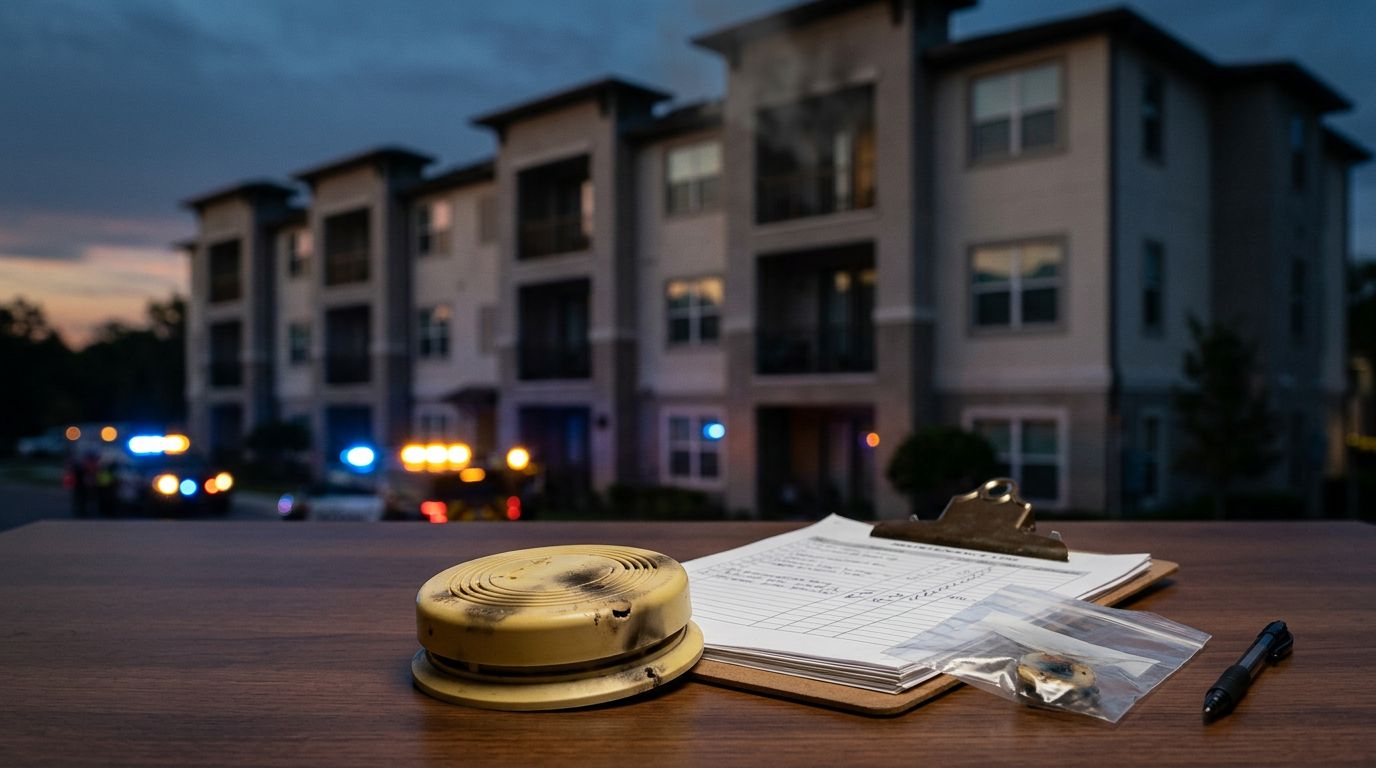
Florida apartment fire claims often turn on a question that receives too little attention: Did a working smoke alarm give residents enough time to escape? When alarms were missing, disabled, poorly placed, or never inspected, records may show that a landlord or property manager failed to address a known safety problem.
Smoke inhalation, burns, falls during evacuation, and other fire injuries can require extensive medical care. The fire report may explain how the blaze started, but smoke alarm records can help show why your injuries became more severe. The evidence should be preserved before damaged equipment, emails, and maintenance files disappear.
Why Smoke Alarm Records Matter in Florida Apartment Fire Claims
A landlord may not be responsible for every fire that occurs on the property. The legal issue often involves the condition of the apartment, the building’s safety systems, and the landlord’s response to known hazards.
A smoke alarm does not prevent every fire. It can, however, provide an early warning. Those extra minutes may allow a resident to leave before a hallway fills with smoke or flames block an exit. If an alarm failed to work, the case may involve more than property damage. The delay could connect the building’s safety failure to the injury.
For example, a resident might suffer burns while searching for a child after no alarm sounded. Another person might inhale dangerous smoke while trying to escape through a corridor that should have been cleared earlier. A tenant could also fall from a balcony or stairwell during a rushed evacuation.
The records can help answer several important questions:
- Did the landlord install a working alarm before the tenancy began?
- Did anyone report that the alarm was chirping, missing, damaged, or silent?
- Did maintenance staff test or replace the device?
- Did a worker remove the alarm during repairs and fail to reinstall it?
- Did the property have inspection procedures for individual units and common areas?
- Did the landlord know about earlier fire safety complaints?
A missing alarm is evidence of a possible safety failure, but the claim still must connect that failure to the time available for escape and the injuries that followed.
The Florida apartment fire injury claims information explains why these cases require proof of duty, breach, causation, and damages. Smoke alarm documents can support each part of that analysis.
Florida Apartment Fire Claims and the Landlord’s Legal Duties
Florida law does not impose one identical smoke detector rule on every type of rental property. The building’s design, construction date, local code, lease terms, and repairs may all affect the duties involved.
Under Florida Statute 83.51, a landlord generally must install working smoke detection devices at the start of a tenancy in a single-family home or duplex, unless the parties agree otherwise in writing. The statute defines qualifying devices by reference to recognized testing and listing standards.
Multi-unit apartment buildings require a closer review. The same statute directs landlords of other dwelling units to comply with applicable building, housing, and health codes. Local fire codes may address alarm placement, testing, inspection, wiring, battery systems, and maintenance.
Florida also has rules concerning certain battery-powered alarms in one-family and two-family dwellings and townhomes undergoing repairs or certain alterations. A newly installed or replacement battery alarm may need a nonremovable, nonreplaceable battery designed to last at least 10 years. That rule should not be treated as a blanket requirement that every Florida apartment must use one particular alarm system.
Local requirements can add important details. For example, a city code may require alarms outside sleeping areas, inside bedrooms, and on each level of a dwelling. Another local rule may require property owners to inspect units at set intervals and keep written records.
That distinction matters because a landlord may argue that a tenant had responsibility for replacing batteries. The lease and local code must be examined together. Even when a tenant has maintenance duties, the landlord may still have responsibility for providing a working, compliant device at move-in and responding to reported defects.
The Four Parts of a Negligence Claim
A fire injury claim generally requires evidence that:
- The landlord or property manager owed a duty to maintain reasonably safe premises.
- The responsible party failed to meet that duty.
- The failure contributed to the injury or increased the harm.
- The victim suffered legally recognized damages.
A smoke alarm violation may help prove the second element. It does not automatically establish the entire case. The evidence must show what happened, who controlled the alarm, whether anyone knew about the problem, and how the missing warning affected the escape.
Which Smoke Alarm Records Can Strengthen a Case?
Property owners and management companies often maintain more safety records than tenants see. Those records may be stored in a leasing office, maintenance platform, email account, contractor file, or building inspection system.
Important documents may include:
- Move-in checklists showing whether alarms were present and tested.
- Work orders for battery replacement, detector testing, electrical repairs, or ceiling work.
- Tenant complaints about chirping, false alarms, missing covers, or devices that would not sound.
- Emails, text messages, and online maintenance requests concerning fire safety.
- Inspection logs for apartments, hallways, stairwells, and other common areas.
- Vendor invoices identifying the alarm model, installation date, repairs, and replacement history.
- Lease provisions assigning battery or testing responsibilities.
- Notices sent to residents about alarm inspections or building safety problems.
- Code enforcement records, violation notices, permits, and certificates of completion.
- Prior incident reports involving smoke, fire, blocked exits, or alarm failures.
The device itself may also contain evidence. Investigators may need to photograph its location, wiring, battery compartment, model number, and condition before anyone removes it. A painted-over alarm, an empty battery compartment, or a detector found in a drawer can have a different legal meaning than a properly installed alarm that failed because of an electrical defect.
Records from the fire department, fire marshal, emergency dispatch center, and code enforcement office may help establish the timeline. Medical records then show the type and severity of the resulting injuries.
A lawyer may send preservation requests to the landlord, property manager, maintenance companies, and other responsible parties. Those requests can cover paper files, electronic work orders, surveillance footage, access logs, resident communications, and damaged equipment. Prompt action matters because ordinary retention systems may delete data.
How Alarm Evidence Helps Prove Causation
Causation is often the hardest issue in an apartment fire case. The defense may admit that an alarm was missing but argue that the fire spread too quickly for any warning to make a difference. It may also claim that the resident ignored an alarm, used an unsafe escape route, or caused the fire.
The timing of the event becomes important. Investigators may compare the reported time of ignition, the first emergency call, the alarm’s condition, the fire’s point of origin, and the time required to evacuate. Witness statements can show whether anyone heard an alarm, saw smoke before a warning, or discovered that a detector had no battery.
Building layout also matters. A resident on an upper floor may need more warning than someone near a ground-level exit. Locked gates, blocked stairwells, security bars, broken exit lights, and heavy smoke in shared corridors can affect the time available for escape.
Alarm records can reveal notice before the fire. Suppose tenants repeatedly reported that a detector did not work, and maintenance closed the requests without testing it. That history may support an argument that the property manager knew about the hazard and failed to correct it.
The defense may focus on the tenant’s conduct. A lease clause could assign battery replacement to the resident, but that clause does not resolve every issue. Investigators still need to determine whether the alarm functioned at move-in, whether the landlord supplied the required device, and whether prior complaints placed management on notice.
What to Do After an Apartment Fire
Your first priority is medical treatment and immediate safety. Once you are out of danger, take steps to protect evidence and avoid statements that could be misunderstood.
- Follow medical instructions. Smoke inhalation can cause serious respiratory problems, and burn injuries may require later treatment even when the initial wounds appear limited. Keep records of every appointment, prescription, therapy session, and work absence.
- Photograph the apartment and alarm system. If it is safe and permitted, photograph the alarm’s location, visible damage, missing batteries, blocked exits, smoke damage, and your injuries. Do not remove or test damaged equipment yourself.
- Save communications. Keep lease documents, maintenance requests, rent portal messages, emails, texts, notices, and photographs. Write down when you reported a problem and who responded.
- Identify witnesses. Neighbors, visitors, maintenance workers, firefighters, and responding officers may have information about the alarm and the evacuation. Record their names and contact details if you can do so safely.
- Avoid recorded statements before legal advice. Insurance representatives may ask about the fire, your injuries, or your actions before the investigation is complete. Answering too quickly can create a statement that leaves out important facts.
- Get legal guidance promptly. A Florida personal injury lawyer can identify potentially responsible parties and seek records before they are altered, lost, or destroyed.
Keep damaged clothing, personal property, medical equipment, and other physical evidence unless a lawyer or investigator tells you otherwise. Do not sign a settlement or release before you understand future medical costs, lost income, and the effect of permanent scarring or breathing problems.
Burn injuries may affect mobility, sleep, work, and emotional health. A consultation with Florida burn injury attorneys can help determine whether the available evidence supports a claim for medical expenses, lost wages, pain, disability, disfigurement, and other damages.
Who May Be Responsible for an Apartment Fire Injury?
The landlord or property owner may be responsible when negligent maintenance or a known alarm problem contributes to an injury. A property management company may share responsibility if it controlled inspections, repairs, tenant complaints, or vendor contracts.
Other parties may also require investigation. An electrical contractor, alarm maintenance company, security company, or manufacturer could have caused or failed to correct a separate hazard. The fire’s origin must be determined before assigning responsibility.
Insurance coverage can add another layer. The property owner’s insurer may handle building damage, while a tenant’s renters insurance may cover personal belongings and certain temporary living costs. Insurance payments for property may not fully compensate a person for bodily injuries caused by negligence.
Florida apartment fire claims also may involve a wrongful death action when a resident dies. Surviving family members should preserve the same types of evidence, including alarm records, emergency communications, medical files, employment information, and funeral expenses.
Time limits can restrict how long an injured person has to file a lawsuit. The deadline may depend on the claim, the defendant, and the facts. Waiting for an insurance company to finish its review does not always preserve your legal rights.
Conclusion: Preserve the Smoke Alarm Evidence
A fire report can show where a blaze began, but it may not answer whether a working alarm would have changed the evacuation. Maintenance logs, complaints, inspection records, lease provisions, photographs, and witness accounts can fill that gap.
If you were injured in an apartment fire, preserve the evidence and seek legal advice before damaged alarms or digital records disappear. In many Florida apartment fire claims, the clearest proof of negligence is found in the records created before anyone called 911.