
Florida Dog Bite Claims for Delivery Drivers and Postal Workers
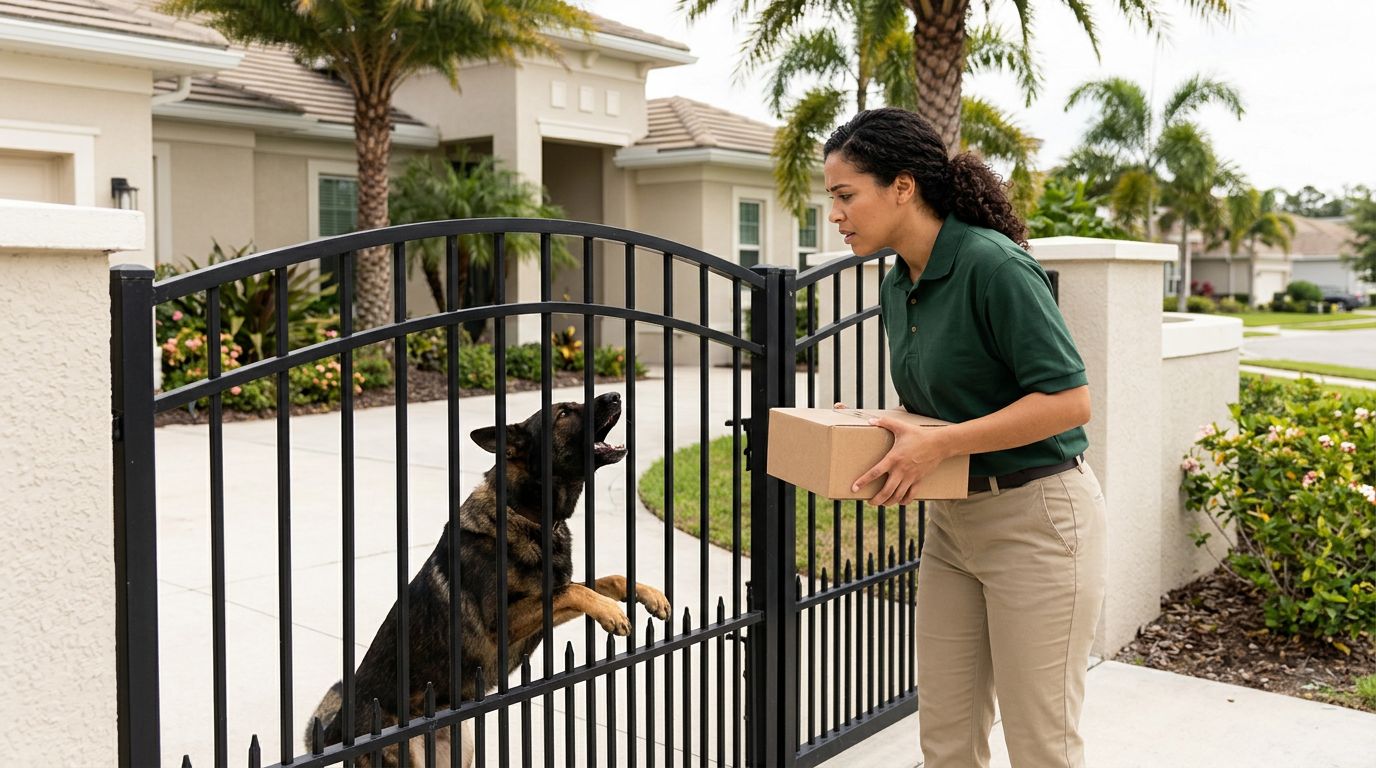
A routine stop at a front door can become a serious injury in seconds. Florida dog bite claims can be more complicated for delivery drivers and postal workers because the bite may create both a claim against the dog owner and an employment injury claim.
Florida law generally holds dog owners responsible when a dog bites someone in a public place or while the person is lawfully on private property. The worker’s job status, reason for entering the property, medical condition, and available insurance can all affect the recovery.
Why a Work-Related Dog Bite Has Two Legal Tracks
A delivery driver or postal carrier may have rights under two separate legal systems after a dog attack.
The first is a personal injury claim against the dog owner. Florida’s dog bite statute usually does not require proof that the owner knew the dog was dangerous or had attacked someone before. The claim may cover medical expenses, lost income, scarring, pain, emotional distress, and future treatment.
The second track is an employment injury claim. A private delivery driver who is a company employee may qualify for workers’ compensation. A United States Postal Service employee generally uses the federal workers’ compensation system under the Federal Employees’ Compensation Act, rather than Florida’s state workers’ compensation system.
Independent contractors face a different issue. A company may call a driver a contractor, but that label doesn’t always settle the legal question. The actual work arrangement, control over the driver, payment method, schedule, equipment, and contract terms may matter.
These claims can exist at the same time. Workers’ compensation may pay authorized medical care and some wage benefits, while a claim against the dog owner may provide damages that workers’ compensation doesn’t cover, including pain and suffering.
A workers’ compensation claim doesn’t automatically replace a personal injury claim against the dog owner. The two claims often require separate notices, evidence, and deadlines.
How Florida dog bite claims Work for Working Visitors
Florida Statute 767.04 imposes liability when a dog bites a person in a public place or while the person is lawfully on private property. The law applies regardless of the dog’s former viciousness or the owner’s knowledge of that viciousness. You can review the current text of Florida Statute 767.04.
The statute also explains when someone is lawfully on private property. It includes a person entering under an invitation and a person performing a duty imposed by Florida law or United States postal regulations. That language is especially important for postal carriers.
A letter carrier delivering mail to a residence generally has a strong argument that the carrier was lawfully present. The same may apply to a private delivery driver who enters a property to deliver a package or food as part of an assigned route. The facts still matter. A driver who enters through a marked no-trespassing area, wanders into an unrelated part of the property, or acts outside the delivery assignment may face an argument about lawful presence.
Florida law also recognizes defenses. A clearly readable “Bad Dog” sign may limit an owner’s liability in some situations. That protection has exceptions, including cases involving children under age six or injuries caused by the owner’s negligence.
The injured worker’s own conduct can affect the result. If the owner claims the driver teased, struck, cornered, chased, or otherwise provoked the dog, the evidence must be examined carefully. Florida’s comparative negligence rule may reduce damages when the bitten person’s negligence contributed to the incident.
Workers’ Compensation Depends on the Driver’s Job Status
Private delivery employees
A driver employed by a private company may qualify for Florida workers’ compensation when the bite occurred during work. The injury usually must arise out of and happen within the course of employment.
For example, a driver making assigned stops for UPS, a local courier company, or another private employer may have a workers’ compensation claim. The employer or insurance carrier may provide authorized medical treatment and wage-loss benefits. Workers’ compensation generally doesn’t pay damages for pain and suffering.
Report the injury to the employer as soon as possible. Florida law generally requires notice within 30 days, but waiting creates avoidable disputes about how and when the injury happened. Ask for the report to be documented, and keep copies of emails, text messages, incident forms, and medical records.
Workers’ compensation insurers often direct injured workers to authorized doctors. A driver who treats only with a personal physician may face payment problems, except in situations such as an emergency or when authorized care isn’t available.
USPS carriers and federal employees
Postal workers normally report on-the-job injuries through the federal workers’ compensation process. A carrier should notify a supervisor, document the attack, and follow the United States Postal Service reporting procedure.
The federal claim and the claim against the dog owner serve different purposes. Federal benefits may address medical care and wage loss. The personal injury claim may seek compensation for pain, permanent scarring, emotional harm, and losses not paid through the employment system.
Independent contractors and gig drivers
Drivers for DoorDash, Uber Eats, Grubhub, Amazon Flex, and similar services may not automatically receive workers’ compensation. Whether a driver is an employee or independent contractor depends on the facts and the governing agreement.
A disputed employment classification doesn’t necessarily defeat a claim against the dog owner. A 1099 driver who was lawfully making a delivery may still pursue personal injury damages under Florida law. Separate occupational accident coverage or commercial insurance may also apply, depending on the company and policy.
What to Do After a Dog Bite on the Route
Your actions during the first hours can affect both the injury record and the insurance investigation.
- Get medical care immediately. Puncture wounds can become infected, and bites may damage tendons, nerves, or joints. Tell the provider that a dog caused the injury and explain that it happened during work.
- Report the incident to the employer. Give the date, time, address, delivery assignment, and a short factual description. Postal employees should also notify the appropriate supervisor and begin the federal injury process.
- Report the dog attack to the proper local agency. Animal control or the local health department may investigate the dog, vaccination records, quarantine requirements, and rabies concerns.
- Preserve evidence. Photograph the wounds, torn clothing, the property entrance, warning signs, the dog if safe, and any blood or other visible evidence. Save delivery scans, route information, GPS records, and the package or food order connected to the stop.
- Identify witnesses. Neighbors, residents, coworkers, supervisors, and other people on the route may have seen the attack or heard the owner discuss the dog’s behavior.
Don’t sign a release or give a detailed recorded statement to the dog owner’s insurer before understanding what the document covers. An early settlement may fail to account for infection, surgery, scar revision, therapy, lost earning capacity, or lasting fear.
Evidence That Supports Florida Dog Bite Claims
A strong claim connects the bite to the property, the dog, the work assignment, and the resulting medical condition.
Useful evidence may include the delivery record, employee schedule, route history, photographs, surveillance footage, witness statements, animal control records, and the owner’s insurance information. Doorbell cameras can be especially valuable because they may show where the driver stood, whether the dog was restrained, what the owner said, and how the attack began.
Medical records should describe more than the initial wound. They should track antibiotics, injections, infection, nerve symptoms, surgery, physical therapy, sleep problems, anxiety, and scarring. Follow-up care also helps show whether the injury caused a lasting condition.
The owner may argue that the driver provoked the dog or ignored a warning. Review how provocation affects Florida dog bite claims before accepting that explanation. A delivery worker’s ordinary movement toward a door usually isn’t the same as teasing or threatening an animal, but the precise facts determine how a defense applies.
For a broader explanation of the state’s liability rule, see this guide to Florida dog bite law.
Compensation and Deadlines After a Dog Attack
A personal injury claim may include reasonable medical expenses, future medical care, lost wages, reduced earning ability, physical pain, emotional distress, permanent scarring, and disfigurement. The value depends on the injury and proof, not simply on whether the skin was punctured.
Workers’ compensation usually follows a narrower system. It may cover authorized treatment and qualifying wage benefits, but it doesn’t ordinarily provide pain-and-suffering damages. If workers’ compensation pays bills or benefits and the worker later recovers from the dog owner, the carrier may assert reimbursement rights or a lien.
Florida personal injury deadlines can be short. Dog bite cases are generally subject to a two-year limitation period for personal injury claims, though the correct deadline can depend on the parties and facts. Postal workers also face separate federal claim procedures. Report the injury promptly and have an attorney review every applicable deadline.
Conclusion
A bite during a delivery route is more than an accident at a customer’s home. Florida dog bite claims may involve strict liability against the owner, workers’ compensation or federal employment benefits, insurance liens, and disputes over lawful presence or provocation.
Medical treatment, prompt workplace reporting, preserved route records, and clear evidence can protect the claim. A Florida personal injury attorney can review the dog owner’s liability and the employment claim together, so one source of compensation doesn’t obscure another.