
Florida Shooting Claims and Prior Crime Evidence
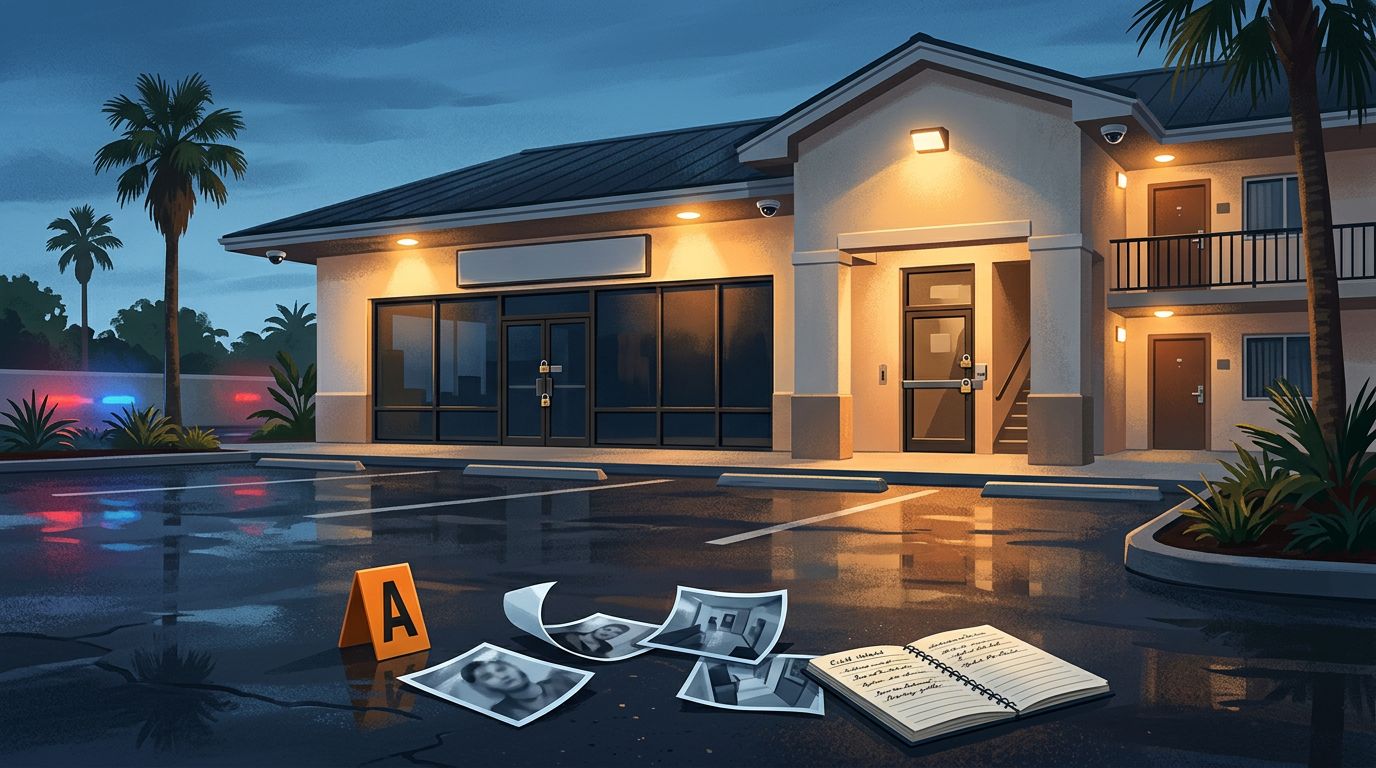
A shooting at a Florida store, hotel, bar, apartment complex, or parking area can leave an injured person asking who should pay for the harm. In Florida shooting claims, the central issue is often whether the business had reason to anticipate violence and failed to take reasonable security measures.
The shooter may face criminal prosecution and a civil lawsuit, but the property owner or operator can also be responsible when negligent security helped make the attack possible. Prior robberies, assaults, threats, police calls, and other incidents may show that the danger was foreseeable. The investigation should begin quickly because video, electronic records, and witness memories can disappear.
How Florida shooting claims against a business are built
A claim against a business usually falls under negligent security and premises liability law. The injured person must connect the shooting to the property owner’s failure to use reasonable care. The case doesn’t require proof that the business planned, encouraged, or directly caused the shooting.
A successful claim generally requires proof of four points:
- The business owed the injured person a legal duty.
- The business failed to use reasonable care under the circumstances.
- That failure played a substantial role in allowing the shooting to occur.
- The shooting caused compensable injuries or death.
The business’s duty depends on property control
Owners, operators, managers, landlords, and other parties who control commercial property may owe safety duties to customers, guests, employees, tenants, and other lawful visitors. The exact duty depends on the relationship between the person and the property, the type of business, and the conditions known to the people in control.
A store may need to address different security concerns than a nightclub. A hotel, apartment complex, gas station, and parking garage each have distinct layouts, hours, access points, lighting conditions, and customer risks. The Florida premises liability duty of care provides the foundation for analyzing those differences.
The shooting alone doesn’t prove negligent security
A violent crime on business property doesn’t automatically establish liability. Businesses generally don’t guarantee that no criminal act will occur. The evidence must show why reasonable precautions were required and how the business’s failure contributed to the injury.
For example, a plaintiff may argue that the business left a rear entrance unlocked, failed to repair broken lights, ignored repeated threats, removed security guards despite known violence, or failed to respond to a pattern of assaults. The claim becomes stronger when those facts connect directly to the shooting.
A lawyer will usually examine the property layout, security policies, prior incidents, staffing, surveillance, warnings, and the timing of the attack. The Florida negligent security proof checklist covers the main evidence used to develop this type of case.
Why prior crime evidence matters in a shooting case
Prior crime evidence helps answer the main question in many negligent security cases: Should the business have anticipated a risk of violence?
A business may argue that the shooting was an unforeseeable criminal act by an unrelated third party. The injured person may respond that earlier incidents gave the owner or operator reason to take precautions. Prior crime evidence helps establish that notice.
What counts as prior crime evidence
Useful evidence can include incidents at the exact property, such as:
- Earlier shootings or attempted shootings
- Armed robberies and aggravated assaults
- Fights, threats, batteries, and weapon complaints
- Carjackings or violent confrontations in parking areas
- Repeated trespassing or unauthorized entry
- Police calls involving weapons or dangerous conduct
- Security reports and employee incident logs
- Complaints from customers, tenants, or nearby businesses
The evidence doesn’t have to come from a formal lawsuit. A manager’s email, a guard’s report, a tenant’s complaint, or a 911 call can help show what the business knew or should have known.
Police reports are useful, but they aren’t the only source. Businesses may keep internal records that don’t appear in public crime databases. Those records can include incident forms, employee messages, safety meetings, maintenance requests, and correspondence with security contractors.
Similarity, location, and timing affect the analysis
A prior armed robbery near the same entrance may provide stronger notice of a later shooting than an unrelated property-damage complaint. Still, the analysis is fact-specific. The number of incidents, their nature, their distance from the property, and the time between incidents all matter.
A prior shooting is not the only evidence that can support foreseeability. Repeated assaults, weapon threats, violent fights, or frequent armed robberies may show a broader security problem. On the other hand, an isolated incident from many years earlier may carry less weight if circumstances changed.
A crime report several miles away isn’t automatically evidence of notice. The important question is whether it helps show a risk connected to the property, its immediate surroundings, or the way the business operated.
Florida hotel cases often involve this same issue. The discussion of Florida hotel assault claims explains how video and prior incidents can work together. Video may show what happened, while earlier crime evidence may show why additional security precautions were reasonably expected.
How lawyers investigate the property’s security history
A business shooting investigation should look beyond the police report. The most important facts may exist in private business records, vendor files, or local government databases.
Business records can reveal what managers knew
A lawyer may seek incident reports, security logs, employee complaints, management emails, and records of calls to the property. These materials may show that employees reported threats or that managers discussed security problems before the shooting.
Security contracts can also matter. They may identify the number of guards assigned, their required patrols, their training, their post orders, and the hours they were supposed to work. If the business hired a security company, that company may become another potential defendant or source of evidence.
Maintenance records can reveal broken cameras, lights, gates, locks, alarms, or doors. A repair request made before the shooting may show that the business knew about a dangerous condition but failed to correct it.
Nearby crime patterns can add context
Prior incidents don’t have to occur inside the exact building to provide useful context. Crime near a shopping center, hotel, apartment complex, or parking garage may help establish a known risk, especially when the business shares entrances, parking areas, or security arrangements with surrounding properties.
Investigators may request public records from law enforcement agencies. They may also review calls for service, arrest records, dispatch information, code violations, and reports involving nearby businesses. The usefulness of this material depends on its connection to the property and the type of danger involved.
A Florida parking garage assault claim may require camera footage, access logs, lighting records, patrol schedules, and prior incident reports. Similar records can matter in a shooting at a shopping center, hotel, club, or convenience store.
The property’s condition must be documented
Photographs and video of the property should show entrances, exits, lighting, cameras, sight lines, gates, parking areas, stairwells, and nearby obstructions. Conditions may change after a shooting, especially when a business repairs a door, adds lights, or changes its security staff.
A lawyer may send a preservation letter asking the business to retain surveillance video, electronic access data, employee communications, and incident records. That request doesn’t replace formal discovery, but it puts the business on notice that the information may be relevant to a claim.
Witnesses also matter. Employees, customers, tenants, guards, neighbors, and first responders may describe earlier incidents, security concerns, or what happened before and during the shooting.
Security failures that may support a claim
Florida law doesn’t require every business to use the same security system. The question is whether the precautions were reasonable for the property’s known risks.
Common security issues in business shooting cases
The evidence may involve:
- Inadequate lighting in parking areas or walkways
- Broken or poorly positioned surveillance cameras
- Unlocked doors, gates, or restricted entrances
- Missing or poorly trained security personnel
- Guards who failed to patrol or respond to warnings
- No system for reporting and escalating threats
- Failure to address repeated fights or weapon complaints
- Poor control of access to a residential or commercial property
- Failure to warn staff or customers about known dangers
The absence of one particular measure doesn’t automatically prove negligence. A business may have cameras but no one monitoring them. It may have guards but assign too few people for the property’s size and operating hours. It may install bright lights in one area while leaving the shooting location dark.
Causation connects the security failure to the injury
The plaintiff must show more than an unsafe condition. The security failure must have helped cause the shooting or increased the chance that the attack would occur.
For instance, an unlocked employee entrance may matter if it allowed the shooter to reach a restricted area. A missing guard may matter if a guard would likely have interrupted a confrontation before it escalated. A broken camera may matter if it prevented staff from seeing an armed person enter or responding to a developing threat.
Causation can become disputed when the shooting happened quickly or the attacker acted without warning. Expert testimony may help explain whether reasonable security measures could have deterred, delayed, detected, or interrupted the attack.
Florida statutes that affect business shooting claims
Several Florida statutes may arise in a negligent security case. Their application depends on the property, the date of the claim, and the facts surrounding the injury.
Section 768.0701 addresses third-party criminal acts
Florida Statutes section 768.0701 applies to an action against an owner, lessor, operator, or manager of commercial or real property. It addresses a person who was lawfully on the property and was injured by a criminal act committed by a third party.
The statute directs the fact finder to consider the fault of all people who contributed to the injury. That can include the shooter, the business, a property manager, a security company, or another responsible party.
This rule affects how fault may be assigned after a jury finds liability. It doesn’t eliminate the need to prove duty, breach, foreseeability, causation, and damages. It also doesn’t create a general rule that a business is automatically protected because the shooter committed an intentional crime.
Section 768.0755 usually concerns slip and fall cases
People researching Florida premises law sometimes find section 768.0755 and assume it controls every accident at a business. It doesn’t. The official Florida statute on transitory foreign substances addresses slip and fall injuries caused by substances on a business floor.
That statute is generally not the principal statute for a shooting or negligent security claim. A business shooting case usually depends on common-law negligence principles, section 768.0701, and other laws that may apply to the property’s business type.
Comparative fault can affect the final recovery
Florida’s comparative fault rules may reduce a damages award based on the fault assigned to the injured person or other parties. Section 768.81 addresses comparative negligence in Florida civil cases.
In a business shooting case, the defense may argue that the shooter caused nearly all the harm. The plaintiff’s attorney must still show why the business’s conduct contributed to the injury and why the evidence supports assigning fault to the property owner or operator.
Defenses businesses may raise
A business and its insurance company may deny liability even when the shooting caused serious harm. These defenses often focus on foreseeability, causation, and fault allocation.
The business may call the shooting unforeseeable
The defense may argue that the attacker had no known connection to the property, that no similar crimes occurred there, or that the shooting happened too quickly for any security measure to prevent it. It may also argue that the business had reasonable precautions in place.
Prior crime evidence can answer some of these arguments. A history of violent incidents, repeated warnings, or known access problems may weaken the claim that the shooting was entirely unexpected. The strength of the response depends on the quality and accuracy of the records.
The business may also argue that the shooter acted independently and that the criminal conduct broke the chain of causation. That argument doesn’t end the case automatically. Florida negligent security claims exist because a third party committed the crime, so the legal issue remains whether the property’s negligence contributed to the resulting harm.
Fault may be assigned to several parties
A shooting case can involve more than one potentially responsible party. The shooter, business owner, property manager, security company, landlord, tenant, or maintenance contractor may have different roles.
A written lease may divide security responsibilities. A management contract may assign patrols or camera monitoring to a third party. An attorney must identify who controlled the relevant area and who had the authority to correct the dangerous condition.
The defense may also examine the injured person’s conduct. That doesn’t excuse a business’s negligence, but it can become part of the damages dispute under Florida’s comparative fault rules.
Damages after a business shooting
Injuries from a shooting may require immediate emergency treatment and years of follow-up care. The claim should account for both current losses and reasonably expected future harm.
Personal injury damages
Depending on the evidence, damages may include medical bills, future medical care, lost wages, reduced earning capacity, physical pain, emotional distress, disability, disfigurement, and loss of enjoyment of life.
A serious gunshot injury can affect mobility, sleep, concentration, relationships, and the ability to work. Psychological injuries may include post-traumatic stress disorder, anxiety, depression, and fear of returning to similar places. Medical records and treatment history help document these losses.
The injured person should follow medical advice and keep records of appointments, prescriptions, symptoms, expenses, missed work, and changes in daily activities. Gaps in treatment may become a defense issue, even when the person had a valid reason for missing care.
Wrongful death damages
When a shooting causes death, the personal representative of the estate may bring a wrongful death action for eligible survivors. Potential damages depend on the survivor’s relationship to the deceased and may include lost support, services, medical and funeral expenses, and emotional losses allowed by Florida law.
A wrongful death claim has its own filing rules and limitations period. The Florida wrongful death filing deadline should be reviewed promptly because identifying the estate representative and all potential defendants can take time.
Deadlines and immediate steps
For negligence claims accruing on or after March 24, 2023, Florida generally applies a two-year statute of limitations. A wrongful death claim also commonly has a two-year period, measured from the date of death. The exact deadline may change because of the claim’s legal theory, the defendant, the date of the incident, or a statutory exception.
The Florida injury claim statute of limitations explains why an injured person shouldn’t wait for the criminal case to finish before seeking legal advice. A civil claim and a criminal prosecution are separate matters.
Preserve evidence without putting yourself at risk
After receiving medical care, keep copies of medical records, bills, discharge instructions, photographs, witness information, and communications with the business or its insurer. Don’t give a recorded statement to an insurance adjuster before understanding how the statement may affect the claim.
If possible, document the property’s condition without trespassing or interfering with an investigation. A lawyer can seek surveillance footage, business records, police materials, and security contracts through preservation requests and formal legal procedures.
Speak with a Florida injury attorney promptly
A lawyer can assess whether the facts support a negligent security claim, identify the parties that controlled the property, and investigate prior crime evidence. The review should include the shooting itself, the property’s history, the security measures in place, and the damages caused by the injury.
Early action matters because businesses may change security conditions, overwrite video, lose electronic data, or place responsibility on another company. Waiting can make it harder to prove what happened and why the business should have anticipated the danger.
Conclusion
Strong Florida shooting claims require more than proof that a violent crime occurred. They require evidence that the business knew or should have known about a foreseeable risk, failed to use reasonable security, and contributed to the resulting injury or death.
Prior crime reports, 911 calls, security logs, employee complaints, surveillance footage, and property records can help connect the shooting to the business’s conduct. Because evidence and filing deadlines can work against an injured person, a prompt review by a Florida injury attorney can protect the claim while the facts are still available.