
Florida Low-Impact Crash Claims: Proving Injury Beyond Vehicle Damage
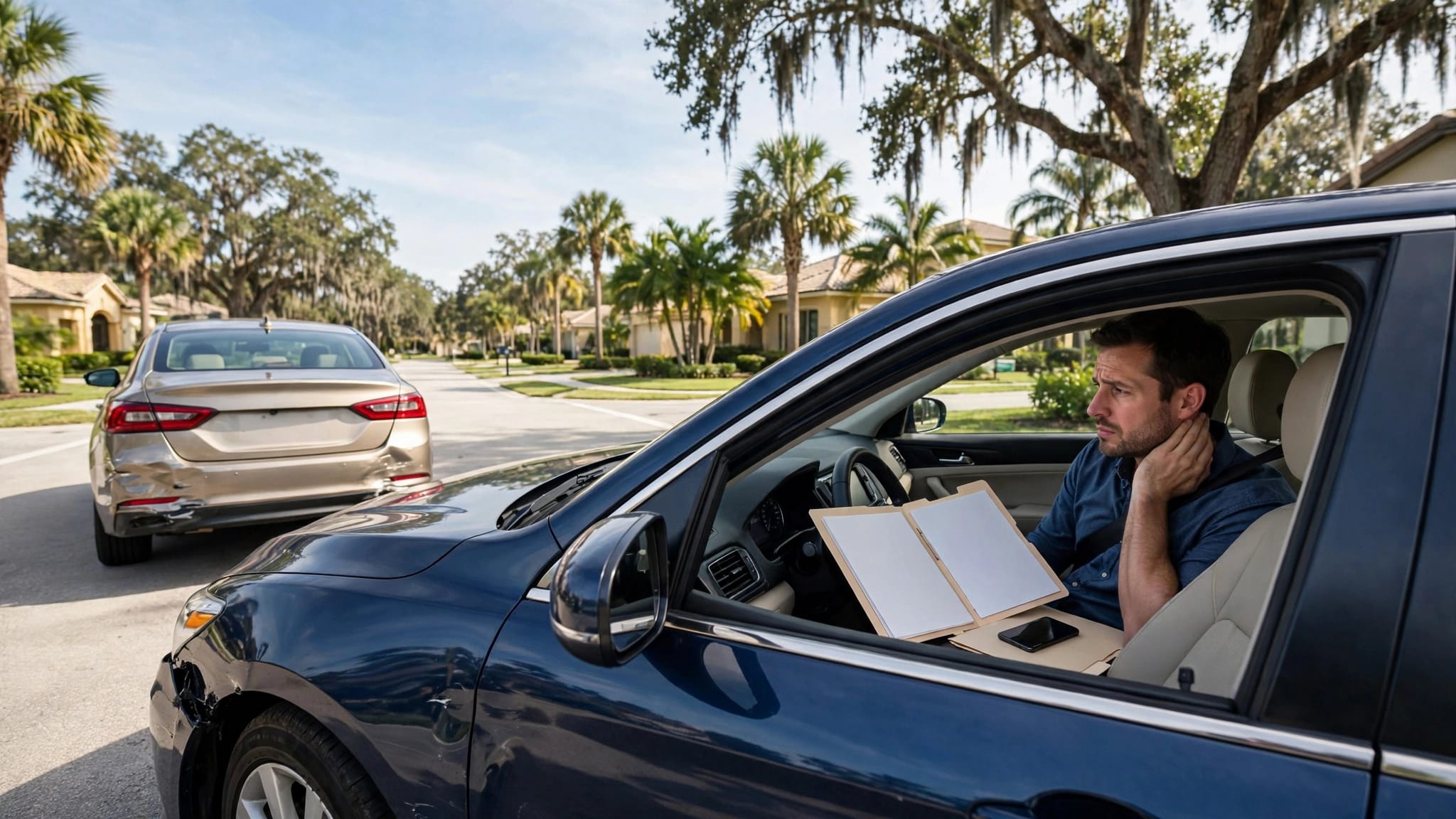
A nearly clean bumper can become the insurance company’s favorite photograph. Yet a low-speed impact can still jolt the neck, back, shoulder, or head, especially when a driver is turned, braced, or caught off guard.
Florida low-impact crash claims depend on medical evidence, crash facts, and prompt action, not simply the repair estimate. The steps you take after a minor-looking collision can shape the entire case.
Minor Vehicle Damage Does Not Measure Human Injury
A vehicle is designed to absorb and distribute some collision force. Modern bumpers can flex, rebound, and hide damage behind a plastic cover. That design may reduce visible repairs, but it doesn’t show how an occupant’s body moved inside the vehicle.
The body and the vehicle react differently
During a rear-end collision, a person’s torso may move with the seat while the head moves differently. That motion can strain muscles, ligaments, and joints in the neck and back. A sideswipe can twist the body toward the door or steering wheel. Even a short impact can aggravate a prior condition.
Pain also may not peak at the crash scene. Adrenaline can mask symptoms for hours or a day. Stiffness, headaches, reduced range of motion, numbness, and shoulder pain can appear after the initial shock fades.
The “minor damage” defense has limits
Insurers often argue that a small dent means a small injury. This argument is common because vehicle photographs are easy to show. However, a damage estimate doesn’t replace medical records or prove that a person did not suffer harm.
A claim becomes stronger when the facts connect. The impact location, your position in the car, early symptoms, medical findings, and consistent treatment should tell the same story. Learn more about responding to the Florida minor damage defense when an insurer tries to make the vehicle condition the whole case.
A clean-looking bumper may be relevant evidence, but it is only one piece of evidence. It cannot diagnose an injured person.
Florida Low-Impact Crash Claims Begin With Prompt Medical Care
Florida’s no-fault system generally makes your own Personal Injury Protection, or PIP, coverage the first source for covered treatment and wage-loss benefits. The at-fault driver’s insurer may still become important, but waiting for the other insurer to act can cost valuable time.
The 14-day PIP treatment deadline
Under Florida Statutes section 627.736, an injured person generally must receive initial services and care within 14 days of a motor vehicle crash to qualify for PIP medical benefits. The clock starts on the date of the collision.
Don’t wait for pain to become unbearable. Seek appropriate medical attention if you have symptoms, explain that a crash occurred, and accurately describe when symptoms began. Keep appointment confirmations, bills, test results, referrals, and work restrictions.
PIP coverage has limits
PIP does not pay every dollar of every loss. It generally pays 80% of reasonable medical expenses and 60% of lost income, subject to statutory limits and policy terms. The available medical benefit may depend on whether a qualified provider finds an emergency medical condition.
That is why early care matters for more than a claim. It allows a provider to evaluate the injury while the crash details and physical symptoms are current. If symptoms appear later, review the Florida 14-day PIP treatment deadline as soon as possible.
Build a Medical Record That Explains the Injury
Low-impact cases often turn on causation. The insurer may accept that you received treatment but argue that the condition came from age, prior work, exercise, or an earlier crash. A detailed medical record gives a clear response.
Tell the provider what happened
At the first visit, describe the collision plainly. State where your vehicle was hit, whether your body twisted, whether you struck anything inside the car, and when symptoms started. Mention prior injuries honestly. A prior condition does not end a claim if the collision aggravated it, but failing to disclose it creates an avoidable credibility issue.
Medical notes should reflect real symptoms and findings. Those may include muscle spasm, tenderness, reduced motion, radiating pain, headaches, dizziness, sleep interruption, or difficulty lifting and driving.
Follow treatment that is medically appropriate
A single urgent-care visit followed by months without care gives an insurer room to argue that the injury resolved. In contrast, a consistent treatment record can show that symptoms persisted and affected daily life.
Follow the treatment plan your provider recommends. If treatment isn’t helping, return to the provider and report the change. Don’t skip care merely because you expect the insurer to dispute the bill.
Keep a simple personal record as well. Note missed work, reduced household activity, sleep problems, medications, and pain flares. This record should support medical documentation, not replace it.
Fault Still Matters When the Impact Was Small
A low-speed crash can raise sharp disputes about blame. In a parking lot, one driver may say the other backed out. In a lane-change case, each driver may claim to have held the lane. Minor property damage doesn’t make fault less important.
Document the crash mechanics early
Take photographs of both vehicles, including close-ups and wider shots that show the location. Photograph the roadway, lane markings, traffic signs, debris, and visible marks on the pavement. Save dashcam footage before it records over itself.
Get the other driver’s information, but don’t argue about fault at the scene. If witnesses saw the impact, ask for names and contact details. A witness who saw a rear-end impact or unsafe lane movement can be more persuasive than competing recollections.
For a collision where an officer did not respond, preserve the information needed for a Florida car accident claim without a police report. A missing report doesn’t automatically defeat an injury claim.
Florida’s comparative fault rule can reduce recovery
Florida applies modified comparative fault in most negligence cases. Under Florida’s comparative fault statute, a person more than 50% at fault generally cannot recover damages. At 50% or less, damages are reduced by that person’s percentage of fault.
For example, an insurer may contend that you braked suddenly or merged without signaling. Respond with evidence, not guesses. Vehicle positions, surveillance video, witness testimony, phone records, and the damage pattern can all matter.
Report the Collision and Preserve the Details
A crash that looks minor can become more serious once pain develops. Reporting rules may apply even when neither vehicle needs a tow truck.
Florida reporting duties may apply
Florida law requires immediate notice by the quickest means of communication when a crash causes injury, death, or apparent property damage of at least $2,000. See the Florida crash reporting requirement for the current rule.
Law enforcement long-form reports also cover crashes involving any indication of pain or discomfort. If no officer completed a report, Florida Highway Safety and Motor Vehicles provides a Driver Report of Traffic Crash form for self-reporting in qualifying situations.
Keep evidence outside the repair file
The repair invoice may document only superficial damage. Save photographs from before repairs, shop estimates, tow records, and correspondence with your insurer. If a body shop removes the bumper cover, ask whether it found hidden damage and retain written documentation.
Also preserve texts about the crash, voicemail messages, rental-car records, and any video from nearby businesses. Do not post about the wreck or your physical condition on social media. Insurers may take a casual photograph or statement out of context.
Understand the Injury Threshold and Available Damages
PIP benefits are only part of the financial picture. A negligence claim against an at-fault driver can seek losses PIP does not fully cover, but Florida law limits recovery of pain and suffering after a motor vehicle crash.
Pain and suffering require qualifying proof
Under Florida Statutes section 627.737, an injured person generally must meet a threshold to recover noneconomic damages in an auto case. Qualifying conditions include significant and permanent loss of an important bodily function, permanent injury within a reasonable degree of medical probability, significant and permanent scarring or disfigurement, or death.
A diagnosis alone doesn’t decide this issue. Medical opinions, testing, treatment history, limitations, and prognosis all matter. Review the Florida serious injury threshold if ongoing symptoms may qualify for a claim beyond PIP.
Economic losses still need proof
Medical expenses, lost income, future care, and reduced earning capacity require records. Save pay stubs, employer correspondence, tax documents if you are self-employed, and receipts for out-of-pocket costs.
The at-fault driver may have bodily injury coverage, limited coverage, or no coverage available for the claim. Your own uninsured or underinsured motorist coverage may also be relevant. Policy language, coverage limits, and the facts of the crash determine what compensation may be available.
Don’t Let a Quick Settlement Close Your Claim
An adjuster may offer a property-damage payment soon after the collision. That payment can be helpful for repairs, yet the documents attached to it deserve careful attention.
Read every release before signing
Some releases use broad language such as “all claims arising from the accident.” Signing that document can affect claims for medical bills, lost income, future care, and pain and suffering, even if you believed you were settling only vehicle damage.
Ask for written confirmation that a release is limited to property damage when that is the intent. The risks of a Florida property damage release are easy to miss when pain has not fully developed.
Filing deadlines are shorter than many expect
Florida law generally gives an injured person two years to file an action founded on negligence. The current language appears in Florida’s negligence limitations statute. However, a deadline should never be treated as a reason to wait.
Evidence disappears quickly. Video can be deleted, witnesses move, and memories change. Early investigation gives a claimant a fairer chance to establish fault and explain how a modest impact caused a real injury.
A Minor Crash Can Still Require Serious Documentation
Florida low-impact crash claims are not decided by a bumper photograph or a repair invoice. They are decided by the full record: timely care, accurate medical documentation, credible crash evidence, and a clear account of how the injury changed daily life.
A small amount of visible vehicle damage does not erase pain or prevent recovery. Prompt action and consistent proof give an injured person the strongest foundation for a fair claim.