
Florida Truck Crash Claims and Driver Qualification Files
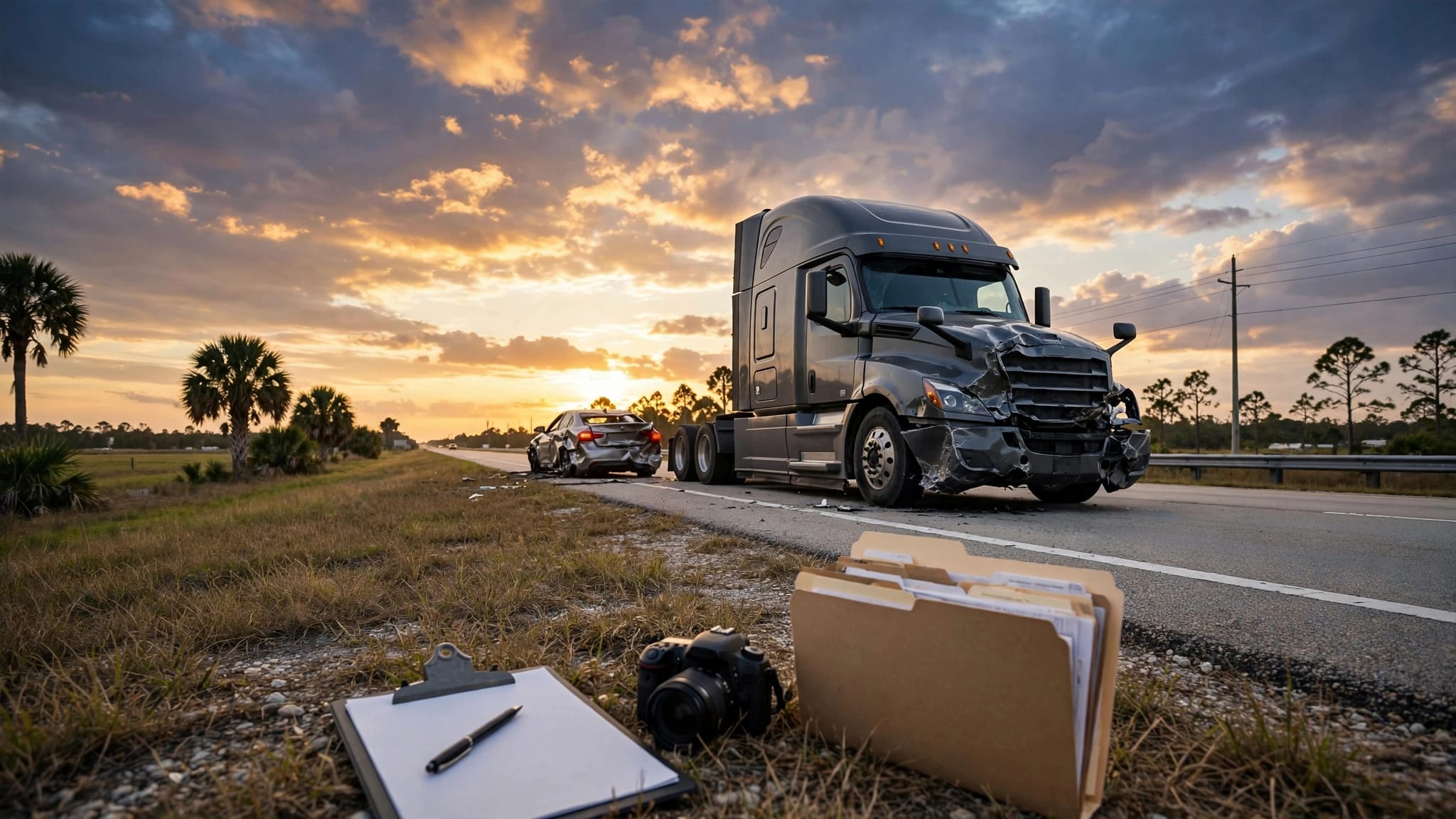
A collision with a commercial truck can leave you facing serious injuries while the trucking company controls much of the evidence. Fast preservation often matters as much as the initial crash report.
Florida truck crash claims may involve the driver, the motor carrier, a cargo company, a maintenance contractor, or other parties. A driver qualification file can help show what the carrier knew about its driver before the collision.
Why Florida Truck Crash Claims Require a Wider Investigation
A truck crash is rarely only a dispute between two drivers. The company that hired, assigned, supervised, and maintained the vehicle may hold records that explain why the collision happened.
In addition to the police report, an investigation may involve electronic logs, dispatch communications, inspection records, dashcam footage, onboard data, and the driver’s employment history. Florida semi-truck crash claims often turn on evidence that a carrier controls.
The driver’s actions are only part of the case
Speeding, distracted driving, tailgating, unsafe lane changes, fatigue, and failure to brake can all support a claim against a commercial driver. However, the carrier’s conduct may also require scrutiny.
For example, a company may have assigned a driver despite a concerning record, ignored recurring safety issues, or created an unrealistic delivery schedule. Those facts do not establish liability by themselves. They can point the investigation toward documents that either support or weaken the claim.
Shared fault must rest on evidence
A trucking insurer may argue that an injured driver sped, stopped too quickly, remained in a blind spot, or had time to avoid the crash. Florida’s comparative fault statute generally reduces damages by the claimant’s percentage of fault.
A person found more than 50% responsible generally cannot recover in covered negligence actions. Still, an insurer’s accusation is not a legal finding. Video, vehicle damage, witness accounts, road conditions, and electronic data should determine how fault is assigned.
A crash report can identify witnesses, vehicles, and an officer’s observations, but it does not settle civil fault on its own.
What a Driver Qualification File Is
Federal rules require motor carriers to keep a driver qualification file, often called a DQ file, for each driver they employ. The file may be stored with the driver’s personnel records, but it has a separate regulatory purpose.
The DQ file helps show whether the carrier confirmed that a driver met applicable qualification requirements before and during employment. It can become important when a crash raises questions about hiring, supervision, or retention.
Documents that may appear in the file
Under federal driver qualification rules, a file may include the driver’s employment application, motor vehicle record information, prior-employment inquiries, medical qualification documents, and road-test records or permitted equivalents.
The Federal Motor Carrier Safety Administration’s Driver Qualification File guidance explains that a carrier generally must obtain a CDLIS motor vehicle record from the driver’s current licensing state, subject to stated exceptions.
Documents may reveal whether the company investigated driving history, verified prior employment, or completed required annual reviews. Missing paperwork does not automatically prove a company caused the crash. It may, however, raise important questions.
Retention can affect the evidence available
A carrier generally must keep the DQ file while the driver remains employed and for three years after employment ends. That retention period matters when a company claims it cannot locate records tied to a former driver.
Federal regulations require carriers to maintain these files, but they do not mean an injured person automatically receives them after asking. Depending on the case, records may be sought through a preservation request, informal investigation, discovery, or subpoena.
DQ Files Are Only One Part of the Evidence
A driver qualification file focuses on who the company hired and whether it maintained required driver records. It does not provide a complete picture of what occurred during the hours and seconds before a wreck.
Strong Florida truck crash claims compare the DQ file with operational records, physical evidence, and medical documentation. Each category can answer a different question.
ELD and dispatch records show the trip
Electronic logging device records may help establish duty status, driving time, locations, and breaks. Federal hours-of-service record rules require drivers to keep duty-status records current through their last change in status.
Dispatch messages, route instructions, payroll data, fuel records, toll data, and GPS information may also reveal when the driver started work and what the carrier expected that day. These records can matter when fatigue, rushed delivery schedules, or an improper route are alleged.
Maintenance and cargo records address other causes
A driver may not be the only source of danger. Brake problems, worn tires, lighting failures, unsecured cargo, and overloaded trailers can contribute to a crash.
Inspection reports, maintenance invoices, repair history, loading paperwork, bills of lading, and scale records may identify who controlled a truck’s condition or cargo. The evidence must connect a documented failure to the collision. A past repair issue unrelated to the crash will not prove fault.
How DQ Evidence Can Affect a Claim
A DQ file may help establish whether the carrier had information about the driver’s qualifications and history. It can also show whether the company completed required reviews at the right time.
The file is most useful when evaluated alongside other evidence. A gap in a record does not replace proof that a driver acted carelessly or that the company’s conduct contributed to the injury.
Hiring and retention questions need a factual link
A claim may examine whether a motor carrier reasonably hired, trained, supervised, or retained a driver. Relevant records can include prior-employer responses, driving history, licensing documents, and annual review materials.
For instance, a prior safety concern may matter if the carrier knew or should have known about it and the concern relates to the crash. A driving-history issue that has no connection to the collision may carry less weight. The facts must show more than a paperwork violation.
The carrier may be responsible for its employee’s driving
When a truck driver was working within the scope of employment, the motor carrier may be responsible for the driver’s negligence. A company can also face separate allegations based on its own conduct, such as unsafe supervision or vehicle maintenance.
Commercial vehicle cases can involve multiple insurance policies and defendants. That is why Florida company vehicle accident claims often require a careful review of both the driver’s actions and the employer’s role.
Preserving Trucking Evidence After the Collision
Trucking companies and insurers often begin their own investigations quickly. Injured people should protect their own account of the crash before records disappear or damaged vehicles are repaired.
Medical care should come first. Once you are safe, preserve records that can confirm the location, timing, impact, and injuries.
Save the information available at the scene
If possible, photograph the truck, trailer, license plate, company name, USDOT number, cargo markings, road conditions, debris, skid marks, and vehicle damage. Obtain witness names and contact information before people leave.
Keep the original image and video files. Social media uploads may reduce quality or remove useful metadata. Also save insurance information, medical discharge papers, prescriptions, work restrictions, repair estimates, and receipts.
A preservation request should be specific
A written preservation request can identify the crash date, location, vehicles, and categories of records that need protection. It may seek DQ files, ELD data, dashcam footage, inspection reports, dispatch communications, maintenance records, and onboard data.
Do not assume that a missing record proves intentional destruction. Preservation duties and spoliation issues depend on the facts, timing, notice, and legal procedure. Prompt action gives a claim a better chance of obtaining the evidence before ordinary business practices overwrite it.
Deadlines and Work-Related Truck Crashes
Florida filing periods can be short, and the proper deadline depends on the claim type, crash date, and defendants. For many negligence claims arising after March 24, 2023, Florida generally provides two years to file suit.
Florida’s limitations statute also generally provides a two-year period for wrongful death actions. Settlement talks and an open insurance claim do not automatically stop the deadline.
Work injuries can create two claim paths
If you were driving for work when a commercial truck crash occurred, workers’ compensation may cover authorized medical care and wage benefits. That claim differs from a negligence claim against a person or business outside your employer.
An injured employee may have a claim against the truck driver, trucking company, contractor, or another responsible third party. Florida workers’ comp for driving injuries explains how a work-related crash can affect available benefits.
Government-owned vehicles require added care
A crash involving a city, county, state agency, or other public entity can involve special notice requirements and limits that do not apply to ordinary private-party claims. The correct procedure may differ based on the potential defendant and the type of claim.
Early legal review matters because public-entity rules, evidence requests, and filing dates can overlap. Waiting for a government agency or insurer to complete an investigation can put important rights at risk.
Key Takeaways
- A driver qualification file may show what a motor carrier knew about a driver before the crash and whether it maintained required records.
- DQ-file evidence works best alongside ELD data, dispatch messages, maintenance records, witness accounts, video, and vehicle damage.
- A missing document may justify further investigation, but it does not automatically prove negligent hiring or causation.
- Florida’s shared-fault law can reduce compensation when evidence supports fault by the injured person.
- Prompt medical treatment and specific preservation requests can protect evidence before it is lost.
Frequently Asked Questions
Can I request the truck driver’s qualification file?
You may seek it through the legal process, but a trucking company does not have to hand it over simply because an insurer receives a claim. An attorney may request preservation early and pursue records through investigation, discovery, or subpoena when appropriate.
Does a traffic citation prove the truck driver caused the crash?
A citation can support a claim, but it does not decide civil liability by itself. Insurers and courts may still examine video, witness testimony, traffic conditions, vehicle data, braking, speed, and the conduct of every driver involved.
What if the truck company says the driver was an independent contractor?
That label does not end the inquiry. The contract, dispatch control, vehicle ownership, insurance arrangements, maintenance responsibilities, and day-to-day working relationship can all matter. A careful review identifies which company controlled the driver and truck.
A Clear Record Gives a Claim Its Strength
Florida truck crash claims are strongest when the facts are preserved before the carrier’s records, vehicle data, and video disappear. The driver qualification file can reveal important hiring and supervision evidence, but it is only one part of the record.
A thorough claim connects the collision, the responsible conduct, the medical harm, and the resulting losses with reliable proof.