
Florida Balcony Collapse Claims: Records That Can Prove Neglect
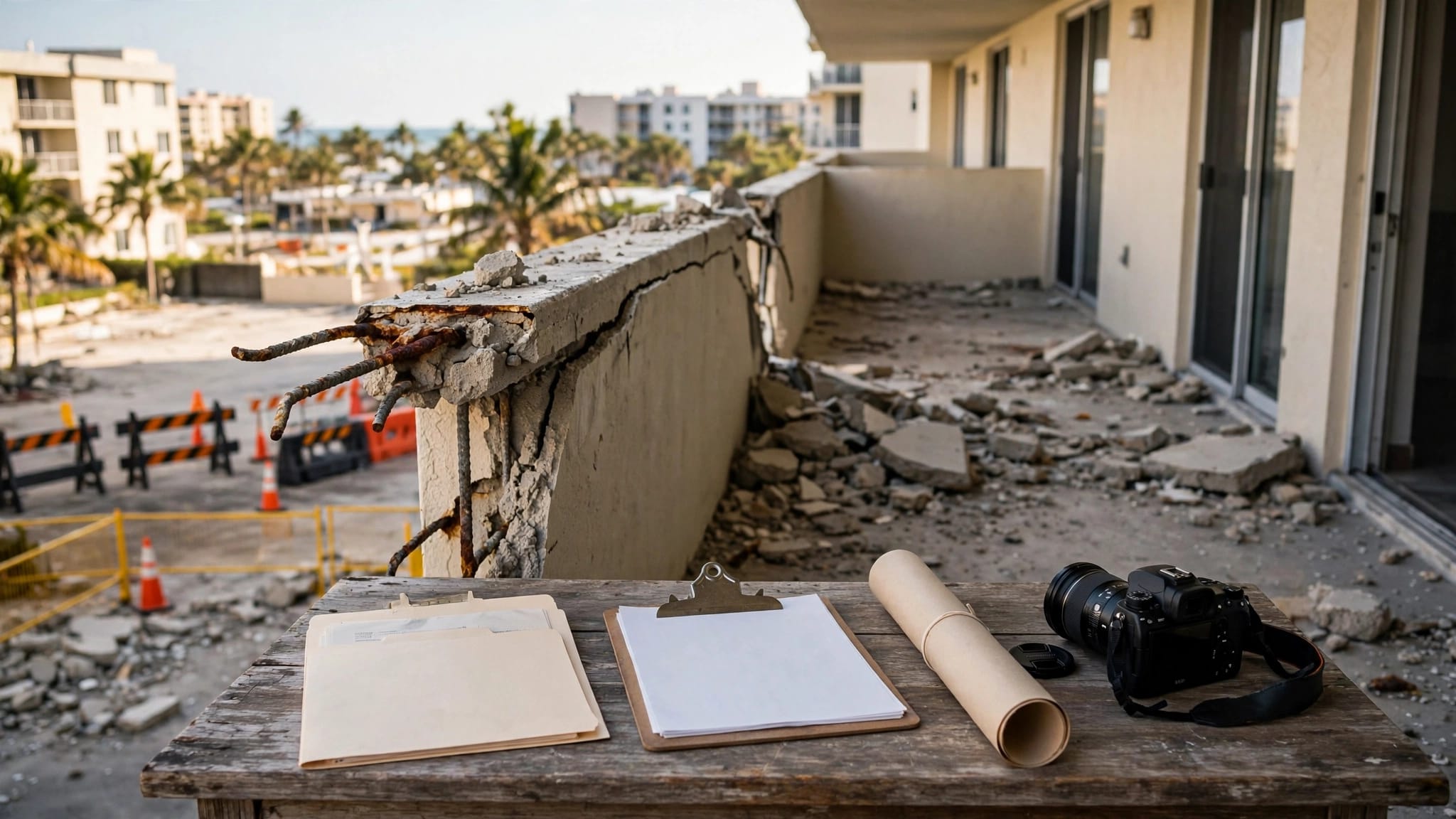
A balcony collapse can cause life-changing fractures, spinal injuries, traumatic brain injuries, or the loss of a loved one within seconds. Yet the most important proof often exists long before the structure fails.
For people pursuing claims after a Florida balcony collapse, inspection reports, repair requests, permits, board minutes, and contractor records can show whether someone had warning of a dangerous condition. Acting early helps preserve those records before repairs change the scene or video systems overwrite footage.
How Florida Balcony Collapse Claims Are Evaluated
A collapse alone does not establish that a property owner acted carelessly. A successful injury claim must connect an unsafe condition to the party responsible for inspecting, maintaining, repairing, or warning about the balcony.
Control of the balcony matters
The person or company named on a deed may not be the only party with legal responsibility. A condominium association may control exterior balconies and structural components. A property-management company may receive maintenance complaints. A contractor may have performed recent repairs, while a developer, builder, architect, engineer, or product manufacturer may require review in some cases.
The central question is often who had the authority and duty to address the hazard. Florida premises cases generally require proof of a duty of care, a failure to meet that duty, causation, and damages. The details of a Florida premises liability duty of care can help clarify how those elements apply to unsafe property conditions.
A dangerous condition needs evidence
Rusting reinforcement, concrete spalling, failed waterproofing, loose railings, water intrusion, cracked slabs, or deteriorated connections can all matter. However, the evidence must show more than the existence of damage after an accident.
Inspection findings, prior complaints, repair invoices, photos, testimony from residents, and maintenance logs can help establish whether deterioration existed before the collapse. A rail that fails during ordinary use may support a claim, but the larger record may reveal why it failed and whether a responsible party had notice.
A post-collapse repair may make the property safer, but it can also erase visible evidence of the condition that injured someone.
Florida Balcony Collapse Claims and Milestone Inspections
Florida’s milestone-inspection law can provide an important timeline in condominium and cooperative cases. It does not apply to every apartment building, hotel, or private residence, and an inspection report does not automatically prove fault. Still, it may identify structural concerns that required further action.
Which buildings require milestone inspections
Under the Florida milestone inspection statute, residential condominium and cooperative buildings that are three habitable stories or higher can fall within the requirement. The statute calls for a structural inspection of load-bearing elements and primary structural members.
The statewide trigger is generally December 31 of the year a covered building reaches 30 years old, measured from its certificate of occupancy. Later milestone inspections are generally required every 10 years.
Older buildings faced earlier deadlines. Buildings that reached 30 years before July 1, 2022 generally had an initial deadline of December 31, 2024. Those reaching 30 years between July 1, 2022 and December 31, 2024 generally had a December 31, 2025 deadline.
Local rules can require inspection at 25 years
A local enforcement agency can require an inspection at 25 years when local conditions support it, including saltwater exposure. There is no blanket rule that every building more than three miles from the coast avoids a 25-year requirement.
The building department’s notices, inspection records, and local ordinances may therefore matter as much as a building’s location. The Florida Department of Business and Professional Regulation provides milestone inspection guidance for condominium owners and associations.
Phase 2 findings may reveal unresolved concerns
A milestone inspection can begin with Phase 1. If the inspection identifies substantial structural deterioration, the building may need a more detailed Phase 2 evaluation.
A claim may turn on what the engineer or architect found, when the association received the report, and what happened next. Records may show that repairs were planned, delayed, underfunded, incomplete, or never started.
Building Inspection Records to Request After a Collapse
Records create a timeline that photographs alone cannot provide. Some documents come from government agencies. Others must be requested from a condominium or cooperative association, property manager, contractor, or insurer.
Request government and building department files
County and city building departments may hold permit applications, inspection results, certificates of occupancy, code-enforcement complaints, violation notices, plans, and records of open or closed permits. Government-held records are generally subject to Florida’s public-records law in Chapter 119, although exemptions can apply.
Request records by property address and include the date range. Ask for documents related to the balcony, exterior concrete, railings, waterproofing, structural repairs, recertification, code complaints, and permits. Keep copies of requests and responses.
A certificate of occupancy date can be especially important because it helps determine whether a milestone inspection should have occurred.
Seek condominium association official records
Condominium associations maintain a different category of documents. Under Florida condominium official records requirements, association records can include plans, permits, warranties, board minutes, accounting records, and other materials. Associations generally must retain official records for at least seven years.
A unit owner or authorized representative can make a written request for association records. The statute generally requires the association to respond within 10 working days and make records available within 45 miles of the condominium property or within the county where it is located.
Useful requests often include:
- Milestone inspection reports, engineering proposals, and Phase 2 documents.
- Board minutes discussing structural conditions, special assessments, repairs, or resident complaints.
- Maintenance logs, work orders, invoices, photographs, warranties, and contractor communications.
- Structural integrity reserve studies, budgets, and records showing planned or deferred repair work.
A resident’s right to inspect association records does not mean every document will be available without limits. An attorney can identify records that should be preserved and seek other evidence through the legal process when needed.
Protect Evidence Before Repairs Change the Scene
The first days after a balcony collapse can shape the strength of a case. Emergency repairs may be necessary, but they can remove failed materials, cover cracks, or alter the structure before an injured person has documented it.
Preserve physical and digital evidence
If it is safe to do so, photograph the balcony, railings, concrete fragments, fasteners, warning signs, nearby drainage conditions, and the surrounding area. Save original photos and video files rather than relying only on edited images or social-media posts.
Write down the date, time, weather, exact location, and names of witnesses. If a neighbor reports earlier cracks, falling concrete, water leaks, or repair delays, record the person’s words and contact information.
Do not discard damaged clothing, footwear, personal property, or debris that may help explain the incident. Avoid altering physical evidence without legal guidance.
Send written preservation requests
A written preservation letter can tell the association, owner, manager, contractor, or insurer to retain relevant materials. The request may identify surveillance footage, incident reports, inspection reports, communications, repair records, prior complaints, maintenance logs, and the failed balcony components.
Video systems often record over footage within days or weeks. Employees may leave, and electronic messages can become difficult to locate. Verbal promises to save evidence are not enough. Keep proof that the written request was delivered.
Prompt action also helps identify contractors and vendors before a property owner repairs the balcony and removes traces of their work.
Fault, Compensation, and Workplace Injuries
Florida balcony collapse claims often involve serious financial and personal losses. The proper claim can depend on whether the injured person was a resident, guest, tenant, worker, or passerby.
Shared fault can affect a recovery
Florida uses modified comparative negligence in most covered negligence cases. If an injured person is assigned 20 percent of the fault, recoverable damages are generally reduced by 20 percent. A person found more than 50 percent responsible generally cannot recover damages in those cases.
Insurers may argue that someone ignored warnings, overloaded the balcony, climbed on a railing, or entered a closed area. Those claims should be tested against the physical evidence, witness accounts, building records, and the condition of any barriers or warning signs.
A recorded statement given before the facts are clear can create problems. Be truthful, but do not guess about what caused the collapse.
Workers may have two paths to compensation
A maintenance worker, painter, inspector, construction worker, or delivery driver injured on a balcony may qualify for workers’ compensation benefits. However, workers’ compensation may not be the only option when an outside party caused or contributed to the incident.
A negligent property owner, contractor, equipment supplier, or other non-employer may face a separate claim. Review third-party claims after a workplace injury when a balcony collapse happened during work.
Recoverable losses may include medical expenses, rehabilitation, lost income, reduced earning capacity, and pain and suffering. A fatal collapse may also support a wrongful death claim, subject to the circumstances and Florida law.
Key Takeaways
- Inspection and maintenance records can show whether balcony deterioration existed before the collapse.
- The certificate of occupancy date may determine whether a covered condominium or cooperative building was due for a milestone inspection.
- Government files and condominium association records are different sources and require different requests.
- Photos, original video, witness details, failed materials, and medical records should be preserved quickly.
- Florida balcony collapse claims can involve owners, associations, managers, contractors, and other parties with control over the unsafe condition.
- Shared-fault arguments can reduce compensation, so records matter when an insurer disputes how the injury occurred.
Frequently Asked Questions About Balcony Collapse Cases
Does a failed inspection automatically prove negligence?
No. An overdue inspection or troubling report can be important evidence, but a claim still requires proof that a responsible party had a duty, failed to act reasonably, and caused the injury. The timing of the report, the recommended repairs, and the response to those recommendations all matter.
How long do I have to file a Florida balcony injury claim?
For many negligence claims arising after March 24, 2023, Florida generally allows two years to file suit. The Florida injury and wrongful death deadlines can vary based on the claim type, injury date, and defendant. Public-property claims may also involve added notice rules, so early legal review is wise.
Can a family bring a claim after a fatal balcony collapse?
A fatal collapse may support a wrongful death action when negligence caused the death. The personal representative of the estate generally brings the case for eligible survivors and the estate. Medical bills, funeral expenses, lost support, and other legally available damages may be involved. The rules for a Florida wrongful death premises liability claim can help families understand the legal framework.
A Records-First Approach Protects Your Claim
A balcony can fail in seconds, but the warning signs may appear in records created months or years earlier. Inspection reports, board minutes, repair files, permits, and witness accounts can reveal whether the collapse was preventable.
Quick action protects both the evidence and the filing deadline. The strongest Florida balcony collapse claims connect the failed structure to a clear record of notice, responsibility, and documented harm.