
Florida Motorcycle Helmet Evidence in Injury Claims
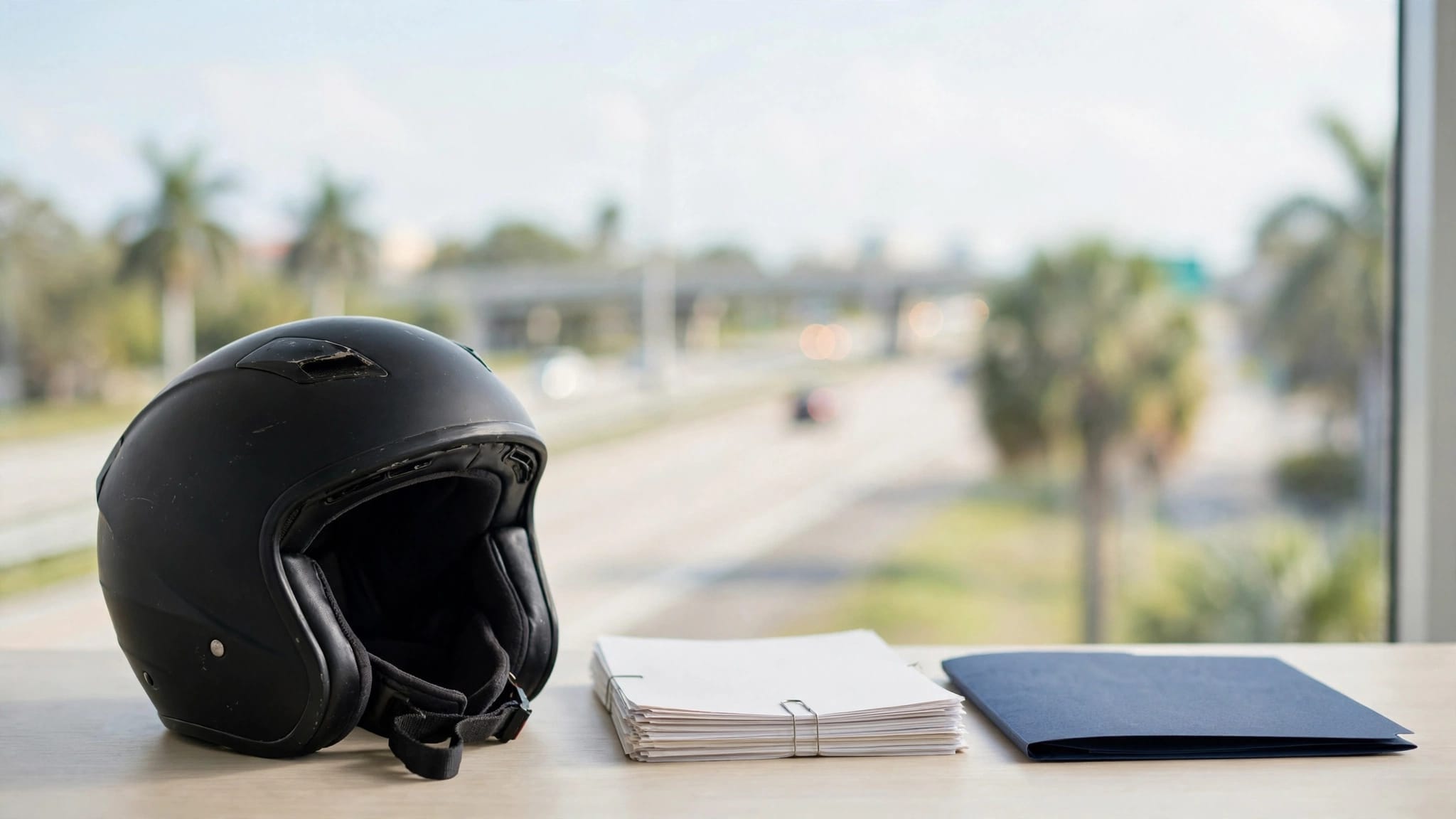
Your helmet, or its absence, can become a point of dispute before an insurer addresses your medical bills. Florida motorcycle helmet evidence may affect an injury claim, but it doesn’t answer every question about a crash.
The important distinction is between who caused the collision and whether a helmet could have changed a particular injury. Keeping those questions separate helps you challenge unsupported blame and document the compensation you need.
Key Takeaways
- Florida’s helmet exemption applies to a person over 21 who has an insurance policy providing at least $10,000 in qualifying motorcycle-crash medical benefits.
- Riding without a helmet doesn’t automatically mean you caused the collision or lose your injury claim.
- An insurer arguing that a helmet would have reduced an injury needs evidence connecting helmet use to that injury.
- Save the helmet, original video files, medical records, and insurance documents before they disappear or get discarded.
What Florida law requires riders to wear
The helmet rule and its exemption
Under Florida’s motorcycle headgear law, motorcycle operators and passengers generally must wear securely fastened protective headgear that meets Federal Motor Vehicle Safety Standard 218. The statute also addresses protective eye devices.
A person over 21 years old may ride without protective headgear if covered by an insurance policy providing at least $10,000 in medical benefits for injuries sustained in a crash while operating or riding on a motorcycle. Age alone doesn’t qualify someone for the exemption.
Why the insurance detail matters
The $10,000 condition concerns medical benefits, not merely liability coverage that pays someone else after a crash. If an insurer questions whether a rider qualified for the exemption, the policy and coverage documents matter more than an assumption that “I had insurance.”
That required coverage also isn’t a promise that every crash expense will be paid. Policy terms and the rider’s actual losses still need review. Keep the declarations page and any documents describing medical-benefits coverage with the rest of your crash records.
How Florida motorcycle helmet evidence affects compensation
Helmet use is different from crash fault
A driver may turn left across a motorcycle’s path, change lanes without looking, or follow too closely. The rider’s helmet choice ordinarily doesn’t explain why the driver made that maneuver. Traffic signals, lane positions, sight lines, and witness accounts address how the collision happened.
An insurer may raise a separate argument: a helmet could have prevented or reduced a claimed injury. That argument concerns the extent of harm, not automatically the cause of the impact. Even a rider who lawfully qualified for the helmet exemption may face a dispute about injury severity.
The injury must fit the argument
A general claim that “helmets prevent injuries” cannot explain every item in a medical file. Head injuries, facial injuries, neck complaints, and a broken leg raise different medical questions. The force and direction of impact also matter.
Records showing where the rider struck the ground or another vehicle may help. So can helmet damage, imaging, and a physician’s assessment. A helmet doesn’t guarantee protection against every head injury; likewise, its absence doesn’t establish that every diagnosed condition would have been avoided. The insurer’s proposed reduction should match evidence about the particular injury.
Keep collision fault separate from shared-fault claims
How comparative fault works
Florida’s comparative-fault statute generally reduces damages in covered negligence actions by the injured person’s share of fault. A person found more than 50% at fault for their own harm generally cannot recover in an action covered by that rule.
For example, $100,000 in supported damages would generally become $80,000 after a 20% fault finding, before other claim issues. An adjuster’s proposed percentage isn’t a court finding. Ask what conduct the insurer says contributed to the harm and what evidence supports that position.
Challenge assumptions with the crash record
The insurer might allege speeding, an unsafe lane change, or a late evasive move. Video, roadway marks, vehicle damage, and witness accounts may support or contradict those allegations. Video evidence in Florida motorcycle crash claims can be useful when the driver’s account changes.
Don’t let a discussion about head protection replace the collision investigation. A rider can dispute the driver’s version of events while also addressing a separate claim about injury severity. Each question needs its own evidence.
Preserve the helmet, footage, and scene evidence
Keep the physical helmet intact
If you wore a helmet, don’t throw it away after the crash. Photograph its front, back, sides, interior, fastening system, and any visible cracks or scrapes. Then store it somewhere safe without cleaning, repairing, or modifying it.
Also keep purchase records or product information if available. Damage patterns may help someone assess the contact points, although a photograph alone can’t establish the medical effect of an impact. Tell your attorney and treating providers if emergency personnel removed or cut the helmet. If you weren’t wearing one, say so accurately; don’t let uncertainty about the helmet distract from preserving other proof.
Secure recordings before they’re overwritten
Save the original helmet-camera or dashcam file, not only a shortened clip sent by text message. Recordings may capture a turn signal, traffic light, braking, or the moments before a fall. Nearby businesses and other drivers may have footage, but those systems can overwrite recordings.
Photograph vehicle positions, debris, lane markings, skid marks, and road conditions if you can do so safely. Get witness names and contact information. A police report provides an early account, yet photographs and recordings can address details the officer didn’t witness. These steps also matter in motorcycle rear-end crash claims involving video.
Build a medical record that identifies each injury
Describe symptoms accurately
Get medical attention promptly, especially for headache, dizziness, confusion, numbness, or worsening pain. Tell providers what you remember about the impact and where your head or body struck a surface. If you don’t know, don’t guess.
Follow-up records can show whether symptoms improved, persisted, or required additional care. Keep emergency records, imaging reports, specialist notes, prescriptions, and therapy records. When the insurer argues that a helmet would have changed the outcome, a clear timeline helps distinguish a diagnosed injury from speculation about one.
Document the full financial loss
Compensation may include past and future medical expenses, lost wages, reduced earning capacity, and pain and suffering when the evidence and law support them. A claim may also involve motorcycle damage and other documented expenses. Save itemized bills, receipts, pay stubs, tax records, and written work restrictions.
Future losses need support rather than a rough estimate. For example, treatment recommendations can explain expected care, while job records can show why an injury limits work. Keep a simple account of daily activities you can no longer manage. The same records that establish the injury also help show what it has cost you.
Identify the insurance that may pay
An at-fault driver’s coverage
When another driver caused the crash, that driver’s bodily injury liability policy may be a source of compensation. Fault alone doesn’t establish how much coverage exists. Florida doesn’t require every private driver to carry bodily injury liability insurance in every situation, so a coverage search matters.
Review any available uninsured or underinsured motorist coverage as well. Depending on the policy, medical payments coverage or health insurance may help address treatment bills while the liability claim develops. Policy limits, exclusions, and reimbursement obligations can affect what a settlement ultimately provides.
Don’t assume motorcycle injuries qualify for PIP
Florida’s ordinary personal injury protection, or PIP, system generally applies to qualifying four-wheel motor vehicles. A motorcycle rider shouldn’t assume PIP will pay simply because a car struck the bike or the rider also owns an auto policy.
The medical-benefits requirement for riding without a helmet is a separate issue from ordinary PIP eligibility. If bills are arriving, review the actual policies rather than waiting for the other driver to admit fault. Medical bill options after a Florida motorcycle crash can help clarify the coverage questions to raise.
Act before evidence and filing time run out
Medical care comes first. Once you’re safe, preserve what you can and identify where other evidence is held. A business may overwrite camera footage, and a repaired vehicle may no longer show the same damage. If an insurer requests a recorded statement, be truthful without estimating speeds, distances, or details you don’t remember.
Florida’s statute of limitations for negligence actions generally provides a two-year filing period for many recent injury claims. The correct deadline depends on the crash date, claim type, and other facts. An open insurance claim or settlement discussion doesn’t automatically stop that clock.
An attorney can review helmet evidence alongside the crash record, medical opinions, and available policies. Early review is useful when the insurer disputes fault, attributes injuries to helmet nonuse, or offers a settlement before future care is clear.
Frequently Asked Questions
Can I seek compensation if I wasn’t wearing a helmet?
Yes, helmet nonuse doesn’t automatically bar a claim. The circumstances still matter, including whether you qualified for Florida’s exemption and whether the insurer can connect helmet nonuse to an injury. Evidence of the other driver’s conduct remains central to proving who caused the collision.
Does a damaged helmet prove how severe my injury is?
No. It can show physical contact and may help explain an impact, but its condition doesn’t replace a medical diagnosis. Keep it intact so its damage can be considered alongside photographs, imaging, treatment records, and the crash circumstances.
What if I was a passenger?
A passenger may have a claim against a negligent driver or another responsible party. Helmet use can still become an injury question, but the passenger didn’t control the motorcycle. Coverage and responsibility require their own review. Florida motorcycle passenger injury claims involve insurance questions that can differ from a rider’s claim.
Conclusion
A helmet can be important evidence, but it doesn’t tell the whole story of a motorcycle crash. Crash fault and injury causation deserve separate, fact-based answers.
Preserve the helmet and recordings, document your treatment and losses, and check every possible source of coverage. That record gives you a stronger basis to respond when an insurer tries to reduce your claim.