
Florida School Bus Crash Claims for Other Drivers
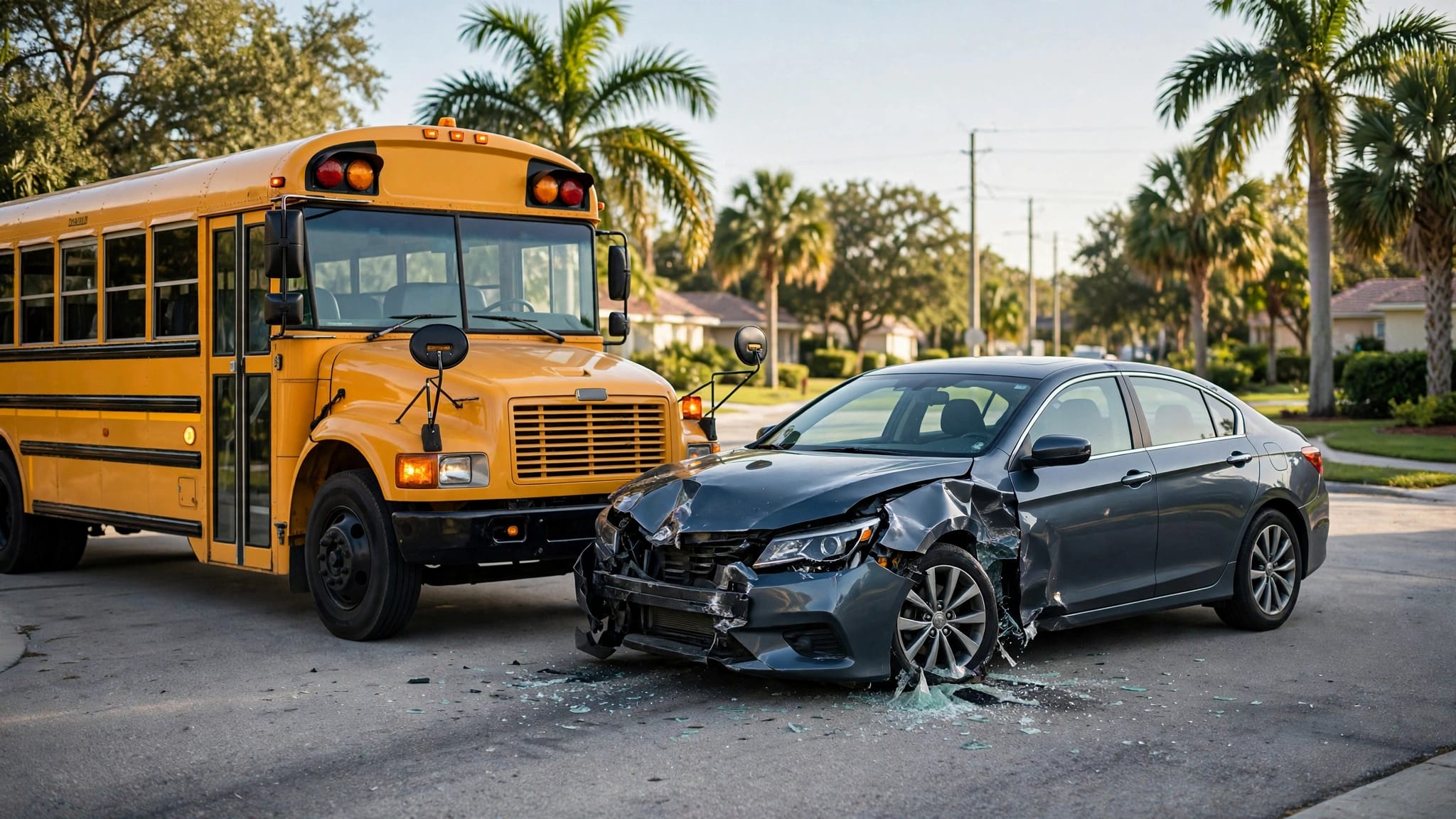
Drivers and passengers in other vehicles can pursue Florida school bus accident claims when negligence causes their injuries. You don’t have to be riding the bus to seek compensation, but the operator’s public or private status changes the claim process.
A collision involving a district school bus can bring government notice requirements, recovery limits, and deadlines that differ from an ordinary car accident. Meanwhile, medical bills and missed paychecks can arrive before anyone accepts responsibility. Start by identifying who operated the bus and what evidence connects their conduct to your injuries.
Key Takeaways
- People injured in another vehicle may have claims against a school board, private bus operator, or another negligent driver.
- Public school board claims require formal notice, not simply a police report or insurance claim.
- Government recovery limits can affect compensation, especially when several people suffer injuries.
- Preserve evidence and address deadlines while medical treatment continues.
Who Is Responsible for Florida School Bus Accident Claims?
The bus’s yellow paint doesn’t identify every legally responsible party. Ownership, employment, maintenance responsibilities, and transportation agreements can all affect the claim.
Public School District Buses
A district school board may face liability when negligent bus operation causes a collision. The investigation should identify whether the driver was performing assigned duties and whether the board owned, maintained, operated, or used the vehicle.
Florida’s government-liability framework controls these claims. For routine negligence within the driver’s employment, the school board is generally the proper defendant rather than the employee personally.
A school district’s internal investigation doesn’t resolve your civil claim. Likewise, a traffic citation doesn’t determine every issue of responsibility or compensation.
Private Operators and Other Drivers
A private school or transportation contractor may own or operate the bus. Ordinary negligence and insurance rules can apply, although a public transportation contract may require a closer analysis of the operator’s legal status.
Another motorist may also share responsibility. A collision can involve several impacts, so the bus driver isn’t automatically the only potential defendant.
Our guidance on Florida multi-vehicle crash claims explains why the sequence of impacts matters when several drivers blame each other.
Proving Negligence and Answering Fault Allegations
A successful claim connects unsafe conduct to the collision and documented harm. The size of the bus and severity of the damage don’t establish negligence by themselves.
Establish What Caused the Collision
The evidence may show an unsafe turn, failure to yield, distracted driving, or inadequate following distance. Maintenance records may also matter when braking or another mechanical problem contributed.
Bus video, nearby surveillance, photographs, witness accounts, and vehicle damage can help reconstruct events. However, each source has limits. A photograph taken after vehicles moved may not establish their positions before impact.
Medical evidence must also connect the collision to your injuries. Tell treating providers about symptoms, their onset, and relevant prior conditions.
Challenge Unsupported Blame
Under Florida’s comparative-fault rules, a claimant’s share of fault reduces recoverable damages in covered negligence cases. A finding of more than 50% responsibility for your own harm generally bars recovery.
Exactly 50% doesn’t cross that threshold. Nevertheless, any assigned percentage can materially affect compensation.
An insurer may argue that you followed too closely, changed lanes unsafely, or ignored bus signals. Those allegations require evidence. As a passenger, your claim also needs its own analysis; your driver’s negligence isn’t automatically your negligence.
How PIP and Injury Compensation Fit Together
Insurance benefits and a liability claim address different parts of the financial loss. An initial payment doesn’t necessarily resolve responsibility for the accident.
PIP Coverage Depends on Your Circumstances
Personal injury protection, or PIP, may provide benefits regardless of fault when the coverage requirements apply. Under Florida’s PIP statute, covered medical benefits include 80% of qualifying, reasonable medical expenses, subject to statutory and policy restrictions.
Coverage can depend on vehicle ownership, household relationships, residency, and the vehicle occupied. Being injured beside a school bus doesn’t automatically establish coverage under its insurance.
Our explanation of PIP coverage for injured passengers addresses these coverage relationships. Seek medical care promptly rather than waiting for an insurer to decide fault.
Document Losses Beyond Initial Bills
A liability claim may include accident-related medical expenses, lost earnings, reduced earning capacity, and other legally recoverable losses. Pain and suffering requires separate analysis, including any applicable motor-vehicle injury threshold.
Future care needs medical support. Similarly, missed income should connect to work restrictions, employment records, or other reliable documentation.
Keep repair estimates, towing charges, and other property-loss records separate from injury expenses. Also review any proposed release carefully because its wording can affect claims beyond the payment currently offered.
Government Notice and Recovery Limits
Public school board claims involve sovereign immunity, which restricts when and how a government entity can face liability. These restrictions can affect a claim even when negligence is clear.
Formal Notice Is a Separate Requirement
Under Florida’s government-claim statute, an ordinary injury claim generally requires written notice within three years after accrual.
For a district school board claim, notice generally must reach both the appropriate agency and the Florida Department of Financial Services. Reporting the collision to police, a transportation supervisor, or an insurance adjuster doesn’t necessarily satisfy this requirement.
The statute generally allows a 180-day investigation period before litigation, subject to its denial provisions and exceptions. Notice preparation should therefore begin before a lawsuit deadline approaches.
Public Recovery Limits Can Affect Payment
The statutory limits generally remain $200,000 per claimant and $300,000 total per incident. These limits matter when several occupants or motorists suffer injuries in one collision.
A court may enter a larger judgment, but payment beyond the statutory limits generally requires further legislative action. Government defendants also aren’t liable for punitive damages under this framework.
Proposed increases in HB 145 did not become law. The official HB 145 bill status records the governor’s veto on June 30, 2026.
Separate school-transportation provisions address people being transported. Those passenger-specific rules shouldn’t automatically be applied to someone injured in another vehicle.
Lawsuit Deadlines Depend on the Defendant
The notice deadline and the deadline to file a lawsuit are different requirements. Satisfying one doesn’t excuse missing the other.
For an ordinary negligence claim against a district school board, section 768.28 generally provides four years after accrual to file suit. The separate three-year written-notice requirement still applies, along with presuit procedures.
By contrast, many ordinary negligence claims against private defendants accruing after March 24, 2023, generally have a two-year filing period. A crash involving both a school board and a private contractor can therefore require different deadline calculations.
Wrongful-death claims also require separate attention. They generally have a two-year lawsuit period, and government-claim notice rules include a two-year presentment requirement for those claims.
A single collision can create different deadlines for different defendants. An open insurance file doesn’t preserve every claim.
Settlement discussions, pending records requests, and an internal investigation don’t automatically pause the filing clock. Nor should you wait until treatment ends or every diagnosis is settled. A lawyer can address the deadline while investigating liability and documenting continuing losses.
Preserve Evidence Before Records Disappear
The practical deadline for collecting evidence can arrive long before the lawsuit deadline. Video may be overwritten, vehicles repaired, and witnesses harder to reach.
Save Scene and Medical Information
If you’re able to do so safely, preserve photographs showing vehicle positions, damage, road markings, traffic controls, and sightlines. Record the bus number, operator information, witness contacts, and responding agency’s report number.
Also retain original dashcam files, medical records, prescriptions, bills, and work restrictions. Keep a factual record of symptoms and activity limitations without guessing about medical causes.
Our discussion of evidence for a Florida accident claim explains how a claim can proceed even when a police report is missing or incomplete.
Request Preservation of Bus Records
Depending on the issues, relevant records can include exterior video, GPS information, route assignments, inspection reports, repair histories, and driver training records.
An attorney can identify the records’ custodians and request preservation. A public-records request and an evidence-preservation demand have different purposes; neither substitutes for formal government-claim notice.
Some records may contain protected student information. Access restrictions don’t mean the evidence lacks value, but obtaining it may require redaction or litigation procedures.
Protect Your Claim While You Recover
For people injured in other vehicles, Florida school bus accident claims depend on identifying the responsible parties and preserving evidence. Early legal review also helps address government notice requirements before they become a barrier.
We represent injured people in Florida bus and car accident cases and offer free consultations. Contact our attorneys to discuss the collision, your injuries, and the procedures that apply to your claim.
Frequently Asked Questions
Can I Bring a Claim if I Wasn’t on the Bus?
Yes. A driver or passenger in another vehicle may pursue compensation when negligent bus operation or another party’s conduct caused injuries. The applicable procedures depend on the defendant’s identity and legal status.
Does the School Board’s Insurance Remove Government Limits?
The existence of insurance doesn’t automatically eliminate sovereign-immunity restrictions. The policy, statutory framework, and proposed settlement require separate analysis. A policy limit alone doesn’t establish the amount legally payable on a claim.
Should I Accept the First Settlement Offer?
Only after understanding what the offer resolves. A release may end claims before future treatment needs or wage losses are clear. Property-damage payments and injury settlements can involve different terms, so the release language matters as much as the amount.