
Florida Multi-Vehicle Crash Claims After a Pileup
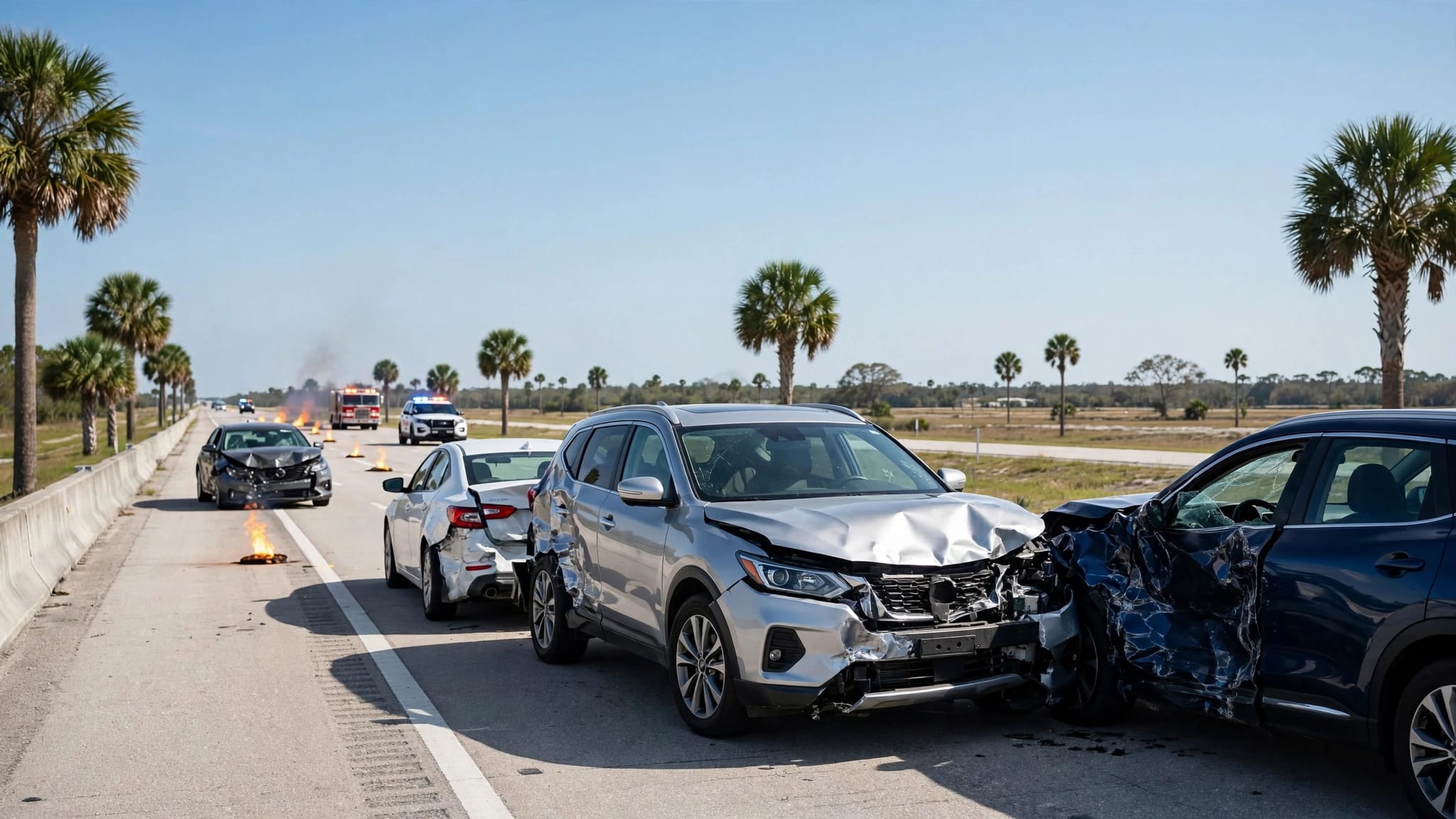
A chain-reaction collision can turn one driver’s mistake into a dispute involving several vehicles, insurers, and competing versions of events. After a pileup, the impact sequence often matters as much as the first impact itself.
Medical care comes first. Then, protecting the facts early can make a meaningful difference when insurers begin assigning blame.
Why Multi-Vehicle Pileups Are Hard to Prove
A rear-end crash involving two cars may appear straightforward. A four-vehicle pileup on I-95, the Turnpike, or a busy Palm Beach County road rarely is. One vehicle may have stopped for traffic, another may have been pushed forward, and a third may have struck after the first collision.
The order of impacts can change fault
Damage to the front and rear of a middle vehicle may show it was hit from behind and pushed into the car ahead. On the other hand, a middle driver may have caused a separate impact before anyone hit them.
Drivers often remember only the moment immediately before their own collision. Photos, vehicle damage, witness accounts, dashcam video, and roadway debris can help establish the full sequence. The Florida chain-reaction accident checklist outlines early steps that can protect those details.
Several factors may be under review
No single verified statewide statistic establishes the cause of most multi-car highway crashes. However, insurers commonly investigate following distance, sudden braking, distracted driving, unsafe lane changes, speeding, roadway debris, weather, and visibility.
A semi-truck or commercial vehicle adds another layer. Its size can create a longer stopping-distance question, while company records, onboard video, and vehicle data may become relevant. A serious collision may also involve fire rescue, law enforcement, towing crews, and temporary roadblocks while responders treat injured people and clear hazards.
A driver accusing you at the scene doesn’t decide civil liability. The evidence must show how each vehicle moved before and after impact.
Steps to Take After a Chain-Reaction Collision
Your health and safety take priority. Move to a safe location if you can do so without worsening injuries or creating another hazard. Follow first responders’ instructions when moving to safety. Call 911 for a vehicle crash with injuries, a lane blocked by wreckage, or vehicles that cannot be driven safely.
Get medical care without delay
Florida’s no-fault system may provide Personal Injury Protection, or PIP, benefits through your own policy before fault is resolved. According to the state’s Florida insurance requirements, PIP generally covers 80% of necessary and reasonable medical expenses up to $10,000, subject to policy and statutory terms.
Florida law also sets a 14-day period for initial medical services and care after a motor vehicle crash. Review the text of Florida Statute 627.736 and seek prompt evaluation for symptoms such as pain, dizziness, headaches, numbness, or limited movement.
Tell each provider how the collision happened and describe symptoms accurately. Keep discharge papers, prescriptions, imaging results, therapy notes, medical bills, and work restrictions.
Collect facts while they are available
If your condition allows, photograph vehicle positions, damage, license plates, lane markings, roadway debris, skid marks, traffic signs, weather, and visible injuries. Get names and contact information for neutral witnesses before they leave.
Exchange insurance and identifying information with every driver involved. Save original dashcam footage and phone photos rather than relying on compressed social media copies. Do not guess about speed, distance, or fault in a report or recorded statement.
For a multi-car claim, the first useful record is often the one that preserves the scene before vehicles are moved and traffic resumes.
Live Traffic Reports and Official Crash Reports
Florida drivers may check a road condition report after an interstate crash. It can confirm the general location, reported time, closure, and responding agency. It doesn’t replace a complete investigation.
What Florida Highway Patrol live reports can show
The Florida Highway Patrol traffic incident page states that its live crash and road condition reports update every five minutes. A report may help family members understand whether a roadblock reported on the route is active.
Still, not every crash appears in the FHP system. The Florida Highway Patrol notes that incidents within city limits may be absent because FHP doesn’t commonly work those crashes. A local police department, sheriff’s office, or another agency may have responded instead.
A live entry may identify the responding agency or emergency response, but it may not account for every emergency vehicle. Use it as a preliminary traffic update, not a complete fatality report. Even a public label such as mass casualty event doesn’t establish fault, injuries, or civil liability.
A traffic crash report takes longer
A formal traffic crash report differs from a live traffic entry. An accident report may contain driver and vehicle information, witness details, a narrative, a diagram, citations, and the officer’s observations.
The Florida Department of Highway Safety and Motor Vehicles says traffic crash reports can take up to 10 days to become available. A traffic crash report is also confidential for a period and generally restricted to crash participants and other parties authorized by law.
Review the report closely when it arrives. Check vehicle numbers, road names, travel directions, lane descriptions, and the diagram against your own photos and records.
Evidence That Shows How the Pileup Happened
A strong Florida multi-vehicle crash claim does not depend on one driver’s memory. It connects independent records that support the same timeline.
Physical evidence can clarify the sequence
Vehicle damage often reveals the direction and force of an impact. Front-end damage, rear damage, side damage, broken lights, displaced bumpers, and debris patterns may help reconstruct which contact occurred first.
Keep the vehicle available for photographs and inspection before major repairs, salvage, or disposal when injuries or liability are disputed. Repairing the car may remove evidence an insurer later questions.
Nearby businesses, homes, toll facilities, and traffic cameras may also hold useful video. Write down camera locations and the approximate crash time quickly, because many systems overwrite recordings within days or weeks.
Electronic records may matter too
Many newer vehicles have event data recorders. Depending on the vehicle and collision, the information may include speed, braking, steering, throttle use, and seatbelt status during the seconds around impact.
Phone records can become relevant if an insurer alleges distracted driving. A phone record alone does not prove what a driver saw or did, but it may be part of a broader investigation.
An attorney can request preservation of video, electronic data, damaged vehicles, and other evidence controlled by another driver, a business, trucking company, or insurer. In a disputed pileup, 911 logs and dispatch records may also help establish a more reliable timeline.
PIP Benefits, Liability Claims, and Shared Fault
PIP can help with early covered medical bills, but it does not decide who caused the crash. Liability still matters when injuries are serious, losses exceed available PIP benefits, or another driver’s negligence caused damages.
Insurers may assign fault to more than one driver
Florida follows modified comparative negligence in many injury cases. Under Florida Statute 768.81, a claimant’s recovery may be reduced by their percentage of fault. In covered negligence actions, someone found more than 50% responsible generally cannot recover damages.
For example, a person with $100,000 in proven damages who is found 20% at fault may recover $80,000 before other claim issues apply. The percentage must rest on evidence, not an adjuster’s assumption.
An insurer may claim you changed lanes without signaling, followed too closely, sped up, used a phone, or had time to avoid the crash. Answer those allegations with photographs, witness accounts, video, damage analysis, and medical records.
Do not treat an insurer’s decision as final
A carrier may reach an early fault decision using incomplete statements and a preliminary report. That assessment can change after more evidence becomes available.
Stay truthful, but keep statements limited to facts you personally know. It is reasonable to avoid estimating speed, reaction time, distance, or visibility when you are uncertain. The Florida modified comparative negligence rule explains why even a small disputed percentage can affect a claim’s value.
Claims That Need Prompt Legal Review
Some crashes demand an early legal review because evidence is controlled by others or because several insurance policies may be involved.
Commercial vehicles and multiple insurance policies
A commercial truck accident involving a semi-truck, delivery van, rideshare vehicle, company car, or work vehicle may involve more than one potentially responsible party. The driver, employer, vehicle owner, contractor, or another motorist may each have a role in the collision.
Commercial cases can involve records beyond a standard crash report, including onboard video, dispatch communications, maintenance records, inspection documents, and electronic driving data. Those records may be routinely overwritten or lost if no preservation request is made.
Serious injuries and denied liability
Prompt review with a qualified Florida attorney may be appropriate when injuries require hospital treatment, surgery, ongoing therapy, time away from work, or future care. It also helps when a hit and run crash occurred, an insurer denies fault, or the report does not match the physical evidence.
Florida filing periods can vary based on the crash date, claim type, and defendant. An open insurance claim or ongoing settlement discussion does not automatically protect a person’s right to file suit. Reviewing the matter early gives you time to preserve records and understand the applicable deadline.
Key Takeaways
- A multi-vehicle collision requires proof of the impact sequence, not assumptions based only on the final position of the cars.
- Prompt medical care protects your health and may affect available PIP benefits.
- FHP live traffic information can help establish a general timeline, but it is not a final accident investigation.
- Photos, video, witnesses, vehicle damage, 911 records, and electronic data can challenge a disputed fault allegation.
- Shared fault can reduce compensation, so do not accept a blame percentage that lacks evidence.
- Claims involving trucks, serious injuries, or several insurers often require fast evidence preservation.
Frequently Asked Questions
Can a crash report prove the other driver caused the pileup?
A crash report can be important evidence, but it does not automatically settle civil liability. Officers often arrive after the impacts occurred and may rely on statements, vehicle positions, physical evidence, and available witnesses.
If the report has an error, preserve proof quickly. Video, photographs, vehicle damage, and neutral witness accounts may support a correction or challenge an insurer’s reading of the report.
Should I give the other driver’s insurer a recorded statement?
The other insurer may request a recorded statement to evaluate its policyholder’s exposure. You should be truthful, but you do not need to guess about facts you do not know.
A short statement made before you see the crash report, photos, or footage can create problems later. Consider obtaining legal advice before giving a detailed recorded statement about a disputed chain-reaction crash.
What if I was a passenger in one of the vehicles?
Passengers may have claims against one driver, several drivers, or other responsible parties. Their ability to seek compensation often depends on the evidence and available insurance coverage, not on which driver they were riding with.
Passengers should seek medical care, preserve records, obtain the crash report, and avoid accepting a driver’s account as the final explanation for what happened.
Moving Forward After a Multi-Car Collision
A Florida multi-vehicle crash can leave you injured, uncertain, and caught between insurers that blame each other. The strongest claim file preserves the timeline early, documents medical harm carefully, and relies on evidence rather than assumptions.
This article provides general information about Florida chain-reaction crash claims and isn’t legal advice for any specific case.
Whether the collision occurred on a Palm Beach County road or elsewhere in Florida, fast action can protect the facts before video disappears, vehicles are repaired, and memories fade.