
Florida Fireworks Injuries: Who’s Liable for Safety Failures
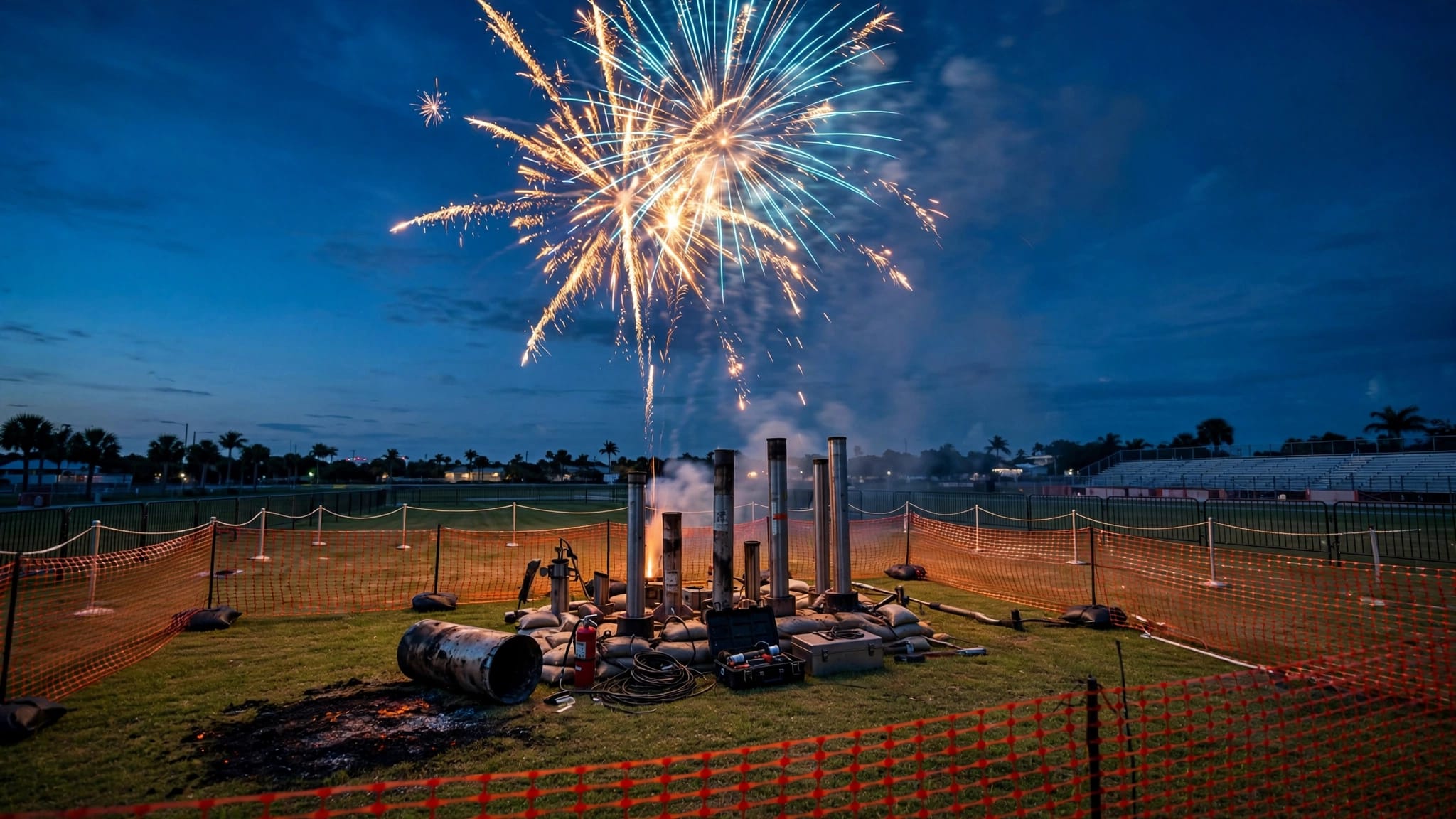
A fireworks display injury can create a claim against the operator, organizer, venue, or product manufacturer responsible for the harm. Claims involving Florida fireworks injuries depend on who controlled the hazard and how that hazard caused the injury.
A public event, professional crew, or approved permit doesn’t settle those questions. The strongest evidence often concerns control: who selected the launch site, managed spectators, handled equipment, and decided whether the show could safely continue. Those responsibilities help identify who may owe compensation.
Key Takeaways
- Display operators, event organizers, property owners, and product manufacturers may share responsibility, depending on their conduct.
- Florida requires permits for supervised public displays and sets minimum outdoor-display safety standards.
- A permit or safety violation doesn’t, by itself, establish civil liability.
- Preserve medical records, original recordings, witness information, and evidence of the display layout.
- Filing deadlines continue while insurers and investigators review the incident.
Who May Be Liable for Florida Fireworks Injuries?
An injury claim must connect a legally recognized duty, a failure to meet that duty, and resulting harm. Identifying the company whose name appeared on the event advertisement is only a starting point.
Display operators and pyrotechnic contractors
The company handling the fireworks may face liability for unsafe setup, firing, or shutdown decisions. Relevant questions include whether the crew secured launch equipment, maintained required separation, monitored conditions, and responded appropriately to a malfunction.
Operator qualifications, firing records, equipment inspections, and crew communications can help explain what happened. Weather records may also matter when wind affected the display.
However, an unexpected explosion doesn’t automatically prove operator negligence. Physical evidence and technical analysis may reveal a defective product, improper handling, or several contributing failures.
Event organizers and permit applicants
An organizer may have responsibilities involving site selection, vendor arrangements, crowd management, or coordination with emergency personnel. Its own unsafe decisions may support a claim even when an outside contractor fired the shells.
Contracts help identify assigned responsibilities, but actual conduct matters too. An organizer that controlled spectator placement presents different questions than a sponsor whose involvement was limited to funding.
An attorney should examine who approved the layout, received safety concerns, and had authority to stop the event.
When Venues and Product Companies May Be Responsible
The launch crew isn’t always the only party whose conduct needs investigation. Property conditions and defective equipment can contribute to the same injury.
Property owners and venue operators
A venue may face a premises-liability claim when its failure to use reasonable care contributed to the harm. Relevant conditions can include inadequate barriers, blocked exits, or spectator areas placed within a dangerous location.
Ownership alone doesn’t establish responsibility. The investigation must address possession, control, knowledge of the hazard, and the duties owed to the injured person.
As with Florida amusement park injury claims, contracts and safety records can help distinguish a venue’s responsibilities from an outside contractor’s conduct.
Fireworks manufacturers, distributors, and sellers
A product-liability investigation may focus on defective shells, fuses, launch equipment, or warnings. Potential claims can involve a manufacturing defect, unsafe design, or inadequate instructions.
The evidence must connect the defect to the incident and injury. A product that exploded isn’t automatically defective, because fireworks are designed to ignite and produce controlled effects.
Packaging, lot numbers, purchase records, remaining products, and damaged equipment may help identify the responsible businesses. Qualified investigators should handle unexploded materials; injured spectators shouldn’t collect them.
What Florida’s Fireworks Display Rules Require
Florida’s statewide requirements provide a starting point for evaluating safety failures. Local requirements and the particular permit can add obligations.
Written permits and operator competence
Under Florida’s public-display permit statute, applications must be submitted in writing at least 15 days before the display. Municipal governing bodies and county commissions have permitting authority within their respective jurisdictions.
The statute also addresses competent operators and fire-chief review of the proposed display.
The permit application can therefore be valuable evidence. It may identify the applicant, proposed location, and arrangements presented for approval. Those records can be compared with the event’s actual operation.
Outdoor-display standards and actual compliance
Florida’s minimum fireworks safety standards adopt NFPA 1123, Code for Fireworks Display, 2018 Edition, for outdoor displays. Local rules may be stricter, but not less stringent.
The applicable standards can inform analysis of separation distances, site arrangements, and other operational requirements. An expert may need to evaluate how those provisions apply to the particular equipment and setting.
A permit approves a planned display. It doesn’t establish that the crew followed the approved plan.
A violation may support a claim, but the evidence must still connect the unsafe practice to the injury.
Evidence That Can Reveal a Safety Failure
Get medical attention first. Burns, eye trauma, and hearing symptoms deserve prompt assessment, even when the full injury isn’t immediately obvious.
The CPSC’s fireworks injury estimates include approximately 13,000 injuries nationwide in 2025. For an individual claim, however, medical findings must establish what the incident caused and what treatment remains necessary.
Preserve original phone recordings rather than keeping only edited clips or social-media uploads. Footage taken before the explosion may show spectator placement, wind conditions, barriers, and staff instructions.
Photographs of your location and visible injuries also matter. Record witness contact information and the fire department’s incident number. Keep damaged clothing when it can be stored safely, but leave fireworks debris to qualified personnel.
An attorney can request preservation of materials controlled by the businesses involved. Relevant records may include:
- Permit applications, approved site plans, inspection reports, and incident reports.
- Firing logs, crew assignments, training records, weather monitoring, and communications.
- Surveillance footage, contracts, insurance documents, and equipment maintenance records.
An incident report is useful, but it may reflect only the first account employees received. Independent recordings and physical evidence can support or challenge that account.
Shared Fault and the Compensation You May Seek
Insurers may dispute both responsibility and the extent of your losses. Each issue requires evidence rather than assumptions about how dangerous fireworks are.
Fault allegations must connect to the injury
An insurer may argue that you crossed a barrier, ignored instructions, or entered a restricted area. Photographs, announcements, witness accounts, and the location of posted warnings can help test those allegations.
Under Florida’s comparative-fault statute, a claimant found more than 50% responsible generally cannot recover in covered negligence actions. A lower percentage reduces recoverable damages.
An adjuster’s proposed percentage isn’t a court finding. Be accurate when describing what happened, and avoid estimating distances or adopting details you don’t remember.
Document medical and financial losses
Compensation may include medical expenses, future treatment, lost earnings, reduced earning capacity, and pain and suffering. Burns, scarring, vision damage, and hearing loss can affect work and daily activities long after emergency treatment ends.
Keep bills, rehabilitation records, work restrictions, pay information, and receipts for injury-related expenses. Medical evidence should support anticipated care and lasting limitations.
There isn’t a reliable settlement amount based solely on the type of firework or injury. Proven losses, liability evidence, available insurance, and applicable legal restrictions affect potential recovery.
Filing Deadlines and Government-Sponsored Displays
For many recent Florida negligence claims, the general lawsuit filing period is two years under section 95.11. Different claim types, injury dates, defendants, and statutory exceptions can change the deadline analysis.
Insurance negotiations and a pending fire investigation don’t automatically pause that period. Evidence preservation should begin well before the filing deadline approaches.
Government involvement requires separate attention. A display held in a public park may involve a private contractor, a public organizer, or both. The public location alone doesn’t determine who is legally responsible.
Claims against Florida government entities can involve section 768.28, including written claim-presentment requirements, sovereign-immunity rules, and recovery limits. Some government decisions may receive immunity protection, while other conduct requires a different analysis.
A city issuing a permit also doesn’t automatically become liable for an operator’s mistakes. The investigation must identify the public entity’s own conduct and the legal basis for a claim.
Early legal review can address these requirements while records remain available. Waiting for an agency or insurer to finish its investigation can leave less time to pursue the appropriate claim.
Frequently Asked Questions
Can I pursue a claim if admission was free?
Yes, potentially. Free admission doesn’t automatically eliminate safety duties or prevent an injury claim. The analysis still concerns the defendant’s responsibilities, unsafe conduct, causation, and damages. The absence of a ticket purchase doesn’t answer those questions.
Does a ticket waiver prevent recovery?
A waiver can affect a case, but its wording and enforceability require legal analysis. It doesn’t erase evidence of an unsafe condition or establish how the injury occurred. Preserve the ticket, purchase confirmation, posted terms, and any document you signed.
What if I was working at the display?
An injury arising out of and occurring in the course of employment may qualify for workers’ compensation. A separate claim may also exist against a responsible third party, subject to applicable immunity rules. Report the injury promptly and preserve information identifying the companies involved.
Protect the Evidence Behind Your Fireworks Injury Claim
Responsibility for Florida fireworks injuries depends on the decisions and failures that caused the harm. Prompt preservation can protect the records needed to distinguish operator mistakes, venue hazards, and product defects.
At Avard Law Offices, we offer free case evaluations for Florida personal injury matters. Bring available medical records, original recordings, witness information, and insurer correspondence so we can review potential claims and filing deadlines.