
Florida Pedestrian Claims After a Sidewalk Crash
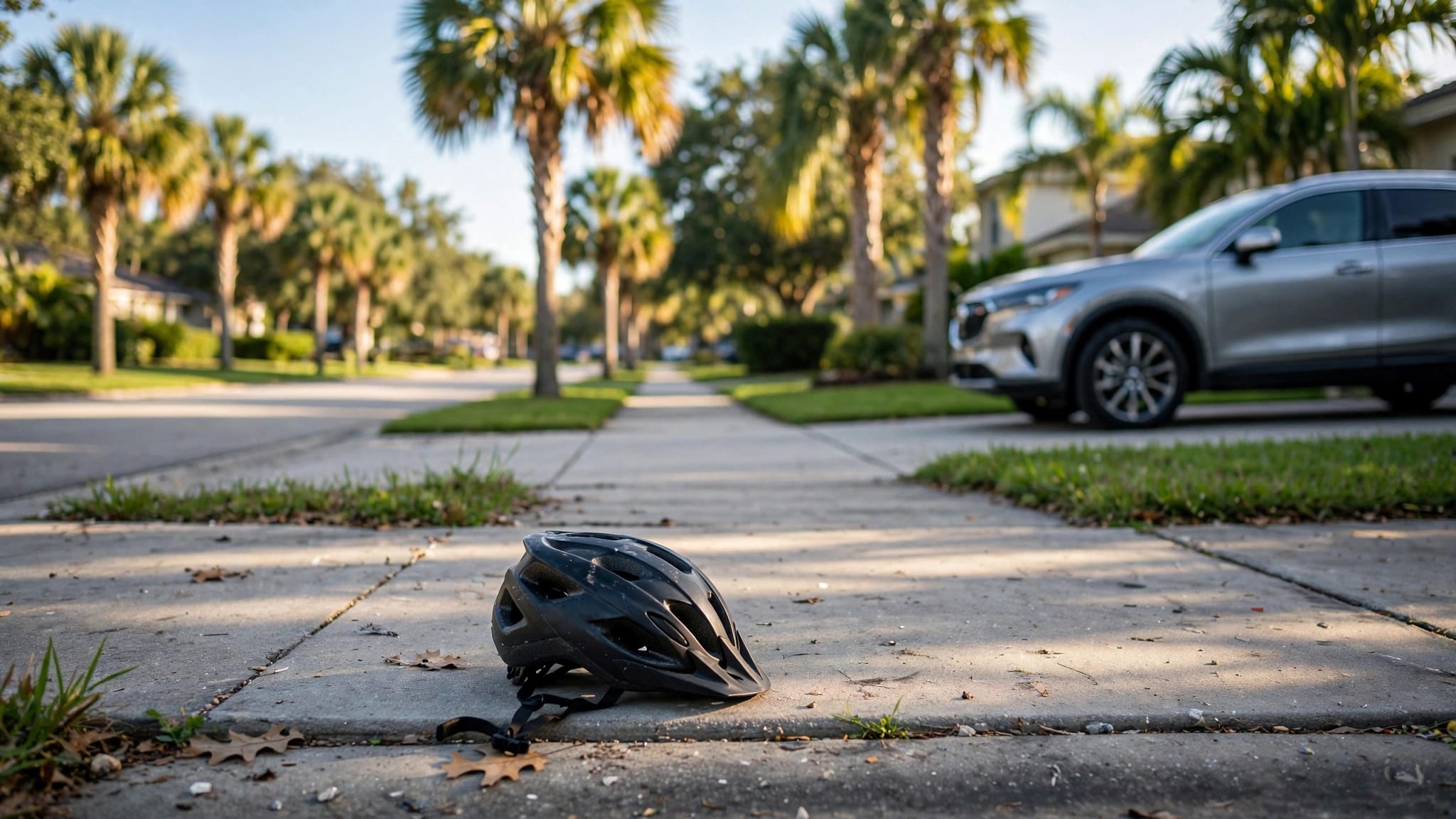
If a car hits you on a Florida sidewalk, you may be able to seek compensation through insurance benefits and a claim against the responsible driver. The outcome depends on the evidence, your injuries, and the coverage available.
Florida pedestrian claims can involve more than one insurance policy, even when you weren’t driving. Taking a few steps after the crash can protect your health and help establish what happened.
Key Takeaways
- Call 911 and seek medical care promptly. Florida PIP medical benefits generally require initial qualifying care within 14 days.
- A driver entering or leaving a driveway must yield to pedestrians on the sidewalk, but fault still depends on the facts.
- PIP can pay some medical expenses and lost income without a fault decision. A separate claim may address other losses.
- Most negligence claims arising after March 24, 2023, have a two-year filing deadline. Claims against government entities can involve additional notice requirements.
What to Do After a Car Hits You on a Sidewalk
Call 911 if you’re injured or the driver leaves the scene. Follow the dispatcher’s instructions and avoid moving if you suspect a serious neck, back, or head injury, unless remaining in place puts you in immediate danger.
Tell responding officers where you were walking and how the collision occurred. If you don’t know the car’s speed or didn’t see what the driver was doing, say so. You can obtain the crash report information and provide it to your insurer or attorney.
Get medical care promptly, even if you initially feel able to walk away. Head injuries, internal injuries, and other conditions don’t always produce obvious symptoms at the scene. Tell your provider about every symptom and any relevant preexisting condition.
If you’re physically able, ask a witness for contact information and photograph the car, sidewalk, driveway, and surrounding area. Avoid arguing about fault with the driver. Your immediate priorities are safety, treatment, and preserving information that may disappear.
Who Is Responsible for a Sidewalk Collision?
Drivers must exercise due care to avoid hitting pedestrians. Florida’s pedestrian traffic rules also require a driver entering or leaving a driveway, alley, or building to yield to a pedestrian approaching on the sidewalk.
That rule matters when a vehicle backs out of a parking space or crosses a sidewalk to enter a business. Even so, a claim needs evidence connecting the driver’s conduct to the injury.
When the driver crosses the sidewalk
A driver may fail to look for pedestrians, turn too quickly, or reverse without a clear view. Video, witness accounts, and the vehicle’s point of impact can help establish where you were when the car entered your path.
A traffic citation can support an investigation, but it doesn’t automatically resolve an injury claim. Likewise, the absence of a citation doesn’t prevent you from presenting other evidence of negligence.
When another party may share responsibility
A vehicle owner or employer may also have legal responsibility, depending on the relationship to the driver and the circumstances. A delivery vehicle collision, for example, may involve employment and commercial insurance questions.
A property owner or government entity may be relevant if a separate dangerous condition contributed to the crash. Liability depends on the condition, who controlled it, and applicable law. Our discussion of Florida multi-vehicle crash claims addresses some of the additional records that can matter when a work vehicle is involved.
Evidence That Can Support Your Claim
Sidewalk crashes can happen outside the view of an officer. Evidence gathered soon afterward can help establish the driver’s path and your location.
Photographs can show a driveway entrance, parked vehicles, obstructions, skid marks, and damage to the car. Keep the original files when possible. Also save photographs of visible injuries as they heal, along with damaged clothing or belongings.
Nearby businesses or residences may have security cameras. Ask whether footage exists and record the camera’s location, but don’t assume a business will keep it indefinitely. An attorney can send a preservation request for relevant footage and other records.
Witnesses may remember details that don’t appear in a crash report, such as whether the driver stopped before crossing the sidewalk. Obtain their names and contact information rather than relying only on a brief statement at the scene.
Medical records are evidence, too. Discharge instructions, imaging results, follow-up visits, and work restrictions can connect the collision to your injuries and document how those injuries affect you.
Can PIP Pay If You Were Walking?
Florida Personal Injury Protection, or PIP, may pay qualifying benefits when a vehicle strikes you as a pedestrian. PIP doesn’t require you to prove the driver caused the crash, but eligibility and the insurer responsible for payment depend on your circumstances.
Which PIP policy may apply
If you own a vehicle and have applicable Florida PIP coverage, your own insurer may be responsible for benefits after a pedestrian collision. Household coverage or another applicable policy may matter in other situations.
The driver’s insurer doesn’t automatically pay your PIP claim first. Vehicle ownership, residency, household relationships, and the available policies can affect the answer. Being an out-of-state visitor can add another coverage question.
What PIP covers and the treatment deadline
Under Florida’s PIP benefits statute, qualifying benefits generally cover 80% of reasonable, necessary medical expenses and 60% of covered lost income. Medical and disability benefits generally share a $10,000 limit. A deductible and other statutory conditions can reduce payment.
Without a qualifying emergency medical condition determination, medical benefits may be limited to $2,500. Initial qualifying medical services generally must occur within 14 days of the crash for medical benefits.
That is a treatment requirement, not a rule that filing an insurance claim within 14 days is enough. Don’t postpone care while insurers investigate fault. PIP doesn’t pay for pain and suffering, and its payment doesn’t establish who caused the collision.
Other Insurance That May Pay for Your Injuries
PIP may leave substantial medical bills and income losses unpaid. Depending on the facts, you may have a separate claim against a responsible driver or access to other insurance.
The driver’s bodily injury coverage
A bodily injury liability policy may pay covered damages when its insured is legally responsible. However, Florida doesn’t require every private driver to carry bodily injury liability coverage in every situation. Even when coverage exists, the limit may be less than your losses.
Several injured people may also need to make claims against one policy. Our explanation of Florida auto insurance policy limits describes why the available coverage can matter in those cases.
Uninsured or underinsured motorist coverage
Your own uninsured or underinsured motorist coverage may apply to eligible injury damages if the responsible driver has no coverage or insufficient coverage. Policy terms, the facts of the crash, and applicable law determine whether benefits are available.
A hit-and-run collision can raise identification and coverage issues. Report it promptly and preserve any vehicle description, video, or witness information. Our guide to Florida underinsured motorist claims explains how that coverage differs from the driver’s liability insurance.
What Compensation Can You Seek?
A claim against a responsible party may include medical expenses, future treatment costs, lost earnings, and reduced earning capacity when the evidence supports those losses. Keep bills and payment records, but also retain treatment recommendations and documents showing the work you missed.
A provider’s restrictions can help explain why you couldn’t perform your job. Pay stubs, schedules, and employer records can support the amount of income lost. For continuing injuries, the claim may also need evidence about future care and work limitations.
Pain and suffering may be recoverable in a covered motor vehicle claim if the injury meets Florida’s applicable serious-injury threshold. Statutory categories include a qualifying permanent injury, significant permanent loss of an important bodily function, and significant permanent scarring or disfigurement.
PIP and a liability claim address different losses. You generally can’t receive duplicate compensation for the same expense, and a settlement should account for applicable payments and reimbursement rights.
Can Shared Fault Reduce Florida Pedestrian Claims?
The driver or insurer may argue that you were distracted or could have avoided the vehicle. An allegation alone doesn’t establish your share of fault. The available sight lines, the car’s movement, witness accounts, and footage may all matter.
Under Florida’s modified comparative negligence rule, an injured person’s percentage of fault generally reduces damages in a covered negligence case. A person found more than 50% at fault generally cannot recover. At exactly 50%, the bar doesn’t apply, although damages are reduced.
For example, if supported damages are $100,000 and you’re found 20% responsible, the fault reduction would be $20,000. Insurance limits and other legal rules may also affect the amount recovered.
Our guide to Florida comparative negligence rules explains how a disputed fault percentage can affect a claim.
Florida Filing Deadlines and Government Claims
For most Florida negligence claims that accrued after March 24, 2023, the general lawsuit deadline is two years. The crash date is ordinarily the starting point for an injury claim. Different rules can apply to other claims and circumstances.
Insurance negotiations don’t automatically stop the filing clock. An adjuster may continue requesting records while the deadline approaches, so an open claim isn’t the same as a filed lawsuit.
Claims against a government agency can involve written notice and waiting requirements before suit. Identifying the public entity and addressing those requirements early matters, particularly because other filing deadlines may also apply.
Florida’s statutes contain the rules governing limitations and claims against public entities. An attorney can assess the deadlines for your particular defendants and claims.
Frequently Asked Questions
Can I make a claim if I don’t own a car?
Possibly. You may have access to PIP through an applicable household or other policy, depending on your circumstances. A separate claim against the responsible driver may also be available. Not owning a car doesn’t automatically eliminate your right to seek damages.
Does a sidewalk location prove the driver was at fault?
No. Being on the sidewalk is important evidence, and drivers have duties when crossing it. Still, the claim must establish how the collision occurred and who contributed to it. Photographs, footage, and witnesses can help resolve conflicting accounts.
Should I accept the insurer’s first offer?
Before signing a release, understand which claims it settles and whether it accounts for ongoing treatment and income loss. A settlement can resolve a claim before the full effect of an injury is clear. An attorney can review the offer and available coverage with you.
Protect Your Recovery After a Sidewalk Crash
A sidewalk collision can leave you with immediate bills and injuries that take longer to understand. Prompt care and preserved evidence give you a stronger basis for pursuing the benefits and damages available.
We offer a free consultation to discuss your injuries, the insurance involved, and your options for a Florida pedestrian claim.