
Florida Driveway Accident Claims: Who Is at Fault?
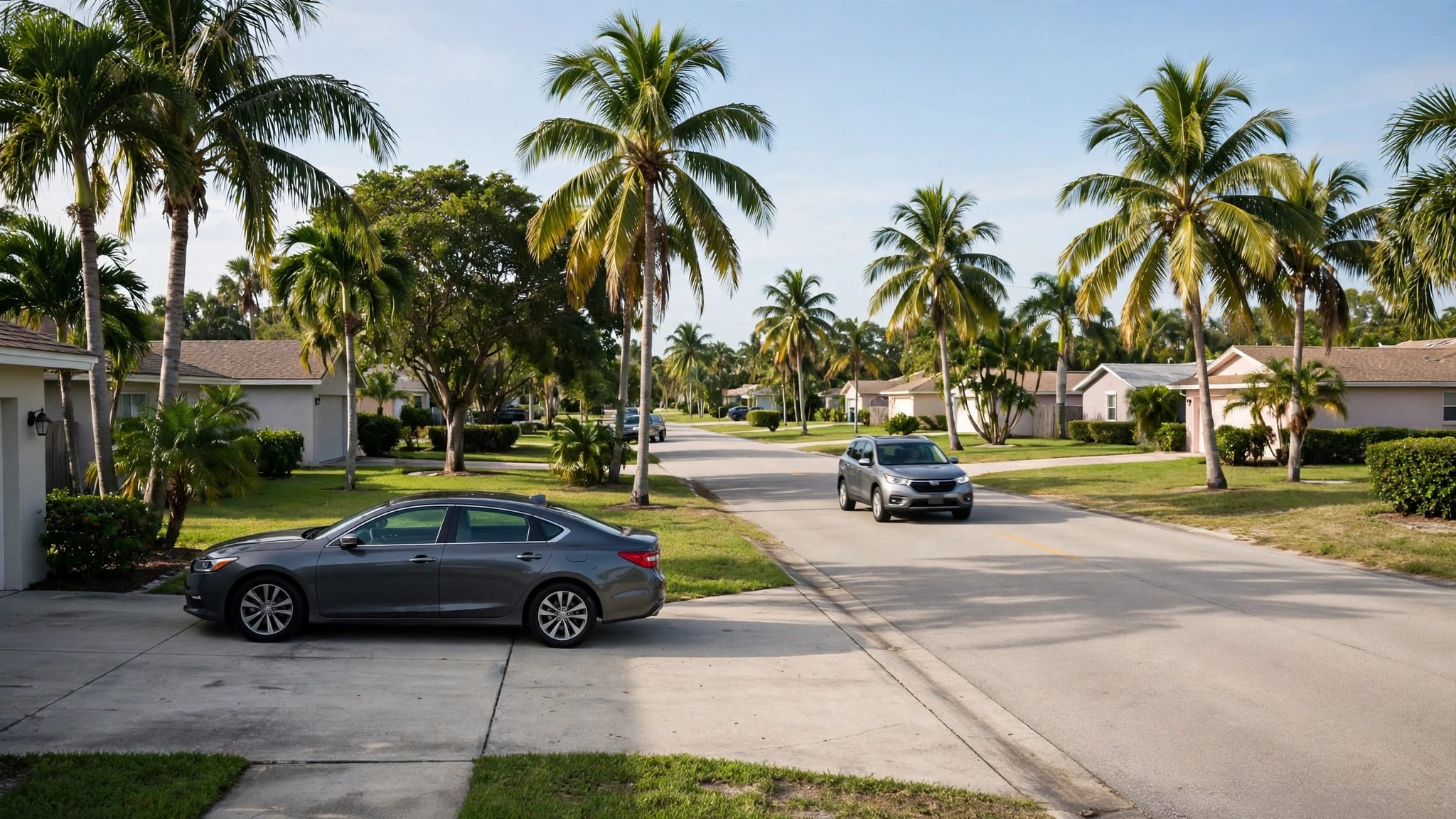
A driver leaving a private driveway in Florida must yield to approaching traffic that presents an immediate hazard. That duty is central to a Florida driveway accident claim, but responsibility still depends on how the collision happened.
If you were injured, you need evidence connecting the unsafe entry to your crash and resulting losses. Meanwhile, medical care shouldn’t wait for an insurer to decide fault.
Start with the driveway driver’s legal duties, then separate the liability investigation from insurance benefits and filing deadlines.
Key Takeaways
- Drivers entering a roadway from a private driveway must yield to traffic close enough to create an immediate hazard.
- In business and residence districts, an additional stopping requirement applies before crossing the sidewalk or entering the street.
- Shared fault can reduce compensation, and being more than 50% responsible generally bars recovery in covered negligence actions.
- Prompt treatment, preserved recordings, photographs, and financial records support different parts of your claim.
Florida’s Right-of-Way Rules for Private Driveways
Drivers must yield before entering traffic
Florida Statutes section 316.125 governs vehicles entering a highway from a private driveway, private road, alley, or building. The rule appears in Florida’s highway traffic laws.
The entering driver must yield to approaching vehicles close enough to pose an immediate hazard. This applies when entering or crossing the roadway.
The issue is whether the driver chose a safe opening, considering vehicle locations and approaching traffic. A turn signal doesn’t create the right of way. Similarly, stopping first doesn’t excuse pulling into an unsafe gap.
Additional stopping duties apply in developed areas
Within a business or residence district, the statute also requires a stop before crossing the sidewalk. If there’s no sidewalk, the driver must stop at the nearest point where approaching traffic is visible before entering the street.
The driver must also yield to pedestrians and vehicles presenting an immediate hazard.
These details matter when an insurer argues that the exiting driver “looked both ways.” Looking, stopping, and yielding are separate actions. Evidence must show what happened after the driver began moving into the roadway.
How Shared Fault Affects a Florida Driveway Accident Claim
Having the right of way doesn’t end the investigation
The exiting driver’s failure to yield can support negligence. However, the claim must also connect that conduct to the collision and your injuries.
An insurer may argue that the approaching driver was speeding, distracted, or changing lanes unsafely. Those allegations require evidence connecting the conduct to the crash.
Visibility matters too. A hedge, wall, parked vehicle, or curve may affect what each driver could see. Poor visibility doesn’t automatically excuse entering traffic without a safe opening.
Fault percentages can change your recovery
Florida Statutes section 768.81 reduces recoverable damages according to an injured person’s share of responsibility in covered negligence actions.
Exactly 50% fault reduces recoverable damages by half; a finding above 50% generally bars recovery in covered negligence actions.
An adjuster’s proposed percentage isn’t a court ruling. Before accepting shared blame, identify the conduct alleged and the evidence supporting it.
Our explanation of Florida comparative negligence rules addresses how those percentages affect injury claims. Unsupported statements that you “could have avoided it” deserve a closer review of the collision timeline.
Evidence That Shows How the Driver Entered Traffic
Preserve the roadway and vehicle evidence
Photograph the driveway entrance, lane markings, traffic signs, sidewalk, sight obstructions, and vehicle damage when it’s safe. Include wide views showing how the driveway connects to the road.
Damage location can help reconstruct vehicle movements, but it rarely answers every question alone. The point of impact, final positions, and available recordings must fit together.
Save original dashcam footage rather than only a short edited clip. Nearby home or business cameras may also show the approach and entry. Because recordings can disappear through routine overwriting, prompt preservation matters.
Avoid repairs or disposal before documenting damage. If vehicle data may matter, an attorney can address preservation with the parties controlling it.
Keep accounts accurate and independent
Obtain witness contact information and identify what each person actually saw. Someone who heard an impact may offer different evidence than someone who watched the driveway exit.
When reporting the collision, distinguish observations from assumptions. Don’t guess about speed, distance, or reaction time.
A police report can provide useful observations and witness information, but a missing report doesn’t automatically defeat a claim. Our guidance on claims without a police report explains how other records can help establish what happened.
Which Insurance Can Pay After the Crash?
PIP benefits don’t require a fault decision
Personal Injury Protection, or PIP, provides qualifying benefits without first proving that another driver caused the collision.
According to Florida’s insurance requirements, PIP covers 80% of necessary and reasonable covered medical expenses, subject to applicable limits. Florida law provides up to $10,000 in medical and disability benefits when its requirements are met.
Initial qualifying medical services generally must occur within 14 days of the crash. Don’t delay care while insurers debate responsibility.
Tell providers when symptoms began, including symptoms that appeared later. Keep discharge instructions, imaging results, prescriptions, and follow-up records together. These records help connect your treatment to the collision.
Other coverage addresses different losses
Florida’s required auto coverage includes PIP and property damage liability, but those benefits address different losses.
PIP doesn’t repair your vehicle or pay pain and suffering. Vehicle damage may involve the responsible driver’s property damage liability coverage or your own collision coverage.
For injuries, the responsible driver’s bodily injury liability coverage may apply if available. Uninsured or underinsured motorist coverage may also matter under the applicable policy.
Keep these claims separate. An insurer’s payment for vehicle damage doesn’t establish the full value of your injury claim.
Documenting Compensation Beyond Initial Medical Bills
A claim against a responsible driver may address supported medical expenses, future treatment, lost earnings, and reduced earning capacity. The evidence must establish both the loss and its connection to the crash.
Keep medical bills alongside treatment records. Also retain pay stubs, employer documentation, and written work restrictions. These materials show why you missed work and how much income you lost.
Future care needs medical support. Similarly, describe ongoing limitations accurately rather than assigning them an unsupported dollar value.
Florida generally requires an injury meeting its motor-vehicle serious-injury threshold before certain non-economic damages, including pain and suffering, are recoverable. PIP eligibility and that threshold are separate issues.
Once the evidence supports a settlement request, the demand should explain liability, injuries, treatment, and documented losses. Our Florida demand letter checklist describes the records that belong in that package.
Avoid signing a broad release before understanding which claims it resolves.
Protect the Lawsuit Deadline During Negotiations
For most recent Florida negligence claims, the general lawsuit filing period is two years. The rule appears in Florida Statutes section 95.11.
Different claim types, defendants, and statutory exceptions can affect the deadline. The lawsuit deadline is also separate from PIP’s initial-treatment requirement.
Settlement discussions don’t automatically stop the filing clock. Neither does an insurer’s statement that its claim file remains open.
An attorney can evaluate the applicable deadline while gathering records and negotiating. That work requires time, especially when video, vehicle data, or multiple insurance policies are involved.
Bring correspondence, claim numbers, insurance information, photographs, and treatment records to a case evaluation. An organized file helps identify missing evidence and unresolved coverage questions before negotiations consume the available filing time.
Frequently Asked Questions
Can I bring a claim if I swerved without hitting the exiting vehicle?
A claim may be possible if an unsafe driveway exit caused you to swerve and suffer injuries. You still need evidence connecting that maneuver to the crash.
Video, witnesses, tire marks, and vehicle positions may help establish the sequence. Without physical contact, identifying the exiting vehicle and preserving independent evidence become especially important.
Does a traffic ticket prove who owes compensation?
A citation doesn’t automatically decide civil liability. The injury claim still requires evidence of negligent conduct, causation, and damages.
Likewise, the absence of a ticket doesn’t automatically establish that the driveway entry was safe. Photographs, recordings, witnesses, and physical evidence may support a different conclusion than an insurer’s initial assessment.
Protect Your Claim After an Unsafe Driveway Exit
The duty to yield provides a starting point, but preserved evidence determines how well you can prove an unsafe entry caused your injuries. Prompt care also protects your health and documents the injury timeline.
At Avard Law Offices, we offer free case evaluations for personal injury matters. We can discuss the driveway collision, disputed fault, available insurance, and the steps needed to pursue your claim.