
Florida Rear-End Crash Claims and the Sudden-Braking Defense
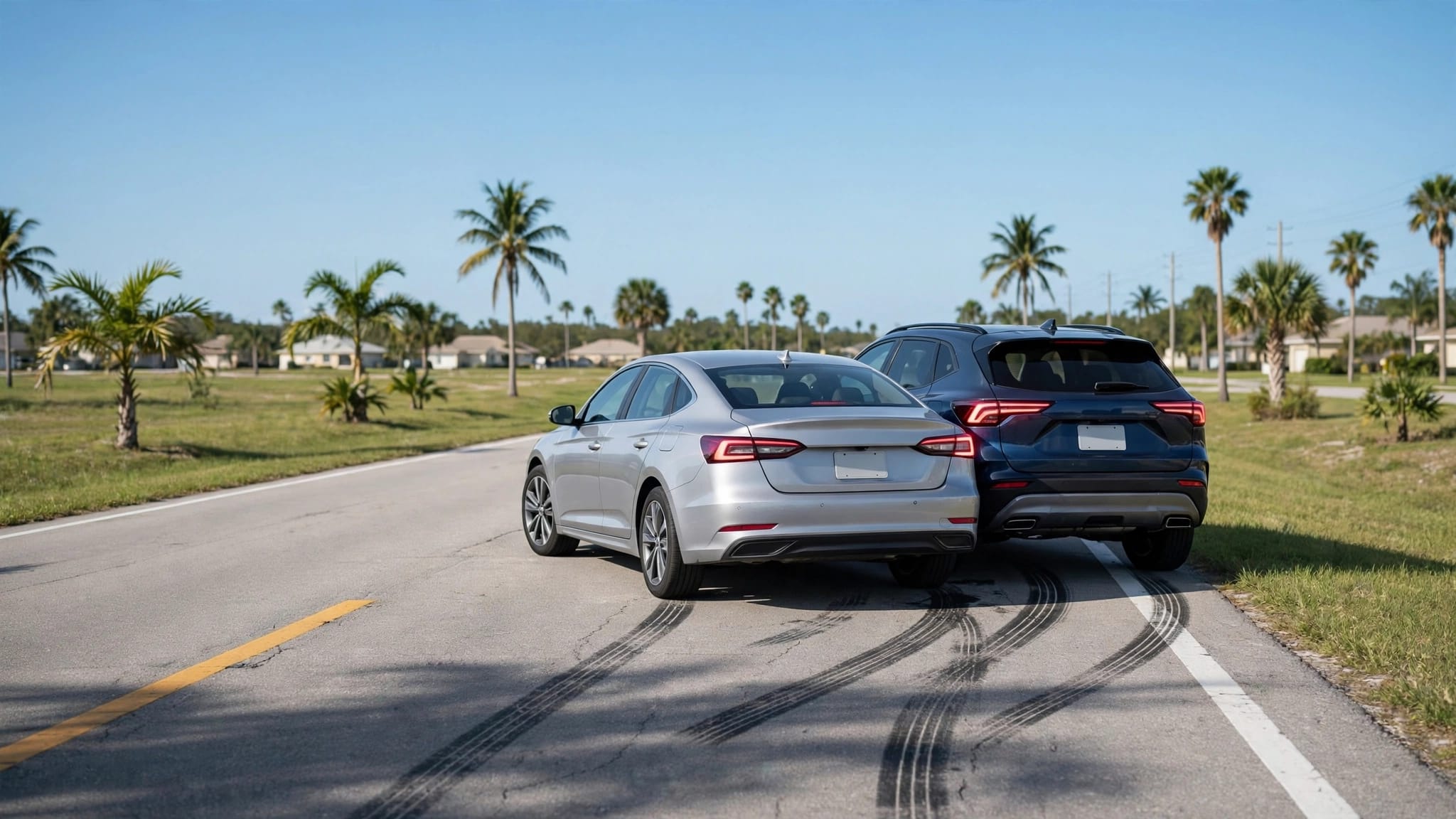
A rear-end collision often looks straightforward until the trailing driver says you “slammed on the brakes.” That accusation can complicate Florida rear-end crash claims, but it doesn’t establish fault by itself.
Florida law generally starts with the assumption that a driver who hits another vehicle from behind failed to maintain a safe distance. Still, photographs, video, road conditions, vehicle data, and witness accounts can change how an insurer or jury views the crash.
The facts from the seconds before impact matter most when sudden braking becomes part of the dispute.
This article provides general Florida legal information, not legal advice.
How Florida Rear-End Crash Claims Handle Sudden Braking
Rear-end collisions usually create a legal presumption against the trailing driver. However, that presumption doesn’t automatically decide liability. The rear driver may present evidence of an unexpected and unreasonable event.
The presumption against the rear driver
In Birge v. Charron, the Florida Supreme Court confirmed that Florida recognizes a rebuttable presumption of negligence after a rear driver strikes a vehicle ahead. The rule reflects a basic driving duty: motorists need enough space to react to traffic changes.
Florida’s following-too-closely statute requires drivers to avoid following more closely than is reasonable and prudent for the speed, traffic, and roadway conditions. That duty generally requires a safe following distance. A stopped vehicle ahead doesn’t automatically prove the front driver acted carelessly.
The rear driver must offer credible evidence of an unexpected and unreasonable event. A bare accusation that the other driver braked suddenly usually isn’t enough.
When sudden braking may matter
A sudden stop can become relevant if the evidence shows it was unexpected and unreasonable under the circumstances. For example, a driver who abruptly cuts into another lane and immediately brakes may create a legitimate fault question.
Yet many ordinary stops are foreseeable. Traffic can slow for congestion, pedestrians, road hazards, traffic lights, emergency vehicles, or a vehicle turning ahead. Drivers should anticipate those conditions and leave a safe buffer.
A sudden-braking defense requires proof of what happened before impact, not an assumption that any hard brake makes the lead driver responsible.
A rear driver may also argue that mechanical failure, an unsafe lane change, or a stopped vehicle with no working brake lights caused the crash. Each theory depends on credible records and physical evidence.
Evidence That Can Test a Sudden-Braking Story
After a rear-end collision, both drivers may give different accounts. Objective evidence often carries more weight than either driver’s first impression at the roadside.
Scene details and vehicle damage
If it is safe, photograph the vehicles before they’re moved. Capture the full scene, traffic signals, lane markings, debris, skid marks, sight obstructions, weather, and damage close-ups.
In a chain-reaction crash, vehicle positions, multiple impact points, and damage patterns may help identify which impact caused the claimed injuries. Damage alone doesn’t settle fault, but it can support a reconstruction analysis.
A police report records witness information and an officer’s observations, but it doesn’t determine civil liability. An insurance company may still consider those details when evaluating the claim. For a broader discussion of liability disputes, review Florida car accident claims when fault is denied.
Video, witnesses, and electronic data
Dashcam footage, traffic-camera recordings, business surveillance video, and doorbell cameras can disappear quickly. Request copies before the recording system overwrites them. Save the original file rather than a cropped social media version.
Newer vehicles may store event data that records speed, throttle use, braking, steering, and seatbelt status around the time of a collision. Repair work, salvage, and storage can make that information unavailable.
Neutral witnesses can also clarify whether traffic stopped normally, whether a vehicle merged abruptly, or whether brake lights illuminated. Get their names and contact information before they leave.
Shared Fault Can Reduce an Injury Recovery
Florida does not always assign all fault to one driver. Even when the at-fault driver appears responsible for the impact, an insurer may argue that the front driver contributed to the collision.
Florida’s 51% fault rule
Florida applies comparative negligence in most injury cases. Under Florida’s comparative-fault statute, a person’s damages can be reduced by their percentage of fault.
For many negligence actions, a person who is more than 50% responsible cannot recover damages. A claimant who is 50% or less at fault may still seek compensation, reduced by that percentage.
For example, a person with $100,000 in proven damages who is found 20% at fault could recover $80,000. The percentage matters because it affects the value of the claim, not the seriousness of the injury.
Do not accept vague blame arguments
An insurer may claim you stopped without reason, changed lanes too closely, had defective brake lights, or could have avoided the crash. Those allegations need evidence tied to the collision, such as lane position, braking, visibility, or functioning lights.
Stay truthful when reporting the wreck, but do not estimate speed, distance, reaction time, or visibility if you do not know. A rushed recorded statement can become a problem if video or vehicle data later shows different facts.
A careful review of Florida’s modified comparative negligence rule can help explain why an unsupported fault percentage deserves close attention.
PIP Benefits and Serious Injury Claims
Fault disputes shouldn’t delay medical care. Florida is a no-fault state for initial PIP benefits, even when drivers dispute responsibility.
Get medical care promptly
Florida personal injury protection, or PIP, can pay qualifying benefits regardless of fault. The Florida PIP statute includes a $10,000 medical and disability benefit limit, subject to statutory conditions.
Under the 14-day rule, beginning initial medical services within 14 days generally affects access to available PIP benefits. PIP generally pays only part of covered medical expenses and lost wages. It doesn’t resolve liability or cover every loss.
Other policy benefits, including uninsured motorist coverage, may apply depending on the policy and circumstances.
Tell each provider how the crash happened and report every symptom, including headaches, dizziness, numbness, neck pain, sleep disruption, and reduced range of motion. Mention possible whiplash and neck injuries or soft tissue injuries.
When pain and suffering damages may be available
A claim against the at-fault driver can seek losses beyond PIP when the injury meets Florida’s serious injury threshold. The serious-injury threshold statute includes permanent injury, significant and permanent loss of an important bodily function, significant permanent scarring or disfigurement, and death.
Medical documentation matters. Imaging results, specialist records, therapy notes, work restrictions, and a clear record of your symptoms can support a claim for pain and suffering and show how the rear-end crash changed your daily life.
Prior injuries don’t automatically defeat a claim. The issue is whether the collision caused new harm or worsened an existing condition.
Steps to Protect Your Claim After a Rear-End Crash
The days after a collision often shape the evidence available months later. Small steps can preserve facts that a sudden-braking defense depends on.
Keep records that show the full impact
Save discharge papers, bills, prescriptions, therapy records, receipts, mileage logs, work restrictions, and pay stubs. Keep a simple journal of pain, missed activities, sleep problems, and job limitations.
Do not repair, sell, or dispose of the vehicle until it has been photographed and inspected when fault remains disputed. Preserve original photos and video with their date information intact.
Report the crash to your own insurance company promptly and follow your policy’s requirements. However, be cautious when insurance adjusters request a detailed recorded statement.
Watch the filing deadline
An insurance claim can remain open while the statute of limitations continues to run. For many Florida negligence claims arising from crashes on or after March 24, 2023, the filing period is generally two years, although the correct date can depend on the crash date, claim type, and parties involved.
The Florida limitations statute controls the statute of limitations, and settlement negotiations do not automatically pause it. A car accident attorney can review the relevant facts to identify the correct deadline. Review the Florida car accident lawsuit deadline early instead of relying on their assurances.
Key Takeaways
- Rear drivers are generally presumed negligent, but evidence of an abrupt and unreasonable maneuver may create a factual dispute.
- Sudden braking alone does not prove that the front driver caused the crash.
- Video, witnesses, vehicle data, roadway photographs, and damage patterns can test competing stories.
- Under Florida’s modified comparative negligence rules, shared fault may reduce recovery, and fault above 50% generally bars recovery in covered negligence cases.
- Prompt treatment protects your health and may preserve PIP benefits.
- Rear-end claims should be supported by consistent records, medical documentation, and evidence of financial losses, not guesses about speed, distance, or braking.
Frequently Asked Questions
Is the rear driver always at fault in a Florida rear-end collision?
No. The rear driver begins with a presumption of negligence, but that driver can present evidence of a sudden and unexpected stop, a mechanical failure, an unsafe lane change, or another event outside normal traffic conditions. The available evidence determines whether that defense has support.
What if I braked suddenly to avoid a hazard?
Braking to avoid a pedestrian, debris, stopped traffic, or another immediate danger may be reasonable. Photograph the hazard if possible, identify witnesses, and preserve any video. The key issue is whether your stop made sense under the conditions, not whether it happened quickly.
Can I still bring a claim if I had a prior neck or back injury?
Yes. A prior condition does not prevent recovery when a crash caused a new injury or made an existing condition worse. Medical records from before and after the collision can help show the difference in symptoms, treatment needs, and physical limitations.
Protect the Facts Before They Disappear
A sudden-braking accusation does not erase the rear driver’s duty to follow at a safe distance. It does mean the evidence must show the timing, traffic conditions, and actions of both drivers with care.
The strongest Florida rear-end crash claims connect the collision, medical records, and financial losses in one consistent account. Early evidence preservation gives that account the support it needs when an insurer disputes fault.