
Florida Seat Belt Defense in Car Accident Claims
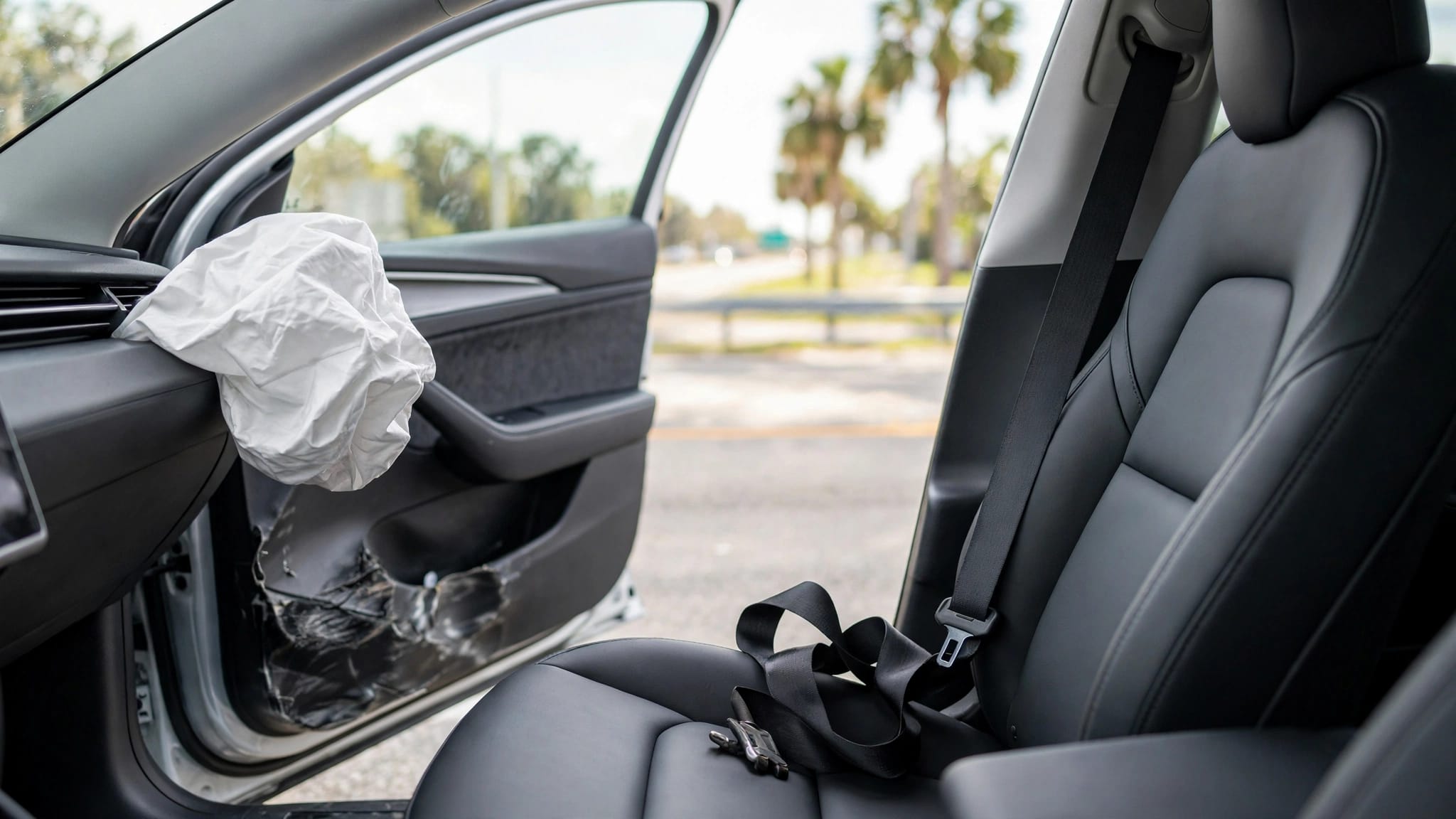
The Florida seat belt defense allows a defendant to argue that an injured person’s failure to use an available, working belt contributed to their injuries. It doesn’t automatically defeat a claim. The defense requires evidence connecting nonuse to the harm.
If another driver caused your crash, an insurer may still raise questions about your seat belt. Those questions can affect the value of your claim, so it’s important to understand what the defense must prove.
Key Takeaways
- Not wearing a seat belt doesn’t automatically make you responsible for a crash or eliminate your injury claim.
- The defense must address whether a working belt was available, whether nonuse was unreasonable, and whether it contributed to your injuries.
- Florida’s comparative negligence rules can reduce recovery and, in some cases, bar it.
- Vehicle components, medical records, witness accounts, and electronic data can help resolve a disputed allegation.
What Is the Florida Seat Belt Defense?
The seat belt defense is an argument about responsibility for injuries. A driver who caused a collision may claim that an injured person failed to use a seat belt and suffered greater harm as a result.
Florida law permits seat belt nonuse to be considered as evidence of comparative negligence in a civil action. However, a violation of the safety belt law isn’t negligence per se or automatic proof of negligence. You can find the safety belt provisions in Florida’s motor vehicle statutes.
Causing the Crash and Contributing to Injuries
A seat belt generally doesn’t determine whether another driver ran a red light or failed to yield. Those actions concern how the collision happened.
A belt dispute usually concerns a different issue: whether the injured person’s conduct contributed to the resulting harm. A defendant who claims nonuse also caused the collision needs evidence connecting it to the accident itself.
A Citation Doesn’t Decide Your Claim
A seat belt citation may become part of the evidence, but it doesn’t settle civil liability. Similarly, an officer’s entry on a crash report isn’t necessarily the last word on whether you were restrained.
The Florida Department of Highway Safety and Motor Vehicles summarizes the state’s safety belt requirements. They generally apply to drivers, front-seat passengers, and passengers under 18. Other rules apply to child restraints.
What Must the Defense Prove?
In Insurance Co. of North America v. Pasakarnis, the Florida Supreme Court recognized that seat belt nonuse can be considered in a comparative negligence analysis. The defense must do more than point to an unbuckled occupant.
A Working Belt Was Available
The defendant must address whether an available, fully operational seat belt was there to use. If the buckle, latch, or webbing was damaged before the crash, that condition matters.
The vehicle itself may contain evidence about the restraint’s operation. Statements from occupants, repair records, and an inspection of the belt assembly can also help establish its condition.
A post-crash photograph alone may not answer every question. A belt can sustain damage during a collision or during rescue and recovery, so the timing and cause of damage need careful examination.
Nonuse Was Unreasonable and Caused Additional Harm
The defense must also show that failing to use the belt was unreasonable under the circumstances and contributed to at least part of the claimed injuries. That requires an analysis of the collision and the person’s injuries, rather than a general statement that seat belts reduce injuries.
Medical and crash reconstruction evidence may be relevant to what happened to the occupant’s body. For example, the analysis may address the direction of impact, intrusion into the passenger compartment, and the injuries documented in treatment records.
An allegation that a belt might have helped doesn’t, by itself, establish which injuries it would have prevented or reduced. The evidence needs a meaningful connection to the harm claimed.
How Comparative Fault Can Affect Compensation
Florida’s comparative negligence rules generally reduce damages by an injured person’s assigned share of fault. The current version of Florida Statutes section 768.81 also bars recovery in most covered negligence actions when the claimant is more than 50% at fault for their own harm.
The Percentage Changes the Result
A finding of 20% comparative fault would generally reduce $100,000 in proven damages to $80,000, before other claim issues. At exactly 50% fault, the statutory bar doesn’t apply, although the damages reduction is substantial.
An insurance adjuster’s proposed percentage isn’t a court finding. It is a negotiating position that should be evaluated against the evidence. Our discussion of Florida comparative negligence rules explains how shared fault can affect a vehicle injury claim.
When the Current Rule Applies
Florida changed its comparative negligence law in 2023. The amended rule generally applies to causes of action filed after March 24, 2023, while older cases can involve different rules.
The statute addresses fault for a person’s own harm, and Florida law permits qualifying seat belt evidence to be considered as comparative negligence. How a seat belt allegation affects the overall fault assessment depends on the evidence and the law applicable to the case.
Evidence That Can Resolve a Seat Belt Dispute
A strong investigation addresses both whether the belt was used and whether its use would have changed the injuries. Those are related questions, but they require different evidence.
Vehicle and Restraint Evidence
Seat belt webbing, buckles, retractors, and surrounding interior surfaces may contain information about restraint use or damage. Depending on the vehicle, electronic systems may also record crash-related information, including restraint status.
Electronic data has limits. Its availability and meaning depend on the vehicle and system, and a recorded status should be interpreted alongside the physical evidence.
Tell your attorney where the vehicle is stored and who controls it. Before repairs, dismantling, or salvage, counsel can seek preservation and arrange an inspection. If storage charges are accumulating, address them while access and preservation are arranged.
Medical Records and Witness Accounts
Emergency records, imaging, treatment notes, and photographs can document the location and severity of injuries. Medical evidence can help evaluate the insurer’s claim that a restraint would have prevented a particular injury.
Bruising or the absence of a visible belt mark doesn’t conclusively establish whether someone wore a belt. Treatment records should be considered alongside the collision evidence, not treated as a substitute for it.
Other occupants, first responders, and bystanders may have relevant observations. Their accounts can differ about what they saw before impact and after rescue, so the timing of each observation matters. Our guide to evidence for a Florida accident claim covers other records that can help establish how a collision occurred.
How to Respond When an Insurer Blames You
Ask what conduct the insurer alleges and what evidence connects it to your injuries. A statement that you were unbelted is different from a supported explanation of how nonuse changed the harm.
Be truthful when reporting the crash. If you don’t remember an event or aren’t certain about a detail, say so rather than guessing. Memory can be affected by a serious collision, and later evidence may clarify what happened.
If the other driver’s insurer requests a recorded statement, consider speaking with an attorney before giving a detailed account. You should also follow your own policy’s notice and cooperation requirements.
Don’t let a seat belt allegation replace the investigation into the other driver’s conduct. Video, witness accounts, vehicle damage, and roadway evidence can still establish who caused the collision.
What If the Seat Belt Failed?
A person may have fastened a belt that didn’t perform as expected. A damaged buckle, torn webbing, or other restraint-system problem deserves investigation, but visible damage alone doesn’t prove a manufacturing defect.
Depending on the evidence, a claim against a negligent driver and a product-related claim may both be possible. They address different questions: who caused the collision and whether a restraint failure caused additional harm.
Preserving the vehicle is especially important when a belt or airbag may have malfunctioned. Our overview of Florida airbag nondeployment claims explains why a restraint-system investigation must account for the circumstances of the crash. A product claim can involve different legal requirements and deadlines.
Insurance Benefits and Injury Damages
Florida’s personal injury protection, or PIP, benefits are separate from a claim against another driver. PIP generally covers a portion of qualifying medical expenses and lost income, subject to statutory and policy requirements. It doesn’t pay for pain and suffering.
For PIP medical benefits, Florida generally requires initial treatment within 14 days after the accident. Seek appropriate care promptly, and keep records of appointments, bills, and work restrictions.
A liability claim may seek additional supported losses, including future care and lost earning capacity. In covered motor vehicle cases, recovery for pain and suffering generally requires a qualifying injury under Florida’s statutory threshold. Insurance coverage and policy limits can also affect payment, even when fault is clear.
Don’t Let Negotiations Run Past the Deadline
For many Florida negligence claims accruing after March 24, 2023, the general lawsuit filing period is two years. The applicable deadline can differ with the type of claim, defendant, and other facts. Florida’s limitations statute sets out different periods for different actions.
An open insurance claim or ongoing settlement discussions don’t automatically preserve your right to sue. Early legal advice also gives your attorney more time to seek evidence before a vehicle is repaired or footage disappears.
Frequently Asked Questions
Can I recover compensation if I wasn’t wearing a seat belt?
Possibly. Nonuse doesn’t automatically defeat a Florida injury claim. The defense must support its argument that unreasonable nonuse contributed to your injuries, and any applicable comparative fault finding can affect recovery.
Can an adult back-seat passenger face a seat belt defense?
Yes. Although Florida generally doesn’t require an adult back-seat passenger to wear a belt under its safety belt law, a defendant may still argue that nonuse was unreasonable and contributed to the injuries. The defense needs evidence for that argument.
Does an unbuckled belt prove I didn’t wear it during the crash?
No. A belt may be unbuckled after impact by an occupant or someone providing assistance. The post-crash position should be evaluated with witness accounts, physical evidence, and any available electronic data.
Get Help With a Seat Belt Allegation
A seat belt defense turns on the evidence, not the insurer’s accusation alone. The crash investigation and the injury analysis each deserve attention.
At Avard Law Offices, we offer free consultations for people seeking help with personal injury claims. We can review the allegation and discuss the next steps for your claim.