
Florida Deer Accident Claims When Another Driver Swerves
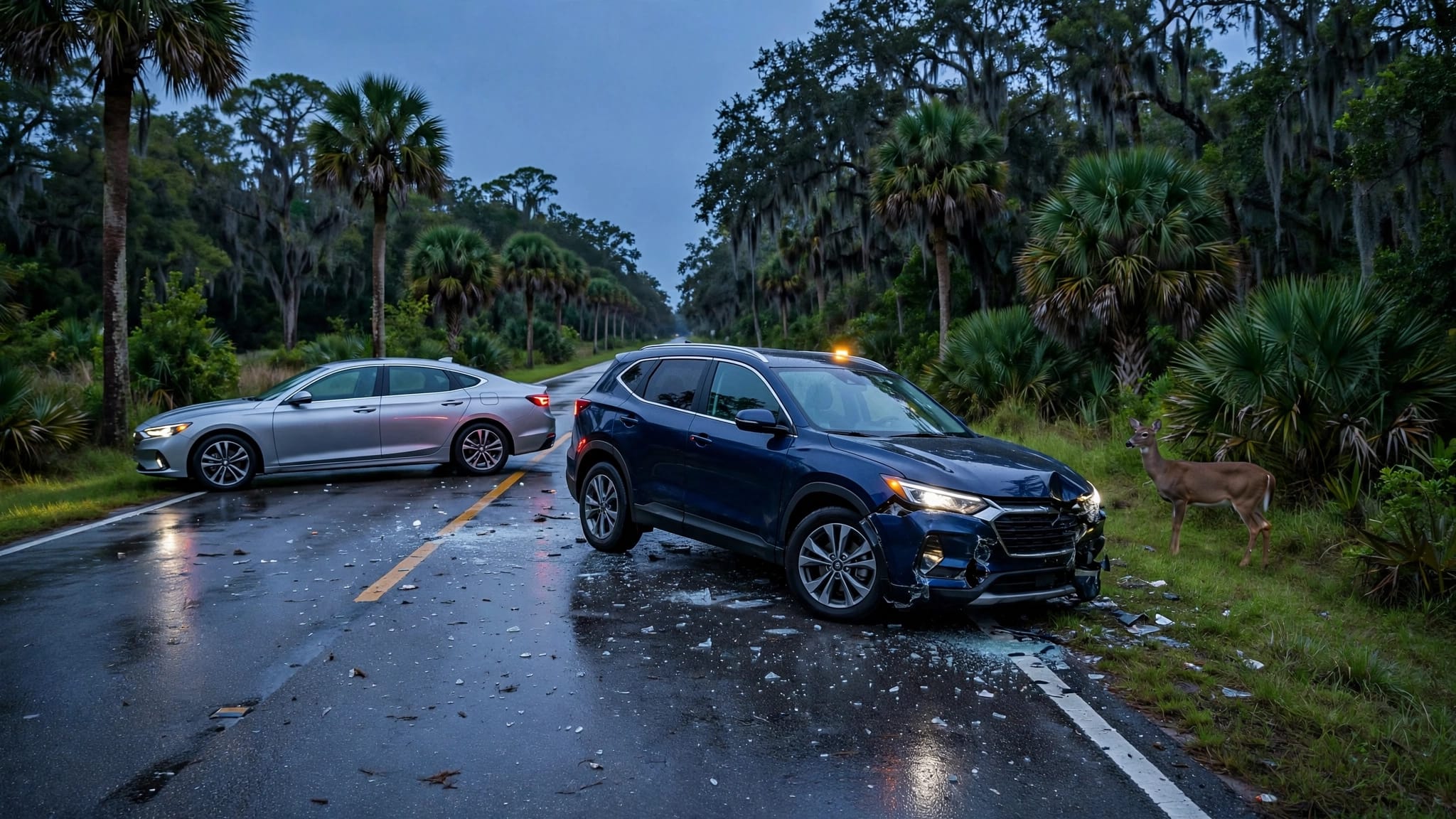
A driver who swerves to avoid a deer and hits your vehicle may be responsible for your injuries. In a Florida deer accident claim, fault depends on whether that driver’s actions were reasonable under the circumstances.
The animal’s appearance doesn’t automatically excuse an unsafe maneuver, but a collision alone doesn’t prove negligence. Your strongest protection is evidence of what happened before impact, especially when the other driver claims there was no time to react.
Start by separating the emergency from the driver’s response to it.
Key Takeaways
- A deer in the roadway doesn’t automatically excuse a driver who swerves into another vehicle.
- Fault depends on speed, visibility, available reaction time, lane position, and the driver’s response.
- Initial medical care generally must begin within 14 days to qualify for Florida PIP benefits.
- Photographs, witnesses, original recordings, and vehicle data can help resolve conflicting accounts.
- Insurance coverage differs for striking a deer, hitting another car, and suffering injuries.
- Shared fault can reduce compensation or bar recovery in covered negligence actions.
Who Is Liable for a Florida Deer Accident?
Every driver must use reasonable care for the conditions. A claim against the swerving driver requires proof that careless conduct caused your injuries and losses.
A sudden deer encounter doesn’t settle fault
A deer may enter the road with little warning. The other driver can argue that an unexpected emergency left limited choices and reaction time.
However, the investigation must examine the entire sequence. Speeding, distraction, or following too closely may have reduced the driver’s ability to respond safely. A claimed emergency doesn’t erase conduct that helped create the danger.
Relevant questions include when the deer became visible, where each vehicle traveled, and whether the driver could reasonably have responded differently. The law evaluates conduct under the actual circumstances, rather than expecting a perfect decision in hindsight.
Swerving into your lane requires investigation
Crossing the center line or entering an occupied lane can support a negligence claim. Yet the impact location alone doesn’t explain why the maneuver occurred or whether it was reasonable.
Damage patterns, tire marks, and video may show whether the driver braked, changed direction abruptly, or lost control before reaching your vehicle.
If the collision involved oncoming traffic, our guidance on Florida head-on collision evidence addresses proof of lane departure. The goal is to establish each vehicle’s movement before contact, rather than rely only on where the vehicles stopped.
What to Do Immediately After the Collision
Your health comes first. Call 911 for injuries or immediate danger, and move away from active traffic when you can do so safely. Don’t approach an injured deer or enter the roadway to photograph it.
Florida’s official crash-response guidance explains reporting and information-exchange duties. Give responders an accurate account, including whether you saw the deer yourself or only heard the other driver mention it.
Exchange driver, vehicle, and insurance information. Also collect witness names and contact details before people leave.
Seek prompt medical evaluation for symptoms such as headache, dizziness, neck pain, weakness, or abdominal pain. Don’t delay treatment while insurers argue about responsibility.
If no officer investigates, your claim may still be possible, although reporting duties can remain. Our discussion of claims without a police report explains how other records can support the crash account.
Keep your statements factual. If you don’t know a speed, distance, or reaction time, say so instead of guessing.
Evidence That Tests the Deer Explanation
A convincing claim connects the roadway, vehicle damage, and witness accounts. Evidence should address both the animal’s appearance and the driver’s response.
Document the road and both vehicles
When safe, photograph lane markings, sight obstructions, debris, tire marks, vehicle positions, and damage. Wide views help explain the road layout; close photographs show contact points.
Document lighting, weather, curves, and roadside vegetation that affected visibility. Photograph the deer only if it remains visible from a safe location.
An animal’s absence doesn’t disprove the account. Likewise, a photograph of a deer doesn’t establish that the driver acted reasonably.
Ask witnesses what they personally observed without suggesting an explanation. Someone may have seen the deer, the lane crossing, or the driver’s actions before impact. Preserve those distinctions.
Preserve recordings and electronic data
Save original dashcam files, including the approach to the collision. A short impact clip may omit the speed, spacing, or visibility needed to evaluate fault.
Nearby businesses or other motorists may have recordings, but footage can disappear quickly. An attorney can request preservation before routine deletion.
Depending on the vehicle and event, electronic crash data may document speed, braking, or other inputs. Preserve the vehicle’s condition before repairs or salvage handling remove useful evidence.
The crash report also deserves review. Compare its diagram, directions of travel, and vehicle descriptions with the physical record. A citation, or the absence of one, doesn’t decide civil liability.
Which Insurance May Cover Your Losses?
A deer-related crash can involve several coverages. The relevant distinction is what caused each loss and which policy applies.
PIP addresses initial injury expenses
Florida Personal Injury Protection generally provides benefits regardless of fault. Under Florida’s PIP statute, initial medical services and care must occur within 14 days after the crash to qualify for medical benefits.
PIP generally pays 80% of qualifying medical expenses and 60% of covered lost income. Combined medical and disability benefits generally have a $10,000 limit, subject to statutory and policy terms.
Without a qualifying emergency medical condition determination, medical benefits may be limited to $2,500. PIP doesn’t cover vehicle repairs or pain and suffering, and its payments don’t establish fault.
Liability, collision, and comprehensive cover different risks
The responsible driver’s bodily injury liability coverage may address covered injury losses. Property damage liability may address damage to your vehicle. However, coverage and available limits affect the amount recoverable.
Your collision coverage generally addresses damage from hitting another vehicle or object, subject to the deductible. Direct contact with a deer generally falls under comprehensive coverage.
Therefore, swerving to avoid a deer and hitting another car usually presents a different coverage question than striking the animal.
Uninsured or underinsured motorist coverage may apply to qualifying injury losses when a negligent driver lacks sufficient liability insurance. It doesn’t automatically apply merely because a deer caused danger.
A claim may also seek supported future treatment costs and reduced earning capacity. Pain-and-suffering recovery in covered Florida motor vehicle cases generally requires a qualifying injury under the statutory threshold, such as permanent injury.
How Shared Fault Can Affect Compensation
The other insurer may argue that you were speeding, distracted, or slow to brake. Those allegations require evidence connecting your conduct to the crash or injuries.
Under Florida’s comparative-fault statute, your percentage of responsibility generally reduces recoverable damages. In covered negligence actions, a person found more than 50% at fault for their own harm cannot recover damages.
Exactly 50% doesn’t trigger that bar, although it reduces recovery by half.
An insurer’s proposed fault percentage isn’t a court finding. The underlying evidence can support or challenge that assessment.
Our explanation of Florida comparative negligence rules addresses why disputed percentages matter.
Be truthful with insurers and follow your own policy’s notice and cooperation requirements. Before giving the other driver’s insurer a detailed recorded statement, legal advice can help you avoid speculation and address disputed facts accurately.
Keep Medical, Reporting, and Lawsuit Deadlines Separate
Different deadlines protect different rights. Receiving treatment doesn’t file a lawsuit, and opening an insurance claim doesn’t satisfy a court filing deadline.
For most recent Florida deer accident injury claims based on negligence, the general lawsuit deadline is two years. Florida’s statute of limitations supplies the governing period, although claim type, accrual rules, and exceptions can affect the calculation.
Settlement discussions generally don’t pause that deadline. Meanwhile, the 14-day PIP treatment requirement concerns initial care, not the completion of treatment.
A driver may also have a separate written-report obligation when law enforcement doesn’t investigate a reportable crash. Don’t assume an insurer’s claim number fulfills that duty.
Keep medical records, bills, work restrictions, pay records, repair estimates, and insurer correspondence together. These documents help establish losses while the liability investigation continues.
Frequently Asked Questions
Can I recover if the other vehicle never touched mine?
Physical contact isn’t always necessary to prove negligence. A driver who swerves into your path may cause you to leave the road or strike another object.
However, you still need evidence connecting that driver’s conduct to your crash. Witnesses and recordings become especially important when the driver leaves. Any uninsured motorist claim also depends on applicable coverage requirements.
What if nobody besides the driver saw the deer?
The claim doesn’t automatically succeed or fail. Investigators can compare the driver’s account with visibility, braking evidence, vehicle movement, and available recordings.
You should distinguish what you personally saw from what someone told you afterward. Don’t adopt an explanation simply because the other driver repeated it at the scene.
Should I accept a settlement while treatment continues?
An early offer may arrive before your doctors understand your recovery or future care needs. A settlement release can end the claims it covers, even if additional problems appear later.
Medical documentation and a clear understanding of the release help prevent resolving an injury claim before its consequences are known. A vehicle-damage resolution and an injury settlement may involve different paperwork.
Protect Your Claim With Evidence, Not Assumptions
A deer encounter can explain a driver’s reaction without resolving whether that reaction was reasonable. Your claim depends on documented conduct, supported injuries, and the insurance available.
At Avard Law Offices, we represent people injured in Florida car accidents and offer a free initial consultation. If another driver swerved into you, we can discuss your claim and the evidence that may need prompt preservation.