
Florida Head-On Crash Claims: Proving Lane Departure
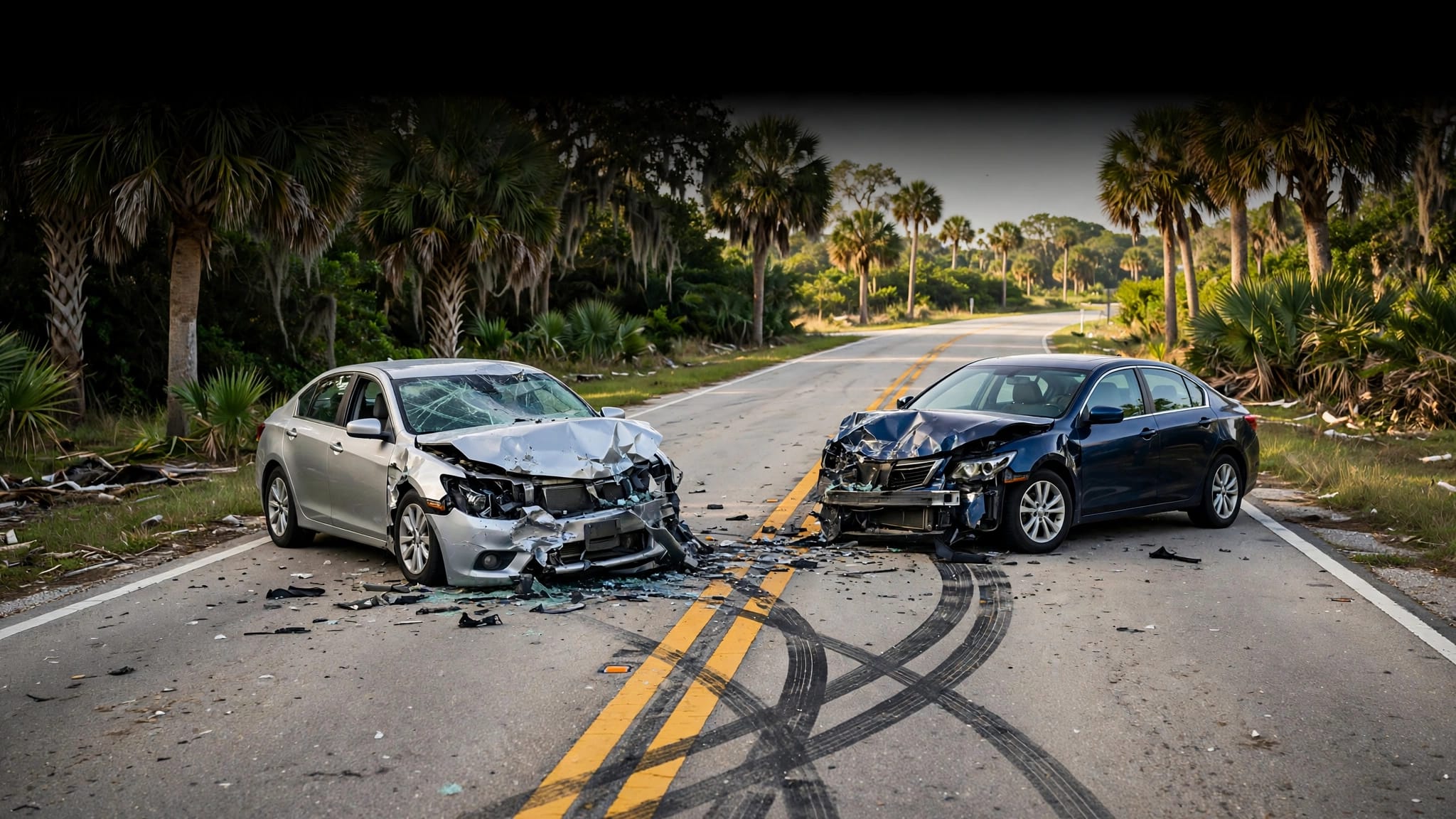
A head-on collision can change a life in seconds, yet the legal dispute often turns on one question: which vehicle crossed the line first. In Florida head-on crash claims, physical evidence can carry more weight than either driver’s first account.
Pain, shock, road closures, and damaged vehicles can blur the facts fast. The strongest claim preserves the roadway, vehicle, and medical evidence before weather, repairs, or missing footage create gaps.
Why Lane Departure Is Central to Florida Head-On Crash Claims
A head-on collision often starts when a driver drifts across a center line, passes into oncoming traffic, enters the wrong direction of travel, or crosses a highway median. Establishing that movement is the foundation of fault.
The vehicle that left its lane may be responsible
On a two-lane road, center lines, tire marks, debris, and vehicle damage may show which driver entered the opposing lane. A double-yellow line, no-passing sign, curve, or limited sight distance can also explain why a passing maneuver was unsafe.
Still, a line crossing does not end every dispute. An insurer may claim the injured driver sped, failed to brake, used a phone, or had enough time to avoid impact. Those claims should rest on records, video, and physical proof, not speculation.
For more detail on documenting the roadway and impact area, review this Florida head-on collision evidence checklist.
Florida’s shared-fault rule can affect recovery
Florida uses modified comparative negligence in most injury cases. Under Florida Statutes section 768.81, a claimant’s damages may be reduced by their percentage of fault.
For example, a person with $100,000 in proven damages who is found 20% responsible could recover $80,000. In most covered negligence cases, a finding of more than 50% fault blocks recovery.
A driver’s accusation at the scene is not a fault finding. The evidence must show how each vehicle moved before impact.
Physical Evidence That Shows How the Crash Happened
The roadway often keeps the clearest record of a lane-departure crash. Photographs and inspection should begin before vehicles are towed, debris is swept away, or rain erases markings.
Center lines, debris, and pavement marks
Take wide photos from both directions of travel. Include the center line, shoulders, curves, signs, intersections, guardrails, and the final positions of all vehicles. Then photograph closer details, such as tire marks, gouges in pavement, fluid trails, broken glass, and the debris field.
A debris field may help identify the point of impact. Tire marks can support an account of braking or steering. Damage to the road edge can show a vehicle left the travel lane before returning across traffic.
Photos should capture conditions that may matter later, including faded striping, standing water, construction changes, poor lighting, vegetation blocking a sign, or a narrow shoulder.
Vehicle damage can support the impact sequence
The location and direction of crush damage can help reconstruct an impact. Front-corner damage, side damage, paint transfer, deployed airbags, and intrusion into the passenger compartment can all be relevant.
Damage patterns don’t decide a case alone. However, they may support witness testimony and reconstruction evidence when drivers give opposing accounts.
Do not authorize disposal of your vehicle before its condition is documented. The same caution applies to the other vehicle when an attorney may need an inspection.
Video, Witnesses, and Vehicle Data Can Fill the Gaps
A head-on crash may happen within seconds, but several independent records can show the events leading to impact. Early preservation matters because many recordings are automatically overwritten.
Cameras and independent witnesses
Save the original dashcam file immediately and make a backup. Edited clips can prompt questions about what occurred before the collision. Look for nearby business cameras, residential doorbell cameras, traffic cameras, school buses, or commercial trucks that traveled through the area.
Ask witnesses for names, phone numbers, and email addresses. A neutral witness who saw a driver drift, pass, or cross the center line can be more persuasive than someone who arrived after impact.
The Florida Highway Patrol live crash and road condition report may also help identify the incident location, reported time, road closures, and responding agency. It is not a substitute for a complete investigation, but it can help establish a timeline.
Event data recorders and phone evidence
Many newer vehicles contain an event data recorder, often called an EDR or black box. Depending on the vehicle and collision, available data may include speed, braking, throttle activity, steering inputs, seat belt status, and other pre-impact information.
This evidence can be lost through repair, salvage, storage-yard handling, or data overwrite. A preservation request can alert the vehicle owner, insurer, or other custodian that the vehicle and its electronic information may be needed.
Phone records may also matter when evidence points to distraction. They can show activity, but they do not automatically prove what a driver saw or did at the moment of impact.
For a closer look at center-line proof and electronic records, see vehicle data and lane-departure evidence.
Crash Reports Are a Starting Point, Not the Whole Case
Florida law requires reporting in certain crashes involving injury, death, or significant property damage. The Florida Department of Highway Safety and Motor Vehicles explains what drivers should do when involved in a crash, including remaining at the scene, exchanging information, and reporting when required.
A crash report may list drivers, witnesses, citations, vehicle damage, the officer’s narrative, and a diagram. Review it as soon as it becomes available. Check street names, travel directions, vehicle numbers, lane descriptions, and the diagram against your own photographs.
Florida’s crash-report confidentiality and access rules appear in section 316.066. A report can support a claim, but it does not decide civil fault by itself.
An officer often arrives after the collision. Video, scene evidence, witness accounts, and vehicle data may later confirm or challenge the initial narrative.
Medical Records Connect the Collision to Your Injuries
Head-on impacts can cause fractures, traumatic brain injuries, spinal damage, internal injuries, and lasting pain. Even when symptoms seem manageable at first, prompt medical evaluation protects your health and creates a record of what happened.
Tell each provider how the crash occurred and describe all symptoms, including headache, dizziness, numbness, sleep problems, reduced movement, or anxiety. Keep discharge papers, imaging results, prescriptions, therapy records, mileage logs, work restrictions, and pay records.
Personal Injury Protection, or PIP, may provide early benefits through a covered vehicle’s policy without waiting for a liability decision. Florida’s PIP statute contains conditions and benefit limits that can affect payment.
Treatment generally must begin within 14 days to protect available PIP benefits. PIP does not resolve who caused the crash, and it does not cover every loss from a serious injury.
Building a Claim Beyond the Initial Insurance Offer
Insurers review more than the point of impact. They may examine speed, visibility, weather, impairment, braking, road design, maintenance, and each driver’s actions before the crash.
A clear claim links four issues: the lane departure, the collision, the injury, and the financial losses that followed. Medical bills matter, but so do future treatment, lost income, reduced earning ability, pain and suffering, and the effect of injury on daily life.
Avoid guessing about speed, distance, or reaction time in a recorded statement. Be truthful, but limit your account to facts you know firsthand. An early estimate can conflict with later footage or reconstruction findings.
When unsafe passing caused the lane departure, roadway markings and sight lines become especially important. Evidence of an unsafe passing maneuver can show where the pass started and why the driver did not have enough room to return safely.
Deadlines and Evidence Loss Need Early Attention
Florida filing deadlines vary with the date of the crash, the type of claim, the parties involved, and other facts. For many negligence claims arising after March 24, 2023, Florida generally provides a two-year period to file suit. A case-specific review is necessary because exceptions can change the deadline.
Settlement talks do not automatically pause the time to file. Waiting also puts video, witnesses, vehicle evidence, and medical proof at risk.
An attorney can send preservation requests, identify coverage, investigate disputed fault, and organize records before the insurance company defines the story. This is especially important when the other driver claims you crossed the line or could have avoided the collision.
Key Takeaways
- Lane departure is often the key factual issue in Florida head-on crash claims.
- Photograph lane markings, debris, tire marks, vehicle positions, signs, and roadway conditions as soon as it is safe.
- Preserve dashcam video, nearby camera footage, witness details, and electronic vehicle data before they disappear.
- A police report can help, but it does not settle civil fault.
- Florida’s comparative-fault law can reduce compensation by an injured person’s share of responsibility.
- Prompt treatment supports your health, documents injuries, and may protect available PIP benefits.
Frequently Asked Questions
Can I recover compensation if the other driver crossed the center line?
Crossing into oncoming traffic is strong evidence of negligence. However, the insurer may still investigate your speed, braking, lane position, and actions before impact. Florida’s comparative-fault rule allows a fact finder to assign responsibility to more than one person when the evidence supports it.
A claim is strongest when the physical evidence, video, witness testimony, and medical records tell the same story.
What should I photograph after a head-on crash?
If you can do so safely, photograph each vehicle, the center line, tire marks, debris, road signs, traffic controls, weather, lighting, and the roadway in both directions. Take wide images first so the scene can be understood in context.
Then take close photos of vehicle damage, airbags, broken glass, paint transfer, and visible injuries. Preserve the original image files rather than relying only on screenshots.
Can a black box prove the other driver entered my lane?
Vehicle data may help show speed, braking, throttle use, or steering activity in the seconds surrounding a collision. The available information differs by vehicle, and an EDR download does not always provide a complete answer.
It can be powerful when it matches other proof, such as the debris field, road marks, crash damage, or video footage.
A Clear Record Gives Your Claim Its Foundation
A head-on collision case should not depend on a quick accusation or an incomplete diagram. Florida head-on crash claims are stronger when the evidence establishes lane position, movement, injury, and loss with care.
Preserving the facts early gives you the best chance to challenge an unfair fault allegation and pursue the compensation your injuries warrant.