
Florida Airbnb Injury Lawsuits After Unsafe Rental Conditions
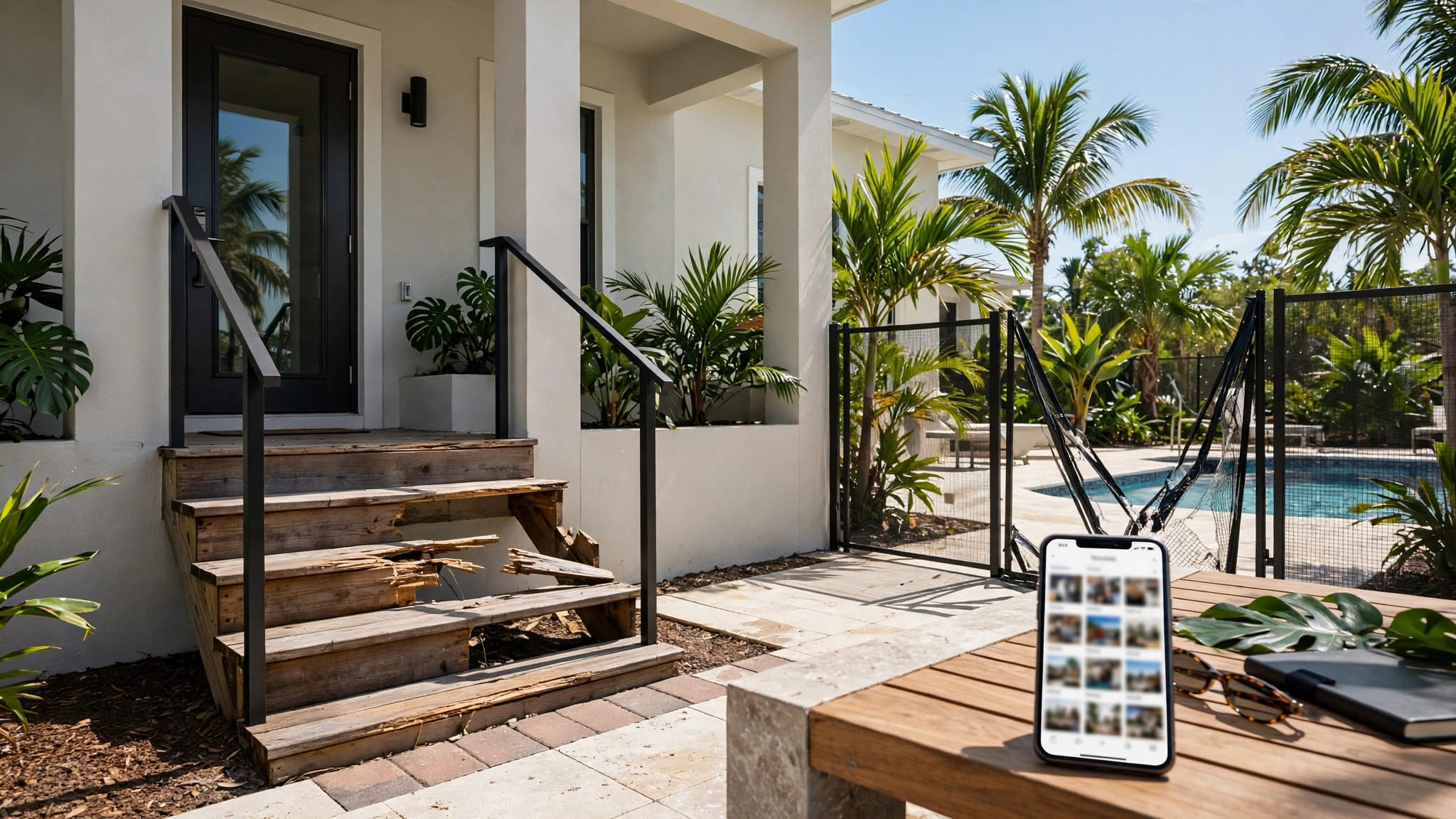
A vacation rental can feel safe until a loose stair tread, broken pool gate, faulty lock, or hidden water leak causes a serious injury. Florida Airbnb injury lawsuits can give injured guests a path to recover compensation when a preventable hazard turns a planned getaway into months of medical care and lost income.
The listing, host messages, and property photos may matter as much as the scene itself. Fast action protects evidence and helps identify everyone who had control over the rental.
Unsafe conditions that can cause serious rental injuries
Short-term rentals must be reasonably safe for paying guests. A host doesn’t get a pass because the property is a private home instead of a hotel.
Many injuries result from poor maintenance, rushed repairs, or hazards the host failed to disclose. The key question is often whether someone could have identified and fixed the danger before a guest got hurt.
Defective stairs, decks, and furniture
Loose railings, rotted decks, uneven steps, broken chairs, and unstable balconies can cause falls with life-changing results. A vacation property may sit empty between stays, so small defects can grow worse without regular inspections.
Photos taken after a fall can show cracked concrete, missing handrails, poor lighting, or an unsafe step height. Prior guest reviews and repair records can also show that the condition did not appear overnight.
Pool, fire, and air-quality hazards
Florida rentals often include pools, hot tubs, patios, grills, and outdoor stairs. Each feature creates safety duties. Missing pool barriers, broken gates, unsecured drain covers, slippery decks, and defective pool lights can lead to preventable injuries.
Fire and carbon monoxide risks also deserve immediate attention. A missing, disconnected, or malfunctioning alarm can become important evidence after a fire or toxic exposure. Guests harmed by dangerous fumes can review the issues involved in Florida carbon monoxide poisoning claims.
How Florida Airbnb injury lawsuits are built
A successful injury claim requires more than proof that an accident happened. The injured guest must connect the dangerous condition to a responsible party’s conduct and to the harm suffered.
In most cases, a paying vacation-rental guest is treated as an invitee. That means the person controlling the property generally must use reasonable care to maintain safe conditions and warn about dangers a guest would not reasonably discover.
The facts an injured guest must prove
Florida Airbnb injury lawsuits commonly focus on five connected issues:
- A dangerous condition existed at the rental, such as a failed handrail, broken lock, concealed hole, or unsafe pool area.
- The host, owner, manager, or another responsible party knew or should have known about it.
- That party failed to repair the condition, block access, or give an adequate warning.
- The unsafe condition caused the injury.
- The guest suffered measurable losses, including medical bills, lost earnings, pain, or reduced ability to work.
Florida premises cases often turn on actual or constructive notice. Actual notice can include a text message about a broken step. Constructive notice may arise when a condition existed long enough that reasonable inspections should have found it. The Florida Bar’s discussion of premises liability and foreseeable crimes also describes the general duty to maintain reasonably safe property and correct or warn of dangers.
More than one party may share responsibility
The listing host is often the first person examined, but the host may not be the only defendant. An owner, property-management company, co-host, maintenance vendor, cleaning company, homeowners association, or condominium association may have had a role.
Control matters. A manager who handled inspections and repairs may face responsibility for ignored maintenance requests. A vendor may be responsible if a careless repair created the hazard. A detailed review of Florida Airbnb injury claims can help clarify how these roles differ.
Preserve proof before the property changes
A host may repair a condition quickly after an incident. Digital evidence can also disappear when a listing changes, messages are deleted, or camera footage records over itself. Medical treatment comes first, yet preserving evidence early can protect the claim.
Do not rely on the host’s version of events. A polite apology or refund offer doesn’t establish fault, and a report that omits key details can create problems later.
Document the scene and your injuries
If it is safe to do so, photograph and record video of the exact area where the injury occurred. Capture the hazard from several distances, nearby lighting, warning signs, the absence of warnings, and anything that shows the scale of the danger.
Keep the clothes and shoes worn during the incident. Save broken furniture parts, damaged luggage, or other physical evidence when possible. In addition, seek prompt medical care and follow treatment instructions. Emergency records often document the first account of how the injury occurred.
Save the rental’s digital trail
Take screenshots of the Airbnb listing before it changes. Preserve amenity descriptions, photos, guest reviews, house rules, check-in instructions, payment records, and all messages with the host or platform.
Write down the address, date, time, names of witnesses, and each person who responded. Request copies of police, fire-rescue, and incident reports if they exist. An attorney can also send preservation requests for surveillance video, smart-lock logs, maintenance records, and relevant communications.
A repaired handrail may remove the physical proof of a defect, but time-stamped photos, prior reviews, and maintenance records can still show what the property looked like when the injury occurred.
Host liability and Airbnb’s role are different questions
The host or property owner usually faces the central claim when unsafe property conditions cause injury. That does not mean Airbnb itself can never become part of a case. Platform liability depends on the facts, the booking agreement, the platform’s actions, and applicable legal defenses.
For example, a claim against a platform may raise questions about arbitration clauses, liability waivers, choice-of-law terms, and whether the platform did more than process a reservation. Those issues require close review of the terms in effect on the booking date.
Insurance often determines the practical outcome
Insurance coverage can come from several places. The host may have a homeowners, landlord, umbrella, or commercial policy. A property manager, condominium association, or maintenance contractor may have separate coverage.
However, insurers often dispute claims involving short-term rentals. A carrier may argue that a policy excludes business activity, does not cover rental use, or excludes a particular type of loss. The applicable policy language matters more than a general promise of coverage.
Do not assume an insurance adjuster represents your interests. The insurer’s goal is to limit what it pays, while an injured guest needs a full account of present and future losses.
Deadlines and comparative fault can affect recovery
Time limits matter in every injury case. Under Florida’s current limitations statute, most negligence actions have a two-year deadline when the claim accrued on or after March 24, 2023. Wrongful death claims also generally carry a two-year deadline measured from the date of death. Review the current text of Florida’s limitations statute for the governing language and exceptions.
Waiting can also make a claim harder to prove. Witness memories fade, security footage disappears, and the rental may change hands or undergo repairs.
A guest’s conduct may become part of the case
Florida uses modified comparative negligence in most injury claims. A court or jury can reduce damages by the injured person’s percentage of fault. If the claimant is found more than 50 percent responsible for their own harm, recovery is barred under Florida’s comparative-fault law.
Hosts and insurers may argue that a guest ignored a warning, used an area after dark, entered a restricted space, or misused equipment. Those claims do not end a case automatically. Photos, messages, property layout, and the visibility of any warning can show whether the argument holds up.
Licensing, local rules, and inadequate security
A rental’s legal status may provide useful context. Florida regulates certain vacation rentals through the Department of Business and Professional Regulation, and guests can consult the state’s vacation-rental licensing guidance when questions arise about a property’s operation.
City and county rules can add registration, occupancy, parking, noise, and safety requirements. A code violation does not automatically prove negligence, but inspection records, permit issues, and enforcement notices may help explain why a hazard existed.
Assaults may involve negligent security claims
Unsafe conditions are not limited to physical defects. An assault at a vacation rental, condominium building, parking area, or shared entrance may support a claim when a property controller ignored foreseeable security risks.
Broken gates, nonfunctioning locks, missing lighting, or a failure to address prior criminal activity can become important. These claims require proof that the criminal conduct was foreseeable and that reasonable security measures could have reduced the risk. Evidence needed to build a Florida negligent security claim often includes incident reports, crime history, camera footage, and records of prior complaints.
What an attorney can do after a vacation-rental injury
An early legal review can identify the right defendants before evidence disappears. It can also prevent an injured guest from giving a recorded statement or accepting a settlement before the full medical picture is clear.
Build the case around proof, not assumptions
A personal injury attorney can inspect the site, collect public records, locate insurance policies, review contracts, and obtain maintenance documents. In Florida Airbnb injury lawsuits, those records often reveal who received a complaint, who approved repairs, and who had authority over the property.
The case should also account for future treatment, missed work, disability, and the injury’s effect on daily life. A quick settlement may cover an emergency-room bill while leaving later surgery or rehabilitation unpaid.
For injuries involving unsafe stairs, pool areas, poor security, toxic exposure, or a dangerous animal, prompt legal guidance helps preserve the facts that matter most. Guests injured by an animal at a rental may also need to examine Florida vacation-rental dog bite liability.
Moving Forward After an Unsafe Airbnb Stay
A vacation rental injury claim depends on evidence of an unsafe condition, notice, control, and real losses. The sooner those facts are documented, the harder they are to dispute.
Florida Airbnb injury lawsuits are not decided by a listing’s polished photos or a host’s assurances. They are decided by what made the property dangerous, who had the opportunity to correct it, and how that failure changed the injured guest’s life.