
Florida Broken Glass Injury Claims: Save Store Evidence
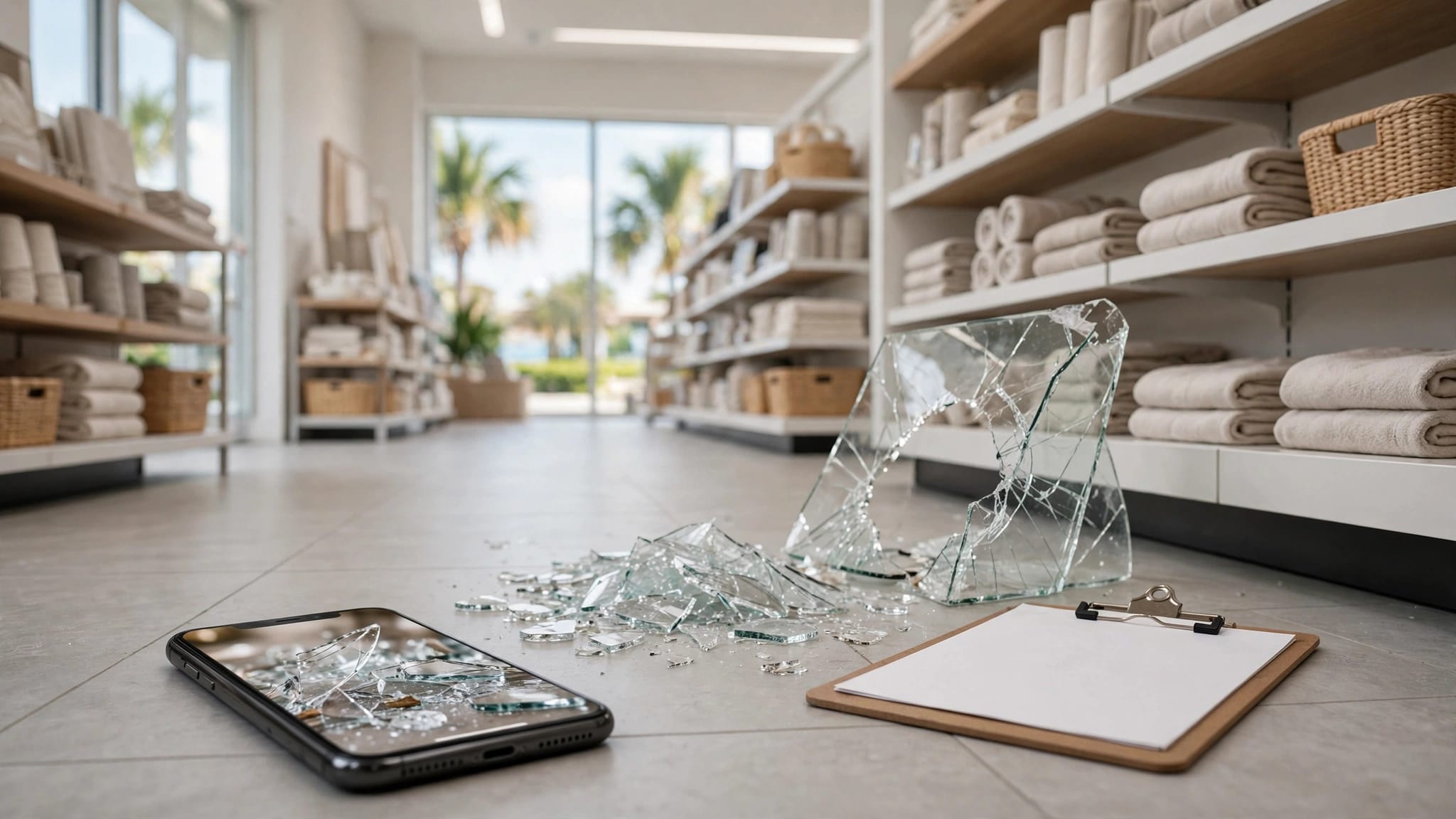
A broken glass injury in Florida can happen in seconds. By the time you leave a store, employees may have swept up the shards, moved the display, or repaired the door that broke. The evidence that could explain what happened may already be changing.
If you’ve been cut or fallen, get care first. Then focus on preserving the scene and asking the business to retain its records. Photos, witness accounts, and footage from before the injury can help show where the glass came from and whether anyone knew it was there.
What to do before the scene changes
Get care and report what happened
Seek urgent care for heavy bleeding, a deep cut, loss of feeling, or a possible piece of glass left in the wound. Tell the treating provider how the injury occurred, including whether you fell, struck a glass door, or cut your hand on a damaged fixture. Keep discharge instructions and follow-up records.
Report the incident to a manager when you can safely do so. Give the time and exact location, such as the end of a particular aisle or a specific entrance. Ask for the incident report number and the manager’s name. If the store won’t provide a copy, record whom you spoke with and when. Don’t guess how long the hazard existed.
Photograph what you can see
Take wide shots that show the aisle, doorway, display, lighting, and nearby warning signs. Then photograph the glass and its possible source. A close-up may show a broken bottle; a wider view may show that shoppers couldn’t see the shards around a corner.
Also document your shoes, clothing, and visible injuries. Save original files without adding captions or filters. If you can’t take photos, ask a companion to help. Don’t handle sharp debris or interrupt emergency care to document the scene. The Florida slip and fall evidence checklist covers other items worth saving after a fall.
Request surveillance footage before it’s overwritten
Store cameras may show the injury, but the earlier footage can be more useful. It might show when an item broke, whether an employee walked past it, or when someone placed a warning sign. Some systems overwrite recordings within days, so send a written preservation request promptly.
Identify the right cameras and time window
Give the store’s address, the incident date, your best estimate of the time, and the precise location. Ask the manager or corporate office to preserve footage covering the area for at least an hour before and after the event. That window is a practical starting point, not a legal retention rule.
Mention nearby views that may fill a gap, such as aisle cameras, checkout cameras, or an entrance camera facing a broken door. Ask for the original recording with its timestamps and available identifying information, rather than a short clip selected by the store. If the time is uncertain, say so and provide the widest reasonable window.
Keep proof of the request
Send the request by a method that gives you a dated copy. Keep the email, delivery confirmation, and any reply. If the property manager, hotel, or another business may control a relevant camera, contact that party too.
A private store generally doesn’t have to give you footage simply because you ask. The immediate goal is to prevent its loss; obtaining a copy may require legal procedures. The guide to requesting Florida store surveillance footage explains why those are separate steps.
Footage from before a glass injury may reveal when the danger appeared, even if the camera never captured the moment of contact.
Preserve store records and the broken item
Video isn’t the whole record. A business may hold documents showing when staff last inspected the area, who responded, and whether anyone reported trouble earlier. Ask that these materials be preserved before routine recordkeeping or repairs change what’s available.
Ask for the records that establish a timeline
Identify incident reports, inspection and cleaning logs, employee schedules, photographs, prior complaints, and communications about the hazard. If a bottle fell from a display, stocking records or reports of an unstable shelf may matter. For a door injury, maintenance tickets and prior repair requests may be more useful than a floor-cleaning log.
These records should be compared, not treated in isolation. A log may say an aisle was checked shortly before the injury, while video may show what that check involved. More on cleaning logs in Florida fall cases explains how records and footage can be read together.
Identify the glass and its source
Ask the business to retain a broken door panel, fixture, display component, or product packaging when one may have caused the injury. Photograph identifying marks and surrounding hardware if you can do so safely. Don’t remove store property without permission.
Keep anything you own that may contain evidence, including torn clothing or shoes with embedded fragments. Store it safely and tell your medical provider about any suspected glass in a wound. Determining whether the glass came from merchandise, a damaged fixture, or a door can change which records and responsible parties need investigation.
What a Florida broken glass injury claim needs to prove
An injury on business property doesn’t, by itself, establish that the business was negligent. A claim needs evidence of a dangerous condition, a failure to use reasonable care, a connection between that failure and the injury, and resulting losses. The details depend on how the glass caused harm.
Loose glass on the floor
Florida Statute § 768.0755 addresses slips and falls on a transitory foreign substance in a business establishment. When it applies, the injured person must show that the business had actual or constructive knowledge of the condition and should have addressed it.
Constructive knowledge may be shown by evidence that the condition existed long enough to be discovered through ordinary care, or occurred regularly enough to be foreseeable. Video, witness statements, and inspection records may help establish that history. Whether loose glass falls under this statute depends on the facts; don’t assume it governs every cut involving glass.
A broken door or fixture
A person cut by a shattering door may have a different premises-liability case than someone who slipped on scattered shards. The inquiry could involve a prior crack, loose hardware, missing warnings, or how the door behaved during ordinary use. Maintenance records and footage before the incident become important.
For a closer look at those issues, see Florida claims involving unsafe glass doors. A store may dispute what caused the break, so photographs of the door before repairs and accounts from people who saw it matter. The business isn’t automatically liable because its glass broke.
Connect the injury to documented losses
Keep a clear medical record
A glass injury may require stitches, imaging, treatment for infection, or care for damaged nerves or tendons. Tell clinicians about symptoms as they arise, and keep appointment records, prescriptions, bills, and work restrictions. Medical records help connect the event to the treatment you needed.
Record missed shifts and any tasks you can’t do while recovering. If someone helps with ordinary household work, note what they did and when. Those details can support a claim for losses that a photograph of the cut alone can’t show.
Expect questions about shared fault
An insurer may argue that the glass was obvious, that a warning was present, or that you caused an item to fall. Test those claims against the scene, footage, and witnesses rather than accepting an early account.
Florida generally uses modified comparative negligence in covered negligence cases. A claimant assigned some fault may have damages reduced by that share; a claimant found more than 50% responsible generally cannot recover in a covered action. An attorney can assess how the rule applies to the particular claim. Preserve any evidence that shows what you could reasonably see and do at the time.
Watch the filing deadline while evidence is gathered
For many Florida negligence claims arising from injuries on or after March 24, 2023, the general period to file a lawsuit is two years. Florida Statute § 95.11 places negligence actions in the two-year category. The correct deadline can depend on the injury date, claim type, defendant, and other facts.
An open insurance file doesn’t preserve your right to sue. Neither does a store investigation or a pending request for footage. Older incidents and claims involving a public entity need separate review. Don’t wait for every record or the end of treatment before asking about the deadline.
The legal deadline and the practical evidence deadline are different. A lawsuit may still be months away when a recording disappears or a damaged fixture is replaced. Early requests give an attorney a better chance to identify what existed and who controlled it.
When legal help can protect the evidence
A Florida personal injury attorney can identify the business and any other parties that controlled the hazard or the records. For example, a property manager may hold entrance footage while a retailer holds the incident report. Counsel can send targeted preservation letters and, when appropriate, use formal legal procedures to seek relevant material.
Early review also helps when accounts conflict. An attorney can compare the manager’s report with camera views, staff records, witness statements, and medical notes. Missing footage doesn’t automatically prove wrongdoing or result in a penalty; the circumstances of its loss and any duty to preserve it matter.
If you’re unsure what to request, bring the details you have to a case evaluation. Even a date, location, photo, and employee name can help identify the records most likely to disappear.
Key Takeaways
- Get medical care, report the incident, and photograph the glass and its surroundings before cleanup or repairs change the scene.
- Promptly request preservation of relevant camera views, including footage from before the injury.
- Ask that incident reports, inspection records, complaints, and the broken item be retained when relevant.
- Keep medical and work records, and review the lawsuit deadline while the store investigates.
Frequently Asked Questions
Will a store give me its surveillance video?
A store may review footage without giving you a copy. Ask in writing for preservation first, and keep proof that your request reached the appropriate business or property manager. If the store declines to provide video, an attorney can assess the legal steps available to obtain it. Give a precise location and time window so the request identifies the footage that matters.
What if the glass was cleaned up before I took a photo?
The cleanup doesn’t end the inquiry. Describe the exact location, what you saw, and who responded. Ask witnesses for contact information, and save photos of nearby displays, doors, warning signs, and your clothing. Footage and store records may help establish where the glass came from and when staff learned about it. Avoid guessing about details you didn’t see.
Does a written request guarantee the video will be saved?
No. A prompt request creates a record of what you asked the business to retain, but preservation disputes depend on the facts and applicable legal duties. Follow up in writing if you receive no acknowledgment, and keep every response. Because recordings may be overwritten quickly, seek legal advice rather than relying on a verbal assurance that someone will “look into it.”
Protect the evidence while it’s available
Broken glass can be swept away long before its source or the store’s response is clear. Early, specific records help answer both questions: what caused the injury, and what the business knew beforehand.
Get care, preserve what you control, and request what the store controls. Those steps give a Florida broken glass injury claim a firmer factual basis before the scene and its records change.