
Florida Cargo Spill Claims: Records That Can Prove Fault
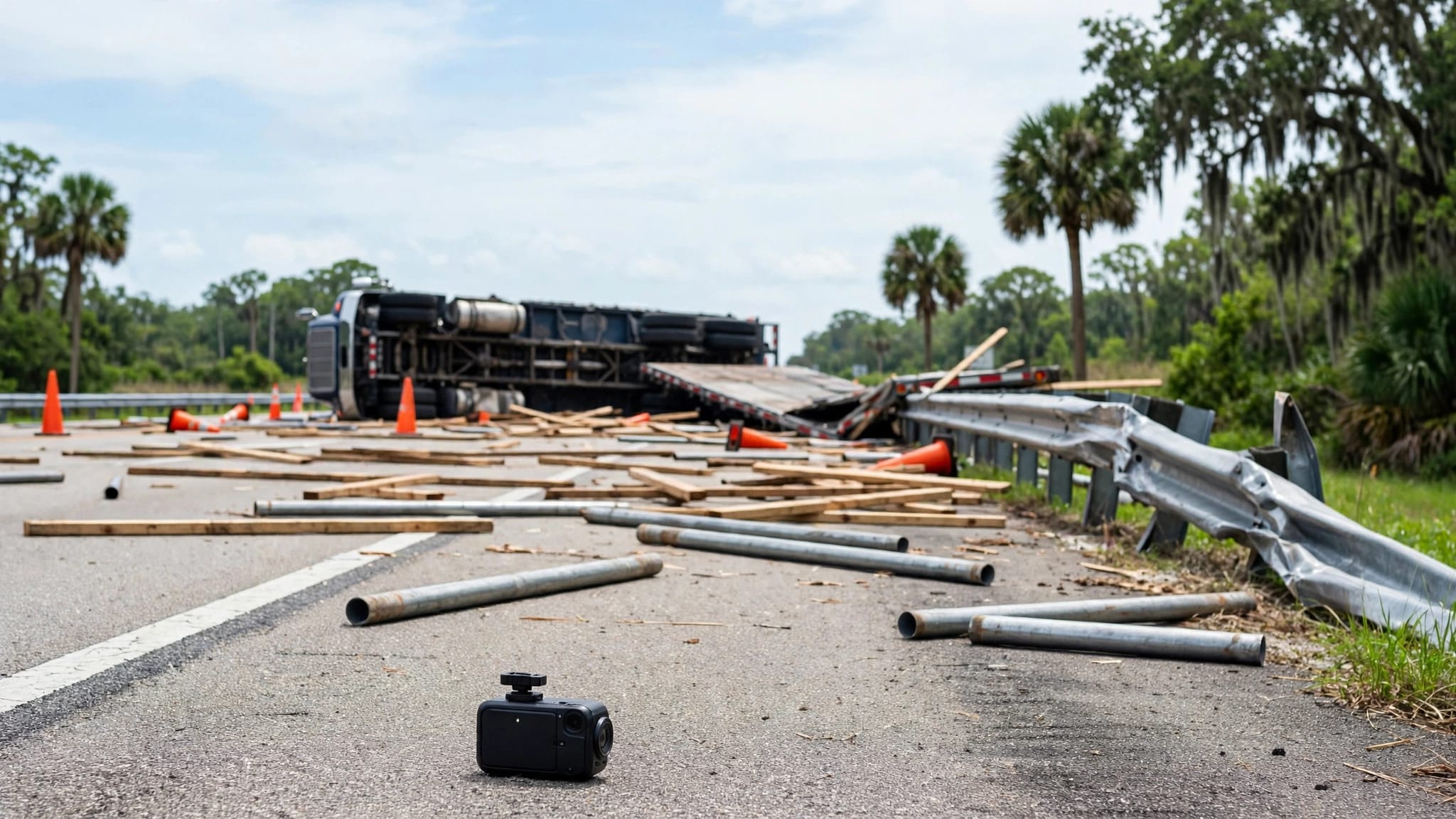
A loose load can turn an ordinary drive into a violent collision within seconds. Lumber, pipes, gravel, fuel, debris, and shifting equipment can block lanes, strike vehicles, or force drivers into guardrails and oncoming traffic.
For injured people, Florida cargo spill claims often depend on evidence that disappears before an insurance adjuster ever calls. The truck’s load records, inspection history, video, and damaged tie-down equipment can show whether the spill was preventable.
The first days after a crash are often when the strongest proof is still available.
How Florida cargo spill claims are proved
A cargo spill case is usually a negligence case. The injured person must show that someone had a duty to load, secure, inspect, or operate the truck safely, failed in that duty, and caused measurable harm.
The physical scene can tell part of the story. However, company records often explain why cargo came loose in the first place. A broken chain, an open trailer door, or an overturned trailer may point to a larger loading or maintenance failure.
Federal cargo rules set a safety baseline
Federal Motor Carrier Safety Administration rules require commercial cargo to be secured so it cannot leak, spill, blow, fall, or shift in a way that affects vehicle safety. The agency’s cargo securement standards cover tiedowns, blocking, bracing, and commodity-specific loads.
For cargo longer than 10 feet that is not blocked to prevent forward movement, the rules generally require two tiedowns for the first 10 feet and another tiedown for each additional 10 feet or fraction. Those requirements do not decide fault alone, but a violation may support a claim that the carrier or driver acted carelessly.
The spill itself may reveal the failure
A load doesn’t need to fall completely off a truck to create danger. Cargo can shift inside a trailer, leak from a tanker, slide from a flatbed, or scatter across several lanes.
Photographs may show the load’s final position, but they cannot always establish how it started. For that reason, flatbed load securement evidence often includes loading tickets, scale slips, damaged straps, and the driver’s inspection records.
A cargo spill can result from one bad decision at the loading dock, but it can also result from several missed chances to catch an unsafe load before the truck reaches the highway.
Get medical care and protect scene evidence
Your health comes first. Seek prompt medical evaluation, even if pain seems manageable at the scene. Adrenaline can hide head, neck, back, and soft-tissue injuries for hours or days.
Tell medical providers that a cargo spill, collision, evasive maneuver, or exposure caused the injury. Clear medical records connect symptoms to the event and document how the injury affects work and daily life.
Capture the roadway before it changes
If you can do so safely, photograph the truck, trailer, spilled cargo, debris field, skid marks, lane closures, road signs, and every damaged vehicle. Take wide photographs first, then closer images of truck markings, trailer numbers, license plates, placards, straps, chains, doors, gates, or broken containers.
Also save the crash report number, the trucking company’s name, and contact details for witnesses. Nearby businesses may have cameras, but video systems often overwrite footage quickly.
Save items that show exposure or impact
Do not throw away clothing, helmets, glasses, car seats, or work equipment damaged in the crash. If a load involved chemicals, fuel, industrial liquid, or other hazardous material, preserve photographs of labels, placards, and UN numbers from a safe distance.
Keep repair estimates, towing paperwork, pharmacy receipts, and screenshots of messages sent right after the wreck. Each item can help establish the timing and force of the incident.
Loading records can identify the real cause
A trucking company may claim the driver checked the load before leaving. The paper and electronic trail can confirm that statement or expose gaps in the safety process.
Loading records matter because they identify what the trailer carried, how much it weighed, who loaded it, and when it left the facility. They may also show that the shipment was rushed or changed after an initial inspection.
Documents that deserve early attention
A lawyer can request records from the carrier, shipper, warehouse, broker, and maintenance provider. The following records can answer different questions about the spill:
| Record | What it may show |
|---|---|
| Bill of lading and shipping papers | Cargo description, shipper, consignee, trailer number, and load weight |
| Loading ticket or load diagram | Weight distribution, loading method, and the party that handled the cargo |
| Scale ticket | Whether the truck or trailer carried an excessive or uneven load |
| Driver inspection report | What the driver checked before departure and during the trip |
| Dispatch and GPS data | Route, stops, schedule pressure, and when the truck moved |
| Dashcam and yard video | The cargo’s condition before departure and the spill itself |
The carrier may also have inspection photos, electronic logging device data, driver training records, repair invoices, and messages between dispatchers and drivers. A missing record can matter when a company should have created or retained it.
Securement equipment needs its own review
The records alone aren’t enough. Straps, chains, ratchets, binders, tarps, trailer doors, latches, and anchor points should be preserved when possible.
A worn strap or failed latch could indicate poor maintenance. On the other hand, intact equipment positioned incorrectly may point to an unsafe loading method. Federal guidance requires compliance with the applicable requirements of Subpart I and Section 392.9, not a superficial pre-trip glance, as the FMCSA’s cargo rule explanation makes clear.
Several parties may share responsibility
Truck crash claims rarely involve only one person. A driver may have missed a shifting load, while a warehouse crew loaded it unevenly and the carrier failed to provide safe equipment.
Florida law permits fault to be allocated among responsible parties. That makes a full investigation important before accepting an insurer’s early explanation of the crash.
The carrier and driver may both face claims
A motor carrier may be responsible for its driver’s conduct, hiring decisions, training, inspection practices, maintenance, and safety policies. The driver may also bear direct responsibility for failing to inspect cargo, responding poorly to a visible load shift, or continuing to drive after discovering a problem.
Electronic records can be persuasive here. GPS data, dispatch messages, and onboard computer information may reveal a rushed delivery schedule, abrupt braking, speeding, or an ignored warning.
Loaders, shippers, and contractors may also matter
A shipper or warehouse can face liability when it controlled loading and created an unsafe distribution of weight or failed to secure the shipment. A freight terminal, third-party loading company, or equipment supplier may also have a role when its work or product contributed to the release.
The company named on the truck may not be the only business involved. A Florida company vehicle accident claim can involve separate employers, commercial insurers, contractors, and records held in different locations.
Preserve digital proof before a company loses it
After a serious truck wreck, businesses often inspect and repair equipment quickly. They may also reuse the truck, trailer, camera system, and electronic storage devices. Waiting can make a claim harder to prove.
A formal preservation request can tell the responsible parties not to destroy, alter, repair, overwrite, or dispose of relevant evidence. It should identify the tractor, trailer, driver, crash date, cargo, and categories of records.
Key electronic evidence in cargo spill cases
Digital evidence can show events that no witness saw. A truck’s electronic control module may record speed, braking, throttle activity, and fault data. Dash cameras can show the lane position, weather, visible cargo movement, and the driver’s reaction.
Dispatch systems can reveal delivery deadlines or instructions to continue driving. Yard camera footage may capture the loading process. For tanker cases, spill reports and hazardous-material shipping documents can establish what escaped and where it spread. Tanker spill logs and driver-hour records can be especially important when fuel or chemicals create both collision and exposure injuries.
Your own records remain important
Keep a simple timeline beginning on the crash date. Include pain levels, missed work, medical visits, medications, symptoms, insurance communications, and tasks you can no longer perform.
Avoid posting detailed opinions or crash theories on social media. Insurers may take photographs or comments out of context. Facts preserved near the time of the crash carry more weight than a reconstructed memory months later.
Florida deadlines and comparative fault rules
Time limits apply to injury claims, and delay risks more than an expired deadline. Important videos and electronic data may be gone long before a lawsuit becomes necessary.
Under Florida’s statute of limitations, most negligence-based personal injury cases have a two-year filing deadline. Wrongful death actions also generally have a two-year deadline. Individual facts can change the analysis, so families should seek legal advice without waiting.
Your actions at the scene may become part of the case
Florida follows a modified comparative negligence system in most negligence cases. Your compensation may be reduced by your percentage of fault. If a jury finds you more than 50 percent responsible for your own harm, you generally cannot recover damages.
The current Florida comparative fault statute also calls for fault to be apportioned among liable parties. Truck insurers may argue that an injured driver followed too closely, drove too fast, or should have avoided the debris. Video, roadway measurements, witness testimony, and vehicle data can test those arguments.
Damages depend on the harm caused
A successful claim may seek payment for medical care, future treatment, lost income, reduced earning ability, vehicle damage, pain, and other losses allowed by law. When a cargo spill causes a death, surviving family members may have a wrongful death claim.
The severity of the collision matters, but so does the evidence. A documented injury and a clear record of unsafe loading can counter an insurer’s attempt to minimize what happened.
Workers hurt by spilled truck cargo have added options
A delivery driver, construction worker, warehouse employee, road crew member, or first responder may suffer injury while working near a cargo spill. Workers’ compensation may provide medical and wage benefits, yet it does not always prevent a claim against another negligent business.
For example, an employee hurt by cargo that fell from a truck operated by another company may have a workers’ compensation claim and a separate claim against the carrier, shipper, loader, or equipment provider. The right path depends on who controlled the truck and cargo.
A review of third-party claims versus workers’ compensation can help injured workers understand why identifying every involved company matters.
A record-based approach protects your claim
Cargo spills leave more than debris on the pavement. They leave a trail of loading tickets, inspection reports, equipment failures, video files, dispatch messages, and medical evidence that can establish what happened.
Florida cargo spill claims become stronger when that evidence is preserved early and compared against the carrier’s safety duties. The sooner the records are secured, the clearer the path to accountability can become.