
Florida Furniture Injury Claims: Preserve the Product Records
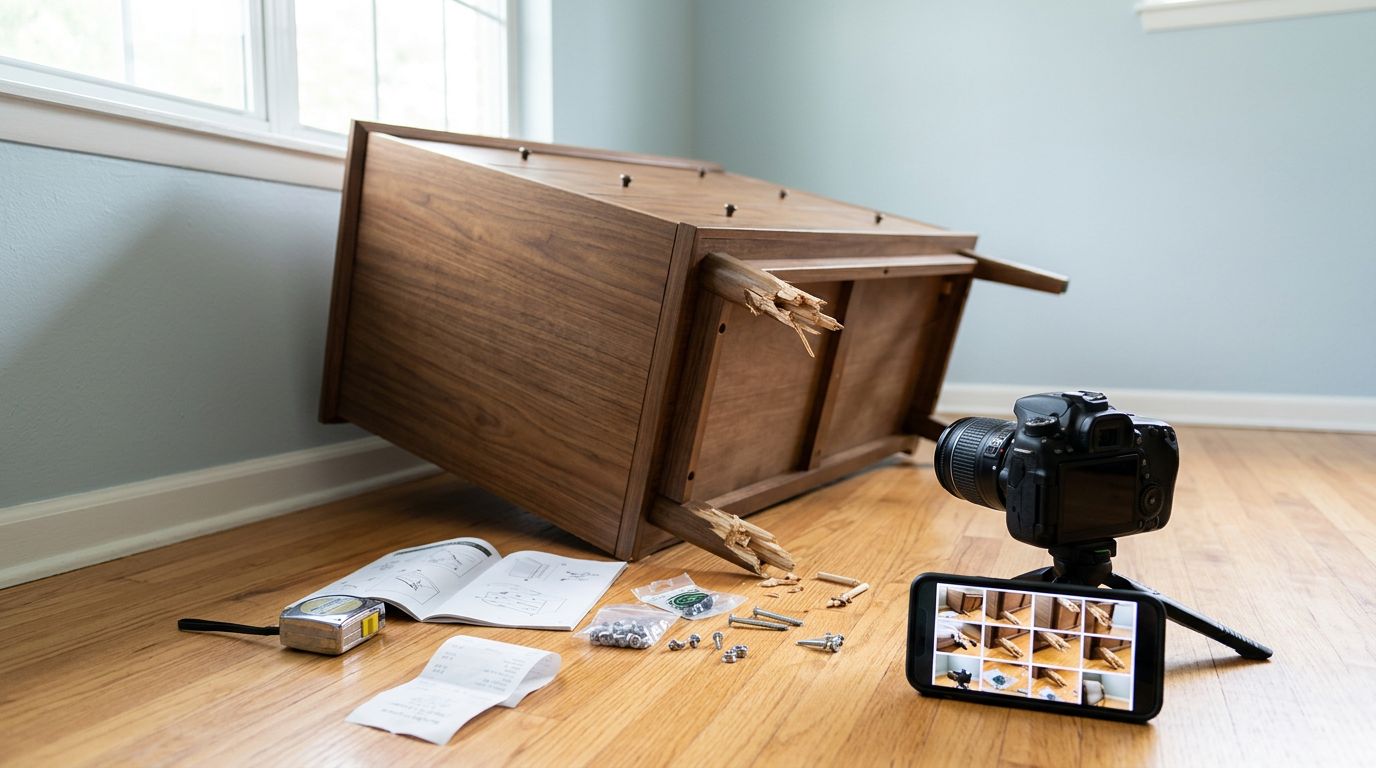
A collapsing dresser, chair, shelf, bed, or cabinet can cause serious harm in seconds. For Florida furniture injury claims, the evidence gathered afterward often matters as much as the injury itself.
The product’s model number, broken parts, assembly instructions, purchase records, and photographs may show whether a manufacturer, retailer, property owner, or installer caused the danger. Acting quickly can protect evidence before someone repairs, discards, or alters the furniture.
When a Furniture Collapse Can Support a Florida Claim
A furniture failure may support more than one legal theory. The correct claim depends on where the collapse occurred, who controlled the furniture, and what caused it to fail.
Premises negligence involving furniture
A business, landlord, hotel, restaurant, event venue, or short-term rental host may have a duty to keep furniture reasonably safe. That duty can include inspecting seating, checking fasteners, securing tall furniture, following manufacturer instructions, and removing damaged items from use.
For example, a restaurant may face a premises liability claim if employees knew that a booth was loose but continued seating customers there. A hotel may have responsibility if a broken bed frame remained in a guest room after prior complaints. A rental property owner may also face liability if unsafe furniture created a foreseeable hazard.
The injured person generally must prove that the responsible party owed a duty, failed to act reasonably, caused the injury, and created measurable losses. Read more about Florida premises liability duty of care when the collapse occurred on property controlled by someone else.
Defective furniture and product liability
A product liability claim may apply when a defect in the furniture caused the collapse. Defects usually fall into three categories:
- A design defect makes the entire product line unreasonably dangerous.
- A manufacturing defect affects one item or a limited group of items.
- A warning or instruction defect fails to explain a known risk or safe-use requirement.
A dresser that tips because of inadequate stability, a chair with a cracked weld, or a bed with a defective support mechanism may raise product liability issues. However, the furniture’s failure alone doesn’t automatically prove a defect. Investigators may need to examine the item, design specifications, warnings, testing, and history of similar complaints.
For a more focused example, see these Florida chair collapse claims and the evidence that may support them.
Why Product Records Matter After a Collapse
Furniture is often easy to replace. That creates a problem when the replacement looks similar but has a different model, production run, fastener, or design.
A lawyer may need to identify the exact item involved, trace its sales history, and compare it with recall notices or other reported incidents. Without the product records, the manufacturer may argue that the furniture was assembled incorrectly, modified, used beyond its intended purpose, or exposed to damage after the accident.
Identify the exact furniture
Start with every identifying detail available. Photograph the product label, barcode, model number, serial number, batch number, and manufacturer’s name. If the label is underneath the furniture or inside a drawer, photograph it before moving the item if possible.
Keep the receipt, online order confirmation, delivery email, credit-card statement, warranty registration, and retailer account history. A purchase record can help establish when and where the item was bought, who sold it, and which version of the product was delivered.
Assembly instructions and warning labels are also important. They may show whether the manufacturer required wall anchoring, a particular screw, a weight limit, or a specific installation method.
Keep the physical evidence
Don’t throw away the broken chair, bent bracket, fractured leg, loose screw, failed hinge, or detached wall anchor. These parts may reveal whether the failure resulted from a weak material, poor weld, missing component, stripped fastener, or improper installation.
If the furniture is large, isolate it in a safe location. Don’t repair, repaint, reassemble, or clean the damaged areas. Keep loose parts and packaging together. If the item must be removed because it creates a safety hazard, photograph it extensively first and record who moved it, when it was moved, and where it went.
A recall can help identify a known safety concern. The CPSC maintains a page for other furniture recalls. In 2026, for example, CPSC recall notices addressed dressers that could tip over and create entrapment hazards without proper anchoring, including a Furnulem dresser recall.
A recall doesn’t automatically establish liability for every injury. It does, however, provide a reason to preserve the item and investigate whether the product matches the recalled model.
Records to Save for Furniture Injury Claims
A complete record can connect the furniture to the accident and the accident to your financial losses. Save digital copies, paper documents, photographs, and messages in more than one location.
Useful evidence may include:
- Photos and videos of the furniture, the room, the surrounding area, and the position of the item immediately after the collapse.
- Close-up images of broken parts, missing fasteners, bent metal, torn upholstery, damaged flooring, wall marks, and other physical details.
- The receipt, purchase contract, online listing, invoice, delivery paperwork, credit-card statement, or warranty documents.
- Assembly instructions, packaging, warning labels, registration cards, and photographs showing whether anchors or brackets were installed.
- Invoices from a furniture assembler, handyman, contractor, delivery company, or property maintenance service.
- Text messages, emails, complaints, customer-service chats, repair requests, and communications with the landlord, store, venue, or manufacturer.
- Names, phone numbers, and statements from people who saw the collapse, noticed the furniture’s condition, or helped after the injury.
- Incident reports, surveillance footage, security records, inspection logs, maintenance records, and prior complaints.
- Medical records, imaging results, prescriptions, bills, mileage, work restrictions, wage records, and communications about missed work.
Don’t rely on an online listing remaining available. Retailers can change product pages, remove photographs, update assembly instructions, or delete customer reviews. Save screenshots that show the product’s description, advertised weight capacity, safety warnings, and anchoring instructions.
If you report the injury or hazard to the Consumer Product Safety Commission, keep the confirmation and any related correspondence. CPSC provides consumer safety resources, including information about reporting product-related injuries and unsafe products through SaferProducts.gov.
Who May Be Responsible for a Furniture Collapse?
Responsibility may involve several parties. A careful investigation looks beyond the person or company that handed you the furniture.
Property owners and businesses
The property controller may be responsible for unsafe furniture supplied to guests, customers, tenants, or visitors. Relevant questions include:
- Who purchased or rented the furniture?
- Who selected the model?
- Who assembled or installed it?
- Who inspected it?
- Who received earlier complaints?
- Who had authority to remove it from use?
A business may have records showing that employees knew about loose seating, repeated repairs, or prior incidents. Surveillance footage may also show whether staff moved, altered, or continued using the furniture after a warning.
A landlord’s responsibility can depend on the lease, control over the furnished space, notice of the defect, and the circumstances of the injury. Short-term rental cases may involve the host, property manager, cleaning company, or furniture supplier.
Manufacturers, retailers, and installers
The manufacturer may face a product liability claim if a defect in design, construction, or warnings caused the injury. A retailer, distributor, or importer may also become part of the case depending on its role and Florida law.
Assembly and installation deserve close attention. A contractor who used the wrong hardware, skipped required anchoring, or ignored damaged parts may have caused the danger. On the other hand, a company may argue that the product was assembled contrary to its instructions. The instructions, photographs, invoices, and physical evidence can help resolve that dispute.
Workplace injuries and outside parties
If furniture collapses at work, workers’ compensation may provide medical treatment and wage benefits. A separate claim may exist against a manufacturer, property owner, maintenance contractor, or other outside party that caused the injury.
Workers’ compensation and a third-party lawsuit follow different rules. The employer may have protection under the workers’ compensation system, while an outside company remains potentially liable for negligent maintenance or a defective product. Learn more about Florida third-party injury claims after a workplace accident.
How to Prove Fault, Causation, and Damages
The case must show more than a broken piece of furniture. It must connect the failure to a legal duty or product defect and then connect that failure to the injury.
Establish what caused the collapse
Photographs can show the condition of the furniture, but an expert may need to inspect the product. The investigation may address whether the item failed because of a defective weld, weak material, improper design, missing hardware, excessive wear, incorrect assembly, or misuse.
Records from the retailer, manufacturer, property owner, and maintenance company can provide additional evidence. Those records may include product complaints, engineering changes, inspection schedules, repair tickets, recall communications, and purchase histories.
Video footage can be especially important. A security camera may show that a chair collapsed during ordinary use, that a dresser had been moved, or that a property employee knew about the problem. Ask the property owner or business to preserve relevant video promptly because many systems overwrite recordings within days or weeks.
CPSC guidance also matters when companies learn about potentially reportable product problems. Under CPSC’s duty-to-report guidance, manufacturers, importers, distributors, and retailers may have reporting obligations when they obtain information about a product that could create a substantial risk or violate a safety requirement.
Document the injury and financial loss
Seek medical care promptly, even if symptoms seem manageable. A collapse can cause fractures, concussions, back injuries, shoulder damage, nerve injuries, and worsening of a prior condition.
Tell medical providers how the furniture failed and what body parts struck the floor or another object. Keep follow-up appointments and follow treatment instructions. Gaps in care can give an insurer an argument that the injury was minor or unrelated.
Damages may include emergency care, imaging, surgery, physical therapy, medication, lost income, reduced earning ability, and pain. A daily symptom journal can document sleep problems, mobility limits, household difficulties, and changes in ordinary activities.
Florida Filing Deadlines and Comparative Fault
Timing can determine whether a valid claim survives. Florida’s statute of limitations contains different deadlines for negligence and product liability actions, so the legal theory must be identified early.
For many negligence claims arising on or after March 24, 2023, Florida law provides a two-year filing period. Product liability claims involving the design, manufacture, distribution, or sale of personal property generally have a four-year limitations period under the applicable product-liability provision. Review the current Florida limitations statute and obtain legal advice based on the accident date and claim type.
Product claims may also face a statute of repose. That rule can bar a case after a fixed period following delivery of the product, even when the injury is discovered later. Many ordinary products may face a 12-year outside period, subject to statutory exceptions and the product’s circumstances. Furniture attached permanently to real property may require a different analysis.
A recall notice, warranty, or recent purchase doesn’t replace the need to calculate the filing deadline from the actual facts.
Florida also uses fault allocation in negligence and product liability cases. The factfinder may consider the conduct of the manufacturer, retailer, installer, property controller, maintenance contractor, and injured person. For example, an insurer may argue that the user exceeded the weight limit or removed an anchor. The evidence must show whether that conduct caused the collapse or merely provides a convenient defense.
Steps to Take After Furniture Fails
The first decisions after a collapse can preserve evidence and prevent avoidable disputes.
- Get medical attention. Call 911 for an emergency, then follow up with the appropriate provider for ongoing symptoms.
- Report the incident. Notify the property owner, manager, business, employer, or event organizer. Request a copy of any incident report.
- Photograph everything. Capture the furniture, broken components, room layout, warning labels, flooring, wall anchors, and visible injuries.
- Preserve the product. Keep the furniture and every loose part. Don’t allow repairs or disposal without documenting the condition and obtaining legal guidance.
- Collect records. Save purchase documents, assembly instructions, messages, medical records, wage information, and witness details.
- Avoid quick statements or settlements. Insurers may ask for recorded statements or authorization to inspect the furniture before the evidence has been reviewed.
- Speak with a Florida injury attorney promptly. A lawyer can identify potential defendants, send preservation requests, obtain business records, and evaluate whether premises negligence, product liability, workers’ compensation, or a third-party claim applies.
Conclusion
Furniture collapse cases often depend on evidence that disappears quickly. The damaged item, product label, assembly records, photographs, prior complaints, and medical documentation can show what failed and who may be responsible.
Florida furniture injury claims may involve a property owner, retailer, installer, manufacturer, or outside contractor. Preserve the product and records before making repairs or accepting an insurance offer, then have an attorney review the facts before the applicable deadline expires.