
Florida Motorcycle PIP After an At-Fault Crash
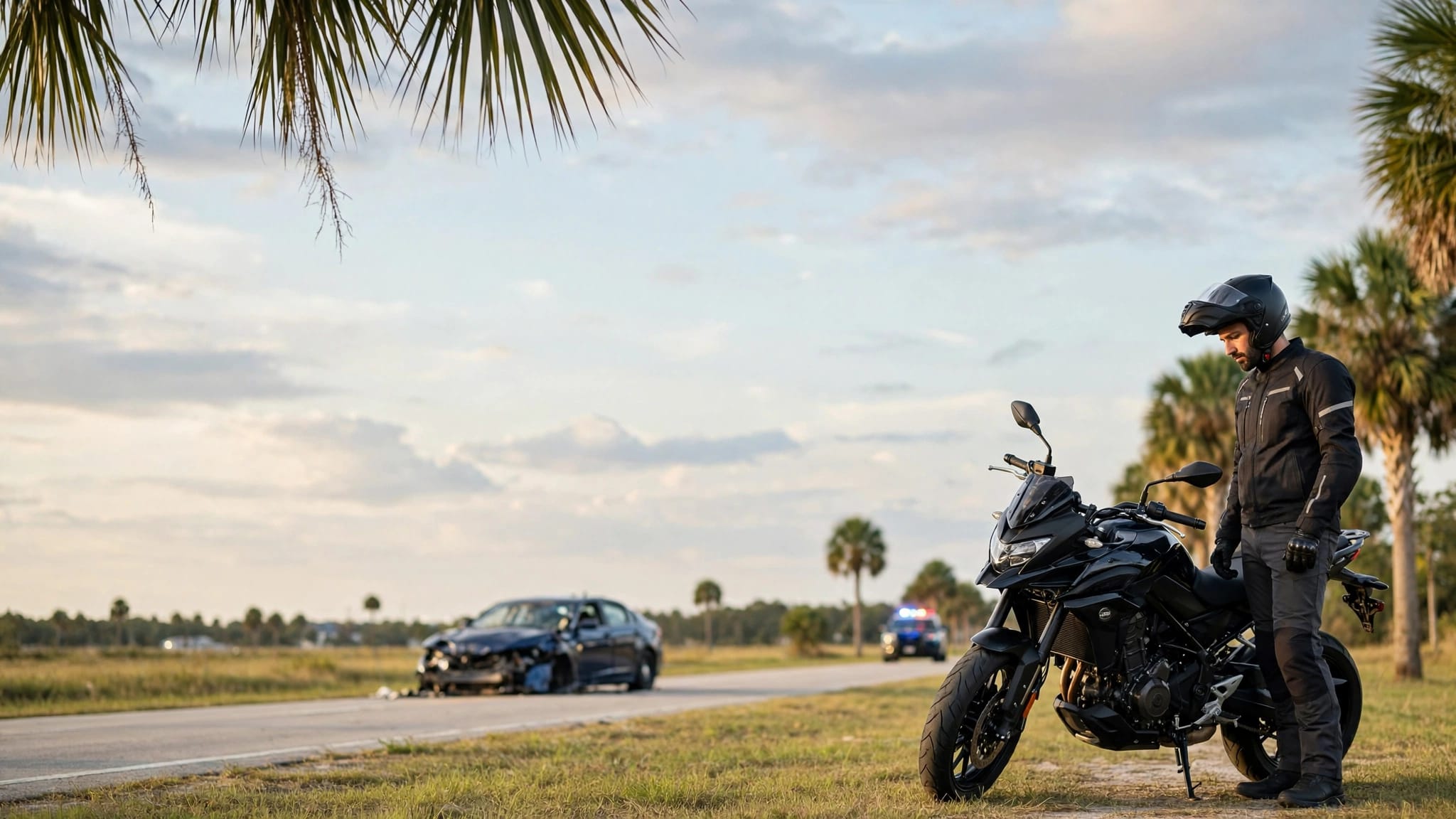
A driver can clearly cause a motorcycle collision and still leave the injured rider facing immediate medical bills. That is because Florida motorcycle PIP rules do not work the same way for motorcycles as they do for standard passenger cars.
Fault matters when pursuing compensation from the driver who caused the crash. However, it does not automatically create PIP benefits for a motorcycle rider. Knowing the difference can prevent costly insurance mistakes in the first days after a wreck.
Key Takeaways
- Florida’s ordinary PIP framework is tied to a statutory definition of “motor vehicle” that requires four or more wheels. Motorcycles generally fall outside that definition.
- An at-fault driver does not automatically make PIP available to an injured rider. Their bodily injury liability policy, if available, may be a primary source of compensation.
- A rider may also need to examine MedPay, health insurance, UM/UIM coverage, and any other applicable policies.
- Prompt medical care, photographs, witness details, and preserved video can strengthen both the injury claim and the fault investigation.
- Many Florida negligence claims arising after March 24, 2023 have a two-year filing period. The correct deadline can change based on the facts, parties, and legal claim.
Does Florida Motorcycle PIP Apply to Riders?
Florida’s no-fault system is familiar to many drivers, yet motorcycles occupy a different place in the insurance statutes. A rider shouldn’t assume an auto policy’s PIP coverage will pay simply because another vehicle struck the motorcycle.
The four-wheel definition changes the analysis
Florida’s definition of “motor vehicle” for PIP purposes generally requires a self-propelled vehicle with four or more wheels that is designed and required to be licensed for highway use. A two-wheel motorcycle does not fit that statutory definition.
Therefore, ordinary Florida motorcycle PIP coverage is not an automatic benefit for someone operating or riding on a motorcycle. This can surprise riders who carry PIP on a household car policy and assume it follows them into every traffic crash.
Policy language still matters. An endorsement, optional benefit, or a rider’s status under another policy can affect the available coverage. The declarations pages, policy forms, and the crash facts need careful review before an insurer’s answer is accepted.
Passengers can face the same coverage issue
A passenger injured on a motorcycle also should not assume that the driver’s PIP policy will provide benefits. The statute discusses people occupying covered motor vehicles and people struck by them. It does not create a separate, automatic motorcycle-passenger PIP benefit.
The rider’s or passenger’s own health insurance, MedPay, or UM/UIM coverage may become important right away. A claim may also involve more than one household policy, particularly when family members own different vehicles.
The other driver’s fault can support a liability claim, but it does not turn a motorcycle into a four-wheel vehicle for Florida PIP purposes.
What an At-Fault Driver Changes
When another driver ran a light, made an unsafe turn, changed lanes without looking, or followed too closely, fault can open a claim against that driver’s insurance. It does not erase the need to identify every policy that may apply.
Liability coverage may pay the rider’s losses
The at-fault driver’s bodily injury liability coverage can be a major source of recovery after a motorcycle crash. A claim can seek payment for medical expenses, lost income, future care, reduced earning capacity, and non-economic harm when supported by the evidence and Florida law.
Available insurance depends on the driver’s actual policy limits. Florida does not require every private driver to carry bodily injury liability insurance in every situation, so proving negligence is only part of the work. The claim also needs a full coverage search.
For example, a driver who turns left in front of an oncoming motorcycle may be liable for failing to yield. Details such as traffic signals, speed, sight lines, braking marks, and camera footage can still affect the insurer’s decision. Florida motorcycle left-turn accident claims often require evidence beyond the initial crash report.
No-fault benefits do not decide liability
For people injured in covered four-wheel vehicles, PIP generally pays qualifying benefits without waiting for a fault decision. Under Florida’s PIP benefit statute, benefits are subject to statutory conditions and a $10,000 medical and disability benefit limit.
That no-fault structure does not settle who caused the collision or cover every loss. It also should not be confused with the liability claim available to a motorcycle rider against a negligent driver.
An insurer may admit vehicle damage but question the severity of injuries, the need for treatment, or the rider’s share of fault. A thorough claim answers those disputes with records, not assumptions.
Paying Motorcycle Crash Medical Bills
Medical providers need payment information long before a liability insurer completes its investigation. Riders should seek treatment promptly and avoid delaying care while insurance companies debate responsibility.
Health insurance and MedPay can address early bills
Health insurance may cover treatment according to the plan’s deductibles, network rules, and reimbursement terms. Medical Payments coverage, usually called MedPay, is optional motorcycle insurance that can help with qualifying medical expenses regardless of fault, up to its policy limit.
Neither option eliminates a claim against the negligent driver. Instead, these benefits may keep treatment moving while the liability claim develops. Later reimbursement claims, liens, and coordination-of-benefits issues can affect a settlement.
For practical guidance on billing options, review Florida motorcycle crash medical bills without PIP. Early billing errors can lead to treatment delays, collection notices, or confusion over which insurer should receive the bills.
UM/UIM can fill an insurance gap
Uninsured or underinsured motorist coverage, known as UM/UIM, may help when the at-fault driver has no bodily injury coverage or carries limits that cannot cover the rider’s losses. This coverage is optional, so it depends on the policy purchased and any valid rejection or selection forms.
Review the policy’s declarations page, exclusions, limits, and notice requirements. A rider may have UM/UIM under a motorcycle policy, another vehicle policy, or a household policy, but coverage cannot be assumed.
Keep copies of every insurance card, policy declaration, denial letter, and explanation of benefits. Those documents help identify missed coverage and expose inconsistent insurer positions.
Evidence That Supports a Motorcycle Injury Claim
A motorcycle claim often turns on proof that disappears quickly. Video can be overwritten, motorcycles can be repaired, and witnesses can become difficult to locate within weeks.
Preserve crash evidence before repairs erase it
Photograph the scene, road conditions, vehicle positions, debris, skid marks, traffic controls, visible injuries, and damage to all vehicles. Save original dashcam or helmet-camera files instead of sending only edited clips or screenshots.
Ask nearby businesses, homes, traffic authorities, or property managers to preserve camera footage. A written request creates a record and may reach the owner before an automated system records over the video.
Vehicle evidence can also matter. Newer cars may store event data related to speed, braking, throttle use, steering input, and other activity near the impact. Florida motorcycle crash claims and video evidence can help establish how the collision occurred when the other driver changes their story.
Medical records should tell a consistent story
Tell each medical provider how the crash happened and describe symptoms accurately. Headaches, dizziness, numbness, sleep disruption, reduced motion, and emotional symptoms belong in the record when they occur.
Save discharge instructions, imaging results, prescriptions, therapy records, receipts, mileage logs, work restrictions, and pay records. A written journal can also document pain, missed work, household limitations, and activities that are now difficult.
Avoid exaggerated language and avoid guessing about speed or distance in an insurer statement. A clear account of what you saw is more credible than an estimate later contradicted by video or physical evidence.
Deadlines and Shared Fault Can Affect Recovery
An insurance claim can remain open while the time to file a lawsuit expires. For many negligence claims based on injuries occurring on or after March 24, 2023, Florida generally allows two years to file suit. Older claims, wrongful death cases, government-related claims, and other circumstances may follow different rules.
Settlement talks and an adjuster’s promise to continue reviewing the file do not automatically pause that deadline. Early legal review also gives counsel time to seek video, records, witness statements, and vehicle data.
Florida uses modified comparative negligence in most injury cases. If the evidence places 20 percent of the fault on the rider, recoverable damages generally decrease by 20 percent. In covered negligence actions, a person found more than 50 percent responsible generally cannot recover damages.
Insurers may claim a motorcyclist sped, rode in a blind spot, changed lanes improperly, or could have avoided the collision. The carrier’s decision is not final. Photographs, video, damage patterns, witness statements, and medical evidence may challenge an unsupported blame allegation.
Frequently Asked Questions
Does the other driver’s fault give me Florida motorcycle PIP?
No. The driver’s fault may support a bodily injury liability claim, but it does not automatically provide PIP benefits to a motorcycle rider. Florida’s statutory PIP system is tied to covered four-wheel motor vehicles, while a motorcycle usually falls outside that definition.
Your own policies may still provide MedPay, UM/UIM, health coverage, or another benefit. Review the actual policy language before relying on an insurer’s initial explanation.
Should I seek medical care if PIP might not apply?
Yes. Medical care should not wait for an insurance coverage decision. Prompt treatment protects your health and creates records that connect the crash to your injuries.
If there is a possible PIP claim under any policy, Florida’s PIP statute generally requires initial services and care within 14 days of the accident. That deadline should not replace a full policy review, especially after a motorcycle collision.
Should I give the other driver’s insurer a recorded statement?
Report the crash promptly to your own insurer and follow your policy’s notice requirements. However, be careful with a detailed recorded statement to the other driver’s insurer.
Stay truthful and factual. Do not guess about speed, distance, lighting, or fault. An early settlement offer can arrive before future treatment needs, lost income, and lasting limitations are known.
A Clear Coverage Review Comes First
A crash caused by another driver can give an injured rider a path to compensation, yet Florida motorcycle PIP is rarely the simple starting point people expect. The strongest claims identify all available insurance while preserving proof of fault, medical harm, and financial loss.
Prompt medical care and a careful review of every applicable policy can protect options before evidence fades or deadlines approach.