
Florida negligent security claims after a parking garage assault
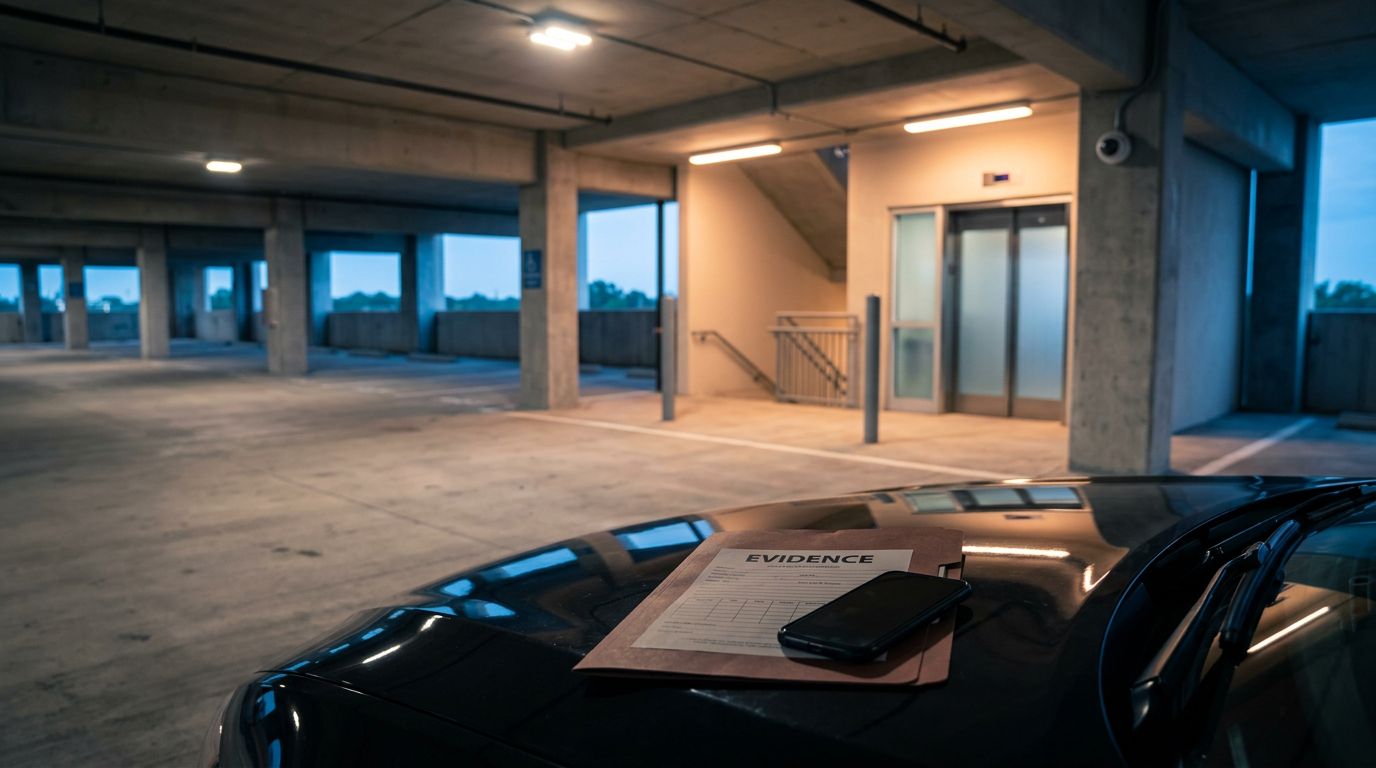
A parking garage assault can leave you with serious injuries, trauma, and a difficult legal question: who should pay? A Florida negligent security claim may apply when a property owner or operator knew, or should have known, that violence was foreseeable and failed to take reasonable safety measures.
The attacker’s arrest doesn’t decide whether the property owner also bears civil responsibility. The claim depends on the garage’s security conditions, the property’s history, who controlled the area, and the evidence available after the assault.
How Florida negligent security claims work after a garage assault
Negligent security is a type of premises liability claim. It doesn’t accuse the property owner of committing the assault. Instead, it alleges that the owner, manager, lessor, or operator failed to protect lawful visitors from a reasonably foreseeable criminal act.
Parking garages create security concerns because they often contain enclosed stairwells, elevators, blind corners, isolated levels, poor lighting, and multiple access points. A garage may also serve several businesses, making it necessary to identify who controlled the structure and its safety systems.
The property owner isn’t automatically responsible for every crime that occurs on the premises. You generally must show that the defendant had a legal duty to provide reasonable protection, breached that duty, and caused or contributed to your injuries.
Foreseeability is often the central dispute. The owner may have had notice of prior assaults, robberies, threats, break-ins, or other crimes in the garage or nearby area. Complaints from tenants, customers, employees, or security staff can also show that management knew about a dangerous condition.
The analysis can involve more than the criminal history. A garage with repeated security complaints may require better lighting, functioning cameras, controlled entrances, security patrols, or other reasonable precautions. The appropriate measures depend on the property’s design, use, location, prior incidents, and known risks.
For a broader explanation of who may owe a duty, see this guide to Florida premises liability duty of care.
What you must prove in a Florida negligent security case
A strong Florida negligent security claim usually depends on five connected issues.
The defendant controlled the garage
First, you must identify the person or company responsible for the area where the assault occurred. That party might be the garage owner, a property management company, a parking operator, a hotel, a shopping center, or a business that controlled a particular entrance.
Ownership alone may not answer the question. A landlord may own the structure while another company manages parking, operates access gates, hires guards, or maintains cameras. Contracts, leases, maintenance agreements, and management records can help establish responsibility.
You also need to show that you were lawfully on the property. Customers, employees, residents, guests, and other authorized visitors may qualify, but the facts of each case matter.
The criminal act was foreseeable
Florida negligent security cases often turn on whether the assault could reasonably have been anticipated. Prior similar crimes are important, but they aren’t the only source of proof.
Evidence may include police reports, emergency calls, incident logs, security complaints, prior threats, documented fights, and reports of broken locks or gates. The timing and location of earlier incidents can also matter. A prior robbery on another floor may carry different significance than repeated assaults near the same elevator.
A property owner may argue that the assault was sudden and unpredictable. Your attorney will need to compare that argument with the information management had before the attack.
Security measures were unreasonable
A security failure may involve conditions such as:
- Inadequate lighting in driving lanes, stairwells, elevators, or pedestrian paths
- Broken or poorly positioned surveillance cameras
- Unlocked doors or malfunctioning access gates
- Missing security personnel where known risks called for a guard
- Failure to monitor restricted entrances
- Lack of warnings about recurring dangers
- Failure to respond to prior reports or repair known equipment
The question isn’t whether the property guaranteed complete safety. The question is whether the security measures were reasonable for the known conditions.
A camera listed in a security plan may not help if it did not record, did not cover the assault location, or had footage that no one monitored.
The security failure contributed to the assault
You must connect the alleged security failure to the injury. For example, a broken gate may have allowed an unauthorized person into the garage. A failed light may have created concealment. A missing guard may have allowed a known threat to remain in the area.
That connection can be difficult when the attacker acted quickly. Video footage, access records, witness accounts, and expert testimony may help show how the security condition increased the opportunity for the assault.
You suffered measurable damages
Damages may include emergency treatment, hospital bills, medication, follow-up care, counseling, lost income, reduced earning capacity, scarring, disability, and pain and suffering. Psychological injuries such as post-traumatic stress can also be part of the claim when supported by medical evidence.
Keep records of treatment, expenses, missed work, symptoms, and limitations. A complete record helps show how the assault affected daily life.
Evidence that can strengthen a parking garage assault claim
Evidence often disappears faster than people expect. Surveillance systems may overwrite recordings, employees may leave, and witnesses may forget what they saw. Begin preserving information as soon as possible.
After receiving medical care and reporting the assault, take these steps when you can:
- Request the police report and keep the incident number.
- Photograph the lighting, doors, gates, elevators, stairwells, signs, and other conditions.
- Write down where the assault occurred and what you remember about visibility and access.
- Collect contact information for witnesses.
- Keep clothing, shoes, damaged property, and other physical evidence in their condition after the incident.
- Save medical records, bills, prescriptions, employment records, and communications about missed work.
- Ask the property owner or operator to preserve video, access logs, incident reports, maintenance records, and security contracts.
Don’t assume the property will preserve everything automatically. A written preservation request can identify the date, time, location, cameras, access points, and records that may matter.
Evidence may also come from outside the garage. Nearby businesses, public cameras, rideshare records, building access systems, and police databases may help establish what happened or whether management had notice of earlier crimes.
Avard Law’s Florida negligent security proof checklist covers the records and facts that commonly matter in these cases.
Who may be responsible for a garage assault?
The responsible defendant depends on control, notice, and the security duties created by the property’s operation. Possible parties can include:
- The owner of the parking garage or building
- A landlord or lessor
- A property management company
- A private parking operator
- A hotel, apartment complex, hospital, or shopping center
- A security company, when its own conduct contributed to the injury
- A business that controlled a specific entrance, walkway, or common area
Several parties may share responsibility, while another named party may have no legal duty over the location. A business tenant usually isn’t responsible for a garage it didn’t own or control, but the facts may change if it hired security or managed access to the area.
A public parking garage raises separate issues. Claims involving a city, county, state agency, or other government entity may involve sovereign immunity and special notice procedures. Florida’s governmental liability statute should be reviewed with an attorney who can analyze the public-entity facts.
Florida deadlines and fault rules
Florida’s deadline for many negligence-based personal injury claims is generally two years for causes of action accruing on or after March 24, 2023. The applicable statute is Florida Statutes section 95.11.
Older claims, delayed discovery issues, minors, wrongful death, and claims against government entities may involve different rules. A preservation letter, insurance claim, or settlement conversation doesn’t necessarily stop the filing deadline. Waiting to contact a lawyer can cause a claim to expire before the evidence is collected.
Florida also has a specific rule for premises liability involving criminal acts by third parties. Under section 768.0701, when a lawful entrant is injured by a third party’s criminal act on commercial or real property, the fact finder must consider the fault of all persons who contributed to the injury. That may include the assailant and other parties whose conduct contributed to the harm.
You can review the Florida statute addressing third-party criminal acts and Florida’s comparative fault statute.
This rule doesn’t automatically eliminate a claim against the property owner. It means the case may require careful analysis of each person’s role and the percentage of fault assigned to them. Insurance companies may point to the assailant’s conduct as a reason to reduce payment, so the security evidence must show how the property’s failures contributed to the opportunity for violence.
Section 768.0705 also contains a presumption against liability for certain convenience businesses that substantially implement listed security measures. That statute doesn’t automatically apply to every parking garage. The business’s classification and compliance with the statutory requirements must be examined.
What to do after a parking garage assault
Get medical attention even if the injuries seem minor. Some conditions, including concussions and emotional trauma, may become more apparent later. Follow the treatment plan and tell medical providers about physical and psychological symptoms.
Report the assault to law enforcement and the property manager, but avoid guessing about facts you don’t remember. Don’t give a recorded statement to an insurer or sign a release before understanding the full extent of your injuries.
Act quickly to preserve video and records. If possible, keep copies of photographs, medical documents, police information, witness contacts, and communications in one secure place.
A Florida personal injury attorney can investigate control of the garage, review prior crime reports, identify security failures, and evaluate whether the evidence supports a claim. More information about Florida parking garage assault claims can help you identify questions to raise during a case evaluation.
Conclusion
A parking garage assault doesn’t automatically establish negligent security liability. The claim depends on whether the property controller owed you a duty, whether violence was foreseeable, whether security measures were unreasonable, and whether those failures contributed to your injuries.
Preserve evidence early, seek medical care, and track the filing deadline. The strongest Florida negligent security claims connect the assault to concrete security conditions and records showing what the owner or operator knew before it happened.