
7 Steps After a Florida Pedestrian Parking Lot Crash
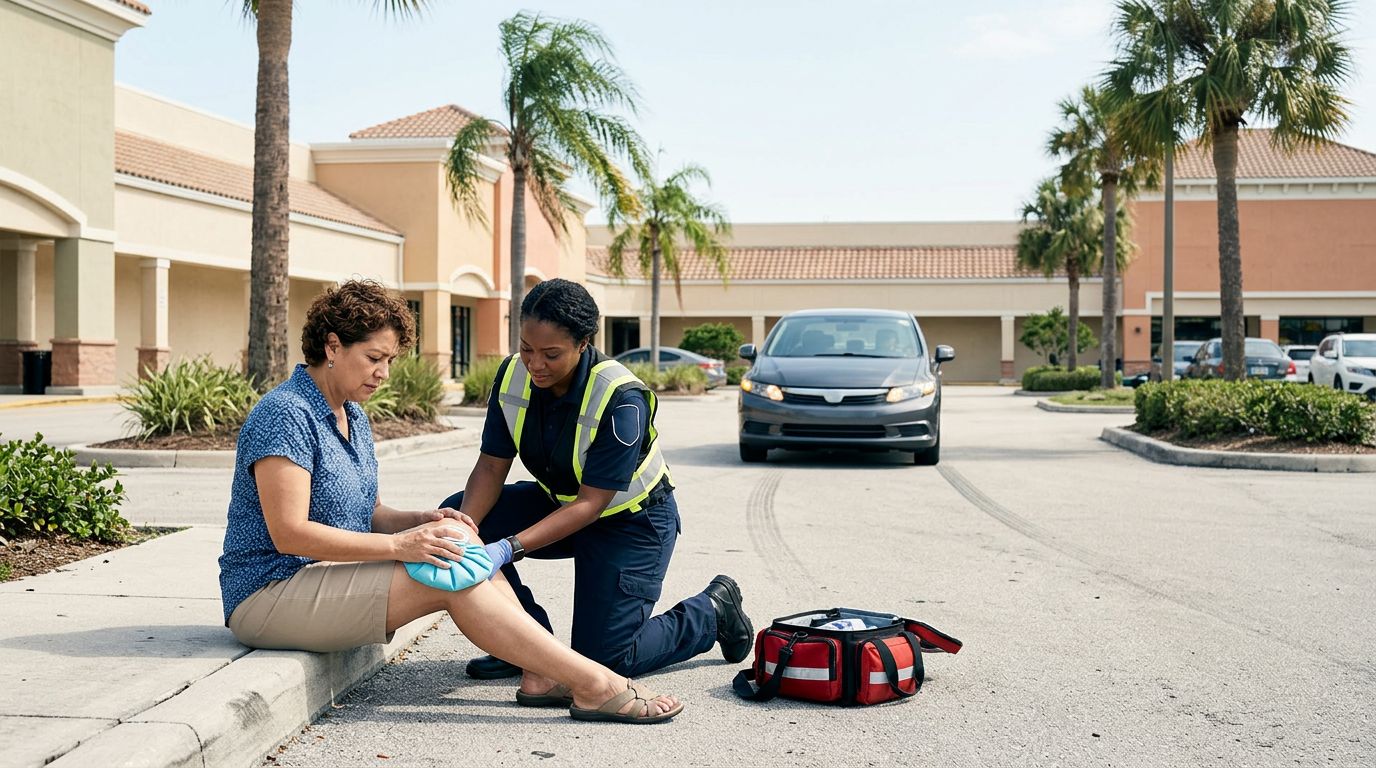
A parking lot crash can cause serious injuries even at low speeds. If you’ve been struck while walking, your Florida pedestrian accident claim may involve the driver, a business, an insurer, or more than one responsible party.
Your first priorities are medical care, accurate evidence, and protecting your statements. The following seven steps can help you respond in a way that supports both your recovery and your potential injury claim.
7 Steps After a Florida Pedestrian Accident in a Parking Lot
1. Move to safety and call 911
Get away from moving vehicles if you can do so without worsening your injuries. Ask someone to call 911, or make the call yourself if you’re able.
Tell the dispatcher that a vehicle hit a pedestrian. Request emergency medical assistance when you have pain, bleeding, confusion, dizziness, weakness, or any other symptom. Some injuries appear hours later, especially head, neck, back, and soft-tissue injuries.
Remain at the scene unless medical personnel take you away. Don’t argue with the driver or accuse anyone of causing the crash. A calm, factual account is more useful than a confrontation.
Florida law requires a driver involved in a crash with injury to stop and provide information. The Florida statute on leaving crash scenes explains duties that can apply after a collision.
2. Get medical care and describe every symptom
Accept transportation to an emergency room when paramedics recommend it. If you don’t need emergency treatment, arrange prompt care with a doctor or urgent care provider.
Explain exactly what happened and identify every symptom. Mention pain that comes and goes, headaches, nausea, numbness, tingling, trouble sleeping, or difficulty concentrating. Don’t assume a symptom is too minor to report.
Florida’s personal injury protection rules can affect medical benefits after a motor vehicle crash. In many situations, injured people must receive initial medical care within 14 days to preserve PIP benefits, but eligibility depends on the available policies and the person’s circumstances. Ask the hospital, insurer, or a Florida personal injury attorney how the rule applies to you.
Keep records of appointments, prescriptions, referrals, mileage, bills, and missed work. Medical records often provide the first detailed account of your injuries, and gaps in treatment can give an insurer an argument that the crash did not cause your condition.
For more guidance about the first days after being hit, review these steps after a Cape Coral pedestrian accident.
3. Exchange information and identify witnesses
Get the driver’s name, phone number, license plate, insurance company, and policy information. If the driver leaves, tell police immediately and write down the vehicle description, direction of travel, and any partial plate number.
Ask witnesses for their names and contact information. A witness may remember whether the driver was backing out, looking at a phone, speeding through the lot, or failed to yield at a marked walkway.
Ask for the responding officer’s name and the incident or report number. The report may contain statements, vehicle information, diagrams, and observations that become important later.
Don’t rely on memory alone. Pain, medication, and shock can distort details after a crash. As soon as you can, write down the time, exact location, lighting, weather, traffic flow, your direction of travel, and what happened immediately before impact.
4. Photograph the scene, vehicle, and your injuries
Take photographs with your phone if you can do so safely. Ask a trusted person to take them if you are receiving treatment.
Capture the entire parking area, then take closer photographs of:
- Your visible injuries and torn or bloodstained clothing.
- The vehicle’s damage, license plate, and position.
- Crosswalks, arrows, stop signs, wheel stops, curbs, and traffic lanes.
- Lighting conditions, blocked sightlines, hazards, and nearby surveillance cameras.
- Skid marks, debris, fluid, and other physical evidence.
Photograph the scene before vehicles move when possible. Parking lots change quickly. A car may leave, employees may clean debris, or a business may repair a sign or light.
Many stores, apartments, hospitals, and shopping centers use security cameras. Ask the property owner or manager to preserve footage immediately. You don’t need to obtain the video yourself. A lawyer can send a formal preservation request and investigate whether cameras captured the impact or the moments before it.
Evidence about video proof in Florida pedestrian claims may help show vehicle movement, signal timing, visibility, and the driver’s opportunity to stop.
5. Report the crash to the right insurance companies
Notify your own auto insurer if you have a policy, even if you weren’t driving. A policy may provide benefits to a pedestrian under certain circumstances.
The driver’s insurer may contact you quickly. Give basic facts, but avoid a recorded statement until you understand your rights. Adjusters may ask questions that invite guesses about speed, distance, visibility, or your medical history.
Don’t say that you’re fine, apologize, or agree that you caused the collision. You may be trying to remain polite, but insurers can use casual comments to dispute the seriousness of your injuries or argue that you share fault.
Never sign a release or accept a settlement check before reviewing the full effect. A settlement may close your claim permanently, including claims for future treatment that doctors have not yet identified.
Keep copies of every letter, email, claim number, and payment explanation. Write down the date and substance of each call with an insurer.
6. Preserve records showing how the crash affected you
A Florida pedestrian accident claim can include more than an emergency room bill. Save documents that show your physical, financial, and personal losses.
Keep a folder for medical records, bills, health insurance statements, prescriptions, therapy notes, and work restrictions. Track time missed from work and any reduction in your hours or earnings. If someone helps with transportation, childcare, household tasks, or personal care, record those services and dates.
Your clothing and personal property may also provide evidence. Store damaged shoes, glasses, bags, or clothing in a safe place. Don’t repair or discard them before documenting the condition.
Follow medical instructions and attend recommended appointments. If treatment is too expensive, tell the provider rather than stopping without explanation. A lawyer may help identify available coverage or discuss medical payment issues.
Also avoid posting crash details, photographs, or activity updates on social media. Insurers may examine public posts and compare them with your injury complaints.
7. Speak with a Florida personal injury attorney before accepting money
A consultation can clarify who may have legal responsibility and which insurance policies may apply. Bring the crash report, photographs, medical records, bills, wage information, and insurer correspondence.
The driver may be responsible for failing to yield, backing without checking, speeding, distracted driving, or ignoring signs. However, parking lot cases often involve disputed facts. The driver may claim you stepped into the vehicle’s path, wore dark clothing, or crossed outside a marked area.
A property owner or business may also face a claim if poor lighting, an obstructed view, confusing traffic design, missing signs, or another dangerous condition contributed to the collision. The owner isn’t automatically responsible for every crash on the property. Evidence must connect a property condition or negligent maintenance to the injury.
An attorney can investigate surveillance footage, witness accounts, maintenance records, photographs, medical causation, and insurance coverage. Early advice also helps prevent statements or releases from limiting your options.
Who May Be Responsible for a Parking Lot Collision?
Parking lots create unusual right-of-way problems because cars reverse, pedestrians cross between parked vehicles, and traffic signs may be unclear. A driver still has a duty to operate with reasonable care and watch for people in the vehicle’s path.
Fault depends on the facts. A driver who backs into a pedestrian may have failed to check mirrors or use adequate caution. A driver turning through a marked crossing may have failed to yield. On the other hand, an insurer may argue that the pedestrian entered suddenly or ignored a traffic control.
Florida can assign responsibility to more than one party. If the evidence shows shared fault, the amount recovered may be reduced. The driver’s statement, the crash report, photographs, camera footage, witness testimony, and medical records can all affect that analysis.
Property conditions matter as well. Poor lighting may prevent a driver from seeing a pedestrian. A tall hedge, sign, delivery truck, or improperly parked vehicle may block the view. A lawyer should examine the lot’s layout instead of assuming the case is only about the driver’s conduct.
A parking lot camera may show more than the impact. It can reveal who had a clear view, how long the pedestrian was visible, and whether the driver had time to stop.
Watch the Florida Filing Deadline
For many negligence-based Florida pedestrian accident injury claims arising on or after March 24, 2023, the lawsuit deadline is generally two years from the crash date. Settlement discussions, insurance delays, and ongoing medical treatment usually don’t extend that deadline.
Florida’s personal injury limitations statute contains the rules and exceptions. Older crashes may fall under the prior four-year period, depending on the date and legal facts. Claims involving a government agency may have separate notice requirements and shorter deadlines.
Wrongful death claims usually have a two-year period measured from the date of death, but the details require prompt legal review. Don’t wait until treatment ends to ask about timing. A lawyer needs time to investigate, preserve evidence, identify defendants, and file the correct case.
Protect Your Rights After a Florida Pedestrian Accident
A parking lot crash can leave you dealing with pain, medical bills, lost income, and an insurer that wants a quick statement. Call 911, get medical care, preserve evidence, and avoid signing away your rights before you understand the claim.
The strongest next step is often a prompt review with a Florida personal injury attorney. Acting early gives your attorney a better chance to locate witnesses, request surveillance footage, and build a complete record of what happened.