
Florida Red-Light Crash Claims: Proving the Driver Ran It
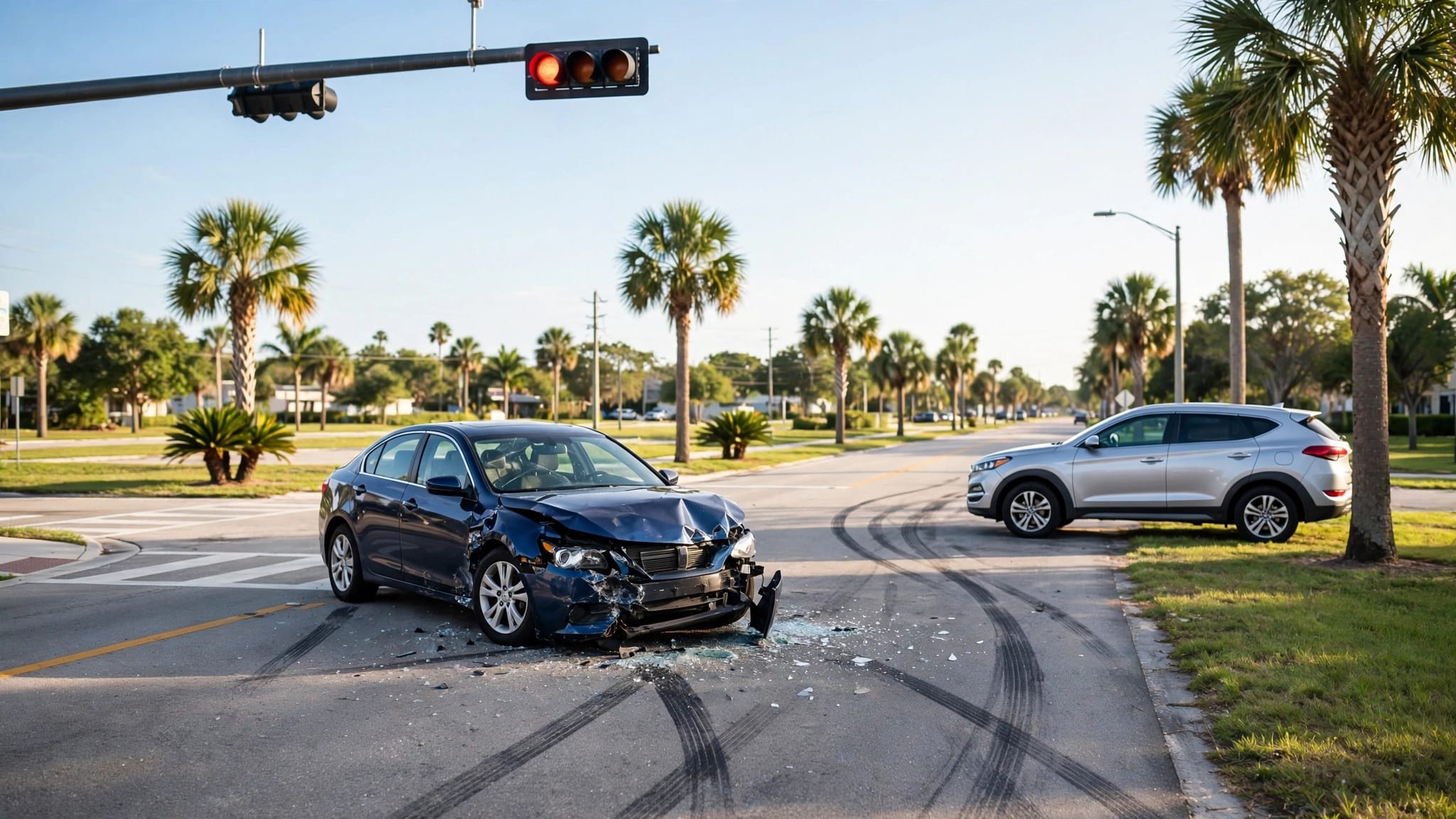
A Florida red light accident claim requires evidence that the other driver violated the signal and caused your injuries. Running a red light can establish a strong basis for liability, but a citation alone doesn’t resolve the claim.
If you’re hurt, prompt medical care and early evidence preservation protect both your health and your ability to pursue compensation. Start by separating three questions: who caused the crash, which insurance applies, and what losses the evidence supports.
Key Takeaways
- A driver facing a steady red signal generally must stop, although certain turns are lawful after stopping and yielding.
- Video, independent witnesses, vehicle damage, and signal records can help establish which driver entered against the light.
- PIP provides qualifying benefits regardless of fault, but initial medical care generally must begin within 14 days.
- Shared fault can reduce compensation, and fault exceeding 50% generally bars recovery in applicable negligence claims.
- Pain-and-suffering damages require qualifying injury evidence, while vehicle repairs involve coverage separate from PIP.
What Florida’s Red-Light Rule Requires
The signal controlling each driver’s lane matters. An intersection may have separate signals for through traffic, turning vehicles, and pedestrians.
Stopping and permitted turns
Under Florida’s traffic signal rules, drivers facing a steady red signal must stop before the near-side crosswalk. If there’s no crosswalk, they must stop before entering the intersection.
A right turn on red is generally permitted after stopping unless a sign prohibits it. However, the driver must yield to pedestrians and traffic proceeding lawfully.
Florida also allows certain left turns on red between one-way streets after stopping and yielding, unless prohibited. Therefore, seeing a vehicle turn during a red signal doesn’t establish a violation by itself.
Entry timing and the duty to yield
The important sequence is when the vehicle entered relative to the signal change. A vehicle inside the intersection when the light turns red presents a different issue from one entering against red.
A green signal also doesn’t excuse every driving error. Turning drivers may still need to yield, and all drivers must use reasonable care. Liability depends on each vehicle’s movement and its connection to the collision.
Proving Fault in a Florida Red Light Accident
When both drivers claim they had green, the investigation needs evidence beyond competing statements. Our guidance on disputed intersection crash evidence addresses how vehicle movements and traffic controls fit together.
Preserve video and independent accounts
Dashcams, nearby businesses, and available intersection cameras may capture the approach, signal, or impact. However, a visible camera doesn’t guarantee that usable footage exists.
Preserve original recordings rather than relying on edited clips or social media uploads. Witness names and contact information also matter, especially when someone saw the signal controlling the other driver’s lane.
An attorney can request preservation of evidence held by businesses, drivers, or insurers. Act early because footage may be overwritten during ordinary recording cycles.
Footage showing the impact may establish vehicle movement without proving the signal color. The recording must support the particular fact you’re trying to establish.
Connect physical evidence with the timeline
Photographs can document impact locations, debris, lane markings, sight obstructions, and final vehicle positions. Vehicle data may also help evaluate speed and braking when available.
Signal timing records can explain how an intersection operates, although a timing plan alone may not establish the displayed phase at impact.
A crash report may identify witnesses, citations, and investigative findings. Still, it doesn’t automatically decide civil liability. Preserve evidence of factual errors, such as an incorrect vehicle direction or diagram, rather than assuming the report is conclusive.
When the Other Driver Blames You
An insurer may argue that you were speeding, distracted, or able to avoid the collision. Those allegations require evidence connecting your conduct to the crash.
Under Florida’s comparative-fault statute, your percentage of responsibility reduces recoverable damages in applicable negligence actions. If you’re more than 50% responsible for your own harm, you generally cannot recover damages.
At exactly 50% fault, recovery remains possible, but the percentage reduces the damages. Our explanation of Florida comparative negligence addresses why an unsupported allocation deserves attention.
A green light supports your account, but the investigation should also address visibility, reaction time, and vehicle movements. Give accurate information without guessing about speed or distance. If you don’t know something, say so. An insurer’s proposed fault percentage isn’t a court ruling, and accepting it can materially affect your claim.
PIP Benefits While Fault Remains Disputed
Personal Injury Protection, or PIP, addresses qualifying early expenses without requiring proof that another driver caused the crash. However, it has eligibility requirements and payment limits.
The 14-day treatment requirement
Under Florida’s PIP benefits statute, initial qualifying medical services generally must occur within 14 days after the accident.
Don’t postpone treatment while waiting for the other insurer to accept responsibility. Describe when symptoms began, including symptoms that appeared after you left the scene.
Tell providers about relevant prior conditions as well. Accurate records help distinguish earlier problems from new injuries or crash-related aggravation. Keep discharge instructions, imaging results, prescriptions, and follow-up records together.
What PIP pays and leaves unpaid
PIP generally pays 80% of qualifying, reasonable medical expenses, subject to statutory conditions and policy terms. The combined medical and disability benefit limit is generally $10,000.
When a qualifying provider determines there was no emergency medical condition, medical benefits are limited to $2,500.
PIP doesn’t pay for vehicle repairs or pain and suffering. Receiving PIP benefits also doesn’t establish fault or resolve a separate claim against the responsible driver.
Compensation Beyond Initial Insurance Benefits
A red-light collision can produce expenses that exceed available no-fault benefits. The claim needs documentation of those losses and their connection to the crash.
Medical costs, work losses, and vehicle damage
Recoverable economic losses may include unpaid medical expenses, supported future treatment, lost earnings, and reduced earning capacity. Preserve bills, pay records, medical work restrictions, and evidence of missed work.
Future care needs medical support. Likewise, reduced earning capacity requires evidence of how the injuries affect your ability to work.
Vehicle damage follows a separate coverage path. The responsible driver’s property damage coverage or your collision coverage may apply. Keep repair estimates, towing receipts, and photographs. For a possible total loss, preserve records of the vehicle’s mileage, condition, and recent work.
When pain and suffering are available
In covered motor vehicle cases, Florida’s serious-injury threshold limits recovery for pain, suffering, mental anguish, and inconvenience.
Qualifying categories include permanent injury within a reasonable degree of medical probability, significant and permanent loss of an important bodily function, significant permanent scarring or disfigurement, or death.
Medical evidence must support the applicable category. The force of the impact or the amount of vehicle damage doesn’t establish a qualifying injury by itself.
Protecting Evidence and the Filing Deadline
Florida generally provides two years to file a negligence lawsuit under its negligence limitations statute. The applicable deadline depends on the accident date, claim type, defendant, and other circumstances.
An open insurance claim doesn’t automatically pause that deadline. The PIP treatment window and lawsuit filing period also address different requirements.
Preservation often requires action much sooner. Before repairs or disposal, have the vehicle thoroughly photographed and, when appropriate, inspected. Save original files and keep a dated record of insurer communications.
Legal review can address liability evidence, medical documentation, available bodily injury coverage, and applicable uninsured or underinsured motorist coverage. Coverage isn’t guaranteed simply because another driver caused the crash.
Our guidance on claims without a police report explains why missing paperwork doesn’t automatically defeat an injury claim.
At Avard Law Offices, we offer free case evaluations for personal injury matters. Bring the crash report if available, photographs, insurance information, medical records, and correspondence about fault or settlement. These materials provide a useful starting point for discussing the claim.
Frequently Asked Questions
Does a red-light ticket guarantee compensation?
No. A ticket may support the investigation, but an injury claim still requires proof of responsibility, causation, and damages. Insurance coverage and shared-fault issues also matter. The civil claim needs evidence of what happened, even when an officer cited the other driver.
Can I pursue a claim without camera footage?
Yes. Independent witnesses, photographs, vehicle damage, physical evidence, and available vehicle data may support liability. The absence of video makes careful preservation of other evidence more important. Consistency between the accounts, roadway layout, and impact evidence can help resolve disputed signal colors.
What if the driver who ran the light has no bodily injury coverage?
Your PIP may still provide qualifying benefits. Applicable uninsured or underinsured motorist coverage may also matter, depending on the policy and circumstances. A claim against the driver remains a separate question, but collectability affects practical recovery options. Required auto coverage doesn’t guarantee adequate injury compensation.
Should I accept an early settlement offer?
Evaluate the injuries, treatment outlook, documented losses, and release terms first. An early payment may require giving up additional claims. A settlement review should account for supported future needs and unresolved coverage issues, rather than focusing only on the first medical bills.
Build the Claim Around the Signal and the Evidence
A successful red-light crash claim connects the driver’s signal violation to the collision, your injuries, and your documented losses. Preserving evidence early helps keep disputed accounts from becoming the only record.
Get medical care promptly and keep insurance benefits separate from the liability claim. Contact us for a free case evaluation to discuss the evidence and your options for pursuing compensation.