
Florida Scuba Injury Claims and Waiver Defenses
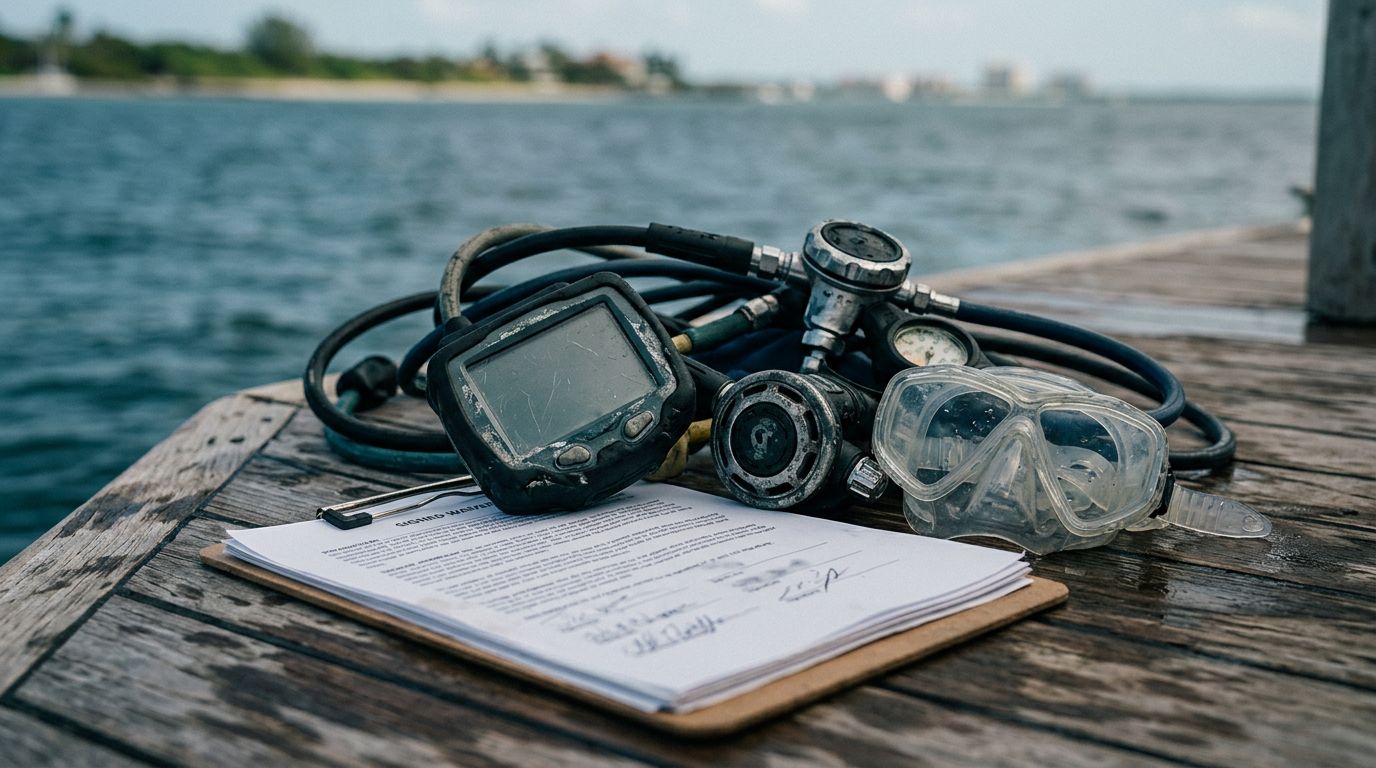
Few recreational accidents leave less visible evidence than a scuba incident. A diver may surface with serious symptoms while the strongest proof remains underwater, on a boat, or inside a dive computer.
Florida scuba injury claims often turn on three issues: what caused the injury, what the diver signed, and whether critical evidence still exists. A waiver can create a serious defense, but it doesn’t automatically erase every possible claim.
Prompt medical care comes first. Then, the facts must be preserved before memories fade, equipment changes hands, or electronic records disappear.
How Florida scuba injury claims are built
An injured diver must usually show that another party owed a duty of reasonable care, failed to meet that duty, and caused measurable harm. That harm may include decompression sickness, barotrauma, near-drowning injuries, spinal trauma, brain injury, or losses after a fatal event.
The responsible party isn’t always obvious. A dive shop may organize the trip, while a separate charter owns the vessel and an instructor leads the dive. Each relationship can matter.
Duty follows control of the risk
A person or business that controls equipment, instruction, vessel operations, or dive logistics may have duties tied to that role. For example, a claim may examine a rental regulator’s condition, the quality of a safety briefing, an instructor’s supervision, or a charter crew’s response to an emergency.
Florida law directs the Department of Health to establish limits for contaminants in compressed air used for recreational sport diving. The state standards for recreational diving air may become relevant when an injury involves a tank fill, air quality concern, or equipment-maintenance question.
Certification level and personal responsibility matter, too. Still, a diver’s certification doesn’t give an operator permission to disregard hazards that it knew or should have recognized.
A signed waiver is a defense, not a final answer
Most Florida dive operators require customers to sign a release before entering the water. These forms often address drowning, pressure-related injuries, equipment failures, currents, marine life, boat travel, and emergency treatment.
The form may look routine, especially when it appears amid booking documents and medical questionnaires. However, its exact language can shape the entire case.
Clear wording carries the most weight
Florida courts strictly construe exculpatory agreements against the business that drafted them. A release is strongest when it clearly and unequivocally states that the diver gives up claims based on the operator’s own ordinary negligence.
A form doesn’t require one magic word in every case. Yet the document must plainly communicate the intent to release negligence claims when the agreement is read as a whole. Broad language about the risks of diving may not resolve whether the diver agreed to excuse careless conduct by a particular defendant.
The U.S. Court of Appeals for the Eleventh Circuit upheld a Florida dive-center release in Schultz v. Florida Keys Dive Center, Inc. In Borden v. Phillips, Florida’s First District Court of Appeal also upheld a scuba-related release. Those decisions show why a waiver needs careful review before anyone assumes a claim cannot proceed.
The protected parties must be identified
A waiver signed for one company may not protect every person connected to the outing. Dive shops, charter companies, instructors, divemasters, resort operators, vessel owners, and equipment suppliers may operate through separate businesses.
Review the complete form, including incorporated terms and online acknowledgments. The date, signature, named company, and language about employees or affiliates can all affect who may assert the release.
A waiver may also fail to cover conduct outside its stated scope. The facts matter as much as the paper. An injury tied to defective equipment, a boat collision, or a danger at a dock can raise issues beyond the usual dive-risk language.
Liability may extend beyond the dive shop
A dive accident can involve several independent failures. The person who sold the excursion may not own the boat. Likewise, the instructor who led the group may not have maintained the equipment.
Identifying every responsible party early protects against a narrow investigation that overlooks a separate source of compensation.
Conduct during the dive can support a negligence claim
A case may focus on an inadequate briefing, unsafe dive planning, poor supervision, failure to monitor changing conditions, or an unreasonable emergency response. Dive logs, vessel records, weather reports, GPS information, and witness accounts can help reconstruct what happened.
For instance, a severe current may be a known condition, not a surprise. The legal question becomes whether the operator responded reasonably in light of the divers’ experience, the plan for the site, and the available safety resources.
Equipment, boats, and property create separate issues
A faulty buoyancy compensator, malfunctioning regulator, contaminated air supply, or defective tank valve may point toward an equipment supplier or manufacturer. A liability release signed for a charter doesn’t automatically protect a product maker that had no role in the agreement.
A dock or dive-shop injury can also involve unsafe property conditions. When a wet surface, broken ladder, loose railing, or unmarked hazard contributes to the accident, Florida premises liability duty rules may apply alongside the diving claim.
Boat-based dives can involve maritime law
A vessel changes the legal analysis. A diver injured while boarding, traveling to a reef, entering the water, or returning to the boat may have claims governed partly by federal maritime law.
The location of the injury matters, but it isn’t the only factor. Courts also consider the activity’s connection to traditional maritime operations and the role of the vessel.
Charter operations require a separate review
Schultz shows that federal maritime law doesn’t automatically invalidate a Florida diving waiver. Yet each charter case depends on its own facts, contract language, and connection to vessel operations.
A propeller strike, collision, fall during boarding, unsafe ladder, or crew error may require review of boating rules as well as ordinary negligence principles. Florida’s boating safety statutes can provide important context when a vessel’s operation contributed to the harm.
Preserve the charter agreement, passenger list, crew names, vessel identification, and any Coast Guard or local incident report. Those records can be difficult to obtain after the trip ends.
Comparative fault can reduce a diver’s recovery
Florida scuba injury claims can involve arguments that the diver contributed to the accident. A charter or insurer may point to an ignored instruction, a missed buddy check, an unsafe ascent, a dive beyond certification, or failure to disclose a medical condition.
Those allegations don’t end the inquiry. The operator’s conduct still requires close review.
Florida uses a 51 percent bar in many negligence cases
Under Florida’s comparative fault statute, a claimant’s share of fault reduces damages in most covered negligence actions. A claimant who is more than 50 percent responsible for their own harm generally cannot recover damages.
The evidence used to assign fault can include dive-computer data, certification records, medical disclosures, witness statements, video, and the operator’s instructions. A diver’s error may reduce a recovery, while an operator’s unsafe decision may still remain a significant cause of the injury.
A signed waiver and a diver’s alleged mistake are separate defenses. Both require proof tied to the actual incident.
Deadlines and evidence move quickly after an accident
Florida scuba injury claims can weaken within days if key proof disappears. A dive operator may return rental gear to service, erase boat-camera footage, or lose access to online booking records.
Early action gives an injured diver a better chance to preserve the record before the dispute becomes a matter of recollection.
Most negligence claims have a two-year deadline
For negligence claims accruing on or after March 24, 2023, Florida law generally provides two years to file suit. The Florida negligence filing deadline can bar a claim even when the injuries are severe and liability appears clear.
Older claims, federal maritime matters, product claims, and other legal theories can require a different analysis. Waiting to determine the deadline is a costly mistake.
Preserve the paper trail and digital record
Gather records while the details remain accessible:
- Save the complete waiver, booking confirmation, receipts, certification information, and communications with the operator.
- Download and back up dive-computer data before it is overwritten or lost.
- Photograph injuries, equipment, the vessel, dock conditions, and any visible defect when possible.
- Write down the timeline, dive site, depth, weather, crew names, other divers, and witnesses.
- Request copies of incident reports and medical transport records, then review them for factual errors.
Don’t alter, repair, discard, or return potentially defective equipment without first documenting its condition. A written request to preserve gear, maintenance records, video, dive logs, and communications can prevent the most important evidence from vanishing.
Workplace and fatal diving accidents need added care
Commercial divers, instructors, underwater photographers, and marine workers may face a different path after an on-the-job injury. Workers’ compensation may provide benefits through the employer, yet a negligent outside party can still create a separate civil claim.
Work injuries may involve third parties
An employer’s workers’ compensation coverage often limits a direct negligence suit against that employer. However, a charter operator, vessel owner, contractor, equipment supplier, or manufacturer may be a third party with separate responsibility.
The distinction matters because workers’ compensation and personal injury cases provide different remedies. Injured workers should understand the difference between benefits through an employer and third-party workplace injury claims against another responsible business.
A fatal dive may support a wrongful death action
When a dive accident causes death, Florida law generally requires the personal representative of the estate to bring the wrongful death action for eligible survivors and the estate. The claim may seek losses tied to the death, subject to the facts and Florida law.
The decedent’s waiver remains important, but it should be reviewed alongside the claimed misconduct, the defendants, and the specific cause of death. Families should preserve equipment and records before an operator’s version becomes the only available account.
A waiver deserves scrutiny after a scuba accident
A release can be a powerful defense, especially when it plainly covers the operator’s ordinary negligence. Still, the language, the parties, the dive conditions, and the evidence decide whether it applies.
Early documentation gives an injured diver or grieving family a clearer view of what happened. It also makes it possible to assess the waiver before a filing deadline or lost evidence closes the door.