
Florida Sinkhole Claims: Injury Evidence and Geotechnical Records
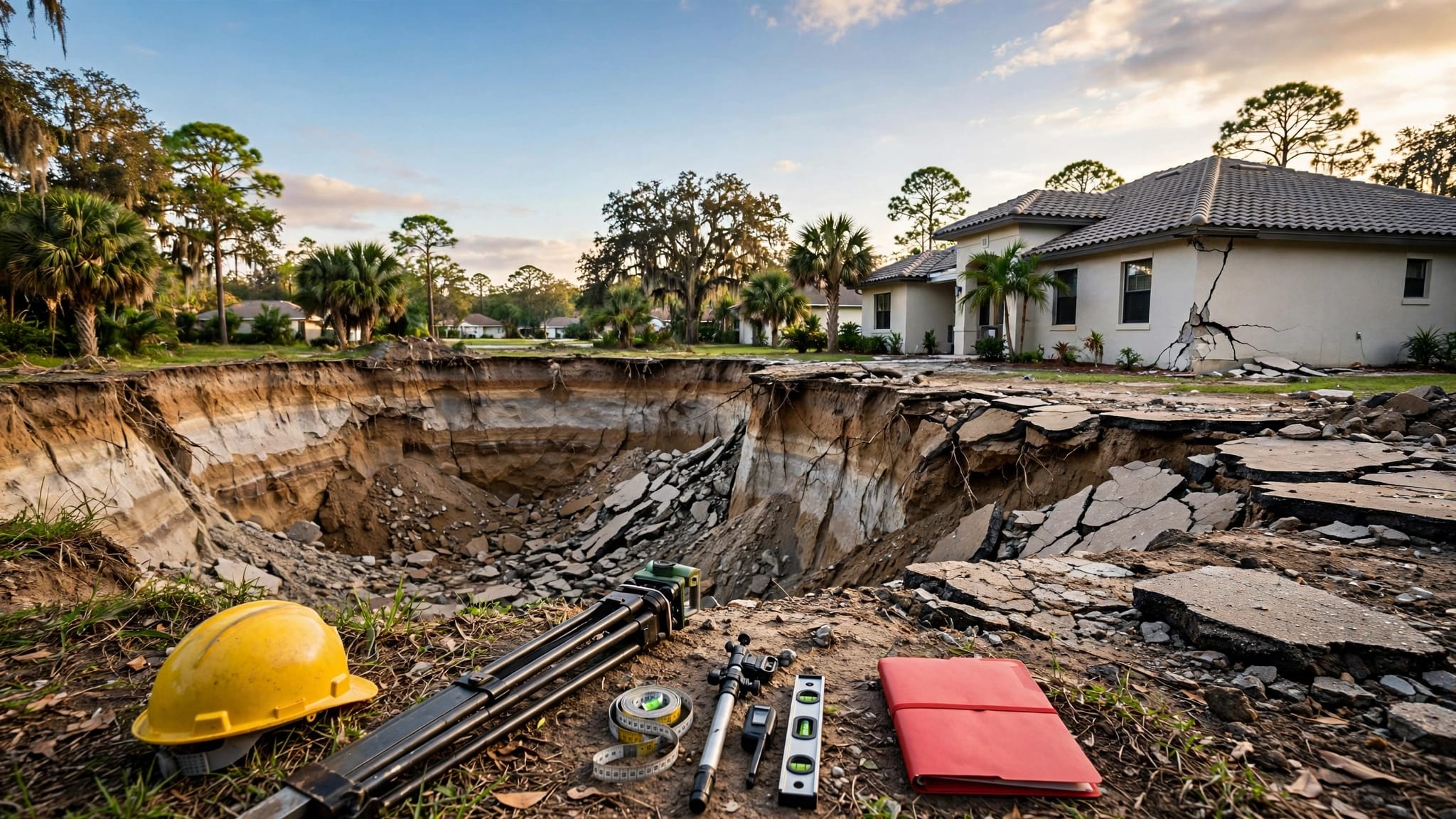
A sinkhole can turn an ordinary property into the site of a serious injury within minutes. For people pursuing Florida sinkhole claims, the visible hole or cracking is only part of the story.
Medical proof establishes the harm. However, geotechnical records often explain why the ground or structure failed and whether someone should have acted before anyone got hurt. The strongest cases connect those two forms of evidence early.
How Florida sinkhole claims differ from property damage claims
A sinkhole event can create two separate legal matters. One is an insurance claim for damage to a home or other covered structure. The other is a bodily injury claim against a person or business whose carelessness contributed to the dangerous condition.
Florida’s sinkhole insurance statutes focus on coverage for structural loss. Under Florida’s sinkhole insurance law, property insurers must cover catastrophic ground cover collapse and must make sinkhole-loss coverage available for an additional premium on eligible structures. The policy language, deductible, exclusions, and notice requirements still matter.
A damaged building does not automatically establish fault
A property policy may pay for testing or repairs, yet that payment does not prove a landlord, store owner, contractor, or property manager caused an injury. Bodily injury cases usually turn on premises negligence.
The injured person must show that a party with control over the property had a duty to use reasonable care. The evidence must also show a dangerous condition, a failure to respond reasonably, and a direct connection between that failure and the injury.
For example, recurring settlement, widening cracks, sticking doors, or prior ground movement may put an owner on notice. If the owner ignored reports or postponed needed investigation, those facts may carry more weight than the size of the final collapse.
Catastrophic collapse and sinkhole loss are not interchangeable
Florida law uses a narrow definition for catastrophic ground cover collapse. It involves abrupt ground collapse, a visible depression, structural damage, and a government order condemning the structure and requiring it to be vacated.
Many sinkhole losses do not meet that standard. Therefore, an insurance dispute may focus on whether the policy included sinkhole coverage and whether an engineer can link the damage to sinkhole activity. An injury claim can proceed under a different theory, based on unsafe property conditions and preventable harm.
Geotechnical records in Florida sinkhole claims
Geotechnical evidence turns a frightening event into a documented explanation. It can identify the subsurface conditions, track structural movement, and test competing explanations such as poor drainage, plumbing leaks, erosion, or construction defects.
For Florida sinkhole claims involving injuries, these records may also reveal what the owner knew, or should have known, before the incident.
Engineering and geology reports can establish causation
Insurers investigating covered sinkhole losses may retain a professional engineer or professional geologist. Their written findings can address whether sinkhole activity caused the structural damage within a reasonable professional probability.
A useful report should identify the inspected areas, observed distress, testing performed, conclusions, and recommended repairs. It may also include foundation elevations, boring logs, soil descriptions, photographs, diagrams, and data from subsurface testing.
The underlying material matters as much as the conclusion. A short report that states “no sinkhole activity” without showing the investigation’s scope may leave important questions unanswered.
An engineering opinion is strongest when the field observations, testing data, and repair recommendation all point to the same cause.
State incident reports provide context, not final proof
The Florida Geological Survey maintains reported subsidence incident records for locations across the state. Nearby reports can support an argument that an area has a history of subsidence or sinkhole-related conditions.
Still, that database is not a complete record of every sinkhole or insurance claim. Florida does not require every occurrence or claim to be reported to the Geological Survey. A map entry also cannot prove that a particular property had sinkhole activity on a particular date.
Use state records as background evidence. Pair them with site-specific engineering data, maintenance files, photographs, and witness testimony.
Records to preserve after a sinkhole injury
Time can erase the evidence that explains a collapse. Contractors may fill a hole, stabilize soil, remove broken concrete, or repair walls before anyone documents the original condition. Those repairs may be necessary for safety, but the evidence should be preserved first when possible.
Take clear photographs and video from a safe location. Include the damaged surface, nearby cracks, warning signs, drainage features, footwear, and anything that shows scale. Save the original files rather than relying only on social media posts or screenshots.
Build a timeline while details are fresh
Write down when you first noticed warning signs and when the injury occurred. Include dates of tenant complaints, maintenance visits, rain events, repairs, evacuation notices, and conversations with property staff.
The timeline should also identify every person who saw the condition. A neighbor may remember repeated cracking. An employee may know that management received several work orders. A contractor may have warned that temporary patching would not solve the problem.
Medical documentation belongs in that timeline. Seek prompt care, follow treatment instructions, and tell providers how the injury occurred. Emergency department notes, imaging, physical therapy records, work restrictions, and bills help connect the physical injury to the collapse.
Request documents controlled by others
Property owners and businesses often hold the most revealing records. An attorney can seek materials before they disappear, including:
- Inspection reports, maintenance requests, repair invoices, and prior complaints about cracking or settlement.
- Lease records, management agreements, and contracts showing who controlled the affected area.
- Surveillance video, incident reports, emergency communications, and employee training records.
- Insurance claim materials, engineering reports, photographs, and repair recommendations.
Documentation of prior complaints can be especially important in a case against a commercial property owner. Similar notice issues arise in Florida pothole fall injury claims, where maintenance records may show that a hazard existed long enough for reasonable inspection or repair.
Proving fault when a property has sinkhole activity
Natural geology does not excuse careless property management. Yet an owner is not automatically liable because a sinkhole formed. The legal question is whether the person or business responsible for the property acted reasonably after warning signs appeared.
A case may involve a homeowner, landlord, condominium association, retail business, construction company, property manager, or government entity. Control matters because the party with authority to inspect, warn, close an area, or order repairs may bear responsibility.
Notice often becomes the central dispute
Actual notice exists when someone directly reports a hazard or the owner personally observes it. Constructive notice can arise when conditions existed long enough, or were obvious enough, that reasonable inspections should have found them.
Repeated crack repairs, old engineering recommendations, tenant emails, and reports of soft ground may support either form of notice. On the other hand, a sudden and unforeseeable collapse with no earlier warning may make negligence harder to prove.
Defense lawyers and insurers may argue that a plumbing leak, tree roots, poor compaction, or stormwater caused the damage. That is why an independent review of the geotechnical file can be important. The case should address alternative causes with evidence, not assumptions.
Separate injury damages from repair costs
Repairing a building and compensating an injured person are different obligations. Property insurance may address stabilization, foundation repair, or structural damage under the policy. A negligence claim may seek medical expenses, lost income, pain and suffering, and other injury-related damages allowed by Florida law.
Keep receipts and records in separate folders. Mixing remediation invoices with medical bills can make a complex claim harder to present clearly.
Workplace sinkhole injuries may involve two claims
A sinkhole injury at work can add workers’ compensation rules to an already technical case. An employee injured while performing job duties may qualify for authorized medical care and wage-related benefits through workers’ compensation.
Florida employees should report a work injury promptly. State law generally requires notice to the employer within 30 days of the injury or initial manifestation, subject to limited exceptions. Delayed notice can put benefits at risk.
A third party may still be responsible
Workers’ compensation usually limits an employee’s claim against the employer. However, another party may be liable if it owned the property, controlled the worksite, performed defective repairs, or created the unsafe condition.
For instance, a delivery driver injured in a collapse at a customer’s premises may have a workers’ compensation claim and a potential claim against the property owner. A contractor injured because another contractor failed to secure a known unstable area may face a similar analysis.
The facts determine whether a third-party case exists. Florida workers’ comp versus third-party claims explains how these separate paths can affect available compensation and evidence.
Preserve the workplace incident report, photographs, names of coworkers, medical records, and all communications from the employer or carrier. Those documents can establish both prompt reporting and the circumstances of the collapse.
Deadlines can close a claim before the evidence is complete
Florida deadlines depend on the type of claim. A bodily injury lawsuit based on negligence generally has a two-year filing period under the current Florida limitations statute, although the accrual date and the facts of a particular case can affect the analysis.
Insurance deadlines follow different rules. Florida’s sinkhole statutes require policyholders to report a sinkhole-loss claim within the time allowed by the governing law and policy. A neutral evaluation process may also become available after an insurer’s engineering report or claim denial.
Early action protects evidence and legal options
Do not wait for final repairs before seeking legal advice. The repair process can remove evidence, and insurers may request statements or documents that affect the record.
Bring every available item to a consultation: the insurance policy, photographs, medical records, engineering reports, repair estimates, correspondence, witness information, and proof of lost work. Missing paperwork should not stop you from getting advice, but it should be identified quickly.
A prompt review can determine whether the claim involves insurance coverage, negligent property maintenance, workers’ compensation, or more than one legal path.
A Clear Record Can Carry a Sinkhole Injury Case
A serious sinkhole injury case needs more than photographs of a damaged property. It needs medical proof of harm, records showing who controlled the site, and geotechnical evidence that explains the failure.
The most persuasive Florida sinkhole claims connect the ground conditions to the structural danger, then connect that danger to a preventable injury. Preserving the right records early gives that connection the support it needs.