
Florida Stop Sign Accident Claims: Proving Failure to Yield
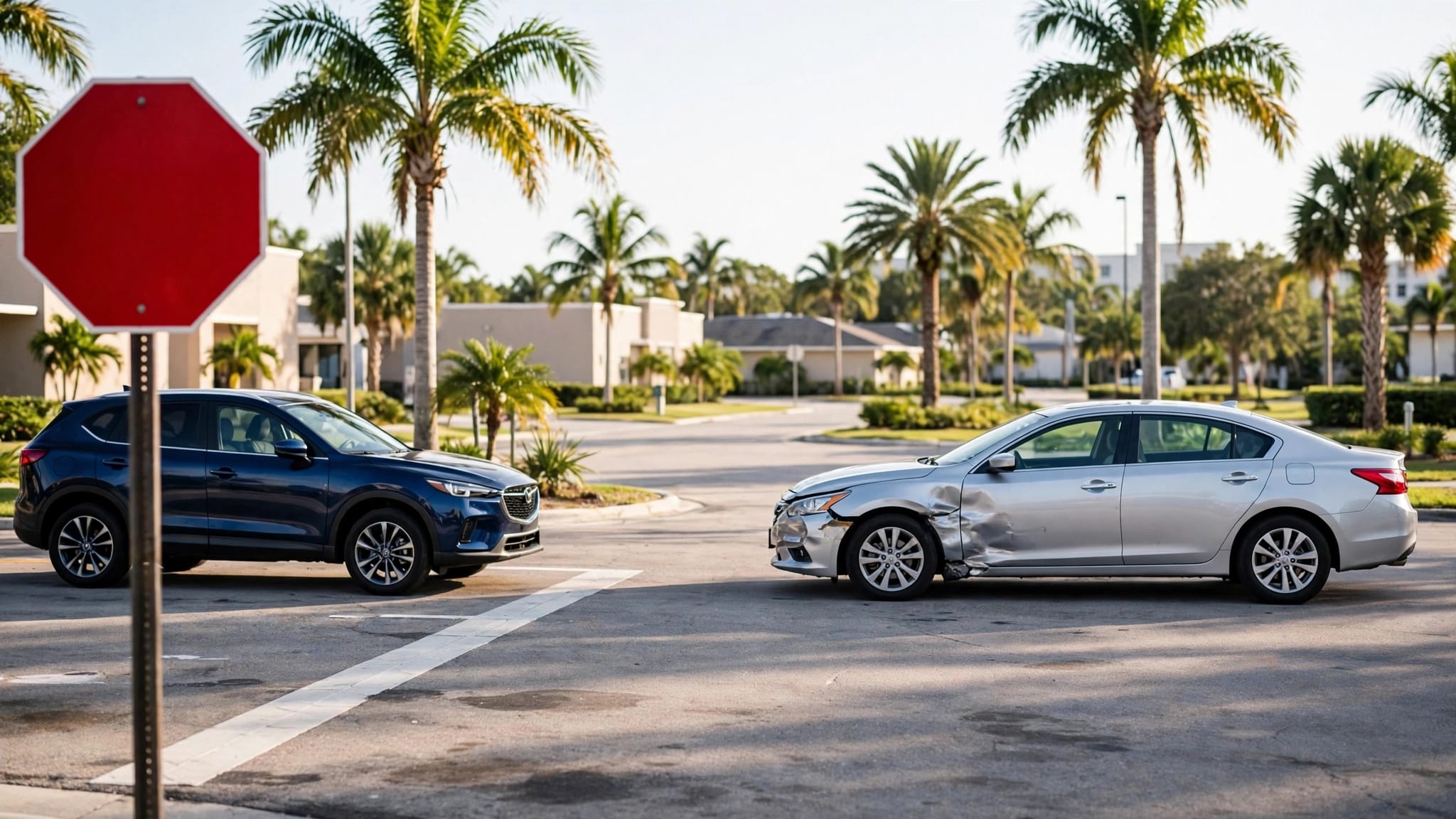
A stop sign is easy to photograph. The harder part is proving what the driver did after reaching it. In a Florida stop sign accident, the other driver may insist they stopped and had enough room to proceed, even when the collision left you injured.
The timing of each vehicle’s movement often decides a disputed claim. Florida’s traffic rule provides the starting point, but photographs, witnesses, video, and medical records help show how that rule applies to your crash.
Key Takeaways
- A driver facing a stop sign must stop in the required place and yield to traffic already in the intersection or approaching closely enough to pose an immediate hazard.
- Video, independent witnesses, scene photographs, and vehicle damage can help establish who entered first.
- A citation or crash report may support your account, but neither automatically decides civil liability.
- Shared fault can reduce compensation. In many negligence actions, a finding of more than 50% fault prevents recovery.
- Preserve evidence quickly, seek medical care promptly, and confirm the filing deadline for your claim.
What Florida’s Stop-Sign Law Requires
A driver can make a complete stop and still cause a crash by pulling into another vehicle’s path. To prove failure to yield, you need evidence of both the driver’s conduct and the traffic approaching the intersection.
The required stopping point
Florida’s stop-sign statute sets an order for where a driver must stop. The marked stop line comes first. If there is no line, the driver must stop before the near-side crosswalk. If neither exists, the driver must stop at the nearest point with a view of approaching traffic before entering the intersecting roadway.
That location matters. A driver who stops beyond the line or crosswalk may already be in another vehicle’s path. Photos showing the sign, pavement markings, and sight lines can help establish where a proper stop should have occurred.
The duty to yield after stopping
After stopping, the driver must yield to a vehicle already in the intersection or approaching closely enough to be an immediate hazard. An insurer may focus on whether its driver came to a complete stop. That doesn’t answer whether pulling forward was safe.
At a four-way stop, arrival order also matters. The first vehicle to stop generally proceeds first. If vehicles stop at the same time, the driver on the left must yield to the driver on the right. Witnesses or footage may clarify a near-simultaneous arrival that the drivers remember differently.
How to Prove the Other Driver Failed to Yield
The central question is where both vehicles were when the stop-sign driver entered the intersection. A strong claim connects that sequence to the impact rather than relying on the sign alone.
Video and independent witnesses
Nearby businesses, homes, and vehicles may have recorded the approach. Footage can show whether the driver stopped, rolled through, paused beyond the line, or waited before entering. It may also show how close your vehicle was when they moved.
Request preservation promptly because recordings may be overwritten. If a business or another driver controls the footage, an attorney can ask them to preserve it. Keep the original file when possible rather than relying only on a short clip.
An independent witness may have seen the vehicles before impact, something neither driver could fully observe. Get the person’s name and contact information. Ask what they saw without suggesting an answer. A witness who saw only the collision can still help establish the vehicles’ positions and direction of travel.
Physical evidence at the intersection
Photograph the intersection from each driver’s approach, including signs, stop lines, crosswalks, lane markings, and anything blocking the view. Wide shots show the layout; close shots preserve details that repairs or ordinary traffic may erase.
Vehicle damage, debris, skid marks, and final resting positions can add context. For example, damage to the side of a car already crossing may support its position in the intersection. It cannot, by itself, establish either driver’s speed or right of way. Compare physical clues with witness accounts and any available video before drawing conclusions.
What a Crash Report Can and Cannot Prove
A Florida crash report may record driver statements, witness names, a diagram, and an officer’s observations. Those details can guide an investigation, especially when the other driver later changes their account. Obtain the report and check names, vehicle directions, and the diagram for errors.
The report is evidence, not a final civil fault ruling. An officer may have arrived after the vehicles moved or may not have seen nearby camera footage. A citation can support your account, but it doesn’t eliminate the need to show how the violation caused the collision.
If no police report exists, the claim doesn’t automatically end. Photos, medical records, witness information, repair records, and insurer correspondence may become more important. Avard Law Offices explains proving a crash claim without a police report when the usual record is unavailable.
Preserve Evidence Before It Disappears
The first days after a crash are often your best chance to document the scene and identify witnesses. Protect your health first, then collect what you safely can.
At the scene and shortly afterward
Call for help if anyone is injured. If it is safe, photograph vehicle positions before they change. Include license plates, damage to every involved vehicle, nearby traffic controls, and the wider intersection. Don’t step into traffic for a better angle.
Save the other driver’s contact and insurance information. Keep witness details separately, since a witness may leave before an officer arrives. Write down the time, weather, lighting, and what you personally observed while your memory is fresh.
Records others control
Ask nearby businesses whether they have footage and whom to contact about preserving it. Keep copies of your request. An attorney may seek preservation of video, vehicle electronic data, and physical evidence held by a driver, business, or insurer when fault is contested.
Avoid repairing or disposing of a badly damaged vehicle before its condition has been documented. Keep towing records, repair estimates, and photographs. These records may help explain the point of impact if the vehicles are no longer available for inspection.
When the Insurer Says You Share Fault
Having the right of way doesn’t prevent an insurer from examining your driving. It may allege that you sped, looked at a phone, failed to brake, or had time to avoid the collision. Each allegation needs evidence connecting your conduct to the crash.
How Florida allocates fault
Florida generally applies modified comparative negligence to covered vehicle injury claims. Your share of fault reduces the damages you can recover. In many negligence actions, a person found more than 50% at fault cannot recover damages under that rule.
For instance, a 20% fault finding would generally reduce $100,000 in proven damages to $80,000 before other claim issues. An adjuster’s proposed percentage is not a court finding. Florida’s comparative-fault provisions are available through the 2026 Florida Statutes.
Test the allegation against the record
If the insurer says you were speeding, ask what supports that claim. Video, road markings, witness observations, and vehicle data may confirm or challenge it. The same approach applies to claims about braking or visibility.
Be accurate in every account you give. Don’t guess at distance, speed, or reaction time when you don’t know. If the other driver’s insurer requests a recorded statement, consider getting legal advice before giving a detailed one. When its account conflicts with yours, review your options for challenging a disputed car accident claim.
Keep Medical Proof Separate From the Fault Dispute
You don’t have to settle the right-of-way argument before seeking treatment. Florida’s Personal Injury Protection coverage, or PIP, can provide qualifying benefits through your own auto policy without first deciding who caused the crash.
The treatment window matters
Under Florida’s PIP benefits statute, you generally must receive initial medical services within 14 days of the accident to qualify for medical benefits. Available benefits depend on the statute’s conditions and your coverage. Don’t wait for an adjuster to accept fault before getting care.
Tell your provider when symptoms began, including symptoms that appeared after you left the scene. Follow-up records can show whether an injury improved or continued to affect work and daily activities. Keep discharge papers, imaging results, prescriptions, therapy records, and bills together.
Document the full effect of the injury
A liability claim may involve losses beyond initial treatment, including future care and lost income when the evidence supports them. Save pay stubs, work restrictions, and records of missed time. Describe limitations plainly to your providers rather than trying to assign them a dollar value yourself.
Florida also places limits on recovering pain-and-suffering damages in motor vehicle cases. The medical evidence matters when evaluating whether an injury meets Florida’s serious injury threshold. PIP eligibility and the ability to pursue those damages are separate questions.
Watch the Filing Deadline While the Claim Moves Forward
For many Florida negligence claims arising from crashes on or after March 24, 2023, the general lawsuit filing period is two years. Older crashes and different types of claims may follow different rules. Confirm the deadline for your accident rather than assuming every claim has the same window.
Settlement discussions do not automatically stop the clock. Calendar the crash date, any treatment or insurance deadlines, and the time needed to investigate. Avard Law Offices has more detail on Florida car accident lawsuit deadlines.
Be careful with an early settlement offer if treatment is ongoing. A signed release may end your ability to seek additional compensation, even if later records reveal continuing needs. Review the injury evidence and available coverage before deciding whether an offer addresses your losses.
When Legal Help Can Make a Difference
Legal review is useful when the other driver denies stopping improperly, the insurer assigns you a share of fault, or important footage sits with someone else. Serious injuries also call for a close look at medical proof, insurance coverage, and the filing deadline.
Bring the crash report if you have one, along with photos, witness contacts, insurer letters, and treatment records. Florida car accident attorneys at Avard Law Offices can review how the available evidence fits the stop-sign rule and what remains to be obtained.
Frequently Asked Questions
Does a stop-sign citation prove the other driver is liable?
No. A citation can support a claim that the driver violated a traffic rule. A civil injury claim still needs evidence connecting the driver’s conduct to the crash and your losses. The other insurer may also raise a supported shared-fault argument.
Can I pursue a claim if the driver says they stopped?
Yes. A complete stop does not end the duty to yield. The question is whether your vehicle was already in the intersection or close enough to pose an immediate hazard when the driver entered. Footage, witnesses, and scene evidence can help answer it.
What if no camera recorded the collision?
A claim can rest on more than video. Independent accounts, roadway photographs, vehicle damage, and the crash report may help establish the sequence. Preserve what is available quickly, and avoid filling gaps with guesses.
Conclusion
A Florida stop sign accident claim turns on the seconds before impact, not simply the presence of a sign. Proving the sequence means showing where each vehicle was, when the other driver entered, and why yielding was required.
Preserve the available evidence, get medical care, and check the filing deadline. Those steps give a disputed account the factual support it needs.