
Florida Truck Accident Claims After a Trailer Detaches
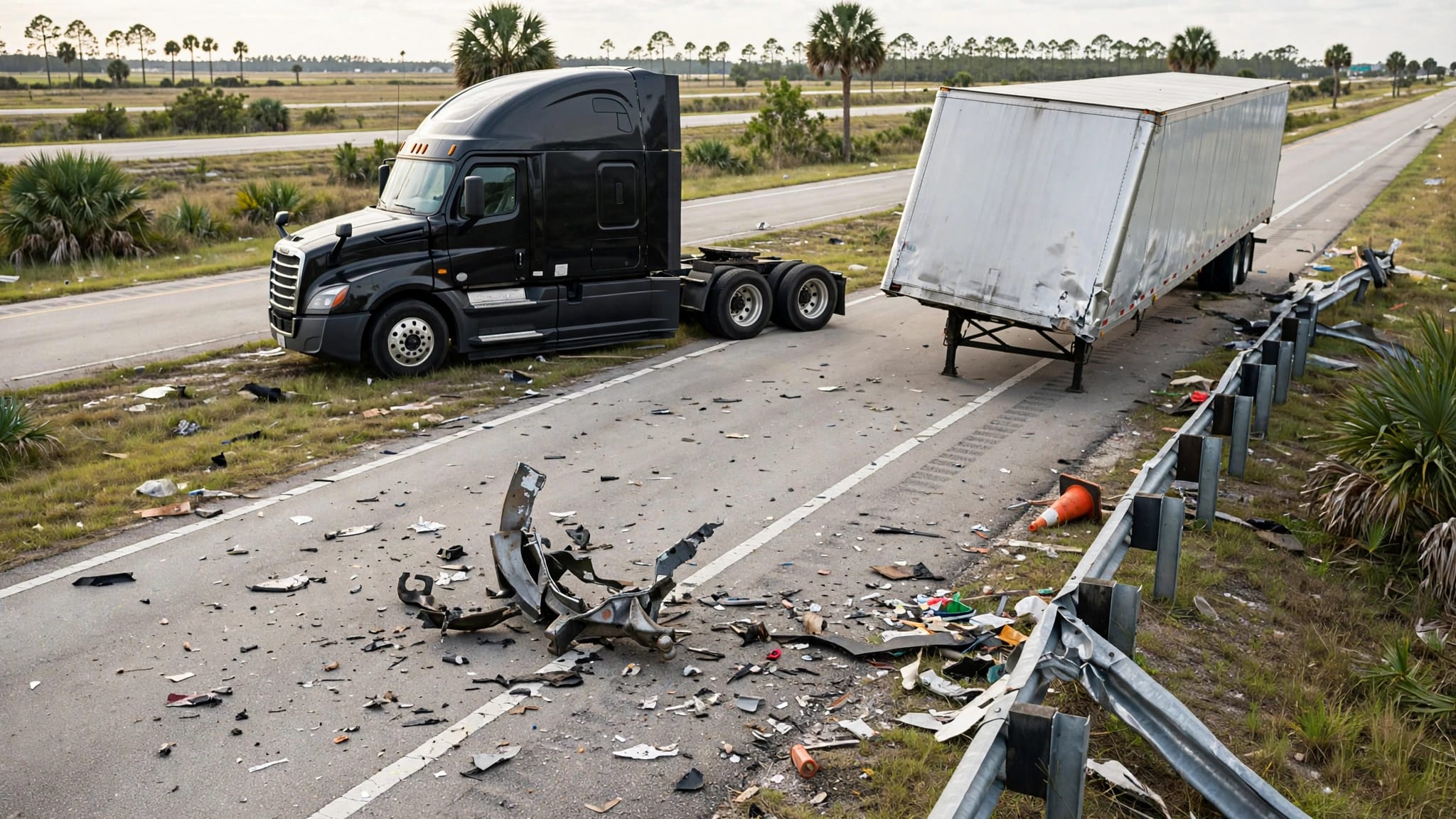
Florida truck accident claims involving a detached trailer depend on proof of how the trailer separated, who was responsible, and how the crash caused your injuries. The trailer’s hitch, maintenance records, and physical damage can be as important as the police report.
After a collision, the trucking company may control the equipment and records you need. Early preservation can protect evidence before repairs, salvage, or routine data deletion change it.
The first step is to establish what separated and how the trailer moved before impact.
Key Takeaways
- A detached trailer doesn’t automatically prove which person or company caused the separation.
- The hitch type matters when applying Florida’s safety-chain requirements.
- Preserve the tractor, trailer, coupling parts, original video, and maintenance records when possible.
- Florida’s shared-fault rules can reduce or bar recovery in a covered negligence case.
- Insurance negotiations don’t automatically extend the lawsuit filing deadline.
How a Trailer Detachment Leads to a Claim
A trailer can separate when a coupling isn’t secured, a component fails, or damage affects the connection. The investigation must establish what happened before the crash rather than assume that visible damage caused the detachment.
The coupling and trailer configuration matter
A tractor pulling a semitrailer commonly uses a fifth-wheel connection. Other trucks tow trailers with a rear hitch and may use safety chains or cables as an additional connection.
Those configurations have different equipment and legal requirements. An investigator may need to examine the fifth wheel, kingpin, locking mechanism, hitch, chains, and attachment points, depending on the vehicles involved. A part that appears bent or broken after the wreck could have failed beforehand or sustained damage during impact.
The trailer’s path can explain the collision
The trailer may cross lanes, strike another vehicle, or stop in traffic. A driver trying to avoid it may then collide with another car. Each impact needs its own timeline.
Road marks, debris, vehicle damage, and witness accounts can help establish where the trailer separated and where each collision occurred. In Florida multi-vehicle crash claims, that sequence can matter when insurers disagree about responsibility for different impacts.
Florida and Federal Trailer Connection Rules
The equipment rules depend on the vehicle, hitch, and circumstances. A violation may support a negligence claim, but it doesn’t automatically establish fault or prove that the violation caused your injuries.
Safety chains and fifth-wheel hitches
Florida’s trailer connection statute addresses trailers and semitrailers towed on public roads using a hitch at the rear of the pulling vehicle. In addition to the hitch, the law generally requires safety chains, cables, or other safety devices strong enough to maintain the connection.
The statute excepts fifth-wheel hitches from that particular requirement. It also excepts farm equipment traveling below 20 mph. As a result, a missing safety chain means different things depending on the hitch and vehicle involved.
Coupling, maintenance, and breakaway brakes
For a full trailer covered by the federal rule, FMCSA’s coupling guidance addresses connection to the towing vehicle’s frame or a frame extension. Federal maintenance rules also require covered motor carriers to systematically inspect, repair, and maintain vehicles under their control.
Florida has separate breakaway-brake requirements for certain trailers. Depending on the equipment and statutory conditions, those brakes must apply automatically after separation and remain applied for at least 15 minutes. A brake issue may affect what happened after detachment even if it didn’t cause the initial separation.
Who May Be Responsible for a Detached Trailer?
Responsibility follows the evidence. Several parties may have handled the trailer, but involvement alone doesn’t make a person or business liable.
The driver and trucking company
A driver’s actions may matter if the connection wasn’t properly secured or an observable problem went unaddressed. The company may also have responsibility based on its driver’s conduct or its own maintenance and supervision practices.
Under federal inspection and maintenance rules, covered carriers must systematically inspect, repair, and maintain vehicles under their control. Inspection reports, repair orders, and prior defect complaints can help establish what the company knew and what it did.
Repair businesses, owners, and manufacturers
A maintenance contractor may have worked on the hitch or another relevant component before the crash. A trailer owner or leasing company may also have had a role, depending on its responsibilities and control over the equipment.
If a component failed, a product claim may require investigation of its design, manufacture, condition, and repair history. Our discussion of investigating Florida truck crashes explains why company records can matter alongside the driver’s account.
Evidence to Preserve After a Trailer Detaches
The trailer and its coupling can be repaired or discarded while an insurance claim is open. Record their location and ask an attorney about preservation before those items are altered.
Physical evidence at the scene
If you can do so safely, photograph the vehicles, trailer position, debris, tire marks, lane markings, and visible damage. Don’t enter traffic or handle broken coupling parts. Give responding officers witness names and contact information when available.
Keep the tow company’s information and the location of your vehicle. If you know where the trailer and tractor were taken, record those locations too. An inspection can document attachment points and damage before repairs or disposal make the original condition impossible to examine.
Recordings and company records
Save original dashcam and phone recordings rather than relying only on copies sent through messaging apps. Nearby business footage and truck cameras may also show the separation, but recordings can be overwritten.
An attorney can send preservation requests for the trailer, coupling components, inspection reports, repair records, dispatch messages, and available electronic data. Engine data, crash-event data, and electronic driving logs answer different questions; none necessarily shows the trailer’s exact path.
Damage to a coupling after the crash doesn’t, by itself, prove the coupling failed before impact.
The order of events matters. Video, physical examination, and maintenance history can help distinguish a preexisting problem from damage caused by the collision.
Medical Care, Insurance, and Compensation
Seek medical attention promptly and explain how the crash happened. Describe your symptoms accurately, including any changes after the initial examination. Treatment records can help connect your injuries to the collision and document their effects over time.
PIP benefits and injury claims
Florida’s personal injury protection, or PIP, coverage may pay certain medical expenses and lost income regardless of fault, subject to policy and statutory conditions. Under Florida’s PIP statute, initial medical services generally must occur within 14 days after the crash for medical benefits.
PIP doesn’t decide who caused the detachment. An injured person may also have a claim against a responsible party. Florida’s motor-vehicle law can impose a serious-injury threshold for certain pain and suffering damages.
Documenting the losses you claim
Keep medical bills, discharge papers, prescriptions, therapy records, and work restrictions. Pay records can help document missed income, while treatment recommendations can support an assessment of future medical needs.
Depending on the facts and applicable law, a claim may include medical costs, lost earnings, property damage, and pain and suffering. The amount depends on the evidence, responsibility, and available coverage. Before signing a settlement release, understand which claims and parties it would affect.
Shared Fault and Florida Filing Deadlines
A trucking insurer may argue that you followed too closely, drove too fast, or had time to avoid the trailer. Those claims should be assessed against the actual roadway conditions and evidence of when the trailer separated.
How shared fault affects recovery
Under Florida’s comparative fault statute, an injured person’s share of fault generally reduces damages in a covered negligence action. A person found more than 50% responsible for their own harm generally cannot recover under the current rule.
An adjuster’s proposed percentage isn’t a court finding. Footage, witness accounts, roadway marks, and vehicle data may support or challenge the insurer’s version. Don’t guess about speed, distance, or reaction time if you don’t know.
The lawsuit deadline is separate from insurance
For many Florida negligence claims arising on or after March 24, 2023, the general filing period is two years. Florida’s limitations statute contains different periods for different actions, and the applicable deadline can depend on the claim, parties, and circumstances.
An open insurance claim doesn’t preserve the right to sue. Settlement discussions don’t automatically pause the deadline either. Legal review can identify the filing period while evidence and coverage are being investigated.
Frequently Asked Questions
Does a detached trailer prove the trucking company was negligent?
No. The separation calls for investigation, but the cause could involve a driver, maintenance provider, component, or another factor. Evidence must connect the responsible conduct to the crash and your injuries.
Can I pursue a claim if I swerved and hit another vehicle?
A claim may be possible. The investigation needs to establish when the trailer separated, what you could see, and how much time and space you had to respond. Other drivers’ actions may also matter.
What should I bring to a consultation?
Bring the crash report or report number, photographs, original video, witness contacts, insurance correspondence, and available medical records. Towing information, work restrictions, and any settlement offer are useful. You don’t need a complete evidence file before seeking help.
Protect the Evidence Behind Your Claim
A trailer detachment claim depends on the connection between the equipment, the separation, and your injuries. Preserving the trailer and records early gives investigators a better chance to establish that sequence.
We offer free consultations for people seeking help with Florida injury claims. Bring the information you have so we can discuss the evidence, insurance, and deadlines affecting your case.