
Grocery Store Ceiling Leak Injuries: Proving Notice
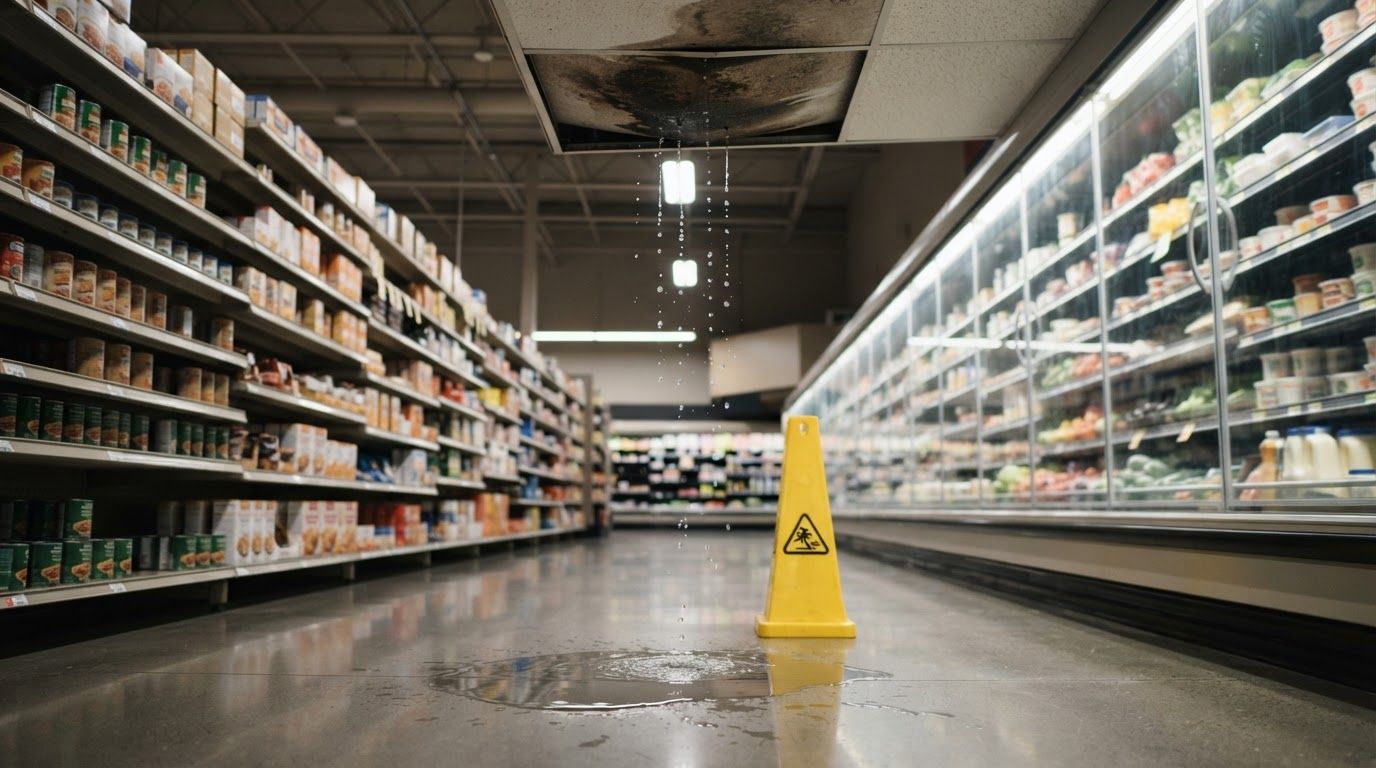
A routine shopping trip can become a serious injury claim when a grocery store ceiling leak leaves water on the floor. The difficult issue is often not proving that you fell, but showing what the store knew about the danger and when it knew it.
Florida law can require evidence of actual or constructive notice. Photos, surveillance footage, incident reports, cleaning logs, and repair records may show whether the store had time to discover and correct the water hazard. The condition above the ceiling may also reveal a longer maintenance problem. Understanding those issues helps you protect the evidence your claim may depend on.
Why a Grocery Store Ceiling Leak Can Create Liability
A ceiling leak can produce an obvious floor hazard, but it may also point to a recurring defect. Water might come from a damaged roof, plumbing failure, air-conditioning equipment, or another building system. The source matters because records about the leak may show that store personnel or a property manager knew about the problem before the fall.
The store or property owner may have a duty to use reasonable care for customers lawfully on the premises. The party responsible for a claim depends on who controlled the area, who handled maintenance, and what caused the water intrusion. A grocery chain, landlord, maintenance contractor, or another business may become involved based on the facts.
The puddle may be only part of the problem
A claim can involve more than the water on the floor. Ceiling stains, damaged tiles, buckets, absorbent mats, repeated mopping, or warning cones may show that the condition existed before the injury.
For example, a ceiling tile that had been stained for weeks does not prove liability by itself. However, it may support questions about inspections, prior complaints, and whether the store responded to an earlier leak. The same is true of a maintenance ticket that remained open after a prior repair.
Florida premises cases often turn on the property controller’s knowledge and response. The broader legal principles appear in this guide to Florida premises liability duty of care.
The responsible party may not be obvious
The store employee who completed an incident report may not be the person responsible for roof or HVAC repairs. A property manager may have hired a contractor to inspect the building. The contract between those parties could affect responsibility, but customers usually won’t have access to it immediately.
A lawyer can investigate the location’s ownership, maintenance arrangements, prior service calls, and internal reporting process. That investigation is especially useful when the store blames an outside vendor without explaining who knew about the water or who had authority to correct it.
Notice Rules for a grocery store ceiling leak in Florida
Florida Statutes section 768.0755 addresses injuries involving a transitory foreign substance in a business establishment. Under the statute, an injured person generally must prove that the business had actual or constructive knowledge of the dangerous condition and should have remedied it.
The Florida premises liability statute identifies two ways to show constructive knowledge. The condition may have existed long enough that the business should have discovered it, or it may have occurred with enough regularity that its recurrence was foreseeable.
Actual notice comes from direct knowledge
Actual notice means the store knew about the condition before the injury. Evidence may include an employee’s admission, a customer’s earlier complaint, a manager’s radio message, or a work order reporting water in the same aisle.
A store may have actual notice even if no employee admits seeing the puddle. Prior reports of a dripping ceiling, a bucket placed below the leak, or a recent call to a maintenance vendor can support an argument that the business knew about the underlying problem.
Timing matters. A complaint made shortly before the fall may show notice of the leak, but it may not establish how long water had accumulated on the floor. Other evidence can help connect those facts.
Constructive notice uses surrounding facts
Constructive notice is usually proved through circumstances rather than a direct admission. A surveillance video may show shoppers avoiding water for an extended period. Drying edges, dirt, footprints, cart tracks, or a spread-out water pattern may also support an argument that the condition was present long enough to discover.
Repeated leaks can provide another route. If the same ceiling area had leaked before, prior repair records and employee testimony may show that water intrusion occurred with regularity. The question is whether the store should have anticipated the condition and taken reasonable steps to inspect or repair it.
The Florida grocery store fall claims guide discusses how actual and constructive notice affect store injury cases.
Evidence that can prove notice and maintenance failure
Strong cases usually contain several pieces of evidence that fit together. One photograph may show a wet floor, while a work order may show that management knew the ceiling had leaked before. Surveillance may fill the timing gap between those facts.
Useful evidence can include:
- Photos of the ceiling, water trail, puddle, damaged tile, warning signs, and surrounding aisle.
- Video showing the area before the fall, including employees, shoppers, buckets, cones, and prior cleanup.
- Store incident reports, employee statements, customer complaints, and internal communications.
- Inspection, sweep, and cleaning logs for the aisle or department.
- Roof, plumbing, HVAC, and ceiling repair records tied to the location.
- Medical records that connect the fall to the diagnosed injury.
Surveillance and inspection logs can establish timing
Surveillance is often one of the clearest ways to show how long the water remained on the floor. The useful footage may begin well before the fall. It can show when the leak started, whether employees passed the area, and whether anyone placed a warning sign only after the injury.
Inspection and cleaning logs provide a second timeline. A gap in the records may raise questions about whether the store followed its normal inspection schedule. The records may also identify the employee assigned to the area and the last time someone documented a check.
Cleaning records deserve early attention in these cases. The discussion of Florida slip and fall cleaning logs explains how inspection records can support or weaken a notice argument.
Roof and HVAC records may reveal a recurring leak
A grocery store ceiling leak may result from a recurring building defect rather than a one-time spill. Roof patches, service invoices, vendor work orders, emails, and equipment records can show whether the business received earlier warnings.
HVAC records may be relevant when condensation, a blocked drain line, or an overflowing pan caused water to reach the sales floor. Roof records may matter when the same ceiling area leaked during earlier storms. These documents don’t automatically prove negligence, but they can help establish notice and identify the party responsible for repairs.
Ask whether the store replaced a ceiling tile without fixing the source. A repeated pattern of temporary cleanup followed by another leak may support an argument that the business failed to address a known condition.
Preserve the evidence before it disappears
Surveillance systems often overwrite footage during routine operations. Stores may also discard draft reports, replace damaged ceiling materials, close maintenance tickets, or lose employee recollections. A written preservation request should go to the store as soon as possible.
The request should identify the exact location, date, and approximate time. It should ask the store to preserve:
- All camera footage covering the aisle, nearby entrances, service desk, and ceiling area.
- Incident reports, manager notes, employee statements, and customer complaints.
- Cleaning, inspection, and safety logs.
- Roof, plumbing, HVAC, ceiling, and water-intrusion records.
- Vendor communications, invoices, work orders, and photographs.
- Electronic messages about the leak or the injured person.
A preservation request isn’t a substitute for filing a lawsuit, and it doesn’t prove the store was negligent. It creates a clear record that the evidence was relevant and should not be treated as ordinary disposable footage. Whether missing evidence affects a case depends on the facts, including the store’s control over the material and the timing of the request.
Get the incident report, but don’t rely on it alone
A store’s report can document the date, location, condition of the floor, names of employees, and immediate response. Ask for the report in writing, but expect that the store may refuse to provide its internal records before litigation.
Your own notes can preserve details that may fade. Write down the aisle, nearby products, ceiling condition, lighting, warning signs, witnesses, employee statements, and the sequence of events. The sooner you record those facts, the less likely ordinary memory changes will affect your account.
These steps can help with requesting a Florida slip and fall incident report, especially when the business gives you only a short reference number or verbal summary.
How warnings and comparative fault affect recovery
A grocery store may argue that it placed a cone, posted a warning, or made the wet area visible. It may also claim that the shopper was looking at a phone, carrying items that blocked the view, walking too quickly, or ignoring an obvious danger.
Those arguments don’t decide the case automatically. The timing and placement of the warning matter. A cone placed after the fall cannot show that the customer received a warning beforehand. Video, photographs, and witness accounts can help establish what a customer could see before stepping into the area.
Florida’s comparative fault law can reduce damages based on the injured person’s percentage of responsibility. Under the current Florida comparative fault statute, a person found more than 50 percent at fault for their own harm generally can’t recover damages in a covered negligence action. The defense therefore has an incentive to focus on visibility, warnings, footwear, attention, and the decision to enter the area.
A strong evidence record addresses those claims with facts. It can show that the water came from above, that the floor was difficult to see, that no warning was present, or that employees knew about the leak before placing a sign.
Document the injury and financial losses
Proving notice is only one part of a personal injury claim. You also must connect the fall to a real injury and document the losses that followed. Seek medical care promptly, particularly when you experience head, back, neck, shoulder, or knee symptoms.
Medical records should describe the fall mechanism, the symptoms that began afterward, examination findings, imaging, treatment, and restrictions. A clear timeline is helpful: the fall, immediate complaints, medical evaluation, follow-up care, and continuing limitations. Tell each provider how the injury happened and identify symptoms accurately.
Damages may include reasonable medical expenses, lost wages, reduced earning capacity, future treatment, and pain-related losses. Keep bills, explanation-of-benefits statements, wage records, employer notes, transportation costs, and appointment information. Photos of bruising or swelling can also document changes that may not appear in a medical image.
Workers may have a different claim path
If you were stocking shelves, delivering goods, cleaning, or performing another job when the leak caused your injury, workers’ compensation may apply. Report the accident to your employer promptly and ask how to obtain authorized medical care.
Workers’ compensation usually focuses on whether the injury happened in the course of employment, rather than requiring proof that the employer knew about the leak. A separate claim against a negligent third party may sometimes exist, but that depends on who controlled the dangerous condition and how the injury occurred. Read about Florida workers’ compensation slip and fall claims if the injury happened while you were working.
Watch the Florida filing deadline
Florida’s general limitations statute gives two years for an action founded on negligence, subject to exceptions and other rules. The current statute is available in Florida Statutes section 95.11.
Do not treat that deadline as a reason to wait. Evidence preservation should begin immediately, and medical documentation is easier to collect when treatment records remain current. A lawyer can review the incident date, possible defendants, notice evidence, insurance communications, and any facts that could change the deadline.
Avoid giving a recorded statement or signing a broad release before understanding the claim’s value. A store or insurer may request information that seems routine but affects how it evaluates notice, fault, or the cause of your injuries.
Conclusion
A grocery store ceiling leak case often depends on a timeline. The strongest proof may show when the leak began, who knew about it, whether inspections occurred, what the store did, and how the fall caused your injuries.
Preserve photos, witness information, medical records, and written communications. Then seek legal advice before surveillance or maintenance evidence disappears and before Florida’s filing deadline limits your options. The condition above the ceiling may be the first clue, but the records showing what happened before the fall often determine the claim.