
Florida Landlord Failure to Repair Claims: Work Order Evidence
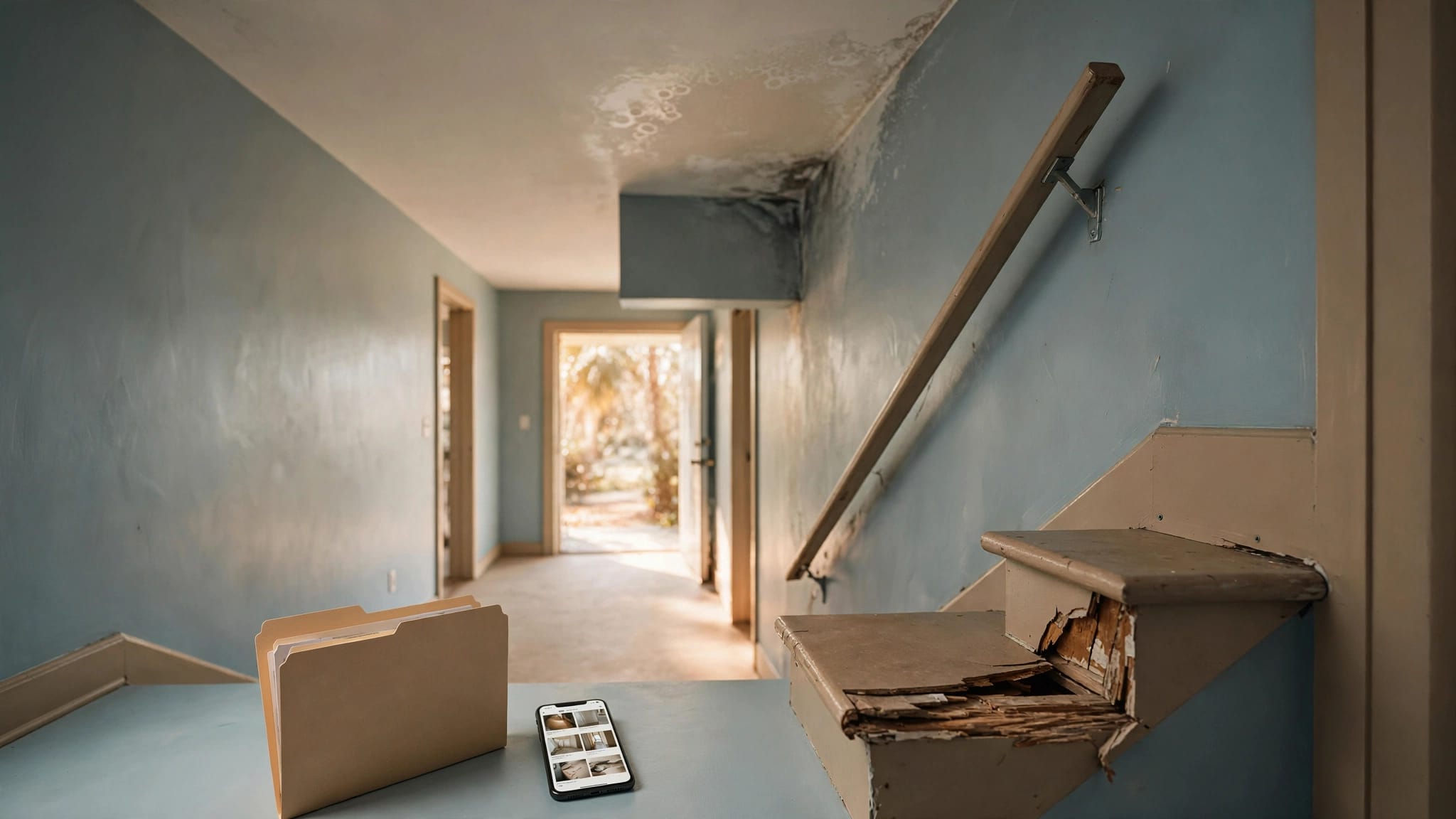
A repair request can look routine until a broken stair, leaking ceiling, failed light, or loose handrail causes a serious injury. In a Florida landlord failure to repair case, the question is rarely limited to whether something was damaged.
The central issue is often notice. Did the landlord, property manager, or maintenance company know about the hazard, and did they respond reasonably before someone got hurt?
Work orders, maintenance logs, written complaints, and repair invoices can answer those questions with dates that are hard to explain away.
Landlord Failure to Repair Under Florida Law
Florida landlords have statutory maintenance duties during a tenancy. Under Florida Statutes section 83.51, a landlord must comply with applicable building, housing, and health codes. Where those codes do not apply, the statute addresses structural components such as roofs, windows, doors, floors, steps, porches, exterior walls, foundations, and plumbing.
Those duties matter when a disrepair issue leads to bodily harm. However, a statutory repair duty alone doesn’t automatically establish a personal injury claim. The evidence must still connect the unsafe condition to the injury.
Control often matters more than ownership
The deed holder is not always the only party that may be responsible. A property management company may receive complaints, dispatch maintenance staff, approve repairs, and control common areas. A maintenance contractor may also share responsibility if poor work created or worsened the hazard.
For apartment stairwells, hallways, laundry rooms, parking lots, and pools, the person or company that controlled maintenance is often central to the case.
The danger must be tied to an injury
A cracked step without an injury may support a repair dispute, but it does not create a bodily injury damages claim by itself. A tenant or guest must show that the condition caused a fall, impact, illness, burn, or another measurable injury.
Medical records, photographs, and a clear description of how the incident happened help connect the neglected repair to the harm.
What Must Be Proven After a Rental Property Injury
A Florida landlord failure to repair injury claim usually rests on four connected points: duty, breach, causation, and damages. In plain terms, the injured person needs evidence that the responsible party had a duty to address the condition, failed to do so, and caused actual losses.
A landlord may owe a duty under state law, a lease, local code requirements, or general premises liability principles. Still, the case becomes stronger when the evidence shows the landlord had advance warning.
Notice can be actual or constructive
Actual notice means someone told the landlord or manager about the danger. A tenant’s maintenance ticket reporting “water leaking through bedroom ceiling” is an example. An email, text message, office complaint, inspection report, or prior resident complaint can also establish actual notice.
Constructive notice means the condition existed long enough, or occurred often enough, that reasonable inspections should have found it. Mold-stained drywall, long-standing water damage, repeated stair complaints, or a visibly loose handrail may support this argument.
For a closer look at who can be responsible for dangerous rental conditions, review Florida premises liability duty of care.
Causation requires a complete story
A work order showing notice is powerful, but it must fit the incident. If a ticket reports a failed light in a stairwell two weeks before a resident falls in that dark area, the timing matters. So does evidence that the outage still existed when the fall occurred.
Medical care also matters. Emergency records, imaging, physician notes, therapy bills, lost income records, and photos of visible injuries help show the extent of the damages.
Why Work Orders Can Make or Break a Claim
Work orders create a timeline. They may show when the tenant reported a problem, who received it, whether maintenance inspected the condition, and whether anyone marked the job complete. They can also reveal repeated complaints about the same hazard.
Under Florida’s landlord and tenant laws in Chapter 83, written notice plays a major role in repair-related tenant remedies. In an injury case, the same documentation may help prove knowledge and an unreasonable delay.
A work order marked “completed” does not end the inquiry if photographs, witnesses, or later tickets show the dangerous condition remained.
Details inside the record matter
A short maintenance ticket may contain more than it appears to at first glance. The date and time show when notice began. The description may identify the exact hazard. Staff notes can reveal whether someone inspected, postponed, or attempted a temporary repair.
This timeline shows why each document matters:
| Record | What it may prove |
|---|---|
| Initial repair request | The landlord or manager received notice |
| Maintenance assignment | The property acted on the complaint |
| Technician notes | What staff observed during inspection |
| Closed work order | The stated repair date or claimed completion |
| Later complaint | The repair may have failed or never occurred |
A repair invoice can also identify the contractor, materials used, and scope of work. If the invoice conflicts with maintenance notes, the inconsistency may need further investigation.
Private records still need support
A screenshot or printed ticket isn’t automatically accepted as proof in court. Florida evidence rules require authentication, meaning there must be support that the document is what it claims to be. Maintenance logs and regularly kept business records may also require testimony or a proper records certification.
For that reason, preserve original messages, portal confirmations, emails, and photos with their dates intact. Avoid editing screenshots or adding text over the original image.
How to Preserve Work Order Evidence After an Injury
The first hours after a fall or other injury can change the available evidence. Property staff may repair the condition quickly, remove damaged material, replace a bulb, dry a wet floor, or secure a handrail. Those actions may improve safety, but they can make later proof harder.
Get medical attention first. Then document the condition only if it is safe to do so. Do not climb, touch, or test a damaged structure after an incident.
Make one clear written report
Report the injury and the hazardous condition in writing. Describe the location, date, approximate time, and what caused the incident. If earlier repair requests exist, include their dates or ticket numbers.
Keep copies of:
- Repair requests submitted through an online portal, email, text, or resident app.
- Screenshots showing the date, time, recipient, and full message thread.
- Photos and video of the condition, nearby lighting, warning signs, and surrounding area.
- Names and contact details for witnesses who saw the condition or the incident.
- Medical records, discharge instructions, receipts, and work-loss documentation.
A management office may prepare an incident report. Ask for a copy, but don’t rely on it as the only record. Write down your own account while the details remain clear.
Photograph conditions before they change
Wide photos establish where the incident occurred. Close photos can capture loose bolts, cracked concrete, water stains, missing grips, exposed wiring, or a broken rail. Include landmarks such as unit numbers, stairwell signs, doorways, and building features.
For an apartment fall, this evidence checklist for unsafe apartment conditions can help identify the records that often disappear after maintenance responds.
Defenses Landlords and Property Managers May Raise
Property owners and managers often dispute either notice or causation. They may claim they never received a complaint, repaired the problem quickly, or lacked control over the location. A landlord may also argue that the tenant caused the condition.
Florida law recognizes that tenants should not unreasonably deny access for necessary repairs. Section 83.53 addresses a landlord’s access to a rental unit for inspection and repairs. Messages about missed appointments, denied entry, or rescheduled visits can become important evidence.
A completed ticket may be challenged
“Completed” can mean a technician visited the unit. It does not always mean the underlying defect was fixed. A technician may have applied a temporary patch, ordered a part, or closed the ticket without resolving the reported issue.
Later complaints, dated photographs, and witness testimony may show that the hazard continued after the ticket closed. This is common with leaks, recurring mold conditions, unstable stairs, defective locks, and drainage problems.
Comparative fault can affect damages
The defense may argue that an injured tenant ignored an obvious risk, used a damaged area after warnings, or contributed to the incident. Florida’s comparative fault rules can reduce recoverable damages when an injured person’s conduct contributed to the harm.
That argument does not erase the landlord’s repair duties. It does make precise evidence more important. A photo showing poor lighting, the absence of warning signs, or a condition that blocked the only safe route can change how fault is evaluated.
Repair Notices, Tenant Remedies, and Injury Deadlines
A Chapter 83 repair dispute is different from a personal injury claim. A tenant may have rights to give a repair notice, defend against a rent action, seek lease termination, or pursue other remedies. Those options do not replace a claim for medical bills, lost income, pain, or other injury damages.
For material noncompliance, Florida law includes a seven-day written notice process under section 83.56. A separate rule in section 83.201 may apply when a lease places repair duties on the landlord and a condition makes the property wholly untenantable. That statute requires a written notice describing the repair and gives the landlord at least 20 days before rent withholding under its terms.
Don’t use injury evidence as a rent strategy without advice
Withholding rent, moving out, or ending a lease can carry legal and financial consequences. The facts, lease language, notice method, and condition of the premises all matter. An injury claim may continue even if the tenant later moves.
Florida law also bars certain retaliatory conduct after protected tenant activity. The state’s retaliatory conduct statute addresses rent increases, reduced services, and other actions tied to qualifying complaints or tenant conduct.
Act before evidence and deadlines close
Florida negligence claims generally have a two-year filing deadline for bodily injury, although the correct deadline can depend on the facts and parties involved. Waiting can also mean losing camera footage, maintenance records, witness recollections, and the physical evidence of the unsafe condition.
A lawyer can seek records early, identify everyone responsible for property maintenance, and evaluate whether the available proof supports a claim.
A Strong Claim Starts With a Clear Timeline
The strongest landlord failure to repair cases often tell a straightforward story: a dangerous condition existed, someone reported it, the responsible party had time to respond, and the failure to fix or warn caused an injury.
Work orders give that story dates, names, and internal property records. Combined with medical evidence and photographs, they can show far more than a tenant’s word against a landlord’s.
If a dangerous stairway caused the injury, Florida apartment stairwell fall claims may involve failed lighting, broken steps, missing handrails, or delayed maintenance. Each condition calls for early evidence preservation.
Conclusion
A repair request is often the first record of a landlord’s notice. Work order evidence can show whether management acted promptly, performed meaningful repairs, or allowed a known danger to remain.
After an injury, preserve the written complaint, maintenance history, scene evidence, and medical records. A clear timeline gives a Florida injury claim its foundation.