
VA Flat Feet Ratings in 2026: Proving Pain and Arch Support
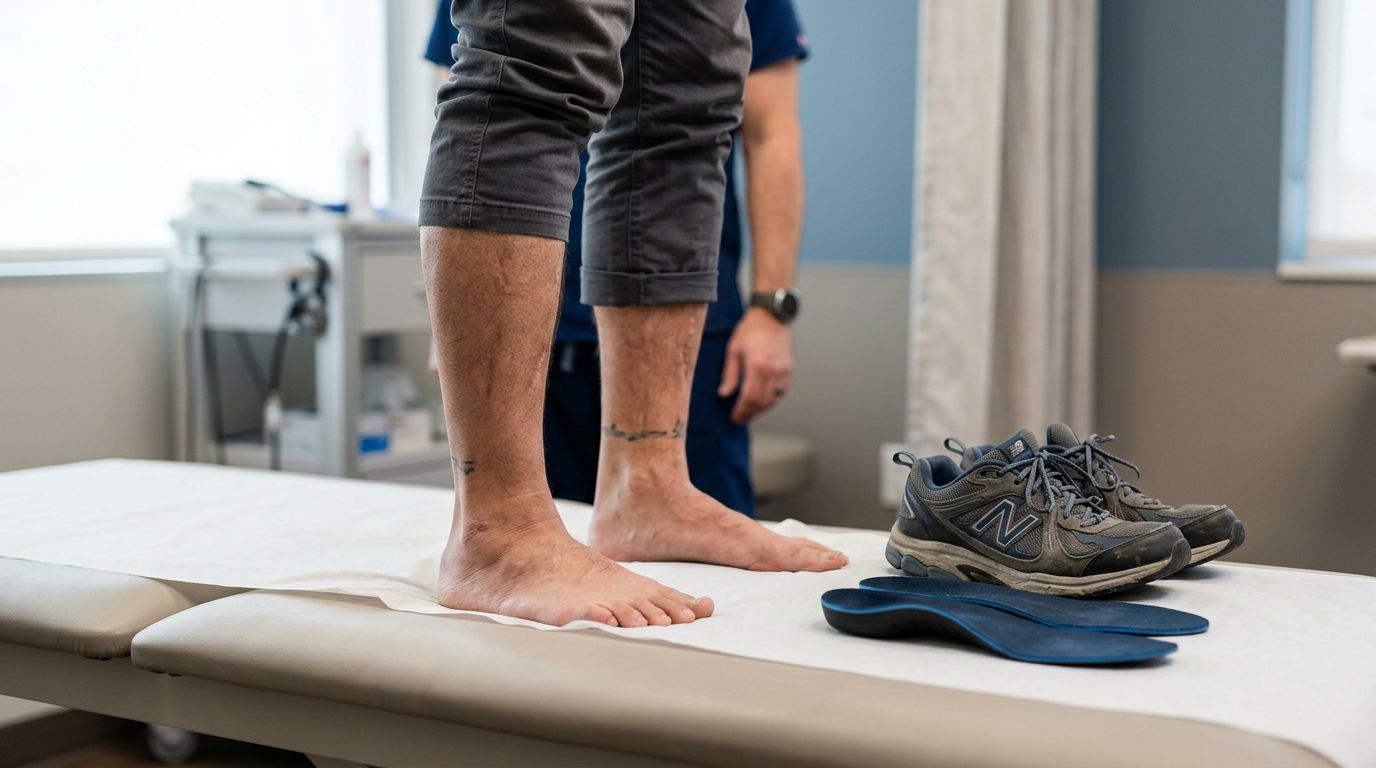
Foot pain alone doesn’t decide a VA claim. The rating depends on how your flat feet affect walking, weight-bearing, alignment, and response to treatment. VA flat feet ratings range from 0% to 50% under Diagnostic Code 5276, with higher percentages requiring more serious clinical findings.
Arch supports matter, but they aren’t the only evidence. Records showing pronation, Achilles tendon changes, swelling, calluses, tenderness, or failed orthotics can change the outcome. Veterans in Florida should also separate the rating question from service connection, because proving a current disability is different from proving that service caused or aggravated it.
Key Takeaways
- VA flat feet ratings under Diagnostic Code 5276 range from 0% to 50%.
- A 0% rating generally applies when mild symptoms improve with arch supports or built-up shoes.
- Pain supports a 10% rating when it occurs with manipulation and use, along with the required alignment findings.
- Severe bilateral flat feet can qualify for 30%, while pronounced bilateral symptoms can qualify for 50%.
- The strongest claims connect current symptoms to service and document how orthotics, footwear, and daily activity affect the feet.
How VA Flat Feet Ratings Work Under Diagnostic Code 5276
The VA evaluates acquired flatfoot, also called pes planus, under Diagnostic Code 5276. The regulation is part of the musculoskeletal schedule in 38 C.F.R. section 4.71a.
The schedule looks at several clinical features. These include the position of the weight-bearing line, inward bowing or displacement of the Achilles tendon, pain with use or manipulation, pronation, swelling, callosities, plantar tenderness, and whether orthopedic shoes or appliances provide relief.
The percentage also depends on whether one foot or both feet are affected. That distinction becomes especially important at the severe and pronounced levels.
| Flat-foot condition | One foot | Both feet |
|---|---|---|
| Mild symptoms relieved by supports | 0% | 0% |
| Moderate symptoms | 10% | 10% |
| Severe symptoms | 20% | 30% |
| Pronounced symptoms | 30% | 50% |
The schedule does not include a 40% rating for flat feet. A veteran generally moves from 30% to 50% only when the evidence supports the pronounced criteria in both feet.
What a 0% flat feet rating means
A 0% rating applies to mild flat feet with symptoms relieved by built-up shoes or arch supports. This rating still recognizes a service-connected condition, even though it doesn’t provide monthly compensation at that level.
A 0% decision may become important if symptoms worsen later. A veteran can seek an increased rating when medical records show greater functional loss or additional findings. The later claim still needs evidence that the disability has increased.
The phrase “relieved by arch supports” deserves careful attention. Relief doesn’t always mean that an insert eliminates every symptom. Your records should describe the actual result. For example, an orthotic may reduce pain during a short walk but fail during work shifts, prolonged standing, or repeated activity.
What qualifies as moderate flat feet
The 10% level applies to moderate flat feet affecting one or both feet. The schedule identifies three central findings:
- The weight-bearing line is over or medial to the great toe.
- The Achilles tendon bows inward.
- Pain occurs on manipulation and use of the feet.
A pain complaint without the other findings may not support this level under the exact wording of Diagnostic Code 5276. However, the VA must consider competent descriptions of functional limits and the full medical record. A podiatry examination, orthopedic evaluation, or well-documented VA examination can help establish the required findings.
Pain on use means pain during activity such as standing, walking, running, climbing stairs, or working on hard floors. Pain on manipulation refers to discomfort when the foot is physically examined or moved.
Severe and pronounced ratings
Severe flat feet require more than ordinary foot pain. The schedule describes objective marked deformity, accentuated pain with manipulation and use, swelling on use, and characteristic callosities.
For one foot, severe flat feet receive 20%. For both feet, the rating is 30%.
Pronounced flat feet are more serious. The evidence should show marked pronation, extreme tenderness of the plantar surfaces, marked inward displacement of the Achilles tendon, and severe spasm of the Achilles tendon on manipulation. The schedule also requires that orthopedic shoes or appliances fail to improve the condition.
Pronounced unilateral flat feet receive 30%. Pronounced bilateral flat feet receive 50%, the highest schedular rating under Diagnostic Code 5276.
The VA may not award a higher rating because a veteran uses an orthotic. Instead, the question is whether the appliance helps. A veteran who receives little or no improvement from prescribed inserts or orthopedic shoes may have stronger evidence for the pronounced level.
For a detailed explanation of the percentages, see this guide to how the VA rates flat feet.
Arch Support Evidence Can Help or Hurt a Claim
Arch support is one of the clearest dividing points in the flat-foot schedule. If supports relieve mild symptoms, the VA may assign 0%. If orthopedic appliances fail to provide improvement, that fact can support a pronounced rating when the other findings are present.
The record should state more than “uses orthotics.” That phrase shows treatment, but it doesn’t show whether the treatment works. Stronger documentation explains:
- What type of insert or shoe the veteran uses.
- When the veteran began using it.
- Whether a doctor prescribed it.
- How long the veteran can stand or walk with it.
- Whether pain returns during work or daily activities.
- Whether the veteran stopped using it because of increased pain.
- Whether the device causes blisters, pressure, instability, or other problems.
A VA examiner may ask whether arch supports help. Answer accurately and describe the difference between temporary relief and meaningful improvement. If inserts help for 20 minutes but fail during a workday, that detail matters.
Treatment history also provides useful context. Podiatry notes may record custom orthotics, shoe modifications, stretching, medication, physical therapy, injections, or recommendations for surgery. None of these treatments automatically establishes a percentage. Together, however, they can show the severity and persistence of the condition.
Why failed orthotics need medical documentation
A veteran’s statement can describe pain and limited walking. Medical records can also document the condition’s physical signs. The strongest file combines both types of evidence.
Ask the treating provider to record the response to treatment in plain terms. “Orthotics ineffective” is useful, but a more complete note may explain that the veteran continues to have plantar tenderness, marked pronation, and pain after standing for 30 minutes despite custom devices.
A provider should not write findings solely to match a rating percentage. The examination should describe what is present, what worsens with activity, and what treatment has accomplished. The VA then applies the schedule to those facts.
Pain Evidence Must Show More Than a Diagnosis
A diagnosis of pes planus establishes a medical condition. It doesn’t establish the percentage by itself. The VA rating turns on the condition’s documented severity.
Pain evidence becomes more persuasive when it answers four questions:
- Where does the pain occur?
- What activity causes it?
- How severe or frequent is it?
- What happens after treatment?
“Both feet hurt” is a starting point. A detailed report might explain that pain is located along the arches and plantar surfaces, worsens after 15 minutes of standing, causes a guarded gait, and continues after custom orthotics. That information gives the decision-maker a clearer picture of functional loss.
The record should also distinguish foot pain from pain caused by another condition. Plantar fasciitis, posterior tibial tendonitis, ankle instability, arthritis, neuropathy, and knee or hip problems can create overlapping symptoms. A medical provider should identify the source of each symptom when possible.
Findings that can support a higher rating
Certain findings carry particular weight because they appear directly in Diagnostic Code 5276. These include:
- Marked pronation or abduction.
- A weight-bearing line that shifts toward or medial to the great toe.
- Inward bowing or displacement of the Achilles tendon.
- Extreme tenderness on the bottoms of the feet.
- Swelling after use.
- Characteristic callosities.
- Severe Achilles spasm during manipulation.
- Little or no improvement from orthopedic shoes or appliances.
A medical report doesn’t need to use every phrase in the regulation. Still, it should describe the actual condition with enough detail to compare the findings to the schedule.
Photos may help document calluses, swelling, worn shoe patterns, or changes in foot alignment. They don’t replace a clinical examination, but they can preserve evidence that may not appear on the day of a compensation examination.
Statements from a spouse, family member, coworker, or supervisor may also help describe observable limits. For example, another person may have seen the veteran remove shoes after work, avoid stairs, walk slowly, or stop recreational activities. Those observations support the medical record without replacing it.
A pain score is less useful by itself than a record showing how long you can stand, how far you can walk, and whether treatment changes those limits.
Proving Service Connection for Pes Planus
A rating percentage comes after service connection. To establish service connection, a veteran generally needs evidence of a current disability, an in-service event or condition, and a link between the two.
Flat feet can appear on an entrance examination. If the condition was noted when the veteran entered service, the VA may treat it as preexisting. The claim then focuses on whether military service permanently aggravated the condition beyond its natural progression.
A veteran may also develop symptoms during service even if flat feet weren’t listed at entry. Service treatment records can show foot pain, orthotic prescriptions, profiles, physical therapy, limited duty, marching injuries, or repeated complaints after training.
Service connection may also involve secondary causation. For example, a service-connected knee, hip, back, or ankle condition may alter gait and place additional strain on the feet. A medical opinion must connect the secondary foot condition to the service-connected disability. A veteran should not assume that a changed gait automatically proves the connection.
Evidence that can establish the service connection
Useful evidence may include:
- Entrance and separation examinations.
- Service treatment records.
- Line-of-duty reports.
- Physical profiles and duty restrictions.
- VA and private podiatry records.
- Orthopedic evaluations.
- A medical nexus opinion.
- Statements describing symptoms that continued after discharge.
- Records showing treatment soon after service.
- Employment records documenting standing or walking restrictions.
Long gaps in treatment don’t automatically defeat a claim. Veterans often self-treat foot pain with inserts, over-the-counter medication, rest, or changed footwear. A personal statement can explain that history, but medical evidence remains important when the issue involves diagnosis, aggravation, or causation.
A nexus opinion should address the veteran’s actual service history and medical record. A conclusory statement that military service “caused flat feet” may receive little weight if it lacks a rationale. The opinion should explain why the current condition is related to service or why service permanently worsened a preexisting condition.
What Happens at a VA Compensation Examination
The compensation examination may include an evaluation of both feet while standing and sitting. The examiner may observe gait, alignment, pronation, Achilles tendon position, calluses, swelling, and tenderness. The examiner may also manipulate the feet and ask about the effect of shoes or orthotics.
Before the appointment, write down how symptoms affect a typical week. Include standing time, walking distance, work tasks, driving, stairs, exercise, sleep, and household activities. Avoid guessing or minimizing symptoms. At the same time, describe better and worse days accurately.
Bring information about prescribed devices and treatment. If a podiatrist recommended custom orthotics, bring the prescription or explain when treatment began. If the device provides only partial relief, state what still happens after using it.
An examination can miss symptoms that appear after repeated use. Tell the examiner what happens during flare-ups, even if the condition looks less severe in the office. Explain the frequency, duration, triggers, and functional impact of those episodes.
The examiner should record findings for each foot. A bilateral condition may have different severity on the right and left. The final rating, however, depends on the applicable schedule and how the VA evaluates the disability as a whole.
Read the examination report when it becomes available. Check whether it accurately states which foot hurts, whether orthotics help, and whether the examiner recorded swelling, calluses, pronation, Achilles changes, and plantar tenderness. A clear error may support a request for correction or further development.
Flat Feet, Plantar Fasciitis, and Ankle Problems
Flat feet often appear with plantar fasciitis or tendon problems. These conditions can produce similar pain, but they are not identical diagnoses.
Pes planus concerns the structure and alignment of the foot. Plantar fasciitis involves inflammation or irritation of the plantar fascia, often causing pain along the heel or sole. Posterior tibial tendon problems may affect arch support and lead to progressive changes in foot alignment.
The VA must evaluate the correct disability and avoid compensating the same symptom twice under different diagnostic codes. That rule is known as avoiding pyramiding. It doesn’t mean every related diagnosis disappears from the claim. It means the same functional impairment cannot receive duplicate compensation.
For information about overlapping conditions, review the discussion of plantar fasciitis and flat feet. The medical records should identify which condition causes each limitation.
Ankle symptoms may deserve separate attention when they involve instability, restricted motion, ankylosis, or a distinct injury. Rolling an ankle because of altered foot mechanics is not automatically a separate compensable disability. A separate rating requires a service-connected condition and evidence of a distinct manifestation.
The same principle applies to knee, hip, and back problems. A changed gait may connect conditions, but a medical opinion should explain the relationship.
Common Problems With VA Flat Feet Ratings
Many low ratings result from incomplete evidence rather than an absent diagnosis. The decision may mention pain but fail to describe whether pain is accentuated, whether swelling follows use, or whether an orthotic provides relief.
Another problem involves the difference between unilateral and bilateral findings. A veteran may have severe symptoms in both feet, but the examination may record only the more painful foot. The file should identify the findings on each side.
A third issue is the use of broad descriptions without functional detail. Terms such as “foot pain,” “flat feet,” and “uses inserts” don’t show how the condition affects work or daily life. Treatment notes should include measurable or observable limits when possible.
The VA may also rely on an examination that does not address flare-ups or repeated use. If the report ignores relevant symptoms, the veteran can identify the omission in a statement, supplemental claim, higher-level review, or appeal, depending on the decision and available evidence.
A rating decision may deny service connection because it finds no nexus. That issue differs from a disagreement over whether the condition is 10%, 30%, or 50%. The response should address the specific reason for denial instead of submitting only additional pain complaints.
What to Do After a Low Rating or Denial
Start by reading the decision’s evidence section and reasons for the assigned percentage. Identify the exact finding that controlled the result. The decision may say that symptoms improve with orthotics, that marked deformity wasn’t shown, or that the evidence supported one foot rather than both.
Next, compare the decision with your medical records. Look for missed findings, inaccurate statements, and symptoms that appeared after repeated use. A new examination or medical opinion may be appropriate when the existing report lacks necessary information.
If the VA assigned 0%, determine whether the decision denied service connection or recognized the condition without compensation. These are different outcomes. A noncompensable rating can later increase if the disability becomes worse, while a service-connection denial requires proof of the connection to service.
A veteran may choose among review options under the modern VA appeals system. The best option depends on whether the record contains a factual error, new and relevant evidence, or a need for a hearing. Filing deadlines apply, so review the decision date promptly.
A VA-accredited attorney can assess service records, medical evidence, and the examination together. Florida veterans who are also dealing with other service-connected disabilities may benefit from reviewing related claims rather than treating the foot condition in isolation. Avard Law Offices provides information about veterans disability benefits and assists veterans with claims and appeals.
Conclusion
VA flat feet ratings depend on documented findings, not a diagnosis or pain score alone. Arch supports, treatment response, bilateral symptoms, pronation, Achilles changes, swelling, calluses, and plantar tenderness can all affect the percentage.
The strongest claim connects those findings to service and explains how the condition limits standing, walking, work, and daily activities. When a decision overlooks failed orthotics or serious findings in both feet, the evidence may support a higher rating or further review.