
Florida Motorcycle Left-Turn Crash Claims
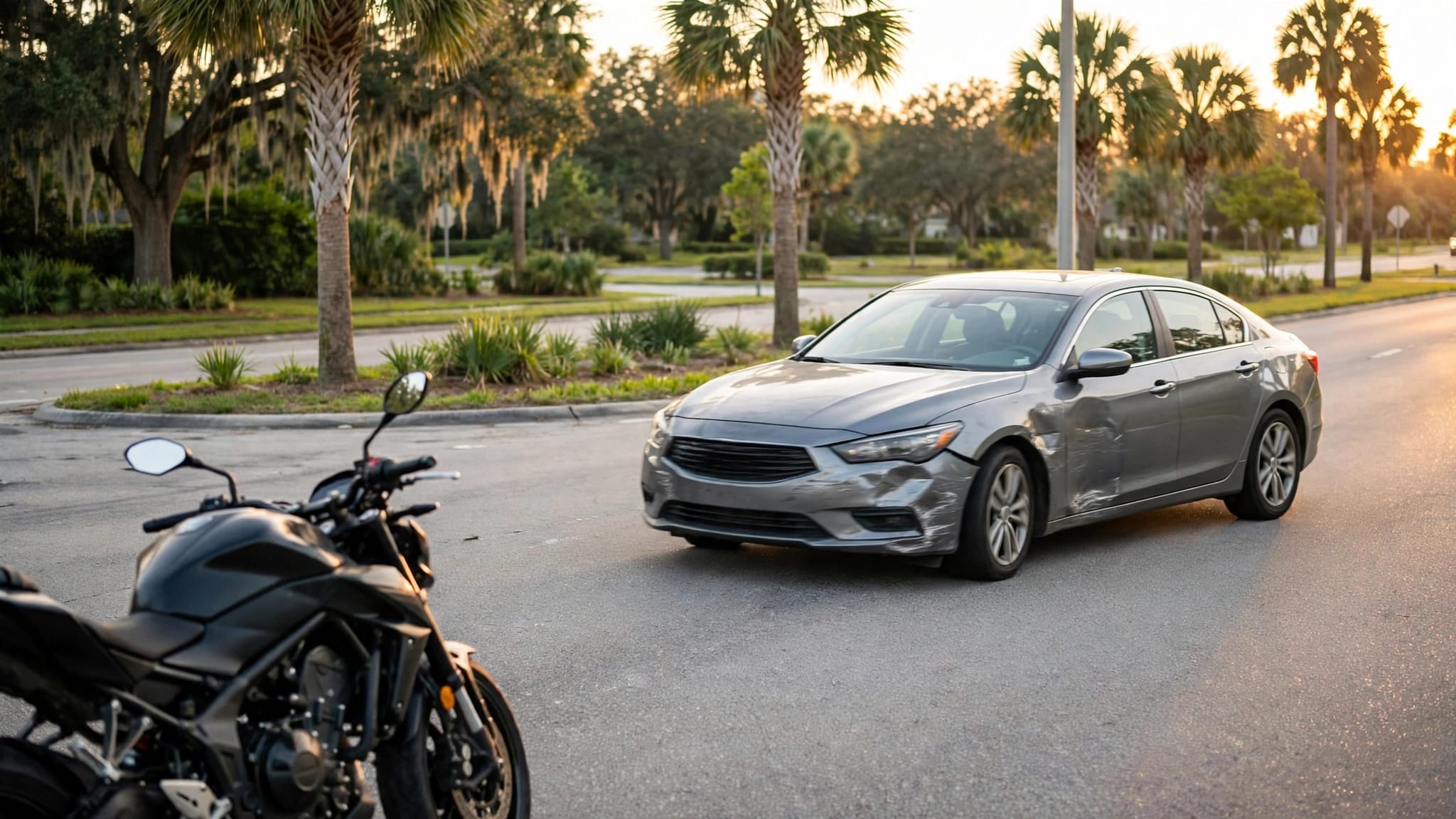
A driver turning across your lane can leave you with serious injuries and an insurer questioning your speed. Florida motorcycle accident claims often depend on proving when the driver turned and whether your motorcycle was already dangerously close.
Your right of way matters, but preserving evidence is just as important. Medical records, video, and vehicle damage can help challenge unsupported accusations.
Start with the turning driver’s legal duty, then protect the records that explain what happened.
Florida’s Left-Turn Rule and Motorcycle Right of Way
The turning driver’s duty to yield
Under Florida’s left-turn statute, section 316.122, a driver turning left must yield to approaching traffic that presents an immediate hazard. The rule applies at intersections and when drivers enter alleys, private roads, or driveways.
For an injured rider, the central question is whether the motorcycle was in the intersection or close enough to make the turn unsafe. A driver cannot excuse a failure to yield simply by saying they didn’t see the motorcycle.
However, a successful negligence claim still requires evidence connecting the unsafe turn to the collision and your injuries.
Why fault isn’t automatic
A left-turn collision doesn’t automatically establish every element of liability. Traffic signals, lane positions, visibility, and each vehicle’s movement still matter.
For example, investigators may need to determine whether the driver had a protected turn arrow or crossed the rider’s path during a permissive turn. They may also examine whether another vehicle blocked either person’s view.
Avard Law Offices’ guidance on disputed intersection crash claims addresses these competing accounts. A citation or crash report can help the investigation, but neither settles civil liability by itself.
Preserve Evidence Before It Disappears
Record the roadway and vehicle damage
Seek medical help first. If you can safely document the scene, photograph traffic signals, lane markings, debris, tire marks, vehicle positions, and sight obstructions. Include wide views and close photographs of damage.
The impact location can help explain how far the turning vehicle crossed your lane. Damage to its side, front corner, or rear quarter may support different accounts of the collision.
Also preserve your motorcycle, helmet, protective clothing, and damaged parts. Before repairs or disposal, ask counsel whether an inspection is needed. Meanwhile, address storage charges promptly so evidence preservation doesn’t create avoidable expenses.
Request video and witness information promptly
Nearby businesses, homes, and vehicles may have recorded the approach and turn. Identify cameras quickly because recording systems can overwrite footage before an insurer finishes its review.
Save original helmet-camera and dashcam files, including the moments before impact. Edited clips or screenshots may omit timing information that matters.
Get witnesses’ names and contact details. Ask what they observed rather than suggesting an explanation.
Some vehicles also store crash-related electronic data, although availability varies by vehicle and system. An attorney can request preservation and evaluate whether specialized retrieval would help.
Preserve the full recording, not only the impact. The approach may show the signal, turning sequence, and time available to react.
How Shared Fault Can Reduce or Bar Recovery
Florida applies modified comparative negligence to most current vehicle injury claims. Under Florida’s comparative-fault statute, section 768.81, your assigned responsibility generally reduces recoverable damages.
A finding of 20% fault generally means a 20% reduction. In an applicable negligence action, a person found more than 50% at fault for their own harm cannot recover damages. Exactly 50% doesn’t cross that bar, although it substantially reduces recovery.
An insurer may allege that you sped, changed lanes improperly, or had enough time to avoid the turning car. Each allegation needs evidence connecting your conduct to the collision or injury.
Ask which facts support the proposed percentage. Video, damage patterns, roadway measurements, and witness accounts may contradict an adjuster’s assumptions.
Be truthful when reporting the crash, but don’t guess about speed, distance, or reaction time. Follow your own policy’s notice and cooperation requirements. Before providing a recorded statement to another driver’s insurer, discuss the request with counsel.
Insurance for Florida Motorcycle Accident Claims
Ordinary PIP doesn’t cover motorcycle riders
Florida’s familiar no-fault system can create confusion after a motorcycle crash. Ordinary personal injury protection, or PIP, is tied to covered motor vehicles that generally have four or more wheels.
A two-wheel motorcycle doesn’t meet that definition. Another driver’s fault therefore doesn’t automatically provide PIP benefits, and owning an insured car doesn’t make its PIP available for motorcycle injuries.
Avard Law Offices explains motorcycle injuries and PIP coverage in greater detail. Don’t postpone necessary treatment while waiting for a liability insurer to accept responsibility.
Identify every potentially available policy
The turning driver’s bodily injury liability coverage may pay supported injury losses, subject to policy limits and other coverage issues. However, Florida doesn’t require every private driver to carry that coverage in every situation.
Counsel should also review potentially applicable uninsured or underinsured motorist coverage. Whether a motorcycle or automobile policy responds depends on its terms, exclusions, and the circumstances.
Health insurance or optional medical-payments coverage may help with treatment costs. These benefits require separate review and may involve deductibles, reimbursement claims, or liens.
Proving fault and finding collectible coverage are separate tasks. Clear liability alone doesn’t guarantee that adequate insurance exists.
Keep Helmet Questions Separate From Collision Fault
Florida permits a helmet exemption for riders age 21 or older who have insurance providing at least $10,000 in medical benefits. The FLHSMV helmet exemption guidance explains those requirements.
Whether you wore a helmet doesn’t resolve whether the driver failed to yield. An insurer alleging that helmet nonuse worsened an injury must address the particular harm and supporting evidence. A fractured leg presents different medical questions than a head injury.
If you wore a helmet, photograph its exterior, interior, fastening system, and visible damage. Store it without cleaning, repairing, or modifying it.
Medical imaging and physician assessments can help evaluate injury-severity arguments. A helmet doesn’t prevent every head injury, and its absence doesn’t establish that every condition was avoidable.
Avard Law Offices’ discussion of helmet evidence in injury claims addresses these distinctions.
Document the Full Cost of Your Injuries
Treatment records should connect the crash to your diagnoses and limitations. Tell providers how the impact occurred and describe symptoms accurately, including dizziness, numbness, headaches, or reduced movement.
Follow recommended care and explain any barriers to attending appointments. Otherwise, gaps in treatment may give an insurer grounds to question injury severity or causation.
Florida motorcycle accident claims can seek supported medical expenses, lost income, reduced earning capacity, and future care costs. Depending on the injuries and applicable law, compensation may also include pain, disability, and loss of enjoyment of life.
Keep bills, prescription receipts, mileage records, work restrictions, and wage documentation. Motorcycle damage, towing, and other crash-related expenses also need records.
Describe daily limitations concretely. Difficulty climbing stairs, returning to work, or sleeping can matter when supported by consistent medical documentation.
Before accepting an offer, evaluate future treatment and reimbursement obligations. A settlement amount may differ substantially from what remains after medical liens and other deductions.
Protect the Filing Deadline During Negotiations
Florida’s limitations statute, section 95.11, generally gives two years to file a negligence lawsuit under the current rule. For an ordinary crash injury claim, the period usually runs from the crash date.
However, older claims, transition rules, different defendants, and different legal theories can change the analysis. Confirm the deadline for your particular collision rather than assuming every claim follows the same timeline.
An insurer’s open claim file doesn’t preserve your right to sue. Settlement discussions and requests for additional records don’t automatically stop the clock.
Early legal review also allows time to obtain medical records, investigate coverage, preserve vehicle evidence, and prepare suit if necessary. Waiting until the deadline approaches can leave little room to resolve missing information.
Insurance notice requirements and evidence-preservation needs may arise much earlier than the lawsuit deadline. Keep those obligations separate, and don’t assume that reporting the crash to an insurer satisfies every legal requirement.
What to Discuss With a Florida Motorcycle Accident Attorney
Bring the crash report, photographs, available recordings, insurance information, treatment records, and insurer correspondence to your consultation. If you don’t have everything, identify where the missing records may be located.
Ask how the attorney will investigate the turning sequence, respond to shared-fault allegations, and search for available coverage. Also discuss who will handle your case and how fees and litigation expenses work.
Avard Law Offices offers free case evaluations for people pursuing personal injury claims. A review can identify urgent evidence requests and explain options before you sign a release.
Key Takeaways for Injured Riders
- A left-turning driver must yield when approaching traffic presents an immediate hazard, but the claim still needs supporting evidence.
- Preserve original video, vehicle damage, witness information, and medical records before they become unavailable.
- Ordinary Florida PIP doesn’t cover injuries sustained while riding a two-wheel motorcycle.
- Shared fault can reduce compensation, and more than 50% fault generally bars recovery in covered negligence actions.
- Confirm your filing deadline even while settlement negotiations continue.
Frequently Asked Questions
Can I bring a claim if there was no contact?
Potentially. If a driver’s negligent turn caused you to crash while avoiding the vehicle, physical contact isn’t necessarily required. However, causation needs proof, and uninsured motorist coverage may raise separate policy issues.
Does a missing traffic ticket defeat my case?
A driver’s lack of a citation doesn’t automatically defeat a civil claim. The investigation can rely on recordings, witnesses, physical evidence, and other records. A negligence lawsuit addresses different questions than a traffic citation.
Should I accept payment for motorcycle damage first?
Review the paperwork before signing. A property-damage payment may address only the motorcycle, but a broadly worded release could affect injury claims. Ask counsel to confirm which claims the documents resolve, especially if your treatment is ongoing or the insurer disputes fault.
Protect Your Claim With Evidence and Timely Advice
The turning driver’s duty to yield is the starting point. Your claim also needs reliable proof of the collision, injuries, losses, and available coverage.
Acting early helps protect records that may challenge an insurer’s blame allegations. Before accepting a settlement, confirm the filing deadline and understand which rights you’re releasing.
A careful legal review can help you pursue compensation without relying on the insurer’s first account of what happened.